

We have excessive wind and cold here this week, and there’s a blizzard outside right now! We want to stay warm and cozy inside but enough with the screens. Get the kids designing, engineering, testing, and exploring physics with an easy homemade snowball launcher for STEM! Enjoy winter STEM projects on stuck inside kind of days!
HOW TO MAKE A SNOWBALL LAUNCHER!
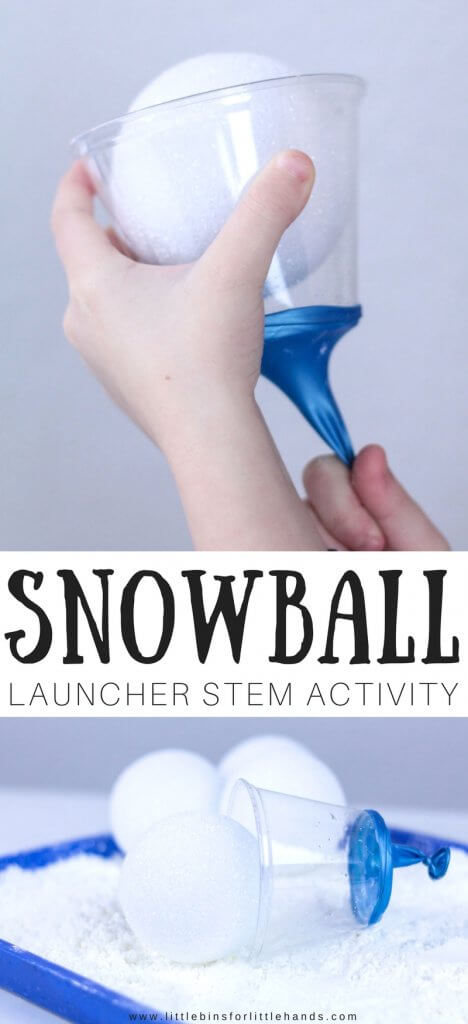
INDOOR SNOWBALL LAUNCHER
Maybe you have tons of snow outside but can’t get out in it yet. Or maybe you never get snow and still want to play with snowballs! Either way, our DIY snowball launchers make the perfect indoor activity. Explore design and physics with a whole lot of laughs included.
All you need to get started with this super simple STEM activity is a few basic supplies you can find around the house. Essentially this is just a bigger version of our homemade confetti poppers and pom pom shooters.
If you are looking for more awesome science all year round, scroll down to the bottom to check out all our resources. Learn how easy it is to set up science at home with your kids or find fun new ideas to bring into the classroom.
YOU MAY ALSO LIKE: 100 Fun Indoor Activities For Kids
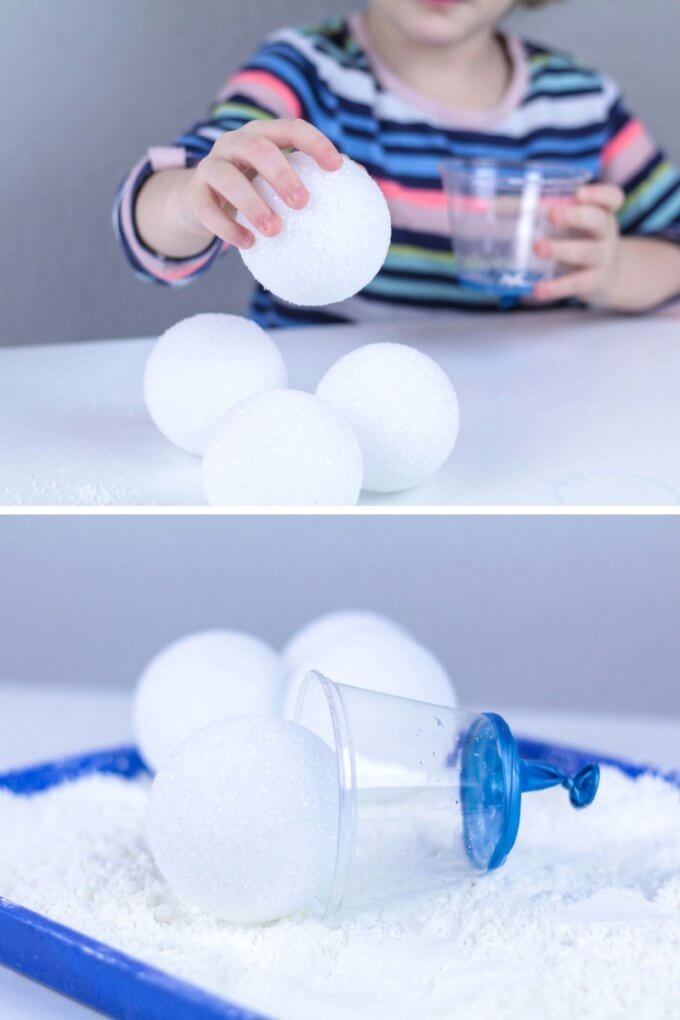
An easy to make STEM snowball launcher is the perfect way to beat the winter blues and explore physics with kids. Read more about how you can share about Newton’s three laws of motions with this homemade rocket toy!
HOW DOES A SNOWBALL LAUNCHER WORK?
Learn about how your homemade snowball launcher works and why we like to include it in our toolbox of easy STEM activities! There’s a bit of fun physics in here. Kids love exploring Sir Isaac Newton’s laws of motion.
The first law of motion states that an object will remain at rest until a force is placed on it. Our snowball isn’t launching buy itself, so we need to create a force! That force is the balloon. Does pulling the balloon further create more force?
The second law says that a mass (like the styrofoam snowball) will accelerate when a force is placed on it. Here the force is the balloon being pulled back and released. Testing different objects of different weights might result in different acceleration rates!
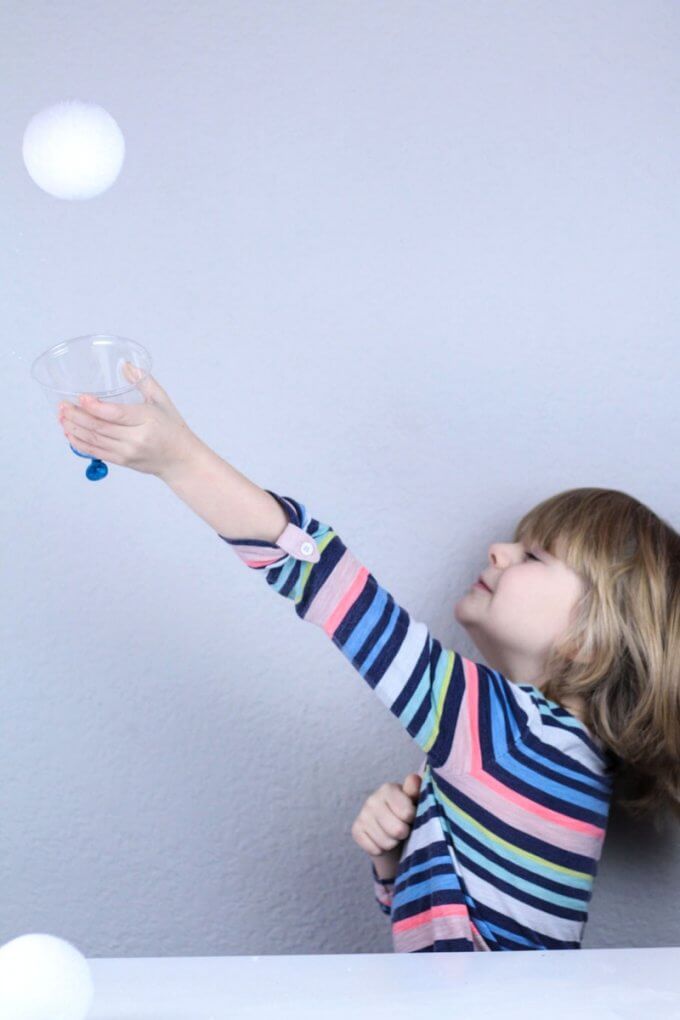
Now, the third law tells us that for every action there is an equal and opposite reaction, the force created by the stretched balloon pushes the object away. The force pushing the ball out is equal to the force pushing the ball back. Forces are found in pairs, the balloon, and the ball here.
CLICK HERE TO GET YOUR FREE PRINTABLE WINTER STEM CARDS
SNOWBALL LAUNCHER
For our complete winter science collection >>>>> Click here!
Supplies:
- Balloons
- Hot glue gun and glue sticks (you can also try duct tape or any other heavy-duty tape)
- Small plastic cup
- Styrofoam balls (find other items to experiment with too including cotton balls, pompoms, balled up paper)
Instructions:
STEP 1. Cut the bottom out of the plastic cup but leave the rim for strength or else the cup will crumple.
This is a good step for the adults to do and can be prepped ahead of time for larger groups! Make sure to trim off any jagged edges.
STEP 2. Tie a knot in the neck of a balloon. Then cut the end off the balloon. (not the knotted end!)
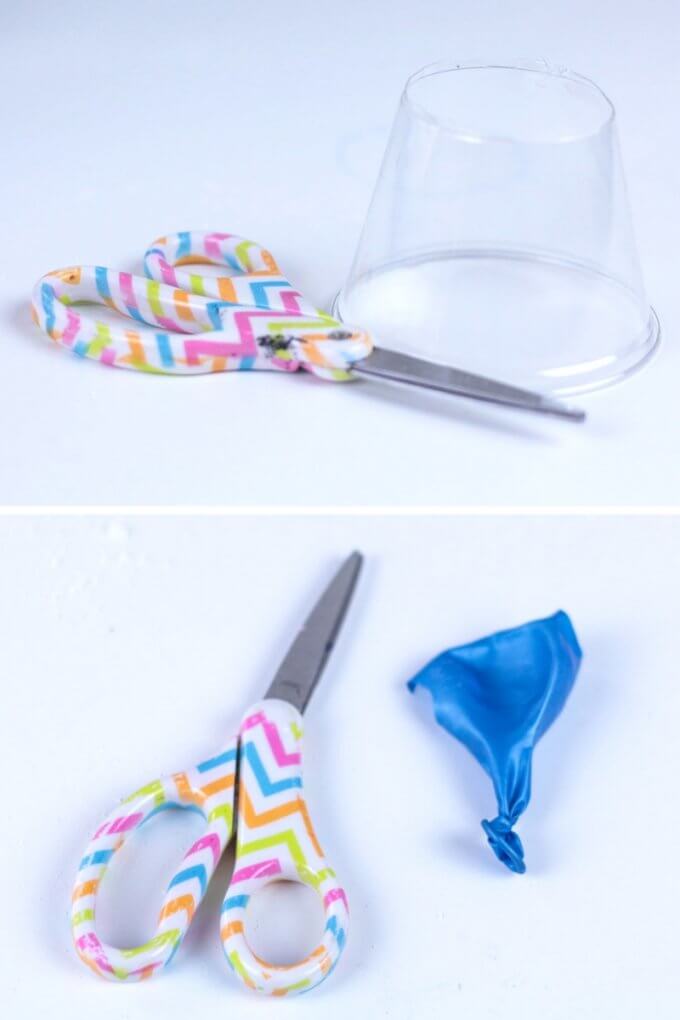
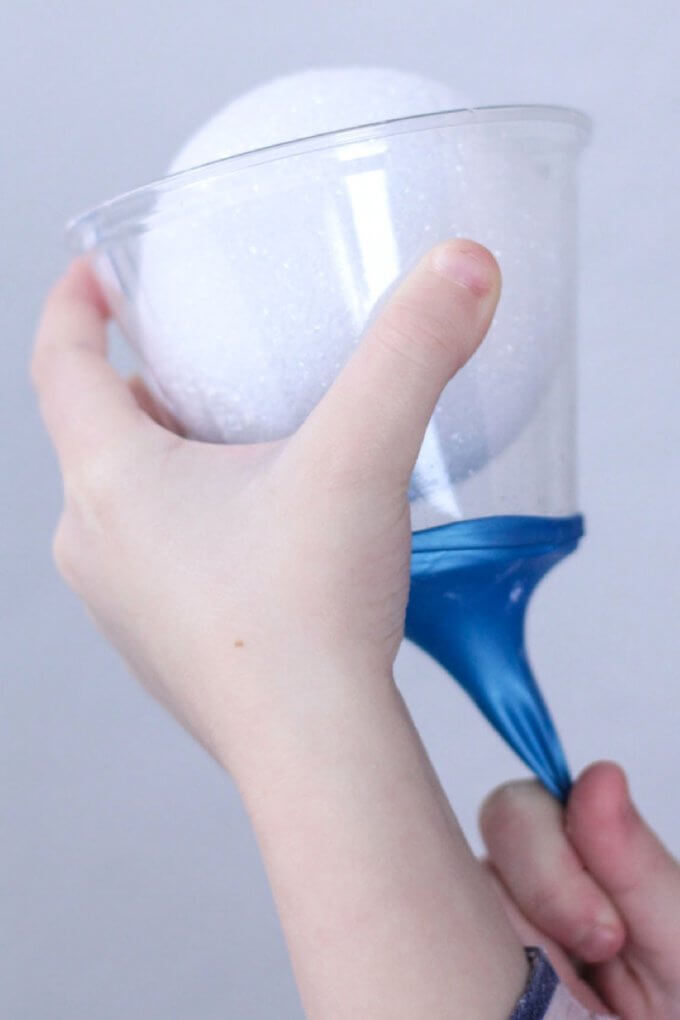
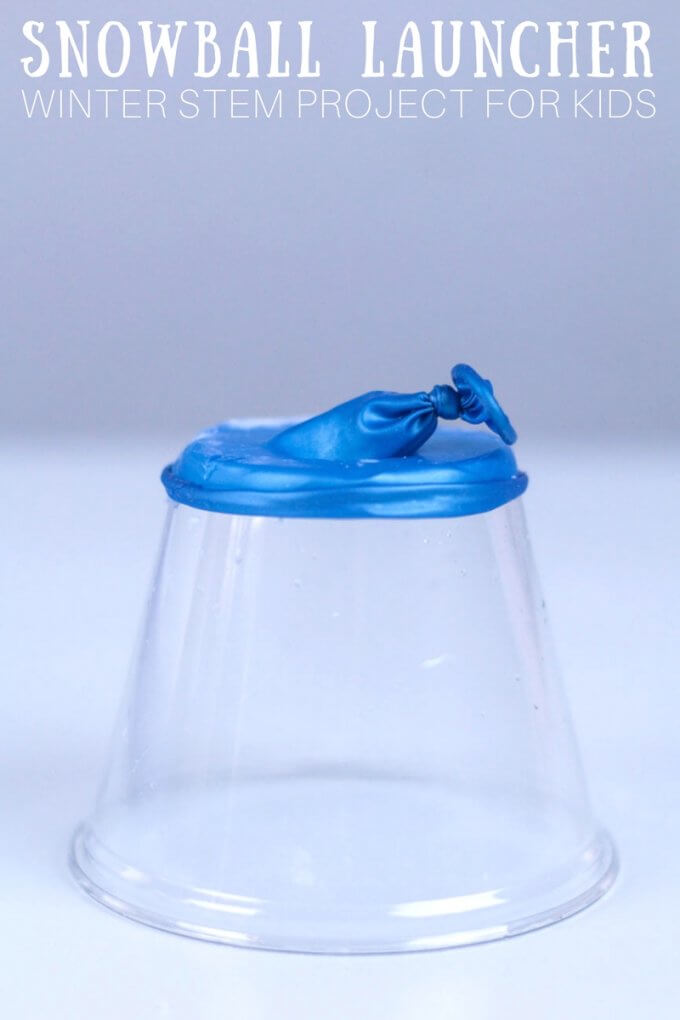
STEP 3. Either tape or glue the balloon to the bottom of the cup, where you have cut the hole.
Now let’s launch some snowballs!
HOW TO USE YOUR SNOWBALL LAUNCHER!
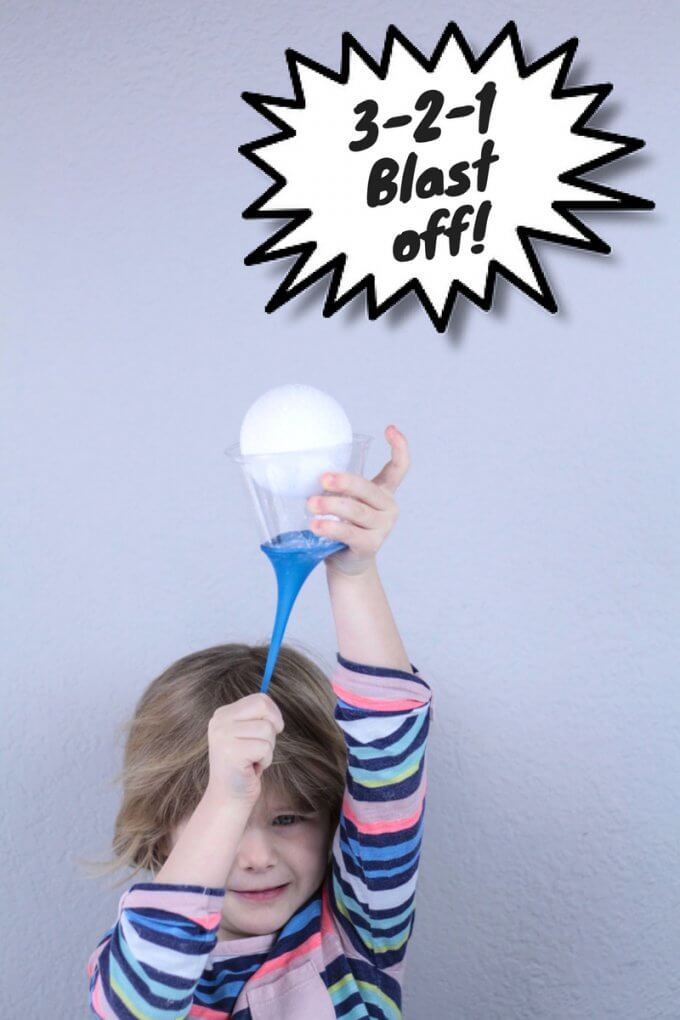
Now to get ready for the snowball launching fun! Place the snowball in the cup. Pull down on the balloon’s knot and release to watch the snowball fly.
This is definitely a fun way to have a snowball fight indoors or even outside when there is no snow!
Turn it into an experiment by comparing different launch items to see what works best and flies the farthest. You can even take measurements and record data to extend the learning portion of this winter STEM activity.
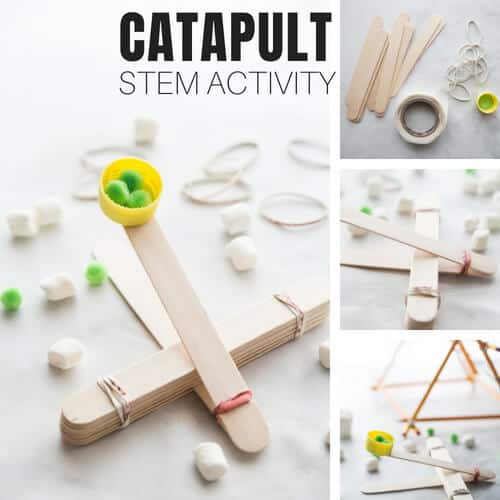
Also explore Newton’s laws of motion with a popsicle stick catapult! These kinds of activities make great STEM building activities to get the kids off those screens and making instead!
SUPER FUN STEM SNOWBALL SHOOTER TO MAKE AND PLAY
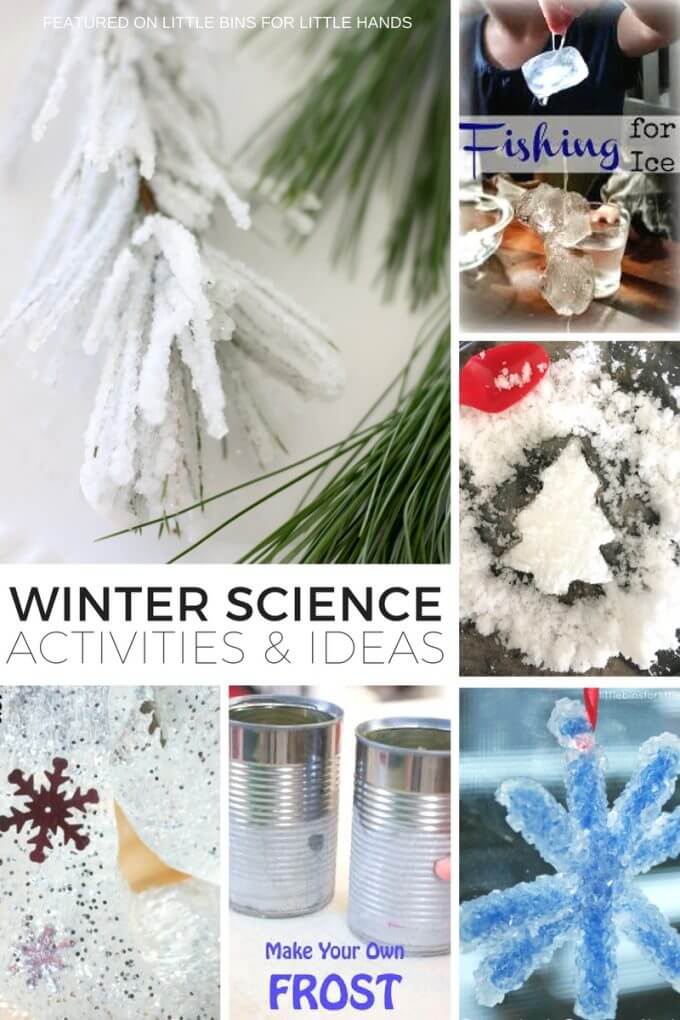
Click on the image below or on the link for awesome winter science ideas for kids.
What size Styrofoam ball did you use?