
Learn how to dye pasta with food coloring for quick and easy sensory play! Colored pasta makes an awesome sensory bin filler. We will show you how to dye pasta easily so it is ready to use the same day. Our simple recipe makes beautiful colors for whatever play theme or craft activity you choose.
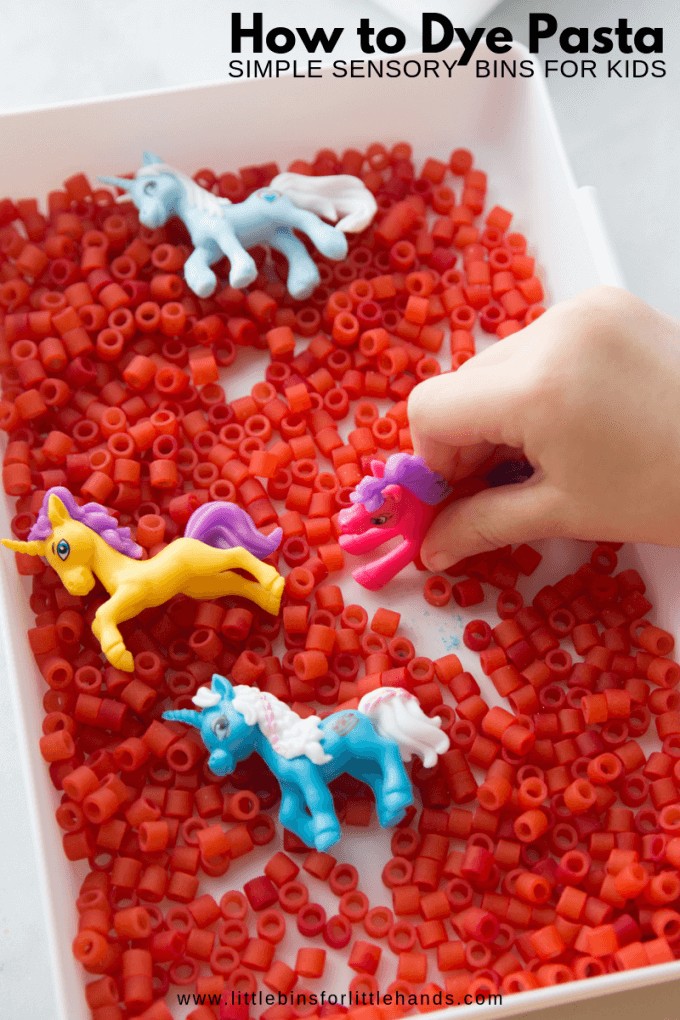
How To Dye Pasta For Crafts And Sensory Play
Our simple how to dye pasta recipe makes helps create the perfect pasta sensory bin for your kids. Also, check out our sensory bin guide for great ways to use your colored pasta!
Here’s how to color pasta with food coloring for sensory activities. All it takes is dried pasta, food coloring, and vinegar. Yes, you can dye pasta without vinegar. We include an easy alternative for you below.
Also, make sure to check out more dyed play materials:
Watch the Video!
How To Dye Pasta for Sensory Bins
Supplies:
- Small dried pasta
- Vinegar
- Food Coloring
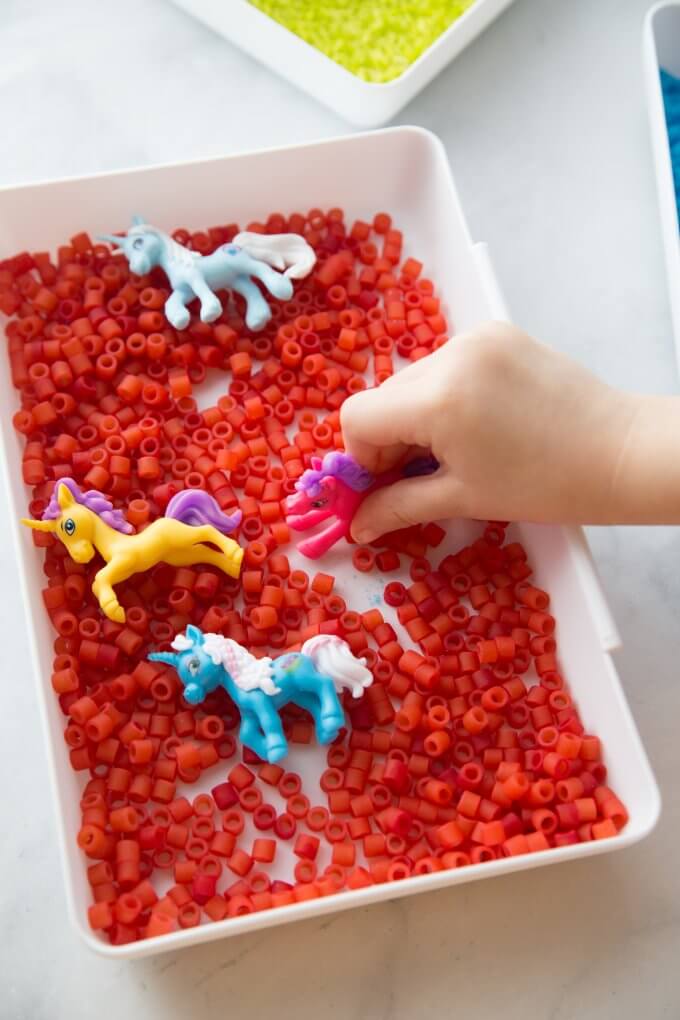
- Fun sensory bin items like these unicorns.
- Scoops and small cups for dumping and filling
Instructions:
STEP 1: Measure 1 Cup of pasta {we like this mini pasta best!} into a container.
💡 NOTE: You can make a bigger quantity of dyed pasta if desired. Adjust the measurements. You can also make several colors of pasta in different containers and mix them together for a rainbow pasta theme!
STEP 2: Next add 1 Teaspoon of Vinegar.
💡 Don’t want to use vinegar? You could add lemon juice instead of vinegar.
STEP 3: Now add as much food coloring as desired (deeper color= more food coloring). You could also make several shades of the same color for a fun effect!
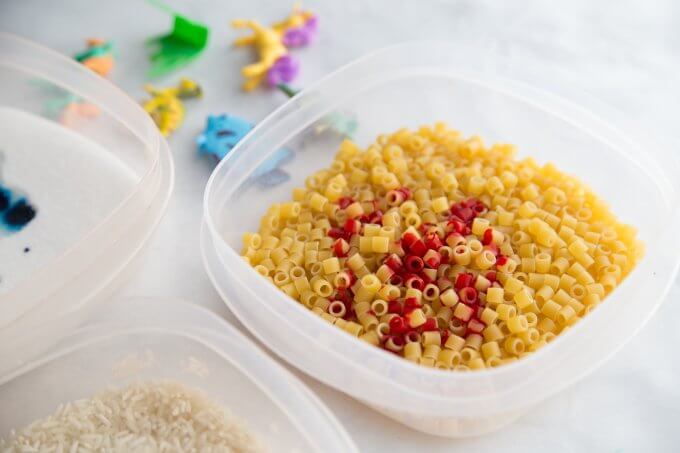
STEP 4: Cover the container and SHAKE vigorously for a minute or two. Check to see if the past is evenly coated!
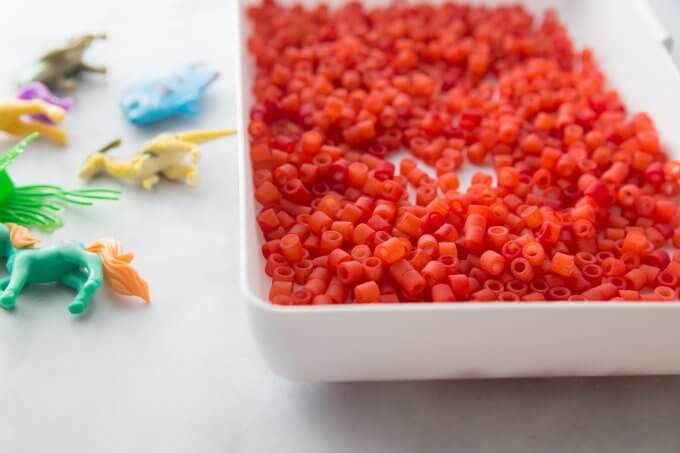
STEP 5: Spread on paper towel or plate to dry in an even layer.
STEP 6: Once the colored pasta is dry, transfer to a bin for sensory play or use for a craft activity.
Tips For Dying Dried Pasta
- If you stick to the one cup per paper towel method, the pasta should be dry in an hour. This method also distributes the color the best.
- For some sensory bins, I have made graded shades of colored pasta for a fun twist. This has also allowed me to experiment with how much food coloring per cup of pasta to achieve the desired shades!
- Store your dyed pasta in gallon zip lock bags when finished, and reuse often!
Ten Fun Themes for a Dyed Pasta Sensory Bin
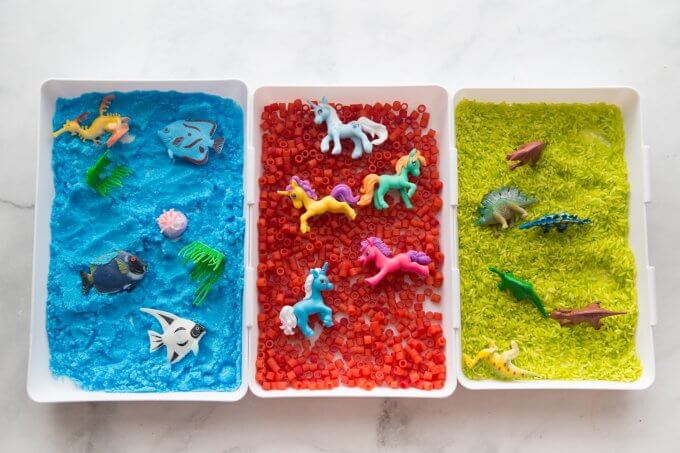
Creating a sensory bin with dyed pasta is a fantastic way to engage kids in imaginative play and sensory exploration. Here are ten exciting themes to inspire your next sensory bin activity:
💡 Read more about sensory bins [here].
- Under the Sea:
- Pasta Colors: Various shades of blue and green.
- Accessories: Toy sea creatures (fish, octopuses, starfish), shells, and pebbles.
- Outer Space:
- Pasta Colors: Black, silver, and purple.
- Accessories: Toy astronauts, rockets, stars, and planets.
- Dinosaur Dig:
- Pasta Colors: Earthy tones like brown, green, and beige.
- Accessories: Small dinosaur toys, plastic bones, and “fossils.”
- Bug Hunt:
- Pasta Colors: Green, brown, and yellow.
- Accessories: Toy insects (ladybugs, beetles, butterflies), magnifying glass, and small leaves.
- Jungle Animals:
- Pasta Colors: Various shades of green, brown, and yellow.
- Accessories: Toy jungle animals (lions, monkeys, elephants), miniature trees, and vines.
- Rainbow Fun:
- Pasta Colors: All colors of the rainbow (red, orange, yellow, green, blue, purple).
- Accessories: Small rainbow toys, colorful beads, and matching pom-poms.
- Flower Garden:
- Pasta Colors: Pink, yellow, green, and purple.
- Accessories: Fake flowers, miniature gardening tools, and toy insects.
- Apple Orchard:
- Pasta Colors: Red, green, and yellow.
- Accessories: Small baskets, fake apples, and toy worms.
- Mermaid Lagoon:
- Pasta Colors: Teal, aqua, and lavender.
- Accessories: Mermaid figurines, seaweed (green yarn or ribbon), and glittery seashells.
- Fairy Tale Forest:
- Pasta Colors: Shades of green, pink, and purple.
- Accessories: Fairy figurines, miniature trees, toadstools, and small woodland animals.
Why Make Sensory Bins?
Are sensory bins worth it? Yes, they are worth it. The more basic you make the sensory bin, the better off you are. Remember, you create a tactile experience for your kids, not a Pinterest image. While we have fantastic pictures of sensory bins, they only stay that way for a minute!
Here’s what children can learn from sensory bins:
Practical Life Skills ~ Sensory bins let a child explore, discover and create play using practical life skills (dumping, filling, scooping) and learn valuable play skills.
Play Skills {emotional development} ~ For both social play and independent play, sensory bins allow children to play cooperatively or side by side. My son has had many positive experiences with other children over a bin of rice!
Language Development ~ Sensory bins increase language development by experiencing all there is to see and do with their hands, which leads to great conversations and opportunities to model language.
Understanding 5 Senses ~ Many sensory play bins include some 5 senses! Imagine a bin of brightly colored rainbow rice: touch the loose grains against the skin, see the vivid colors as they mix, and hear the sound of sprinkling over a plastic container or shaken in a plastic egg! You can also add scents for the olfactory system!
Check Out These Helpful Sensory Bin Resources
There’s so much more to learn about sensory bins and sensory play.
Click on the image below or on the link for more fun and easy sensory activities for kids!

I work in an early childhood program and came across you website. I would love to share your website on my Facebook coaching corner. Could I please have your permission to share? I am sure the teachers will enjoy your site as much as I have.
That’s fine!