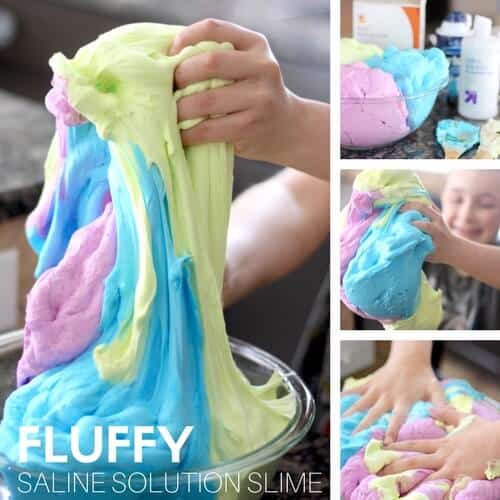

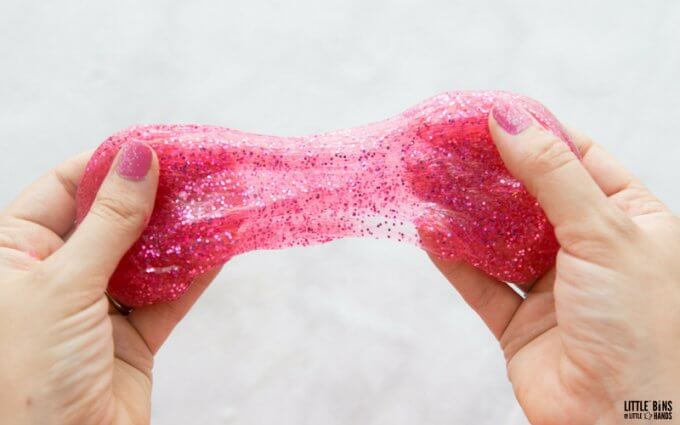
Learn how to make stretchy homemade slime with simple ingredients and clear step-by-step instructions. This easy slime recipe works with white or clear glue and a saline solution activator. Once you master the basic slime recipe, you can create dozens of fun slime variations and science activities.
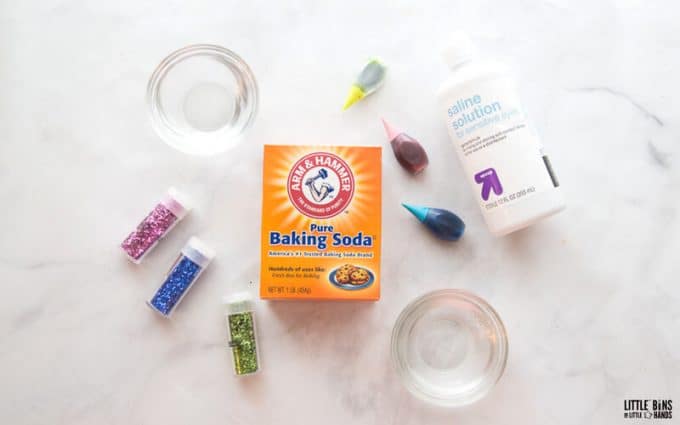
What You Need To Make Slime
- PVA school glue (white or clear)
- Water
- Baking soda
- Saline solution containing boric acid or sodium borate
- Food coloring (optional)
- Glitter or mix-ins (optional)
Not sure which supplies to use?
👉 See the slime ingredients list
👉 Read the slime activator guide
Best Homemade Slime Recipe
Ingredients
- 1/2 cup PVA school glue
- 1/2 cup water
- 1–2 tbsp saline solution
- 1/4–1/2 tsp baking soda
- Coloring and mix-ins (optional)
Instructions
- Mix glue and water in a bowl. Add color, glitter, or confetti if desired.
- Stir in baking soda until fully combined.
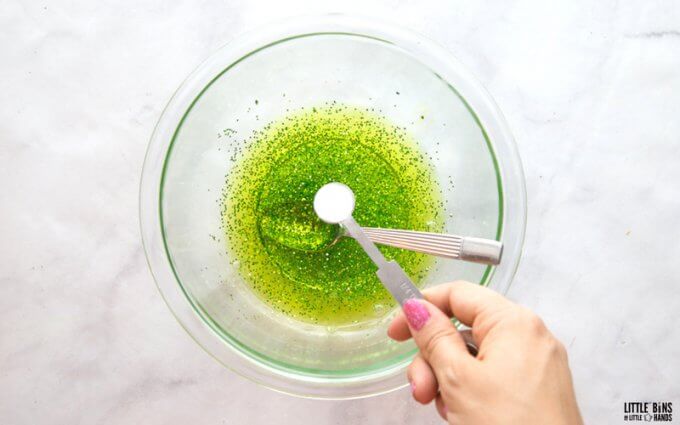
- Add 1 tablespoon saline solution and mix until the slime starts to pull away from the sides of the bowl.
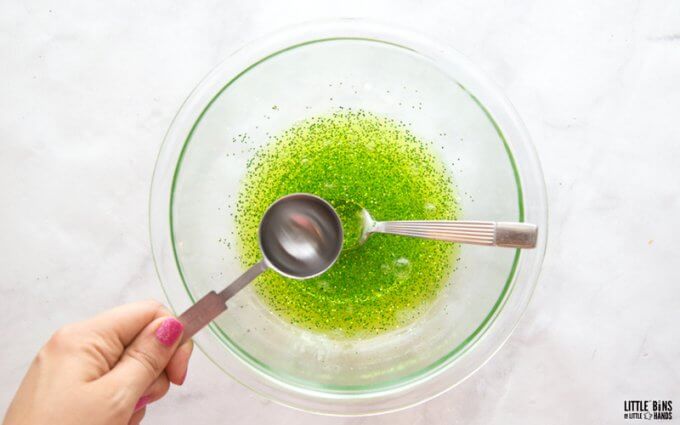
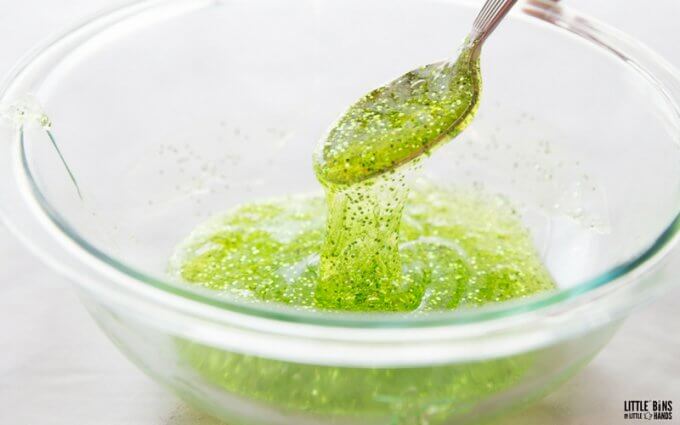
- Add a few drops of the solution to your fingers. Pick up the slime and knead it by hand until smooth and stretchy.
The slime may feel sticky at first — this is normal while the chemical reaction finishes. If your slime feels stiff instead of stretchy, learn how to make slime stretchy.

Choose Your Slime Activator Method
There isn’t just one way to make slime — the texture and stretch depend on the activator you use. All working slime recipes rely on borate ions.
You can follow the basic recipe above, or choose a specific method below:
Saline Solution Slime (most popular)
Make stretchy slime using contact solution and baking soda → Saline Slime Recipe
Borax Slime (classic science method)
A traditional polymer reaction with a strong stretch → Borax Slime Recipe
Liquid Starch Slime (simplest mixing)
Easy one-step slime with a smooth texture → Liquid Starch Slime Recipe
Not sure which one to use? See the full comparison in the slime activator guide.
Slime Troubleshooting
- Sticky slime → add a few drops of saline solution (learn how to fix sticky slime)
- Rubbery slime → knead in warm water (see how to fix rubbery slime)
- Breaks easily → knead longer
- Won’t form → activator missing boric acid (see the slime activator guide)
- Too firm next day → add warm water and knead (more slime fixing tips)

Why Slime Works (Simple Science)
Slime forms when borate ions in the activator react with glue polymers (polyvinyl acetate). The molecules connect into long chains called cross-links, transforming liquid glue into a stretchy material called a non-Newtonian fluid.
Different activators release borate ions at different rates, which affects the slime texture.
👉 Read the full explanation in the slime activator guide
Explore Slime Science
Want to take slime-making further?
Grab our free Slime Science Starter Lab to explore polymers, slime activators, non-Newtonian fluids, and hands-on slime investigations.
Includes:
- STEM challenges
- Observation pages
- Slime science
- A 5-day slime chemistry lab
👉 Download the Free Starter Lab
Slime Variations To Try
Once you learn the basic slime recipe, you can adjust the texture and appearance by changing the ingredients and mix-ins. Try these popular slime variations:

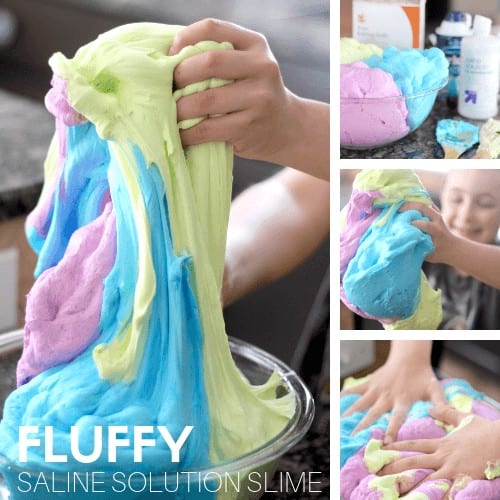
- Fluffy slime
- Clear slime
- Butter slime
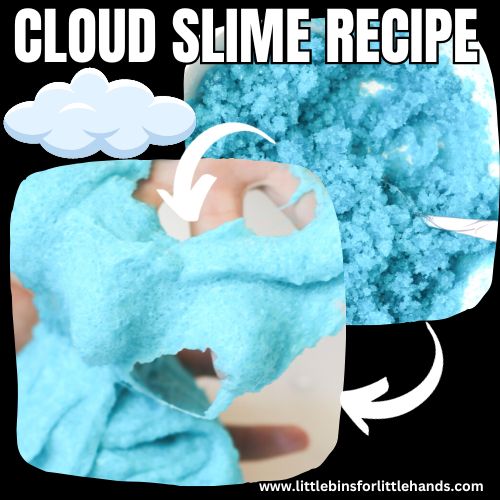
- Cloud slime
- Crunchy Slime
- Glitter slime
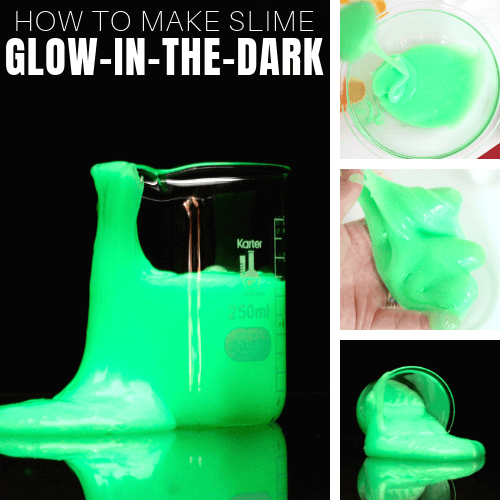
- Glow-in-the-dark slime
- Magnetic slime
- Galaxy slime
- Sand slime
- Chalkboard slime
- Chocolate slime
- Paint slime
- Rainbow slime
- Thermochromic slime
- Starburst slime
- Edible Slime
Slime Help & Cleanup
Making slime sometimes gets messy — that’s part of the learning!
• Slime not working? → learn how to fix slime problems
• Slime too sticky or hard? → see slime troubleshooting tips
• Slime in hair or clothes? → how to get slime out of clothes and hair
Frequently Asked Questions
How do you store slime?
Keep slime in an airtight container. Most slime lasts weeks or months.
Is slime safe?
Slime is a chemistry activity and should be used with supervision. Wash your hands after play.
How do you remove slime from clothes or hair?
Follow this step-by-step guide for how to get slime out of clothes and hair
Can you make slime without glue?
Yes — edible slime recipes use marshmallows, chia seeds, or specific candies.
The Chemistry Behind Slime (For Curious Kids)
Glue is made of long, flexible molecules called polymers. Normally, they slide past each other, so glue flows like a liquid. When borate ions are added, the molecules form a network that traps water while remaining mobile.
Because pressure changes how it flows, slime behaves as both a solid and a liquid — a non-Newtonian fluid.
👉 Read the full slime science guide.
Kids can explore:
- states of matter
- viscosity
- elasticity
- polymers
- chemical reactions
Printable Slime Project Bundle for Kids
Turn slime into a full activity with printable recipes, themed projects, science investigations, and labels.