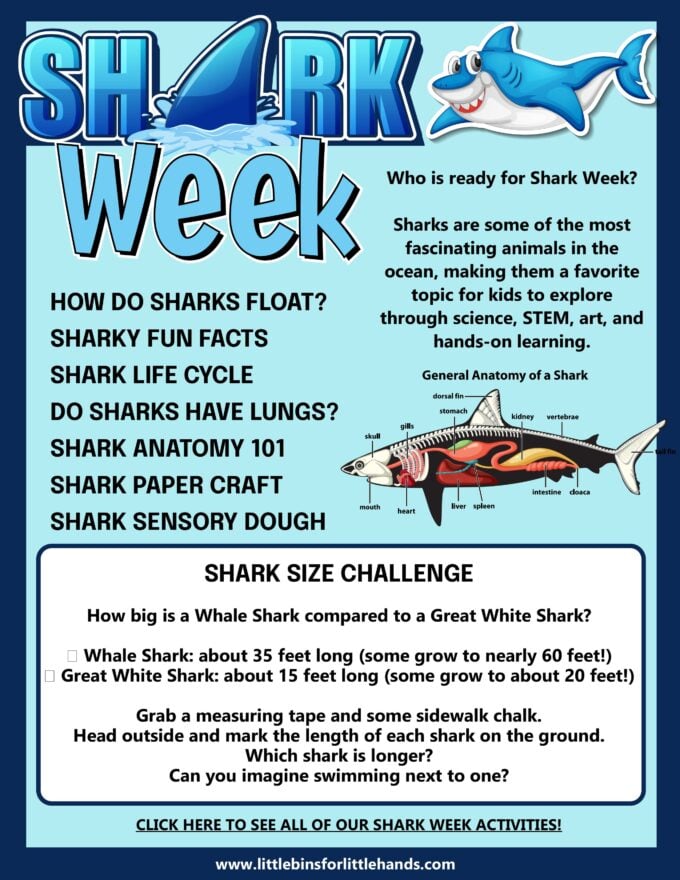

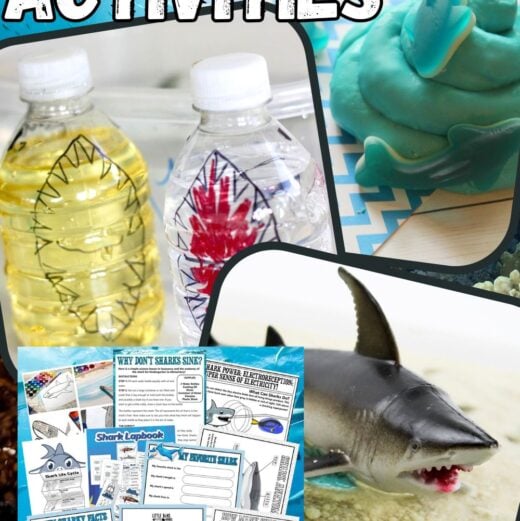
Who is ready for Shark Week? Sharks are some of the most fascinating animals in the ocean, making them a favorite topic for kids to explore through science, STEM, art, and hands-on learning.
Whether you’re planning a Shark Week theme, an ocean unit, or simply have a child who loves sharks, this collection of shark facts, printable activities, and science experiments will help you dive into learning. From discovering why sharks don’t sink to exploring shark anatomy and life cycles, there’s something here for every young ocean explorer.
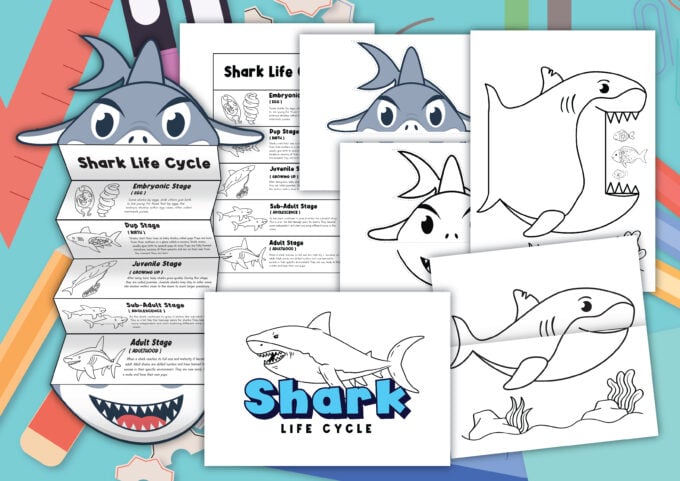
Start Here: Free Shark Life Cycle Printable
Learning about the shark life cycle is a great place to begin your Shark Week study!
Download our FREE Shark Life Cycle Printable featuring:
- Shark life cycle poster
- Interactive life cycle foldable
- Life cycle worksheet
- Coloring page
👉 Grab your FREE Shark Life Cycle Printable!
Common Shark Questions
Kids always have questions about sharks! Here are answers to some of the most common questions about these amazing ocean animals.
What is the largest shark?
The Whale Shark is the largest shark in the world. The biggest recorded whale shark measured more than 60 feet long—longer than a school bus!
Do sharks ever stop swimming?
Some sharks must keep swimming so oxygen-rich water continually flows over their gills. Others, including Nurse Sharks, can rest on the ocean floor while still breathing.
Do sharks have lungs?
No. Sharks do not have lungs. Like fish, they breathe using gills, which remove oxygen from the water.
Do sharks have a swim bladder?
Unlike most fish, sharks do not have a swim bladder. Instead, sharks rely on several amazing adaptations—including their large oil-filled liver—to help them stay buoyant in the water.
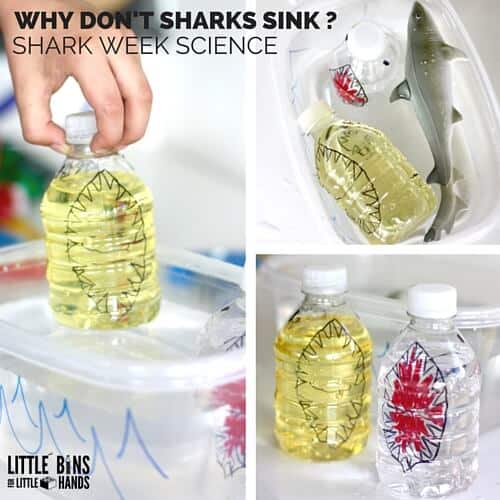
Why don’t sharks sink?
A shark’s liver contains oils that are lighter than water, helping sharks stay buoyant as they swim through the ocean. Want to see this in action? Try our Why Don’t Sharks Sink? buoyancy experiment!
10 Fun Shark Facts For Kids
- Sharks have existed for more than 400 million years, long before dinosaurs.
- Scientists have identified more than 500 species of sharks.
- The smallest shark is only about 7 inches long, while the largest, the Whale Shark, can grow longer than a school bus.
- Sharks continually replace their teeth and may lose thousands during their lifetime.
- The largest shark—the Whale Shark—is also one of the gentlest, feeding mainly on plankton.
- Baby sharks are called pups. Some hatch from eggs while others are born alive.
- Sharks have an incredible sense of smell. Nearly two-thirds of their brain is dedicated to processing scents.
- Sharks do not have bones. Their skeleton is made of flexible cartilage.
- Because their eyes are positioned on the sides of their head, many sharks have an excellent field of vision.
- Sharks are important predators that help keep ocean ecosystems balanced.
Shark Week Activities
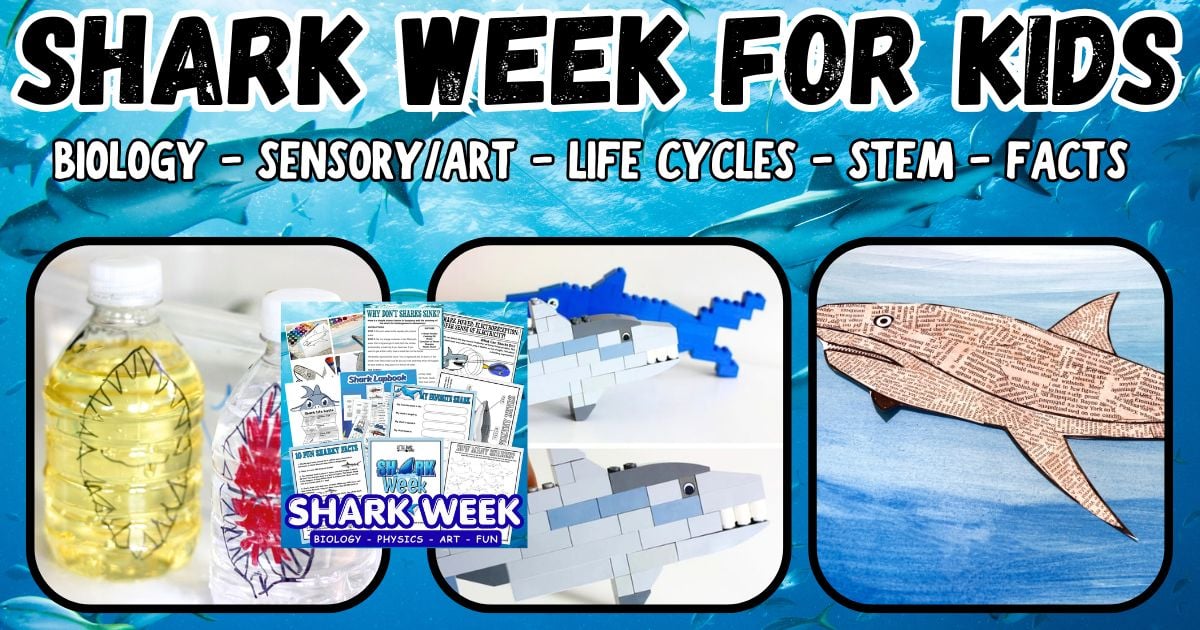
Celebrate Shark Week with these fun hands-on science, STEM, art, engineering, and sensory activities.
Shark Science Activities
Explore how sharks grow from embryo to adult with our free printable life cycle activity.
Discover how an oil-filled liver helps sharks stay buoyant with an easy science experiment.
Learn how sharks breathe through their gills instead of lungs with a simple hands-on activity.
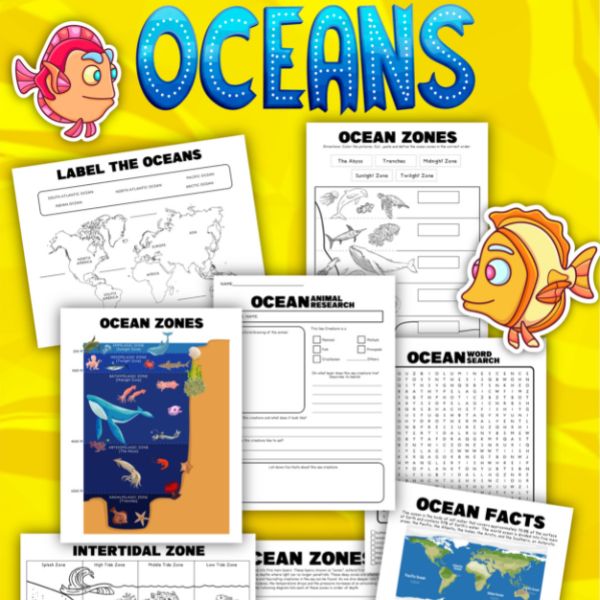
Where do sharks live? Explore the ocean’s layers and discover which sharks live in different zones.
Shark STEM Activities
Can you design a shark-proof cage that protects a diver underwater? Use recycled materials or building bricks to engineer your own design.
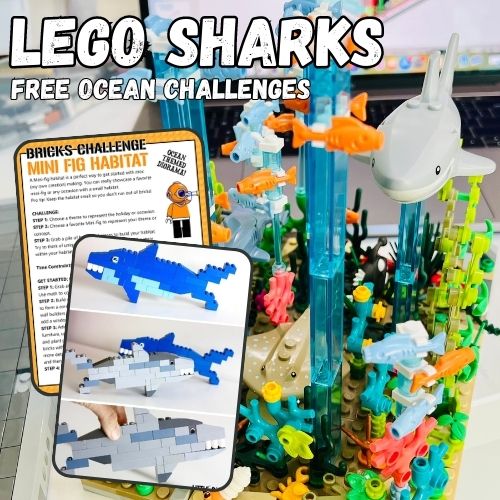
Challenge kids to build their favorite shark using LEGO bricks. Can you build a Great White? Hammerhead? Whale Shark?
How long is a Whale Shark (the longest recorded at 60 feet) compared to a Great White (the largest average is 20 feet)? Grab a measuring tape, do some safe internet research, and head outside to compare the lengths of different sharks. Use sidewalk chalk to indicate the length.
Shark Art Activities
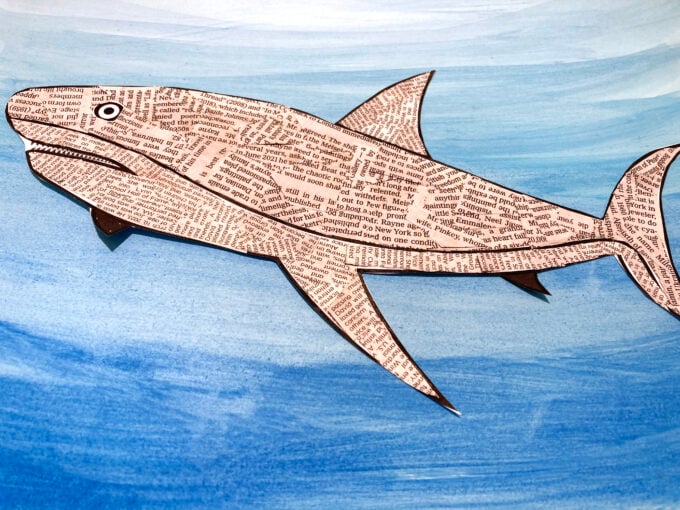
Create a colorful shark collage with torn paper and a watercolor ocean background. Free template included.
Shark Sensory Play
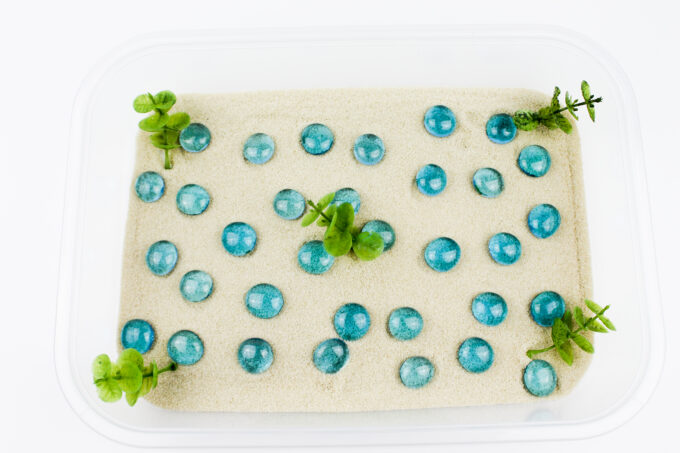
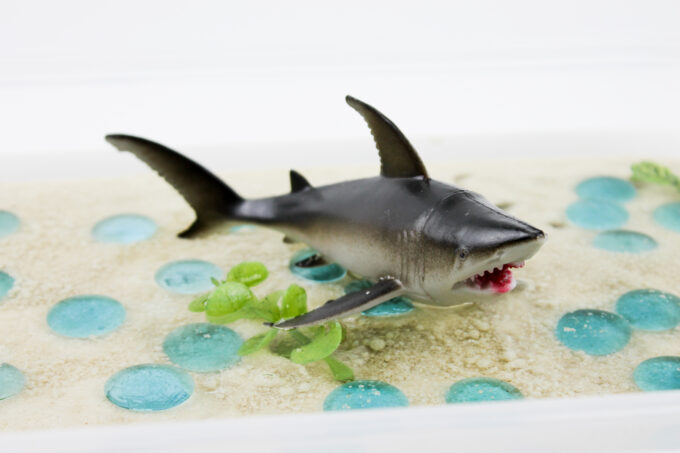
Fill a bin with water, plastic sharks, aquarium plants, and small rocks for an easy ocean sensory experience.
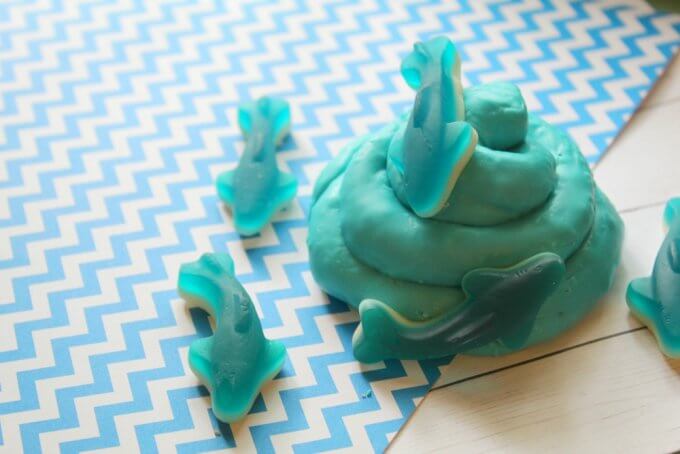
Mix up an edible shark-themed dough for sensory play and imaginative ocean adventures.
Shark Videos For Kids
Want to learn even more?
Jonathan Bird’s Blue World offers an excellent collection of kid-friendly shark videos featuring different shark species, shark adaptations, and amazing underwater footage.
Watch together, then compare your favorite sharks using the activities above.
👉 Jonathon Bird’s Blue World Shark Academy Videos
🦈 Make Shark Week Easy!
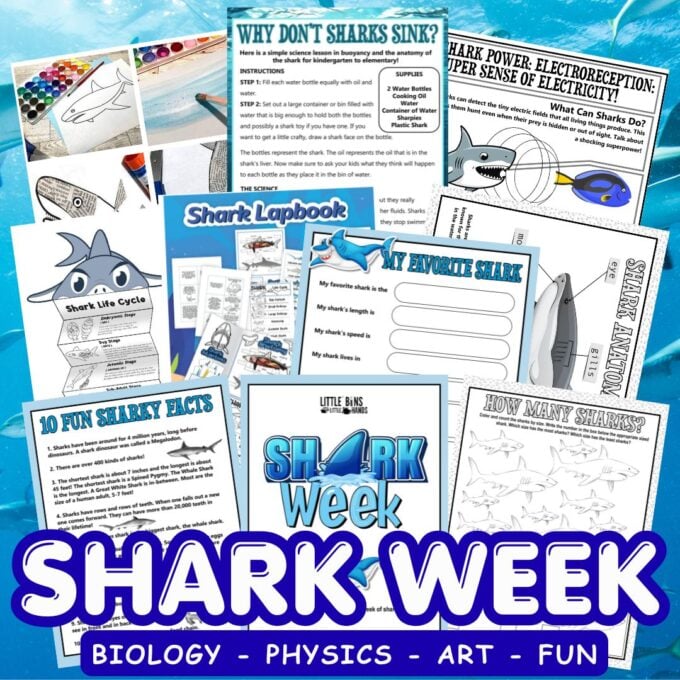
Planning a full week of shark-themed learning? Skip the prep with our Shark Week Science Pack! Inside you’ll find hands-on science activities, STEM challenges, printable worksheets, shark anatomy, life cycle activities, buoyancy experiments, research pages, crafts, puzzles, and an interactive Shark Lapbook—all designed to make Shark Week fun and engaging for preschool through elementary students. Just print and start exploring! 🦈
👉 Grab the Shark Week Science Pack here.
Learn More About Ocean Animals
Do you have kids who love learning about the ocean and all the animals in it? Check out these ocean animal activities for more fantastic learning ideas for jellyfish, starfish, narwhals, and more!