

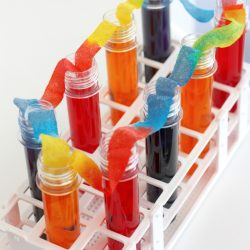
This walking water experiment is incredibly easy and fun for kids to set up. All you need are a few simple supplies from your kitchen cupboards. Watch the water travel as it makes a rainbow of color and learn about capillary action in plants! We love easy science experiments for kids.
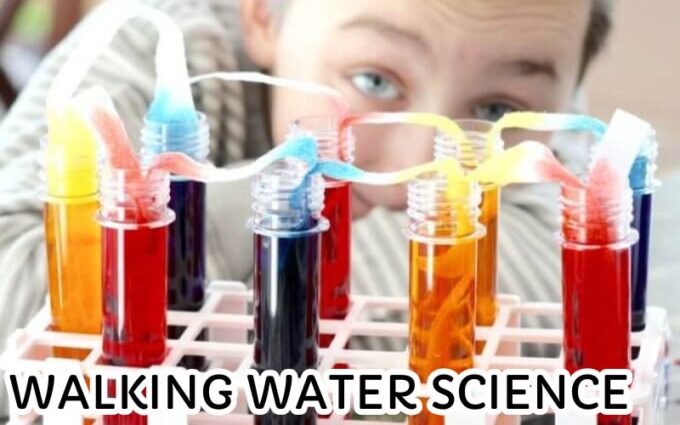
Walking Water Experiment for Kids
Watch water “walk” from cup to cup in this colorful and fun experiment! Kids will be amazed as they learn how water can move against gravity using paper towels. It’s an easy way to simultaneously explore color mixing and simple science concepts!
Field of Science: Physical Science & Life Science
Grade Level: K-3 (easily adaptable for 4th grade)
Concepts Explored:
- Capillary action
- Cohesion and adhesion
- Gravity vs. upward movement of liquids
- Absorbent materials
- Color mixing (primary and secondary colors)
- Plant biology connection (how water moves through plants)
Supplies:
- Water
- Test Tubes and Rack (clear plastic cups or mason jars work well too!)
- Food Coloring
- Paper Towels
- Stirrer
- Scissors
- Timer (optional)
How to set Up Walking Water
Watch the Walking Water Video:
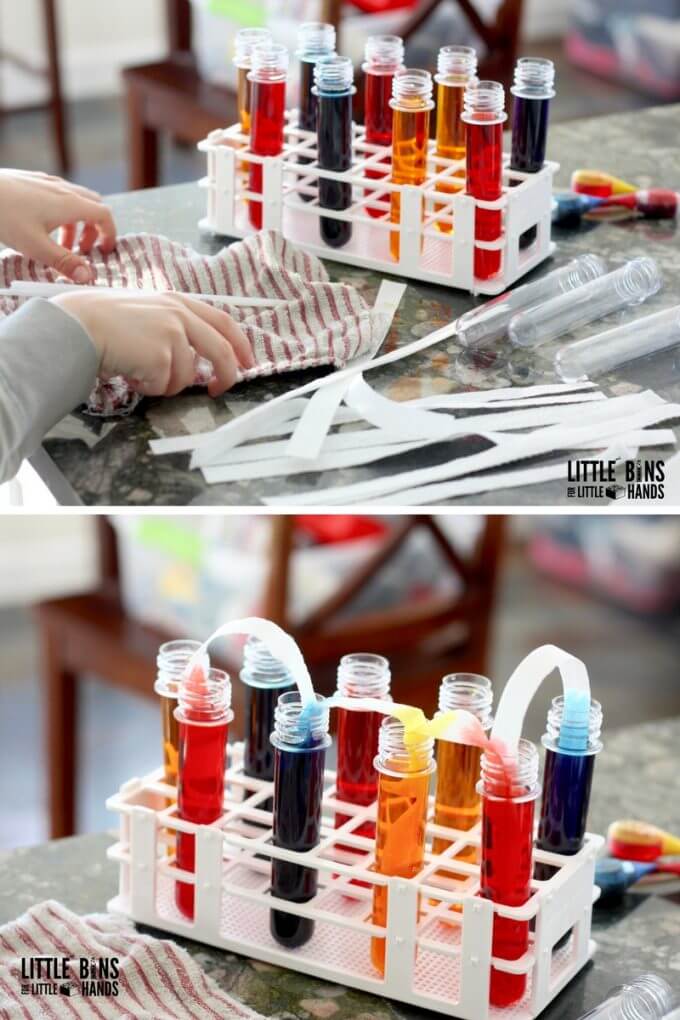
STEP 1. You can set up as many or as few jars as you like for this part.
We used 9 test tubes of primary colors (3 x red, 3 x yellow, 3 x blue). We added red, yellow, and blue food coloring (one color per test tube) in a pattern.
Give each test tube (glass or cup) a little stir to distribute the color evenly. Try to put the same amount of food coloring in each container!
STEP 2. Cut thin strips of paper towel to fit in the test tubes. If you are using glasses or cups, you can judge the best size strip to fit what you are using.
Place the paper towel strips into the test tubes. There will be two ends in each tube.
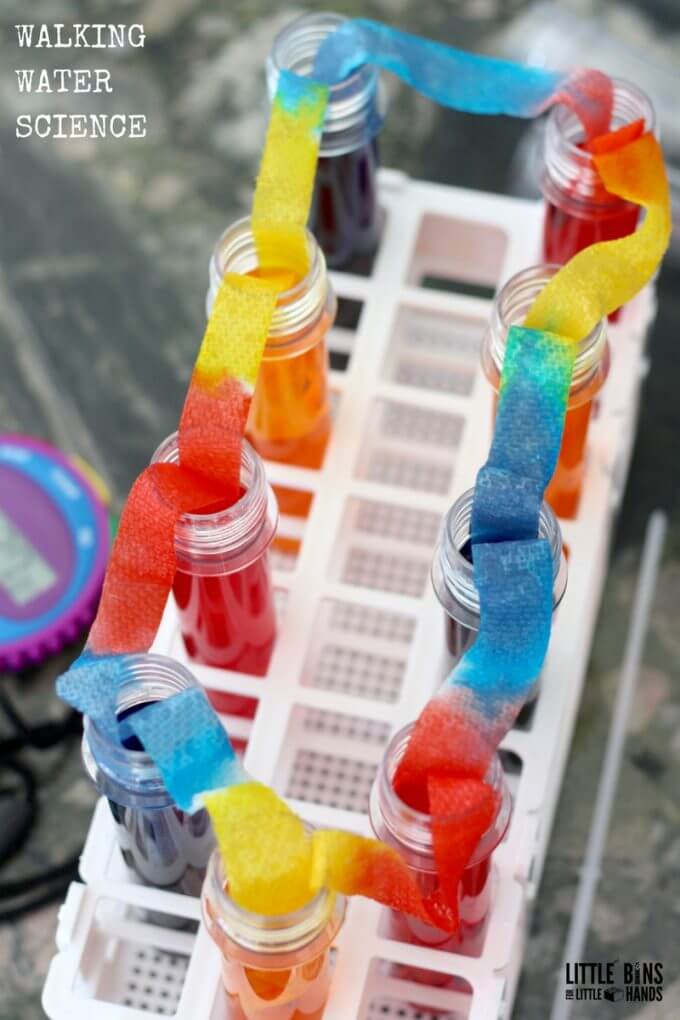
STEP 3. Wait and watch what happens. At this point, you can set up a stopwatch to make note of how long it takes for the colors to meet and mix.
Once you have inserted the towels, it’s the perfect time to talk about what your kids see happening (observations). Do they want to improve their hypothesis or have new ideas about what might happen?
Make It a Science Project
Turn this into a complete science project! Encourage kids to turn this experiment into a complete project by using the scientific method, writing a hypothesis, and testing variables such as:
- Use different materials (coffee filters, napkins, or cloth) and compare how well the water “walks.”
- Try cold water vs. warm water. Which moves faster?
- What happens if you space the cups farther apart?
🔎 Check out our Grow A Rainbow experiment for another fun way to set this up!
The Science Behind Walking Water Experiment
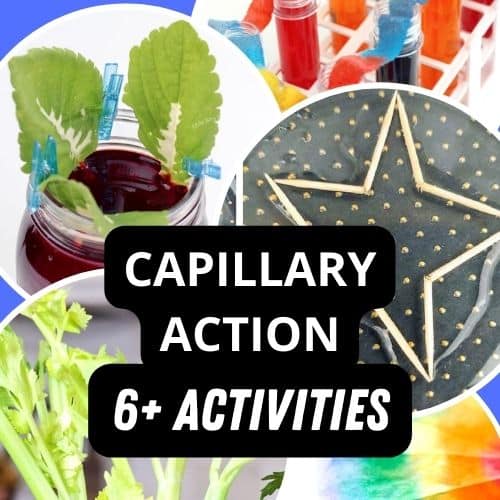
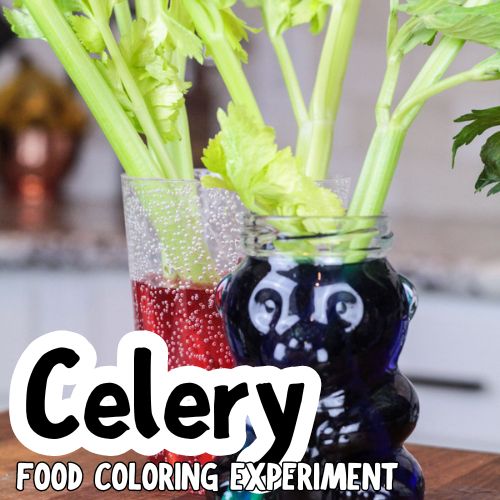
Walking water is a fun and colorful science experiment! It shows how water can move, or “walk,” without anyone touching it. This happens because of something called capillary action. You can also see capillary action when you do our celery and food coloring experiment!
What is Capillary Action?
Capillary action is when water moves up through tiny spaces, like a paper towel or the stem of a plant. The water goes up instead of down, even though gravity usually pulls things down!
Two forces help make this happen:
Cohesion and Adhesion.
- Cohesion means water sticks to itself. Water molecules love holding hands!
- Adhesion means water sticks to other things, like paper towels or plants.
🔎 Learn more about capillary action here.
How Does Water Walk?
When you dip a paper towel into colored water, the water travels up the paper towel. The paper towel has tiny holes and spaces, like the tubes inside a plant’s stem. This helps the water move up, like plants pulling water from the ground.
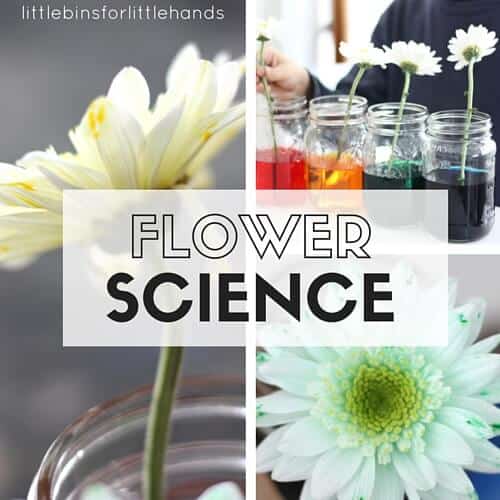
🔎 Set up this color changing flowers science activity.
As the water moves up, it “walks” from one cup to the next. When two colors meet, like red and yellow, they mix and make a new color—like orange!
The water will keep walking until the paper towel can no longer hold any more. We left ours overnight, and the next day, we found a soggy paper towel and a messy puddle! That means the towel got oversaturated, which is a fancy way of saying it soaked up too much water.
Discussion Questions
- What do you notice happening to the water in the paper towels?
- Why do you think the water moves up instead of down?
- What happens when two different colors meet in the paper towel?
- Can you think of another place where water moves upward like this in nature?
- What would happen if we used a different material, like plastic or cloth, instead of paper towels?
Key Vocabulary
- Capillary Action: Water moving up through tiny spaces, like a paper towel or plant stem.
- Cohesion: Water sticking to itself (water molecules hold hands).
- Adhesion: Water sticking to other things (like paper or plants).
- Oversaturated: When something (like a paper towel) soaks up too much water and can’t hold any more.
Lesson Extension Ideas

More Fun Water Experiments to Try
💡 Check out our list of other water experiments for here!
- Color Changing Flowers
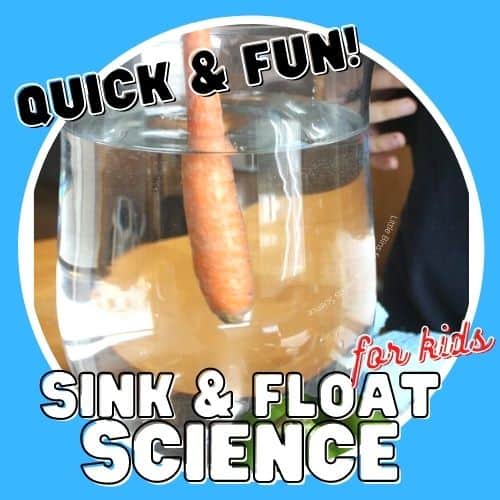
- Sink or Float Buoyancy
- Paper Towel Experiment
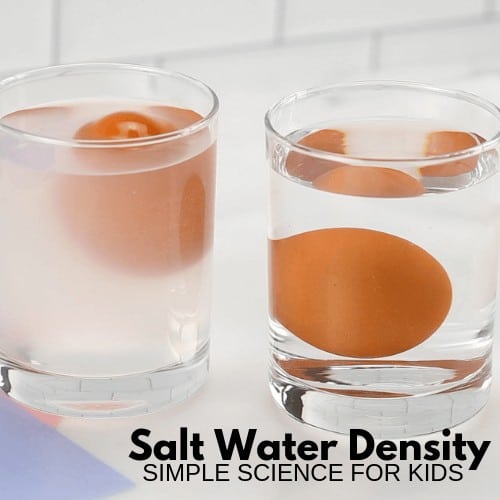
- Saltwater Density Egg Float
- Rising Water Science
- Sugar Water Rainbow (Density)
- Oil and Water
Printable Science Projects For Kids
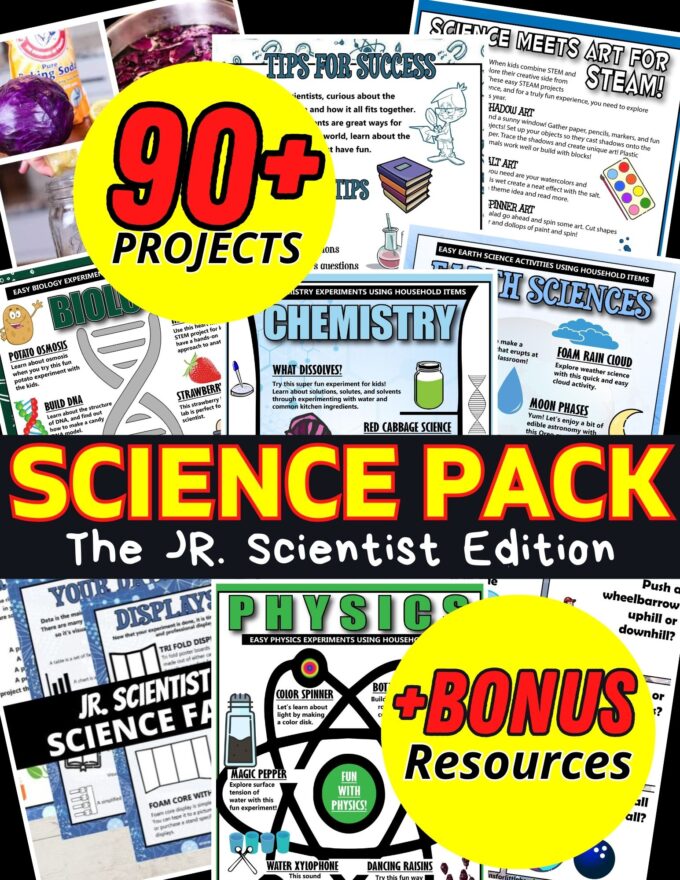
If you’re looking to grab all of our printable science projects in one convenient place plus exclusive worksheets and bonuses like a STEAM Project pack, our Science Project Pack is what you need! Over 300+ Pages!
- 90+ classic science activities with journal pages, supply lists, set up and process, and science information. NEW! Activity-specific observation pages!
- Best science practices posters and our original science method process folders for extra alternatives!
- Be a Collector activities pack introduces kids to the world of making collections through the eyes of a scientist. What will they collect first?
- Know the Words Science vocabulary pack includes flashcards, crosswords, and word searches that illuminate keywords in the experiments!
- My science journal writing prompts explore what it means to be a scientist!!
- Bonus STEAM Project Pack: Art meets science with doable projects!
- Bonus Quick Grab Packs for Biology, Earth Science, Chemistry, and Physics


i was wodering where can i buy this Test Tubes and Rack
Amazon!
This looks like such a cool activity!