
Recycling activities for kids are a simple way to teach children how to reduce waste and care for the environment.
These hands-on activities include sorting, recycling worksheets, and simple challenges designed for preschool, kindergarten, and elementary students. They are easy to use at home or in the classroom and pair well with lessons on environmental science, land pollution, and Earth Day.
What are recycling activities for kids?
Recycling activities for kids are hands-on activities that teach children how to sort, reuse, and reduce waste to help protect the environment.
👉 Explore more here: Environmental Science Activities for Kids
Recycling Science
Field: Environmental Science
Grades: K–4
Concepts Explored: Recycling reduces waste sent to landfills; materials like paper, plastic, glass, and metal can be reused; recycling helps conserve natural resources; reducing waste helps prevent land pollution; the 3 Rs (reduce, reuse, recycle) support sustainable habits.
Recycling Worksheets and Printables for Kids
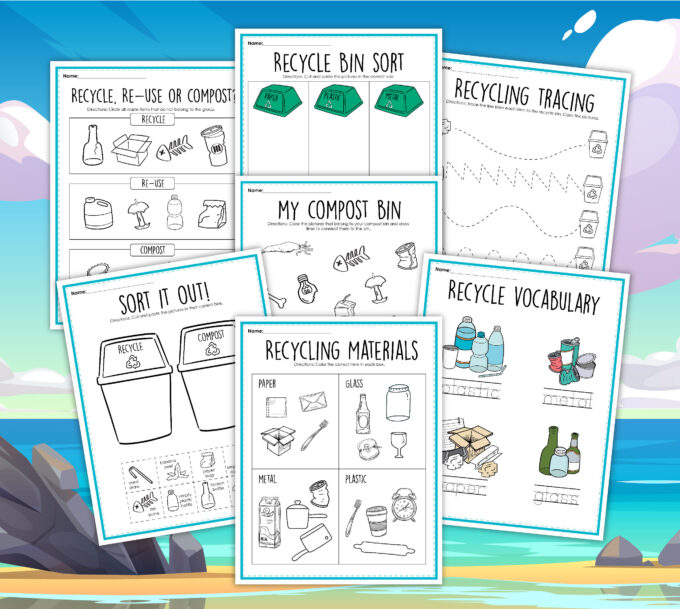
This post includes recycling worksheets and printable activities designed for preschool, kindergarten, and elementary students.
These activities focus on:
- sorting materials into categories
- understanding reduce, reuse, recycle
- identifying recyclable vs non-recyclable items
- building early environmental science skills
💡 Use these printables for independent work, centers, or whole-group activities.
Supplies Needed
- Printable recycling pack (below)
- Paper, plastic, metal, and glass items (clean)
- Bins or containers for sorting
- Scissors and glue (for cut-and-paste activities)
- Markers or crayons
How To Do Recycling Activities
Recycling Activities
Recycling Materials Sort
Grades: Preschool, Kindergarten
Concept: Identifying recyclable materials
Kids sort items into paper, plastic, glass, and metal using real objects or printable cards.
Recycle vs Compost Sort
Grades: Preschool, Kindergarten, elementary (use as introduction to project)
Concept: Waste sorting
Kids decide which items can be recycled and which should be composted.
👉 Pair this with a DIY Mini Compost Bin project
Recycling Worksheets Activity
Grades: Preschool, Kindergarten
Concept: Reinforcement through printables
Use worksheets to practice sorting, tracing, and identifying recyclable materials. These activities support early learning and fine motor skills.
Recycling Bin Sort
Grades: Preschool, Kindergarten
Concept: Categorizing materials
Kids cut and paste items into labeled bins such as paper, plastic, and metal.
Recycling Scavenger Hunt
Grades: Kindergarten, Elementary
Concept: Real-world application
Kids find recyclable items around the classroom or home and identify their material type.
Reduce Reuse Recycle Discussion
Grades: Elementary
Concept: Environmental responsibility
Students explore ways to reduce waste, reuse materials, and recycle correctly.
👉 Introduce this Decomposition Experiment (focusing on litter)
Recycling Poster Project
Grades: Elementary
Concept: Communication and awareness
Kids create posters showing what can be recycled and why recycling is important. Suggestion: make a timeline showing trash breakdown. Title it: “How Long Does it Last”
| Item | Estimated Breakdown Time |
|---|---|
| Apple core | 1–2 months |
| Paper | 2–6 weeks |
| Cardboard | 2 months |
| Cotton fabric | 3–5 months |
| Wool sock | 1–5 years |
| Cigarette butt | 10–15 years |
| Plastic bag | 10–20 years |
| Tin can | 50 years |
| Aluminum can | 200 years |
| Plastic bottle | 450 years |
| Disposable diaper | 450–500 years |
| Fishing line | 600 years |
| Glass bottle | 1 million years (or more!) |
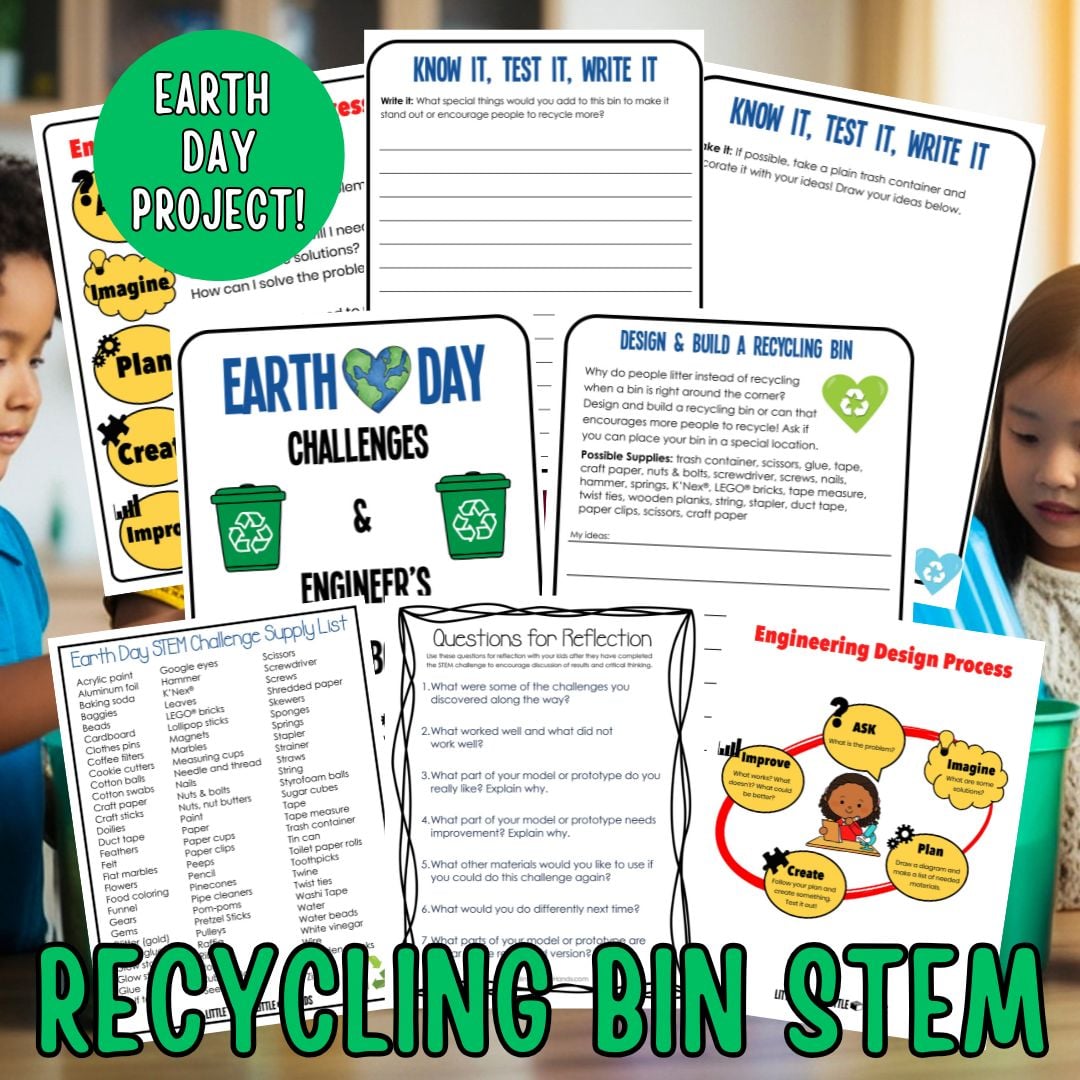
Design a Recycling Bin Challenge
Grades: Elementary
Concept: Engineering + environmental problem-solving
Students design a recycling bin that encourages people to recycle instead of littering. They plan, build, and test their design using simple materials.
This type of activity connects recycling to real-world behavior and problem-solving
👉 Grab the free recycling bin STEM challenge here
What Success Looks Like
Students can:
- Correctly sort materials into recycling categories
- Explain what recycling means
- Identify at least one way to reduce or reuse waste
- Make connections between recycling and protecting the environment
What’s Happening? (Expanded Recycling Science Information)
Recycling is the process of turning used materials into new products instead of throwing them away.
When materials are not recycled, they often end up in landfills or as litter, contributing to land pollution. This can harm soil, plants, and animals.
Recycling helps reduce this impact by keeping materials in use. It also saves energy and natural resources compared to making new products from raw materials.
Understanding recycling helps kids see how small everyday actions can make a big difference.
👉 To deepen your kids’ understanding of land pollution, set up our simple litter decomposition experiment or set up a mini composting bin (free printables).
How to Use This as an Environmental Science Lesson
- Introduce the Topic – Ask: What happens to trash after we throw it away?
- Sort Materials – Have students classify items into recycling categories.
- Compare and discuss recycling vs. composting vs. trash.
- Apply – Do a scavenger hunt or sorting activity.
- Connect to Real Life – Talk about recycling at home, school, and in the community.
Discussion Questions
- What items can be recycled?
- What happens if we don’t recycle?
- Why is recycling important?
- What is the difference between recycling and composting?
- How can you reduce waste at home?
Extend the Learning
👉 Ask: Earth Day Conversation starters (free)
👉 Explore more: Land Pollution Activities for Kids
👉 Try: Earth Day Activities for Kids
👉 See more: Environmental Science Activities for Kids
👉 Make: Recycled STEM Projects for kIds
👉 Play: Recycled Paper Playdough Mat for Kids (free)
Grab Your Free Recycling Printable Pack
This printable pack includes simple activities for sorting and identifying recyclable materials:
- Recycling materials sort
- Recycle vs compost activity
- Vocabulary pages
- Tracing activity
- Compost sorting
- Recycling bin sort
These activities help reinforce key recycling concepts in a hands-on way .
👉 Enter your email below and I’ll send it to you!
Make It Easy: Full Recycling Unit
Save time with a complete set of recycling lessons designed for K–4.
This unit includes:
- Recycling basics and vocabulary
- Recyclable vs non-recyclable materials
- Sorting activities and games
- Composting activities
- The recycling process
- Reduce, reuse, recycle concepts
- Scavenger hunt and poster project
- Quizzes and writing pages
It’s a full 35+ page unit you can use for a complete environmental science study .
👉 Check out the full Recycling Unit here.

FAQ
What are recycling activities for kids?
They are hands-on activities that teach kids how to sort, reduce, and reuse materials.
What age is best for recycling activities?
These activities work well for preschool through elementary students.
What does recycling teach kids?
It teaches environmental responsibility, sorting skills, and real-world problem solving.
How does recycling help the environment?
It reduces waste, saves resources, and helps prevent pollution.
Related Science Activities
- Land Pollution Activities for Kids
- Water Conservation Activities
- Earth Day Activities for Kids
- Environmental Science Activities for Kids
- Air Pollution Activities for Kids
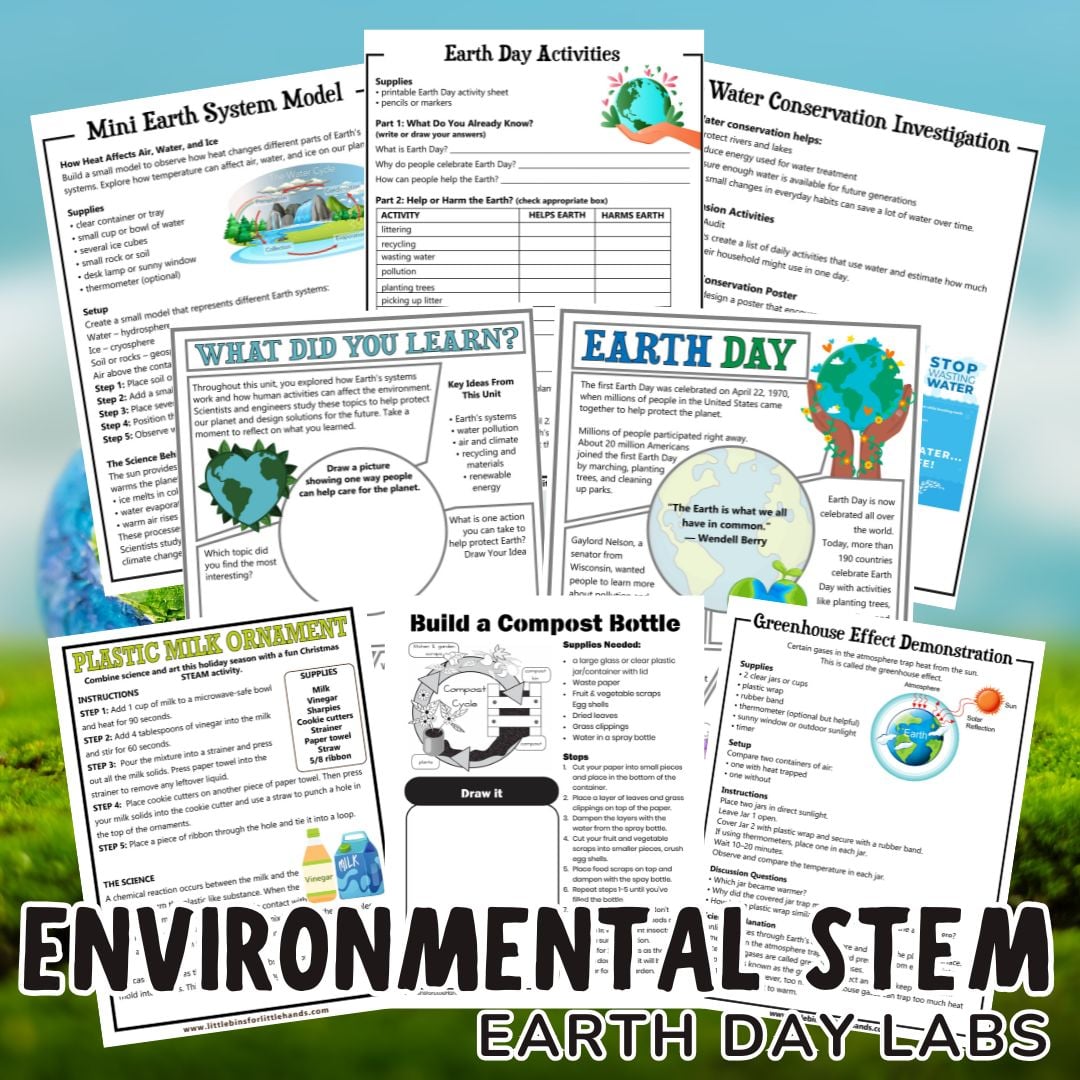
Want Everything Organized for You?
Planning Environmental or Earth Day lessons doesn’t have to mean jumping between 20 different tabs. Our Environmental STEM Printable Pack brings everything together in one ready-to-use resource, with vocab, NGSS questions, and quick-start tips.