
If you are like me, then you have a big container of recycled materials and cool items you can’t bear to get rid of! That’s pretty much all you need to make an Archimedes screw. This simple machine for kids is a fun engineering activity to try!
What is the Archimedes Screw Pump?
Archimedes’ screw, also known as a water screw, screw pump, or Egyptian screw, is one of the oldest machines used to move water from a lower area to a higher area. It works by rotating a screw-shaped surface inside a circular tube. As the screw turns, the material inside is forced up the tube in a process called displacement.
The Archimedes screw is named after the famous Greek mathematician, philosopher, engineer, and inventor. Even though Archimedes is often credited with inventing it, there’s evidence that the screw was used in Ancient Egypt before his time to move water for irrigation!
💡 The Archimedes screw is a fantastic example of a simple machine.
What Is The Purpose of the Archimedes Screw?
The purpose of the Archimedes screw is to make it easier to move water or other materials to a higher point without using buckets or heavy lifting. The screw was especially helpful in draining water from flooded areas or bringing water to fields for irrigation.
Even today, Archimedes screws are still used in wastewater treatment plants, for moving grains in farming, and even in some hydropower plants. It’s amazing how this ancient invention is still useful today!
Let’s Make An Archimedes Screw!
This project is perfect for grades 3-5. Students in these grades are starting to learn about simple machines and basic engineering concepts. This Archimedes screw uses cardboard and a water bottle to create a simple machine to move cereal!
Supplies:
- Circles template (see below)
- Water bottle
- Scissors
- Card stock
- Paper
- Tape
- Cereal or beans (to lift)
Instructions:
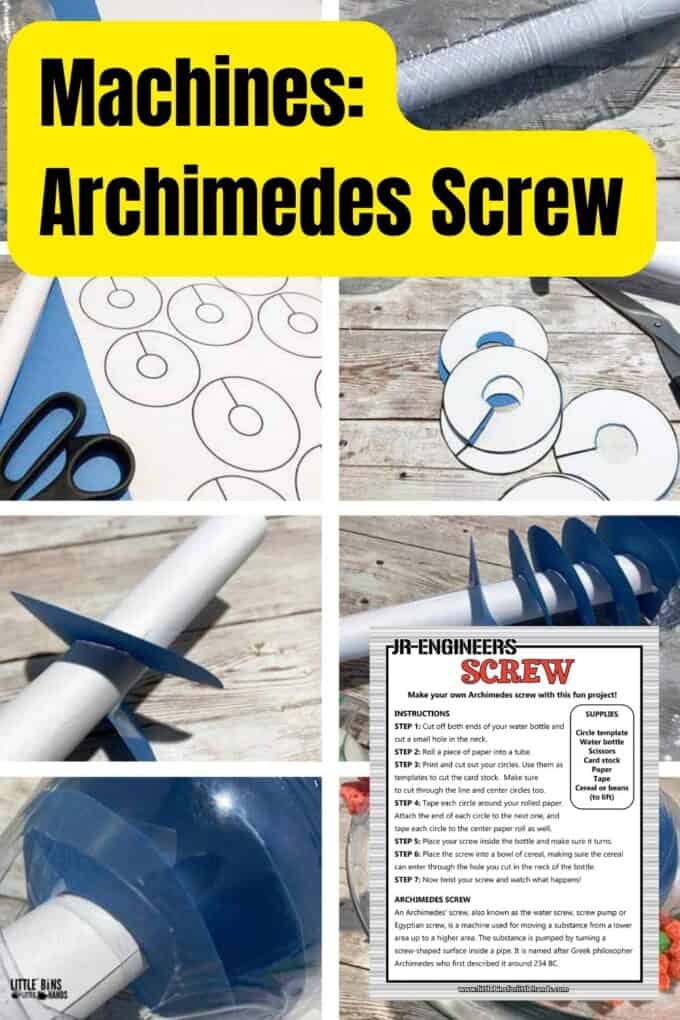
STEP 1: Cut off both ends of the water bottle to have an open cylinder. Then, cut a small hole near the neck of the bottle—this is where the cereal will enter.
STEP 2: Roll a piece of paper into a tight tube. This will be the center shaft of your screw.
STEP 3: Print and cut out circle templates, or trace and cut your own circles from card stock. These circles will form the screw shape.
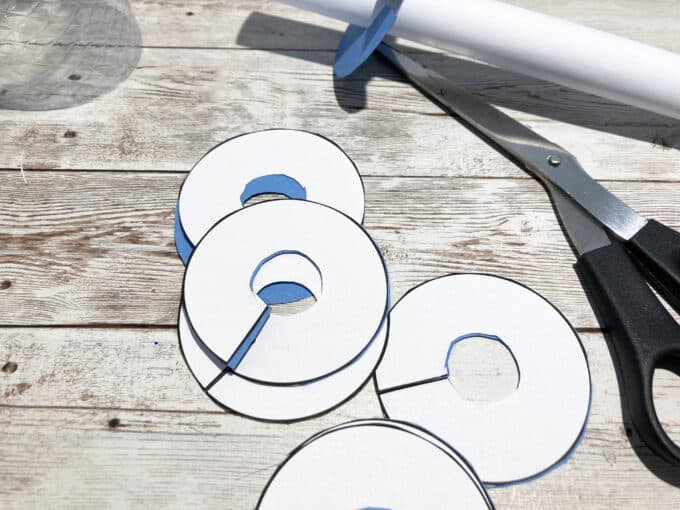
STEP 4: Cut a slit from the edge to the center of each circle, then tape them one by one around the paper tube. Attach the end of each circle to the next one, creating a spiral.
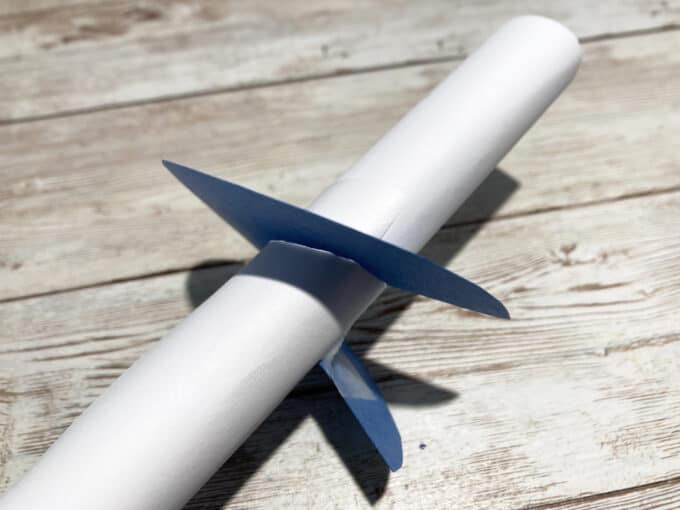
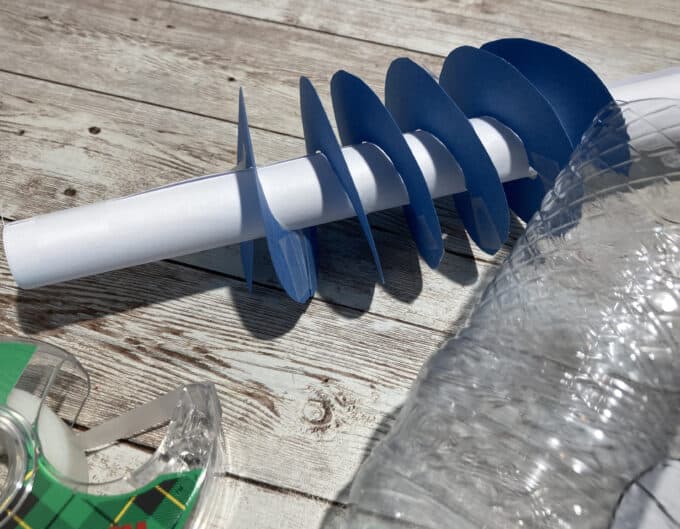
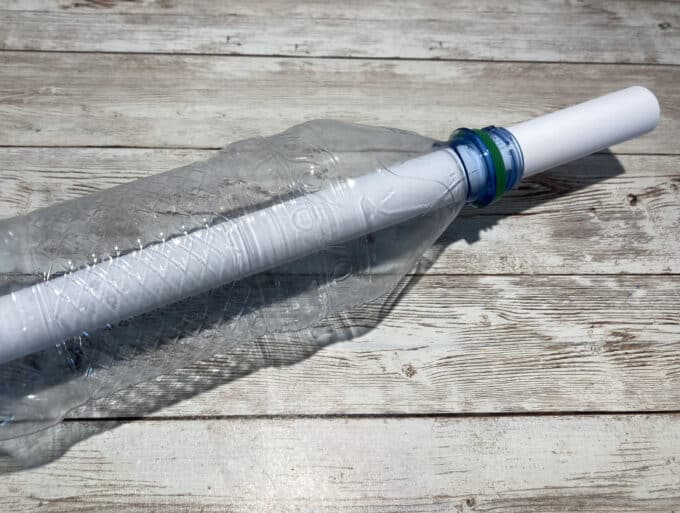
STEP 5: Place your screw inside the water bottle and make sure it can turn freely. If it doesn’t fit, adjust the size of the circles.
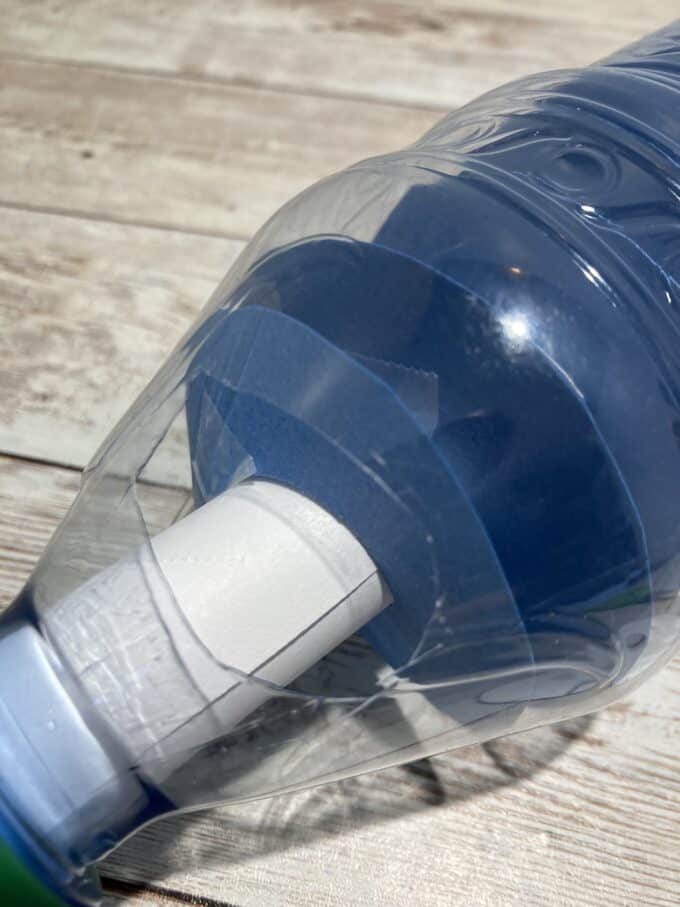
STEP 6: Place the end of the tube into a bowl of cereal. Make sure the cereal can fall through the hole you cut in the neck of the bottle.
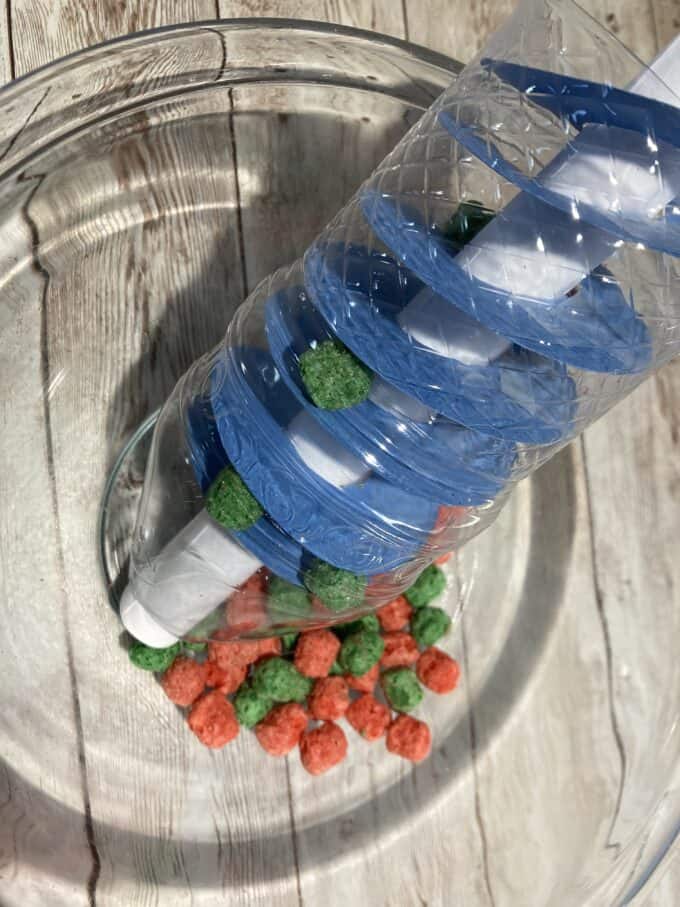
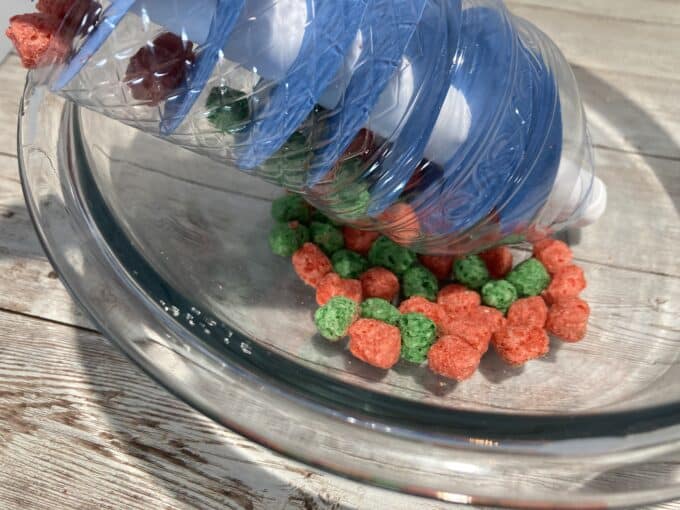
STEP 7: Twist the screw and watch what happens! The rotation of the device helps the cereal slowly move up the spiral and out the top of the bottle!
How Does the Archimedes Screw Work?
This fun activity is an example of a simple machine. The Archimedes screw uses a spiral or screw to move things (fluids and solids) from one level to another by turning. When the screw turns, the material inside (in this case, cereal) is displaced and pushed upward.
The design of the screw is based on the inclined plane, another type of simple machine. The spiral acts like a long ramp, making it easier to move materials upwards with less effort. The Archimedes screw provides a mechanical advantage by allowing us to lift materials without using a lot of energy.
How Do Angle and Diameter Affect the Archimedes Screw?
When designing an Archimedes screw, the angle of the screw and the diameter of the tube or pipe play key roles in how well it works.
The Angle of the Screw:
The angle, or the steepness of the screw’s spiral, affects how fast or efficiently the material (like water or cereal) moves up the screw. A steeper angle (tighter spiral) means the screw has to turn more times to lift the material, but it might move the material more slowly. On the other hand, a flatter angle (looser spiral) allows the screw to move the material faster but might require more effort to turn.
Make it a STEM Challenge
In the DIY version, the angle is determined by how tightly or loosely the circles are placed along the center tube. If you want to experiment, you can adjust the spacing between the circles to change the angle and see how that affects the movement of the material!
The Diameter of the Tube:
The diameter (or width) of the pipe or bottle also makes a big difference. A larger diameter tube can hold more material inside it, allowing you to move more material with each turn of the screw. However, a larger diameter also means you need a bigger screw, which might require more effort to turn.
Make it a STEM Challenge
In your DIY project, the diameter of the water bottle will determine how much cereal or beans can be moved at once. You could try different sizes of bottles or tubes to see how changing the diameter affects how much cereal you can lift with each turn of the screw.
More Simple Machine Projects To Make
If you want some more hands-on simple machine projects you can engineer try some of these ideas:
- Build a Hand Crank Winch
- Make a Water Wheel
- Homemade Pulley Machine
- Popsicle Stick Catapult
- Simple Paper Cup Pulley Machine
- Simple Machine Worksheets
Printable Engineering Projects Pack
Get started with STEM and engineering projects today with this fantastic resource that includes all the information you need to complete more than 80+ activities that encourage STEM skills!