
What if you could lift heavy objects with just a flick? Let’s investigate pulleys, a simple machine helping humans for centuries! You can build a simple pulley system with a few easy supplies to bring physics to life in the classroom or at home.
What is a Pulley?
A pulley is a basic mechanical device (simple machine) that uses a wheel with a groove and a flexible rope, string, or cable. The rope loops over the wheel to help lift or move loads. Depending on the setup, pulleys can:
- Reduce the force needed to lift a load.
- Change the direction of force to make lifting more comfortable.
The object being lifted is called the load, and the force applied to the pulley system is the effort. By combining multiple pulleys, called a compound pulley, we can create a mechanical advantage, allowing us to lift heavier loads with a smaller force over a longer distance.
Did you know? The earliest evidence of pulleys dates back to Ancient Egypt, where they were likely used to build the pyramids. Today, pulleys are essential in cranes, flagpoles, clotheslines, and even window blinds.
Recommended Grade Level: Suitable for grades 2–5 and offers hands-on experience with the science of simple machines.
💡 Explore all of our STEM and Engineering Activities [here].
Supplies Needed:
- Thread spool
- String or flexible rope
- Cardboard
- Scissors
- Cup
- Marbles or other small objects
- Wire (for suspension)
How to Make a Pulley System:
Prepare the Cup:
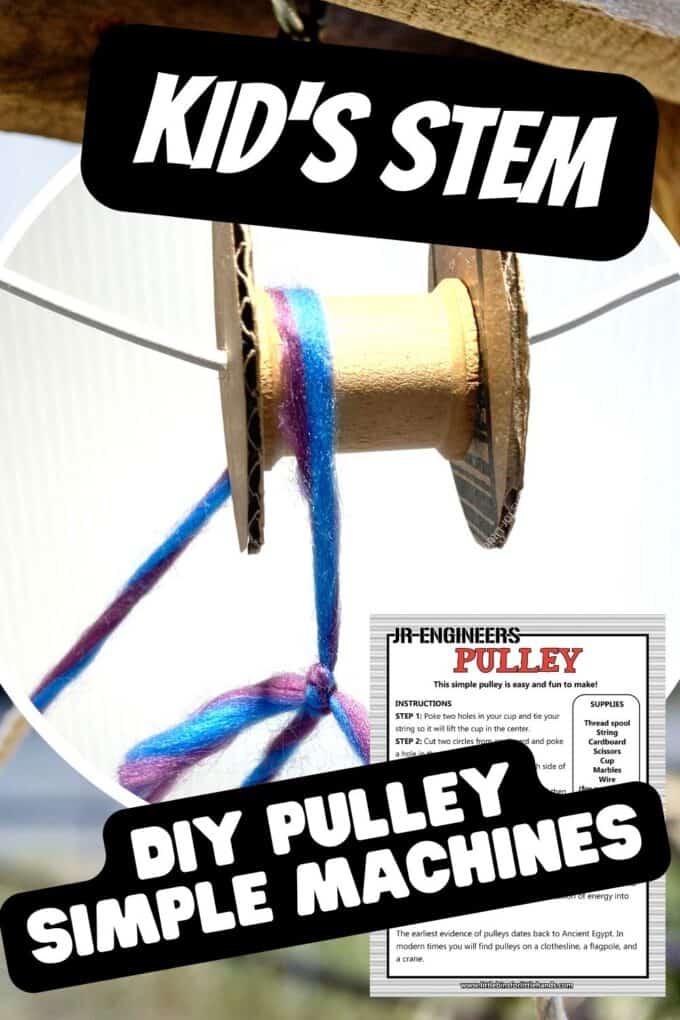
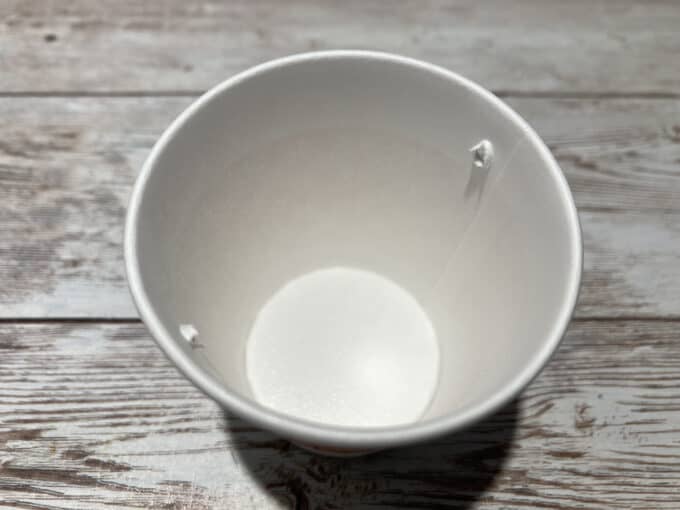
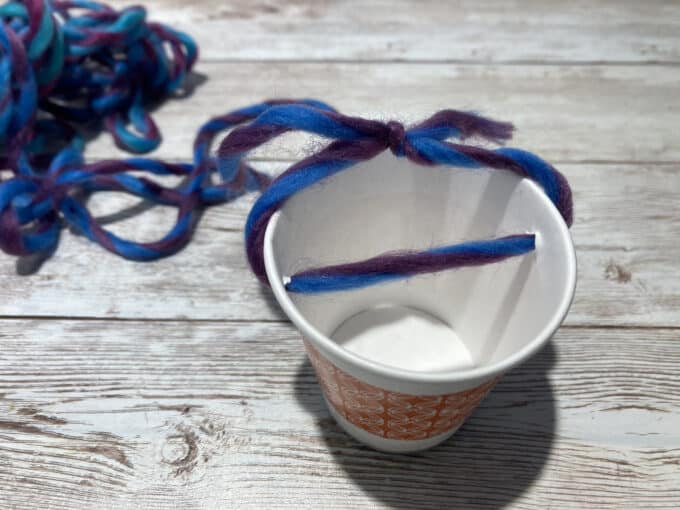
Poke two holes in the sides of your cup. Thread the string through the holes and tie it securely to form a handle.
Create the Pulley Wheel:
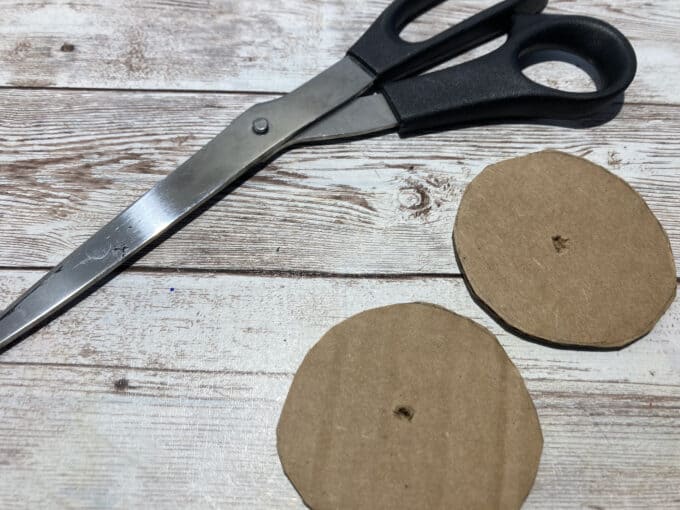
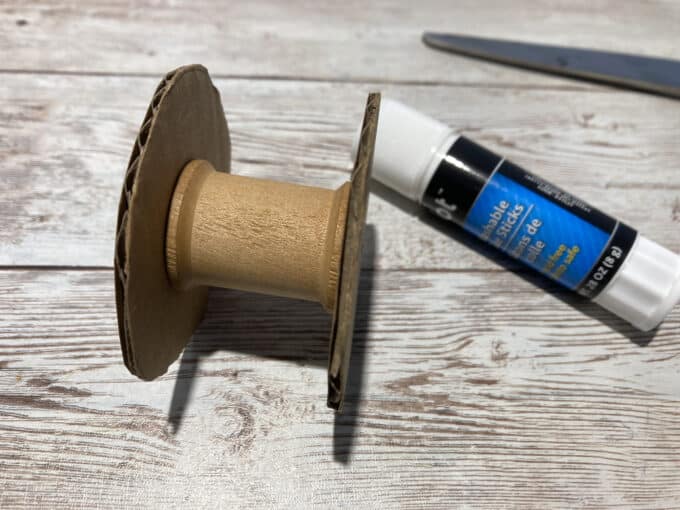
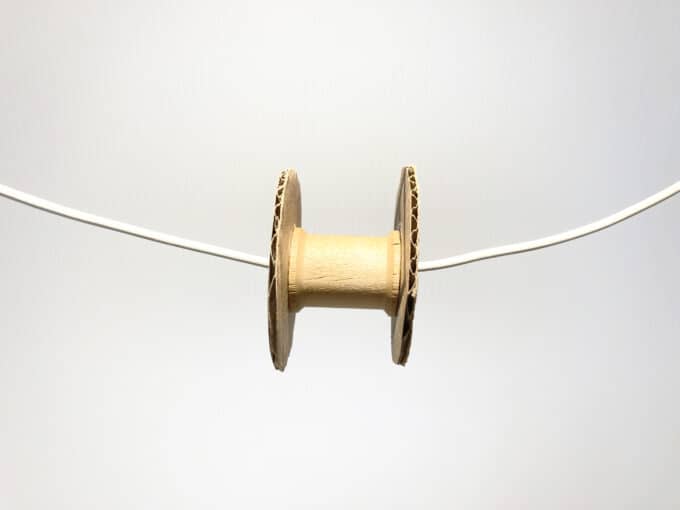
Cut two identical circles from the cardboard. Poke a hole in the center of each circle and glue them onto either side of the thread spool to form a wheel with rims.
Assemble the Pulley System:
Thread the spool through a wire to act as the axle. Suspend the wire between two sturdy points, like chair backs or door handles.
Test the Pulley:
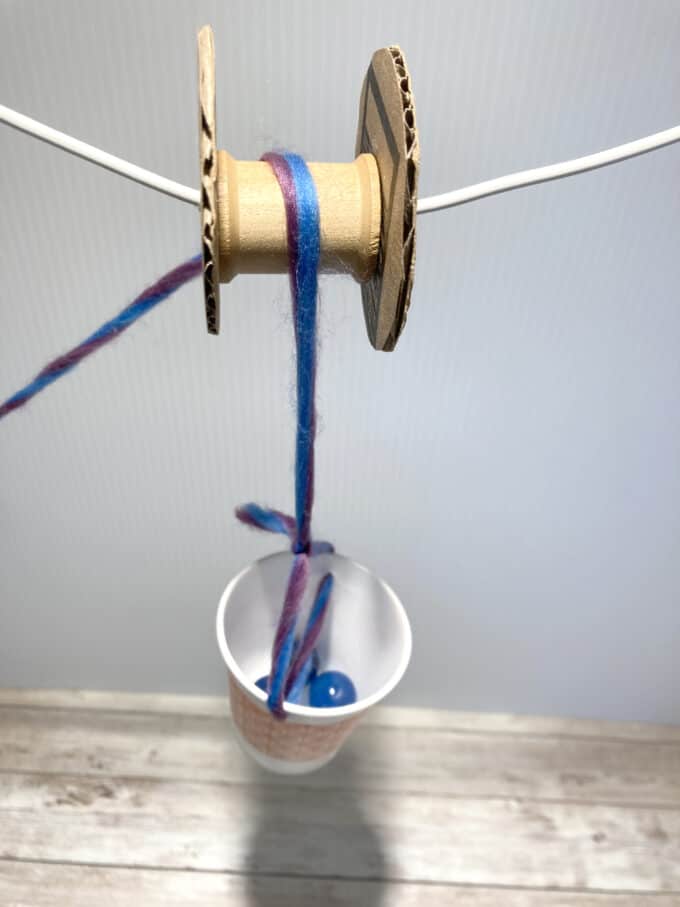
Place marbles or small objects into the cup. Pull the string over the thread spool to lift the cup. Watch how easily it moves!
Pulley Science Information:
How They Work: Pulleys rely on kinetic energy and the transfer of force. By redirecting force, they reduce the strain on our muscles.
Types of Pulleys:
Real-World Applications:
- Construction cranes lift heavy beams.
- Clotheslines and window blinds make everyday tasks easier.
- Elevators use pulley systems to move between floors.
💡Learn more about potential and kinetic energy [here] and force and motion [here].
Engineering Connection:
Engineers use pulleys to solve real-world challenges, like designing construction cranes or theaters with stage rigging systems. When designing pulley systems, they consider factors like the ratio of input force to output force, the type of rope or cable used, and the durability of the materials.
Challenge your students to think like engineers:
- How can you modify the pulley to lift heavier loads?
- What happens when you use more spools or larger wheels?
Extension Activities:
Pulley Systems Exploration: Experiment with adding more spools to create a compound pulley system. Measure the force needed to lift the load with each setup.
Design a Toy Elevator: Use a shoebox and pulleys to create an elevator for small toys or stuffed animals.
Build a Flagpole: Create a working flagpole using dowels and a simple pulley.
Investigate Mechanical Advantage: Use a spring scale to measure the effort force needed for different pulley setups.
More Simple Machine Activities
Simple machines make our lives easier by changing the amount or direction of the force needed to perform a task. They include the pulley, lever, wedge, screw, inclined plane, and wheel and axle. These tools, used by humans since ancient times, are the foundation of modern engineering and physics! Pulleys are most fascinating because they can make heavy lifting feel effortless.
- Wheel and Axle Fun: Construct a toy car using spools and cardboard wheels.
- Lever Experiment: Create a seesaw to explore fulcrums and mechanical advantage.
- Inclined Plane Test: Build a ramp to investigate how slopes make lifting easier.
- Screw in Action: Make an Archimedes screw to move water or small objects.
- Wedge Investigation: Test wedges by splitting objects or holding items in place.
💡Learn more about simple machines here with a free printable.
Printable Simple Machines Pack
Check out all our simple machine projects here or explore the projects below…
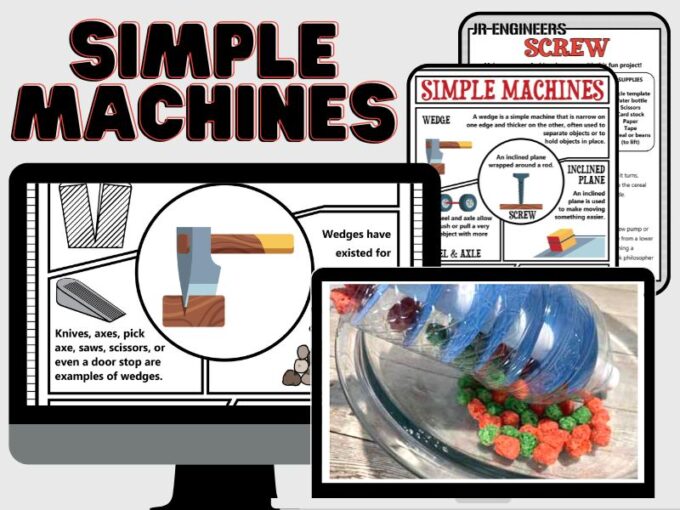
Explore, through hands-on activities, the six simple machines, including the wheel and axle, lever, screw, incline plane, pulley, and wedge, with easy-to-digest information and a totally do-able project!
What’s Included:
- 6 simple machines projects: One for each machine including the wheel/axle, lever, wedge, screw, pulley, and inclined plane
- Instructions, pictures, and templates (if applicable) for each project
- Informational sheet on each simple machine with easy-to-digest information that is perfect for kids to read.
- A quick video to watch illustrating the different machines.
- Fun extras are perfect for early finishers, quiet time, or to send home to extend the learning.