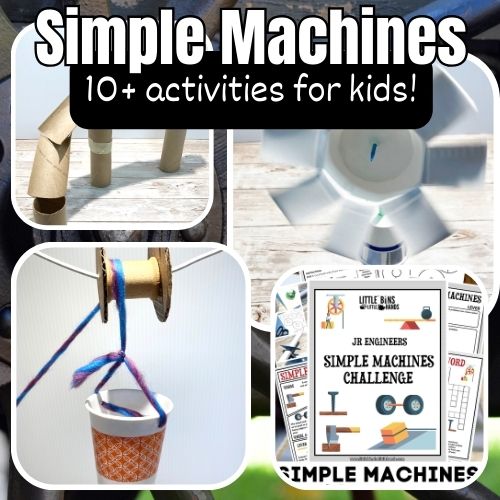

Water wheels are simple machines that use the energy of flowing water to turn a wheel. The turning wheel could then power other machines to do work. Make this super simple water wheel from paper cups and a straw at home or in the classroom. We love fun, hands-on STEM projects for kids!
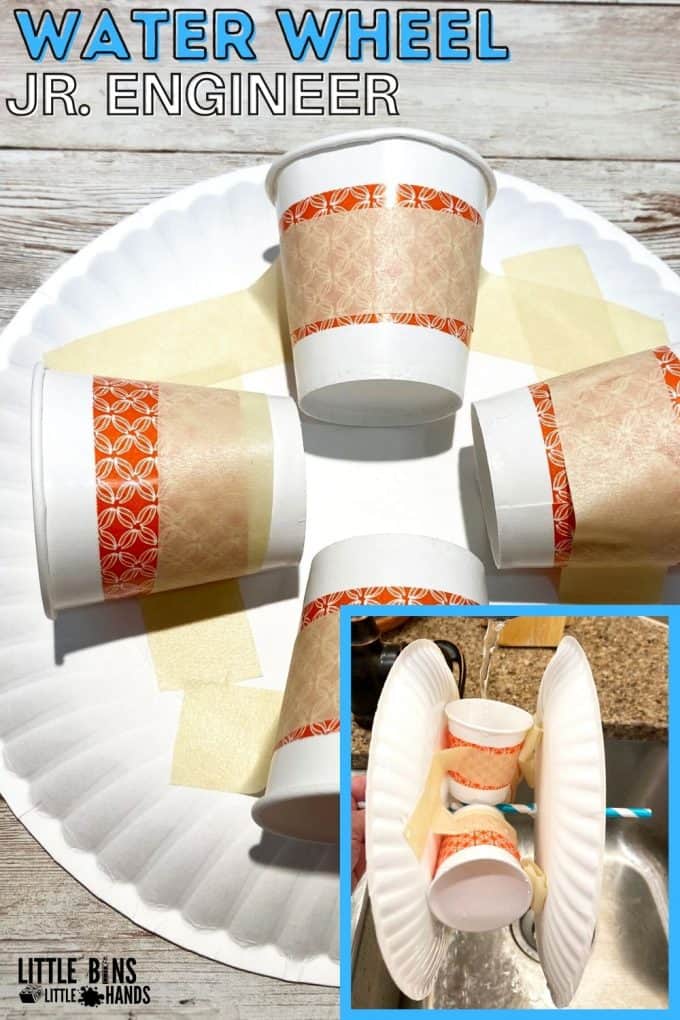
DIY Water Wheel Project for Kids
Make your own water wheel from cups and paper plates that works! Below are step-by-step instructions for this mechanical engineering project. Of course, your kids can always brainstorm an alternative model and see how that works instead.
🔎 ALSO CHECK OUT: Engineering Activities for Kids
Recomended Grade Level: 2nd-6th Grade
Science Concepts Covered
- Energy Transfer (Physics) – Learn how moving water creates energy to spin a wheel.
- Simple Machines (Engineering) – Discover how a wheel and axle work together.
- Hydropower & Renewable Energy (Environmental Science) – Explore how water can be used as a clean energy source.
- Forces & Motion (Physics) – Test how water applies force to move the wheel.
- Scientific Inquiry & Experimentation – Experiment with different wheel designs and blade shapes.
Supplies:
- 2 Paper plates
- Straw
- Tape
- Small paper cups
- (Printable Instructions in the STEM Club)
How to Make a Water Wheel
STEP 1: Poke a hole in the center of both paper plates, the size of your straw.
STEP 2: Tape four paper cups to the back of a paper plate.
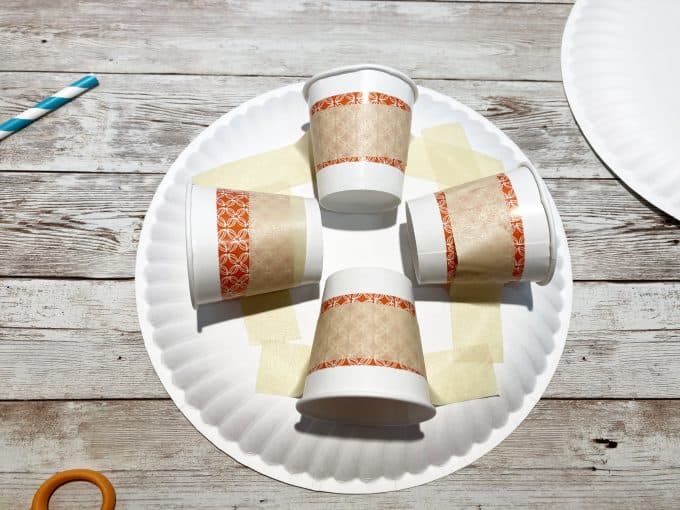
STEP 3: Tape the second plate to the other side of your paper cups. Then thread the straw through the holes you have made in the plates.
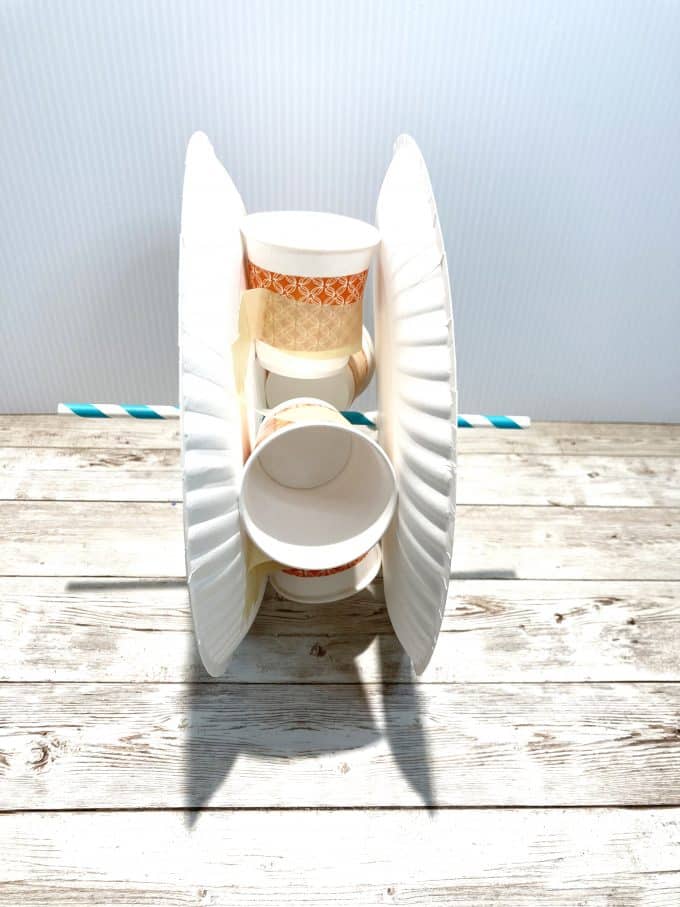
STEP 4: Check to make sure your cups can spin on the straw.
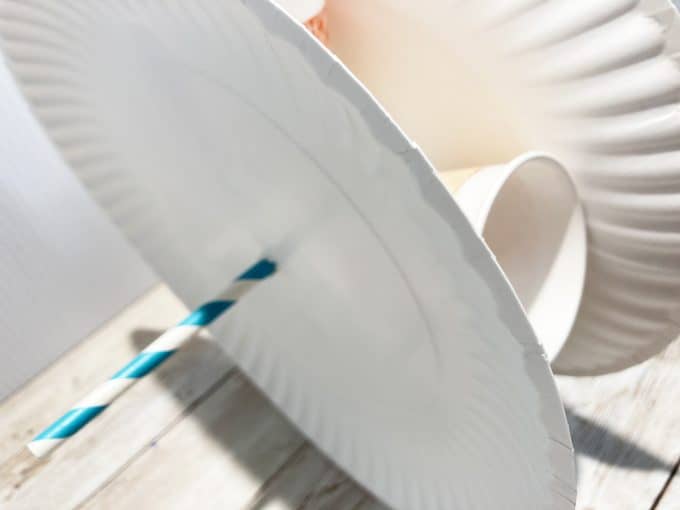
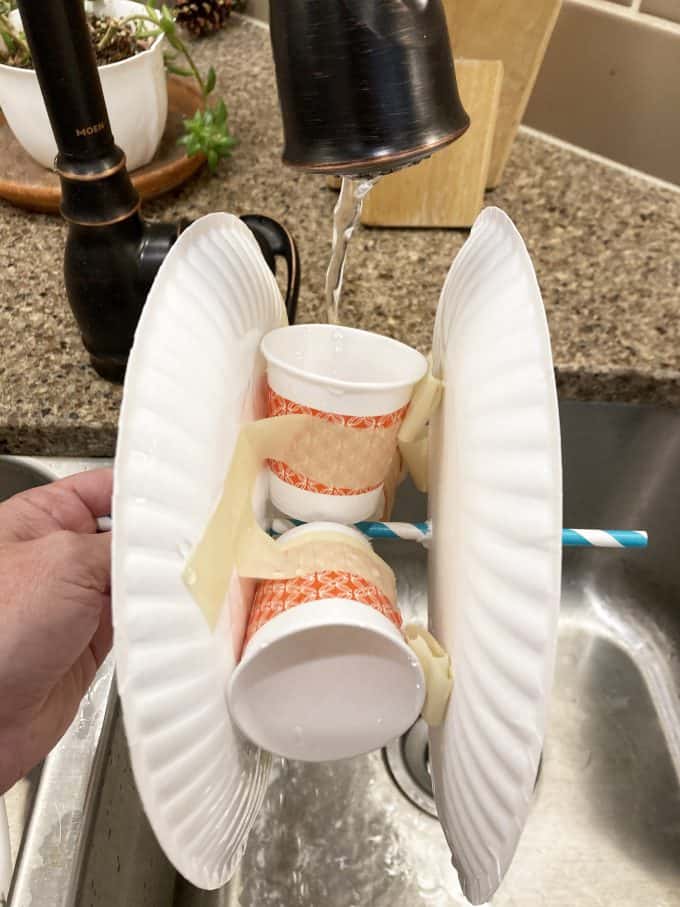
STEP 5: Hold your water wheel straw firmly under a slow stream of water in your sink and watch the action!
How Does a Water Wheel Work?
A water wheel is a simple machine that uses the power of moving water to spin a wheel. As the wheel turns, it transfers energy to an axle, which can power other machines to do work. Water wheels are usually made of wood or metal and have blades or buckets around the edge to catch the water.
In the Middle Ages, water wheels were an essential source of energy. People used them to grind grain into flour, crush rocks, and even power early machines. Today, the same idea is used in hydropower plants to create electricity. Water wheels are a clean and renewable way to generate energy, making them great for the environment!
Click here to get your free printable engineering challenges!
More Engineering Activities for Kids
STEM Concepts Covered