
Have you ever wondered how bridges stay strong, airplanes fly, or computers work? Engineers are the people behind these fantastic creations! Engineers are problem-solvers who use math, science, and creativity to design and build things that improve our world.
What Does an Engineer Do?
What is an engineer? An engineer’s job is to solve problems. They ask questions like, “How can we build a safer bridge?” or “How can we make cars use less fuel?”
Engineers use their mathematics, physics, chemistry, and biology knowledge to create solutions. They also work with scientists, architects, and other experts to design projects and test their ideas.
Whether building a robot or designing a navigation system, engineers combine curiosity and expertise to determine how things work and improve them.
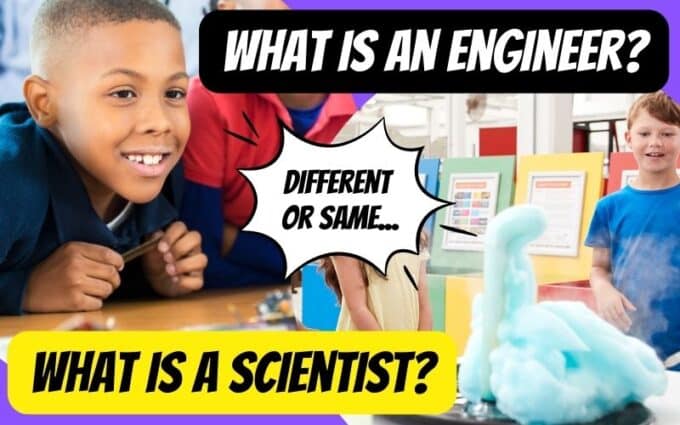
Engineers vs. Scientists: What’s the Difference?
Both engineers and scientists play essential roles in understanding and improving the world, but their jobs are different. Here’s how they compare:
- Scientists focus on discovering new knowledge about how the world works. They ask questions like “Why does this happen?” and “What are the laws of nature?” Scientists conduct experiments to test theories and make discoveries about the natural world.
- On the other hand, engineers use the knowledge scientists discovered to solve real-world problems. They ask, “How can we use this knowledge to create something useful?” Engineers design and build bridges, spacecraft, and electronic devices to improve our lives.
Key Differences:
- Goal: Scientists seek to understand, while engineers aim to apply knowledge.
- Focus: Scientists explore the “why,” and engineers focus on the “how.”
- Work: Scientists conduct experiments and make observations; engineers design solutions and create practical applications.
Even though their roles differ, scientists and engineers often work together. For example, a scientist might discover a new material, and an engineer could use it to design better machinery or renewable energy systems.
💡 Read more: What is a Scientist?
Different Types of Engineers
Engineers work in many different areas, called engineering fields, and each has its own focus. Let’s explore what engineers do and how they make a difference.
- Civil Engineers: They design and build bridges, tunnels, highways, and dams to create safe and efficient infrastructure projects.
- Mechanical Engineers: These engineers work with machinery and moving parts, creating everything from robotics to vehicles.
- Electrical Engineers: They design systems for electric power, electronic devices, and even renewable energy sources.
- Chemical Engineers: These engineers use chemicals to create products like medicines, fuel, and food. They also work on environmental issues.
- Aerospace Engineers: They design aircraft, spacecraft, and satellites, helping us explore the skies and outer space.
- Biomedical Engineers: They combine engineering with medicine to create tools like artificial limbs and imaging devices.
- Environmental Engineers: These engineers focus on environmental sustainability and work to solve problems like pollution and clean water access.
💡Check out our list of engineering activities organized by field.
How Do Engineers Learn Their Skills?
Becoming an engineer requires a lot of learning! Engineers usually start by earning a bachelor’s degree in an engineering field, like mechanical engineering or computer engineering. Some continue their education with a master’s degree or other advanced degrees.
They study coursework in subjects like computer-aided design, simulation, and the application of science. Earning certifications, such as passing the Fundamentals of Engineering exam, is also important for becoming a professional engineer.
Why Are Engineers Important?
Engineers make life better for everyone. They:
- Solve big challenges like building renewable energy systems or improving power generation.
- Work on everyday projects like designing electronic devices and quality standards for products.
- Collaborate with stakeholders like governments and businesses to plan infrastructure projects.
How Can Kids Learn About Engineering?
Teachers and caregivers can bring engineering into the classroom or home with fun activities. Kids can:
- Build simple machines or test designs with LEGOs.
- Create robotics projects to learn how machines work.
- Experiment with chemicals and materials to see how things react.
- Explore topics like aerospace engineering by making paper rockets.
Encourage kids to follow their curiosity and explore their passions. Engineering is a profession for inventors, problem-solvers, and dreamers. Who knows? They might grow up to design the next big discovery!
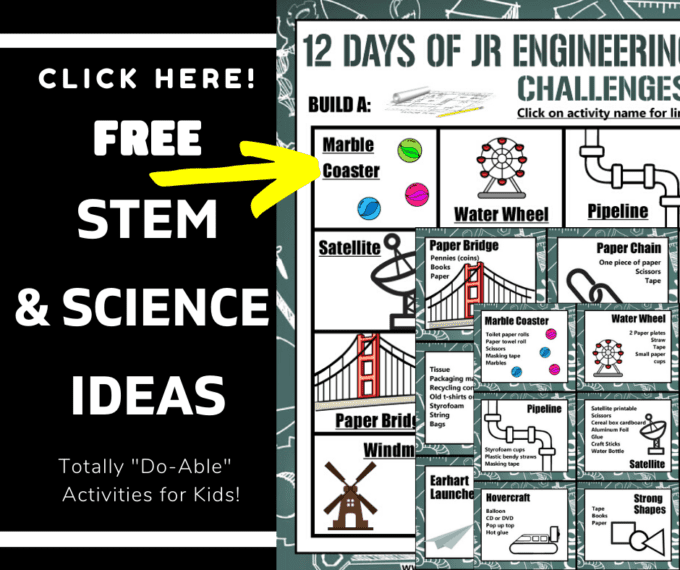
Grab this FREE Engineering Challenge Calendar today!
Helpful STEM Resources
Here are a few resources to help introduce STEM more effectively to your kids or students. You’ll find helpful free printables throughout.
- Engineering Design Process Explained
- What Is An Engineer?
- Engineering Words
- Real World STEM
- Build A Growth Mindset With STEM
- Questions for Reflection (get them talking about it!)
- BEST STEM Books for Kids
- 14 Engineering Books for Kids
- Jr. Engineer Challenge Calendar (Free)
- Must Have STEM Supplies List
- Join us in the Club