
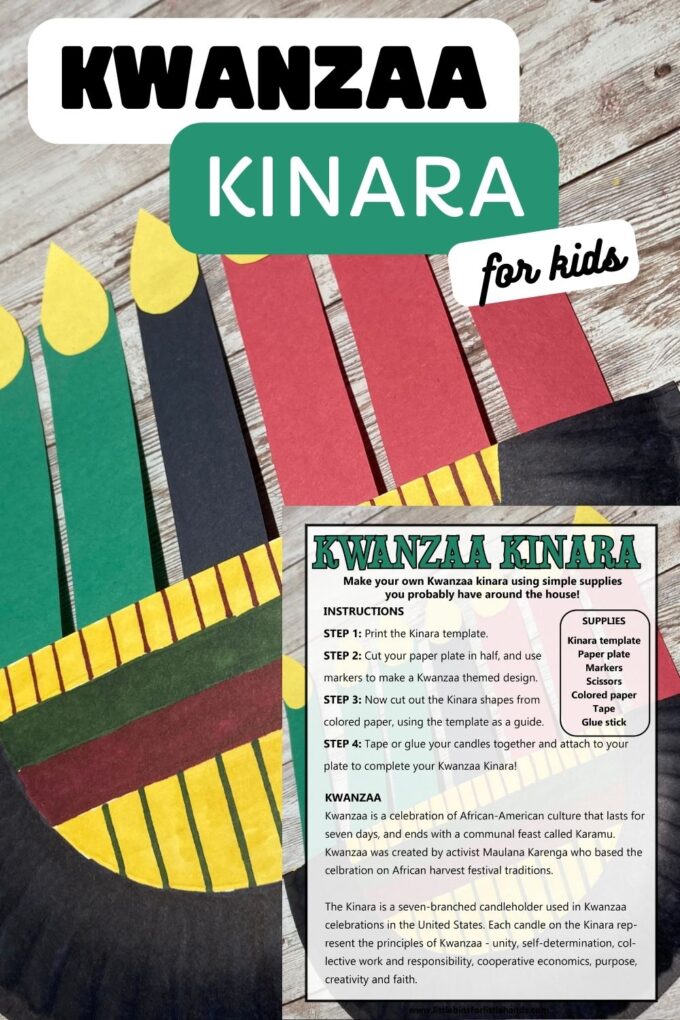
Make your own paper kinara to celebrate Kwanzaa! This Kwanzaa kinara craft is easy to make with our free candle printable below. Learn about holidays around the world and get the kids making their own holiday decorations at home or in the classroom.
What is Kwanzaa?
Kwanzaa: Celebrating African-American Culture and Heritage
Kwanzaa is a week-long African-American culture celebration from December 26 to January 1. The festivities culminate with a communal feast known as Karamu.
Created in 1966 by activist Maulana Karenga, Kwanzaa draws inspiration from African harvest festival traditions. This celebration offers a meaningful way for African Americans to honor their cultural heritage and deepen their connection to their roots.
The Kinara: A Symbol of Kwanzaa
Central to Kwanzaa is the Kinara, a seven-branched candle holder. “kinara” originates from the Swahili word for “candle holder.” The Kinara is the focal point of Kwanzaa displays, typically on a table adorned with harvest symbols.
Each day, a candle is lit to reflect one of Kwanzaa’s seven principles. The lighting begins with the black candle in the center, followed by the red candles on the left and finally, the green candles on the right.
- Black Candle: Represents the African people.
- Red Candles: Symbolize their struggles.
- Green Candles: Represent hope and the future born from those struggles.
The seven candles correspond to the principles of Kwanzaa: unity, self-determination, collective work and responsibility, cooperative economics, purpose, creativity, and faith.
Want to bring the celebration to life? Create your own Kinara craft with our printable instructions below!
💡 YOU MAY ALSO LIKE: Black History Month Activities for Kids
Kinara Craft
Lighting candles is also important in other holiday celebrations worldwide, like Diwali and Hanukkah.
SUPPLIES:
- Kinara template (see below)
- Paper plate
- Markers
- Scissors
- Colored paper
- Tape
- Glue stick
How to Make a Kinara
STEP 1: Print the Kinara template.
STEP 2: Cut your paper plate in half.
STEP 3: Use colored markers to make a Kwanzaa themed design on the paper plate.


STEP 4: Now cut out the Kinara candle shapes from colored paper, using the template as a guide. You will want 3 red candles, 1 black candle and 3 green candles.
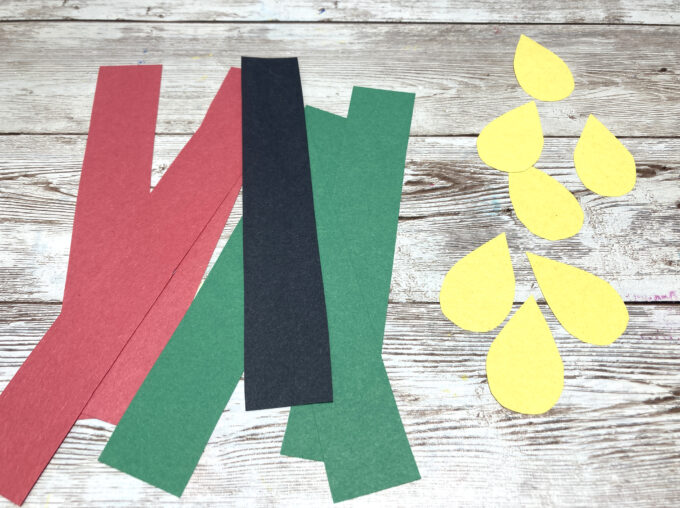
STEP 5: Tape your candles onto the back of the paper plate to complete your Kwanzaa Kinara!
Remember, the kinara gets put together with 3 red candles on the left, 1 black candle in the middle and 3 green candles on the right!

STEP 6. Glue the flames to the top of each candle to finish.


More Kwanzaa Activities for Kids
We have a growing list of various holiday activities for the season. Click on the links below to find more free printable Kwanzaa projects, too!
- Kwanzaa Color By Number
- Holidays Around the World Read and Color
- Basquiat Inspired Kwanzaa Craft
- Recreate our Alma Thomas Circle Art Project with traditional Kwanzaa colors
- Try a Basquiat Self Portrait
What is Kwanzaa?
Kwanzaa is a seven-day celebration of African-American culture that ends with a communal feast called Karamu.
Activist Maulana Karenga created Kwanzaa in 1966 based on the celebration of African harvest festival traditions. It runs from December 26 to January 1st of each year.
Kwanzaa is integral to the end of the year for many African Americans. It is a special time to celebrate African culture and connect to one’s roots.
💡 YOU MAY ALSO LIKE: Black History Month Activities For Kids
The Kinara is a seven-branched candle holder used in Kwanzaa celebrations in the United States. The word kinara is a Swahili word that means candle holder.
You will find the Kinara used as the centerpiece on a table decorated with Kwanzaa’s harvest symbols. Each day, a candle is lit, starting with the middle black candle and moving from the left red candle to the right green candle.
The black candle symbolizes the African people, the red candles their struggle, and the green candles the future and hope that comes from their struggle.
Each candle on the Kinara represents the principles of Kwanzaa – unity, self-determination, collective work and responsibility, cooperative economics, purpose, creativity, and faith.