
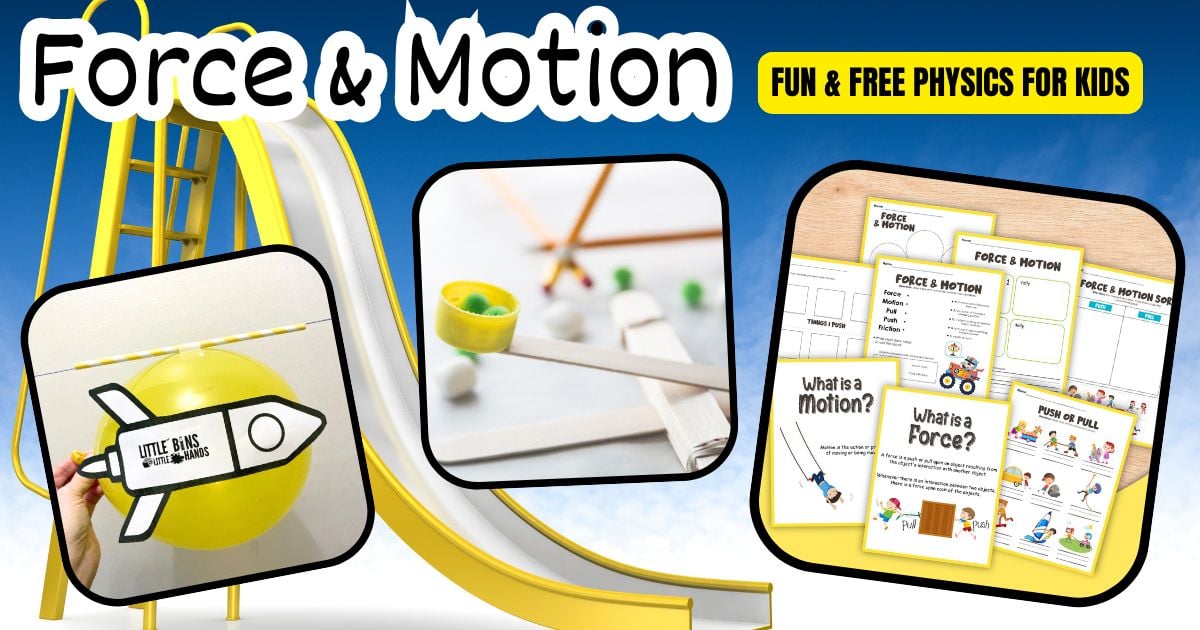
Explore force and motion with easy, hands-on activities and free worksheets for kids. Learn how things move through simple experiments, real-world examples, and print-and-go activities designed for kindergarten through early elementary.
What Is Force and Motion for Kids?
A force is a push or a pull on an object.
Motion is when an object moves from one place to another.
Forces can make objects:
- Start moving
- Stop moving
- Move faster or slower
- Change direction
Examples kids understand:
- Pushing a swing makes it move
- Pulling a wagon brings it closer
- Rolling a ball shows motion
- Sliding down a slide shows gravity in action
Force and motion are happening all around us every day!
Free Force and Motion Worksheets
Introduce and reinforce key concepts with these printable worksheets:
- What is a Force Poster
- What is Motion Poster
- Push or Pull Worksheet
- Force & Motion Matching Worksheet
- Force & Motion Sorting Activity
- Ramp Experiment Worksheet
- Things I Push and Pull Activity
- All the Ways I Have Motion Worksheet
👉 Grab your Free Force and Motion Worksheets Pack here:
Force and Motion Experiments (Grades K-6)
Explore even more ways to investigate motion and forces:
- Balloon Rocket (air and thrust)
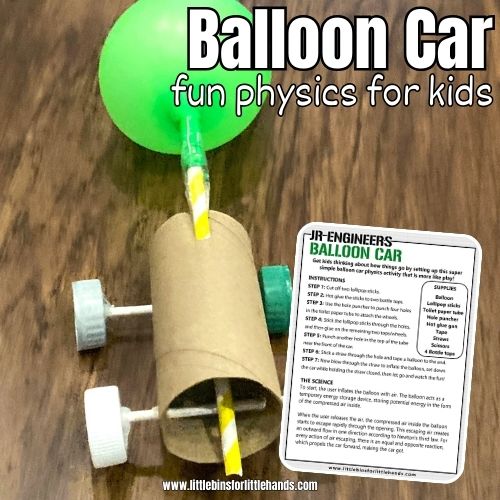
- Balloon Car (force and movement)
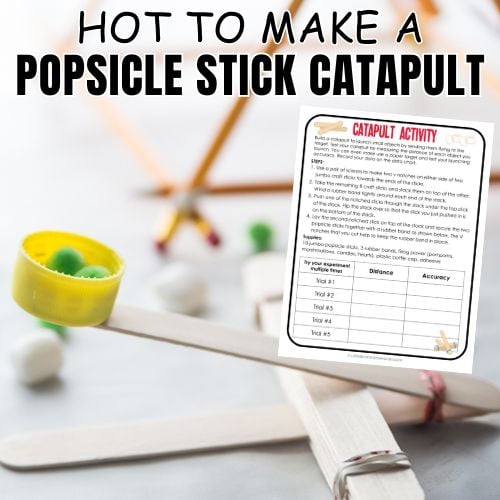
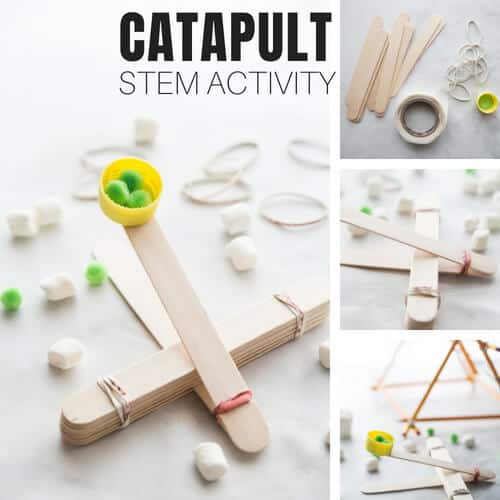
- Popsicle Stick Catapult (energy and motion)
- Paper Airplane Challenge (lift and aerodynamics)
- Pom Pom Shooter (force and distance)
- Domino Chain Reaction (energy transfer)
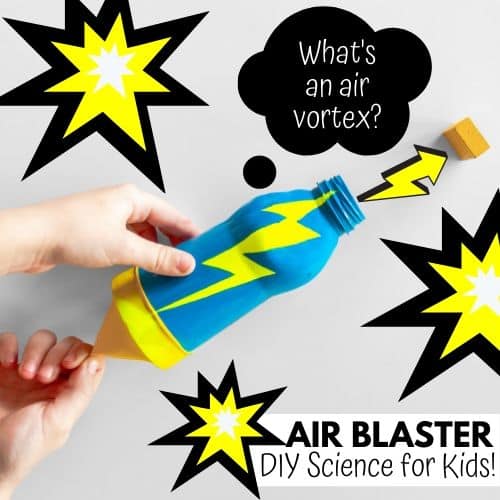
- Air Cannon (air pressure and motion)
- LEGO Zipline (motion and gravity
- LEGO Car and Ramp Challenge (force and motion)
👉 These activities help kids see how different forces affect motion in different ways.
More Hands-On Force and Motion Activities (PreK-2)
Try these simple and engaging activities to bring physics to life!
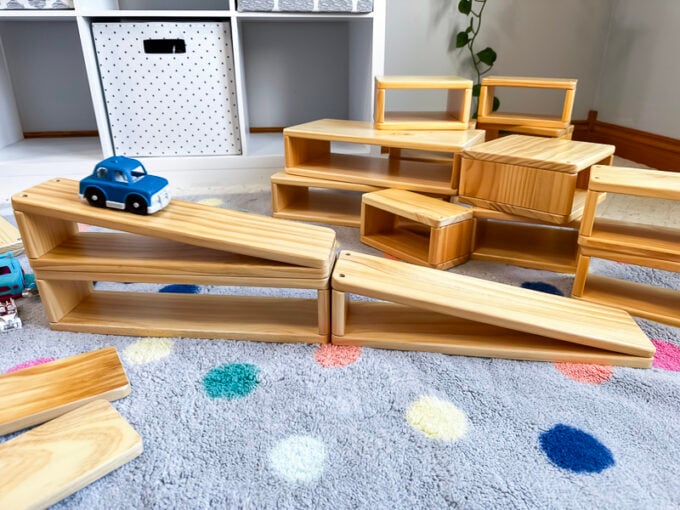
Push and Pull Ramp Experiment
Build a simple ramp and explore how pushes and pulls affect motion. Test how the strength of a push or the height of the ramp changes how fast a car moves.
👉 This helps kids see how stronger forces and steeper ramps increase motion.
👉 Try it here: Push and Pull Ramp Experiment (Free Printable)
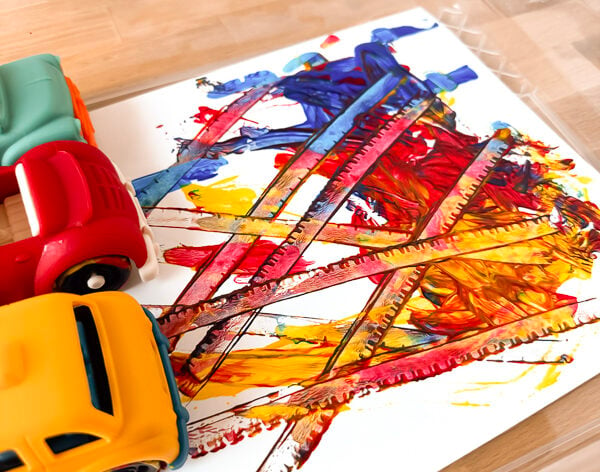
Car Ramp Painting Activity (STEAM)
Turn your ramp into a creative art activity! Add washable paint to toy car wheels and roll them down a ramp to create colorful tracks.
👉 This shows how motion creates patterns and how speed affects the design.
Friction Experiment with Toy Cars
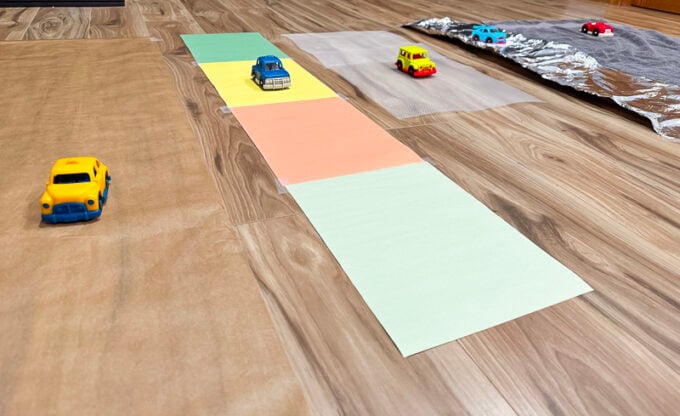
Test how different surfaces affect motion using toy cars.
Try:
- Foil (smooth surface)
- Towel or carpet (rough surface)
👉 This introduces friction, a force that slows objects down.
👉 Learn more: Toy Car Friction Experiment here
Force and Motion STEM Challenge (K-4)
Move an Object Without Touching It STEM Challenge. Challenge kids to move an object using tools, air, or ramps—without using their hands!
👉 This builds problem-solving skills and shows how forces can be applied in different ways.
👉 Try it here: Move an Object STEM Challenge Instructions
Types of Forces for Kids
There are different types of forces that affect motion:
- Push – moves something away (pushing a cart)
- Pull – brings something closer (pulling a rope)
- Friction – slows things down when surfaces rub together (like a toy car slowing on carpet)
- Gravity – pulls objects toward the Earth (why things fall down)
Key Force and Motion Vocabulary
Help kids build science vocabulary with these important terms:
- Force – a push or pull
- Motion – movement
- Speed – how fast something moves
- Friction – a force that slows motion
- Gravity – a force that pulls objects down
- Ramp (Inclined Plane) – a simple machine that helps move objects
How to Teach Force and Motion to Kids
Make learning effective and engaging with these simple strategies:
- Start with real-life examples kids recognize
- Use hands-on activities instead of worksheets alone
- Ask open-ended questions like “What changed?” or “What do you notice?”
- Repeat concepts through play and experimentation
- Encourage kids to test their own ideas
👉 The goal is exploration—not just memorizing definitions!
Examples of Force and Motion in Everyday Life
Help kids connect science to their world with real-life examples:
At the playground:
- Pushing a swing
- Sliding down a slide
- Climbing and jumping
In sports:
- Kicking a soccer ball
- Throwing a baseball
- Hitting a ball with a bat
At home:
- Opening and closing doors
- Pushing a shopping cart
- Pulling a drawer
👉 Ask: Is this a push or a pull? What made it move?
Books About Force and Motion for Kids
- Forces: Physical Science for Kids by Andi Diehn
- Forces Make Things Move by Kimberly Brubaker Bradley
- Motion: Push and Pull, Fast and Slow by Darlene R. Stille
- Isaac Newton and the Laws of Motion by Andrea Gianopoulos
Build a Full Physics Unit
Want to expand this topic into a full unit?
Start with:
- Force and motion (this page) to introduce pushes, pulls, and movement
- Newton’s Laws of Motion to understand how forces affect objects
- Simple machines (ramps, levers, pulleys) to see how forces make work easier
- Energy (potential and kinetic energy) to explore how motion is created and changed
- Things That Go – a clever way to explore forces with DIY self-propelled vehicles
💡 These topics work together to build a strong foundation in early physics and help kids connect how and why things move
Force and Motion FAQ
What is force and motion in simple terms?
Force is a push or pull, and motion is movement. Forces cause objects to move, stop, or change direction.
What is an example of force and motion?
Pushing a swing, pulling a wagon, or kicking a ball are all examples of force causing motion.
How do you teach force and motion to kindergarten?
Use simple language, real-life examples, and hands-on activities like ramps and toy cars. Let kids observe and experiment.
What are the types of forces for kids?
The main types are push, pull, friction, and gravity.
Why is force and motion important?
It helps kids understand how the world works and connects to real-life experiences and early engineering concepts.
Conclusion
Force and motion are all around us! With simple materials and engaging activities, kids can explore how things move and why. Try these experiments and worksheets to make physics fun, hands-on, and memorable.
Explore More Science Topics
Build on what you’re learning with these related science topics:
- 👉 Force and Motion Engineering Activities
- 👉 Physics activities for kids
- 👉 Energy experiments and activities for kids
- 👉 Newtons Laws experiments
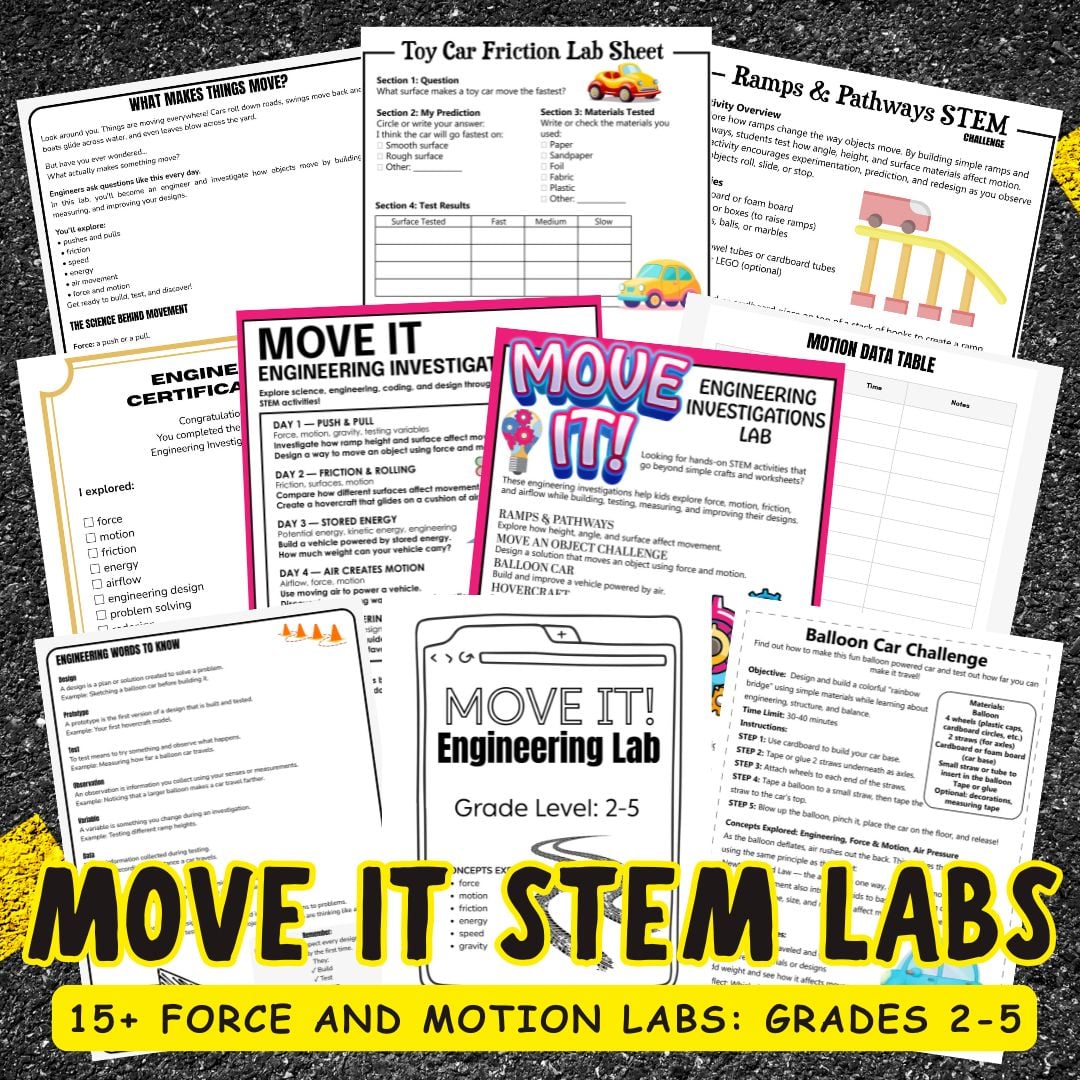
Move It! Engineering Investigations Lab
Help kids explore force, motion, friction, airflow, and energy through hands-on engineering challenges that encourage them to build, test, measure, and improve designs.
✔ Engineering investigations that go beyond worksheets
✔ 5-day STEM plan included
✔ Engineering notebook and planning pages
✔ Build, test, redesign, and improve challenges
✔ Grades 2–5
👉 Get the Complete Lab