

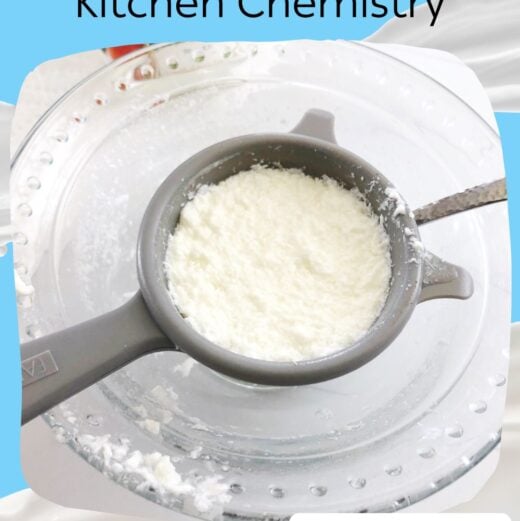
Did you know you can turn milk into a plastic-like material using just one simple kitchen ingredient? This plastic milk experiment combines milk and vinegar to create a natural polymer that can be molded, shaped, and hardened.
Kids will love watching the milk transform as they explore chemistry, polymers, and materials science through hands-on learning. It’s an easy kitchen chemistry activity that demonstrates how scientists can create new materials from everyday ingredients.
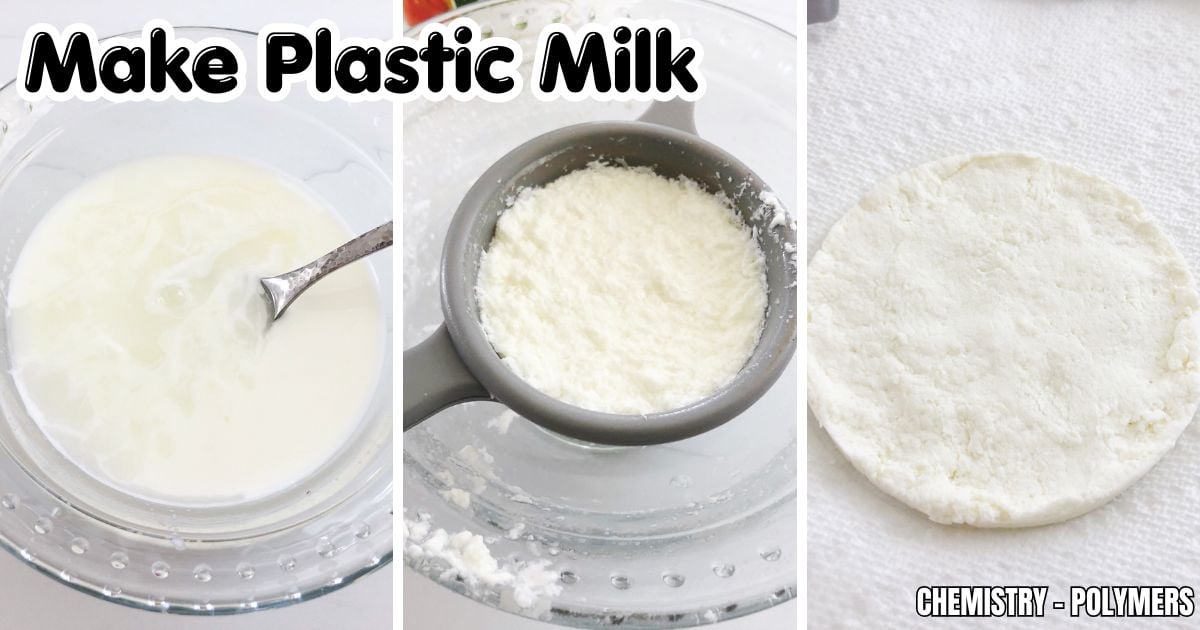
Milk and Vinegar Experiment
Field of Science: Chemistry
Grade Level: 1st–6th Grade
Concepts Explored: Chemical reactions, polymers, acids and bases, casein protein
When you mix warm milk and vinegar, a chemical reaction causes the milk protein (casein) to separate and form curds. These curds can be molded into shapes and will harden over time—just like plastic! This activity explores the science of polymers and how they can form from everyday ingredients.
👉 Explore more types of polymers for kids here
Materials:
- 1 cup milk
- 4 tablespoons white vinegar
- Sharpies
- Cookie cutters
- Strainer
- spoons
- Paper towels
How to Make Plastic Milk: Plastic Milk Demonstration
Watch the Video!
STEP 1: Add 1 cup of milk to a microwave-safe bowl and heat for 90 seconds.
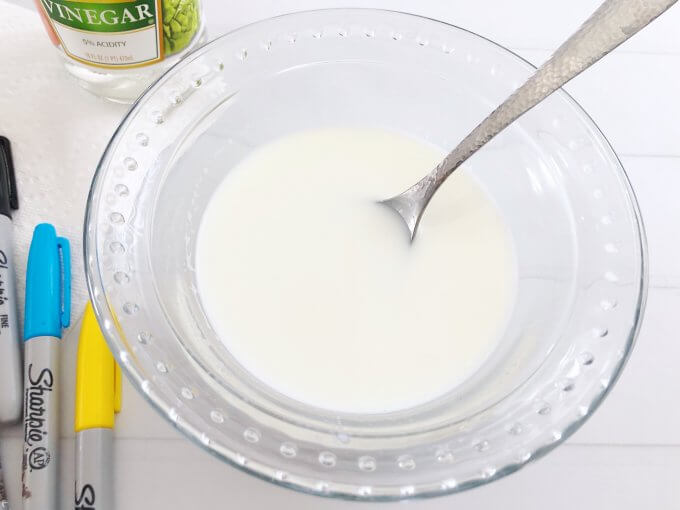
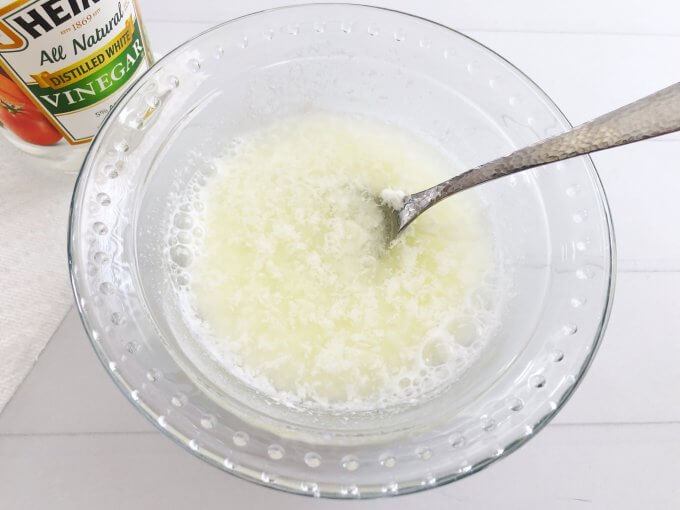
STEP 2: Mix in 4 tablespoons of vinegar and stir for 60 seconds.
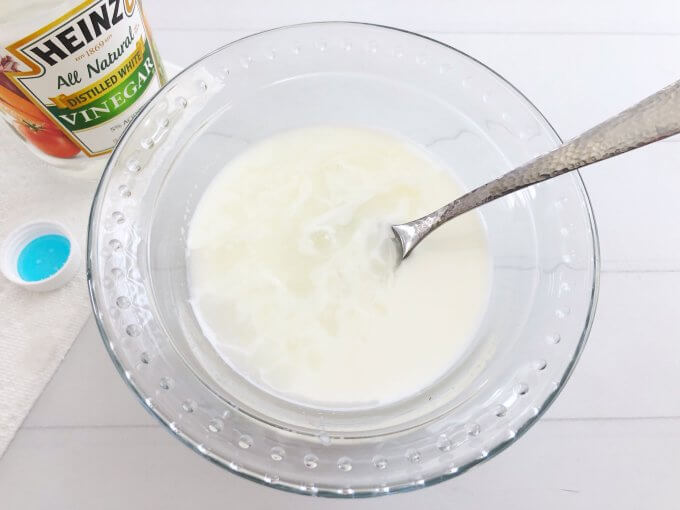
🔎 Stirring slowly, you’ll notice solid chunks called curds forming and separating from the liquid called whey.
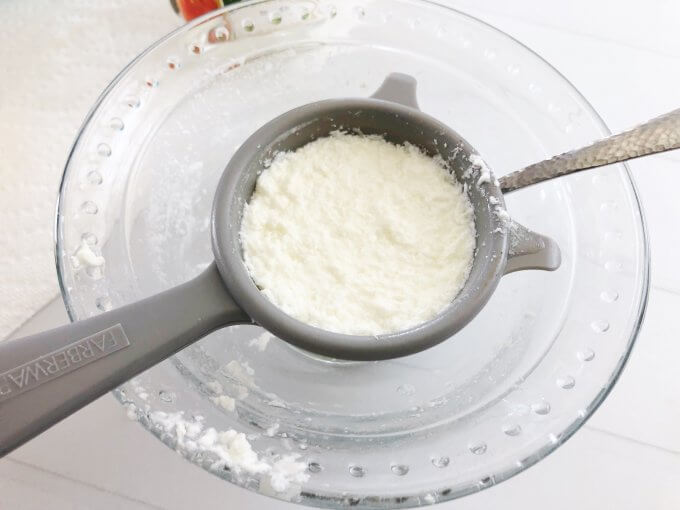
STEP 3: Pour the mixture into a strainer and press out all the liquid leaving just the solid clumps or curds behind. This will resemble the consistency of ricotta cheese!
STEP 4: Press the paper towel into the strainer to soak up any of the leftover liquid or whey and remove it.
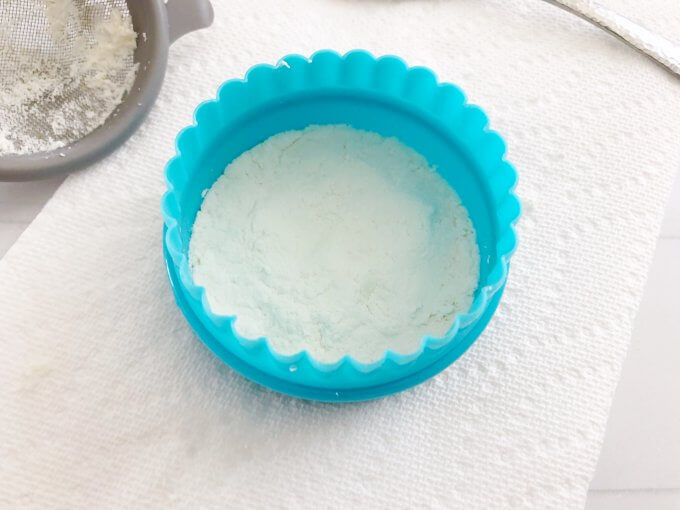
STEP 5: Lay out a piece of paper towel, place a cookie cutter onto the paper towel, and press your vinegar-milk mixture or plastic dough into the cookie cutter and let set for 48 hours.
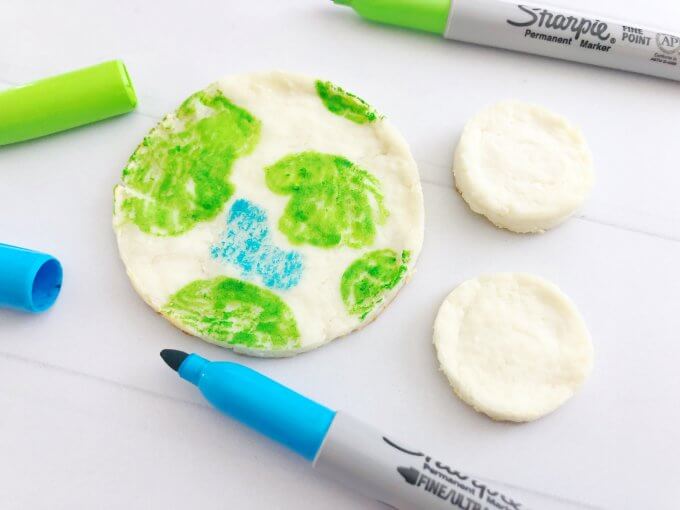
STEP 6: Wait the 48 hours and color with a Sharpie if desired!

Milk and Vinegar Chemical Reaction
Milk may seem like a simple liquid, but it contains proteins, fats, sugars, vitamins, and minerals. One of the most important proteins in milk is called casein.
When you add vinegar to warm milk, the acid in the vinegar changes the structure of the casein protein. The protein molecules can no longer remain evenly dispersed in the liquid, so they separate from the milk and clump together. These solid clumps are called curds, while the remaining liquid is called whey.
As the casein proteins join together, they form long chains called polymers. A polymer is a material made of many smaller repeating units linked together. Plastic, rubber, DNA, and even some proteins are polymers.
The casein polymer created in this experiment can be molded while it is wet. As it dries, the water evaporates, and the material hardens into a plastic-like substance called casein plastic.
Casein plastic is not a modern plastic made from petroleum. It is a natural bioplastic made from milk protein. Before synthetic plastics became common, casein plastic was used to make buttons, jewelry, beads, knitting needles, and decorative items.
This experiment demonstrates both a chemical reaction and the formation of a polymer material. The milk changes into a completely new substance with different properties, making this an excellent introduction to polymer chemistry and materials science.
👉 Learn how to make bioplastic with kids here
💡 Plastic milk is one example of a bioplastic—a material made from natural substances instead of fossil fuels. Scientists continue to study plant-based and biodegradable plastics as alternatives to traditional plastics.
Plastic Milk Investigation Challenge
Scientists often test how changing one ingredient affects the final material. Use this activity as a simple polymer investigation.
Try changing one variable at a time:
- Does whole milk produce a stronger plastic than skim milk?
- What happens when you use more vinegar?
- Can lemon juice replace vinegar?
- Which shape dries the strongest after 48 hours?
- Does thickness affect drying time?
Record:
- Your hypothesis
- Materials used
- Observations during the reaction
- The final texture and strength of the plastic
- What you would test next
💡 Looking for a ready-to-use investigation sheet? Grab the free Kitchen Chemistry Guide and Investigation Planner to turn everyday ingredients into real science experiments.
Plastic Milk FAQ
What happens when you mix milk and vinegar? The acid in the vinegar causes the casein protein in the milk to separate from the liquid and form solid clumps called curds. These proteins join together to create a plastic-like material called casein plastic.
Is plastic milk a chemical reaction? Yes. The vinegar changes the structure of the milk proteins, causing them to separate and form a new material with different properties.
What is casein plastic? Casein plastic is a natural plastic made from milk protein. Before synthetic plastics became common, casein plastic was used to make buttons, beads, jewelry, and other household items.
Why does vinegar make milk curdle? Vinegar contains acetic acid, which changes the pH of the milk. This causes the casein proteins to clump together and separate from the liquid.
Is plastic milk a polymer? Yes. The casein proteins join together to form long molecular chains called polymers. This makes plastic milk a great introduction to polymer science.
Can you make plastic milk with different types of milk? Yes. Whole milk, 2%, and skim milk will all work, although the amount of plastic produced may vary slightly because of differences in fat content.
Can you use lemon juice instead of vinegar? Yes. Lemon juice contains citric acid, which can also cause the casein proteins in milk to separate and form plastic.
How long does plastic milk take to harden? Most plastic milk creations begin to harden within 24 hours and continue drying for several days depending on their size and thickness.
More Polymer Science Activities
Explore more ways polymers can stretch, bounce, bend, and change shape.
👉 Want to explore all kinds of reactions, polymers, mixtures, and kitchen science? Visit our Chemistry Experiments for Kids Hub.

Explore More Kitchen Chemistry
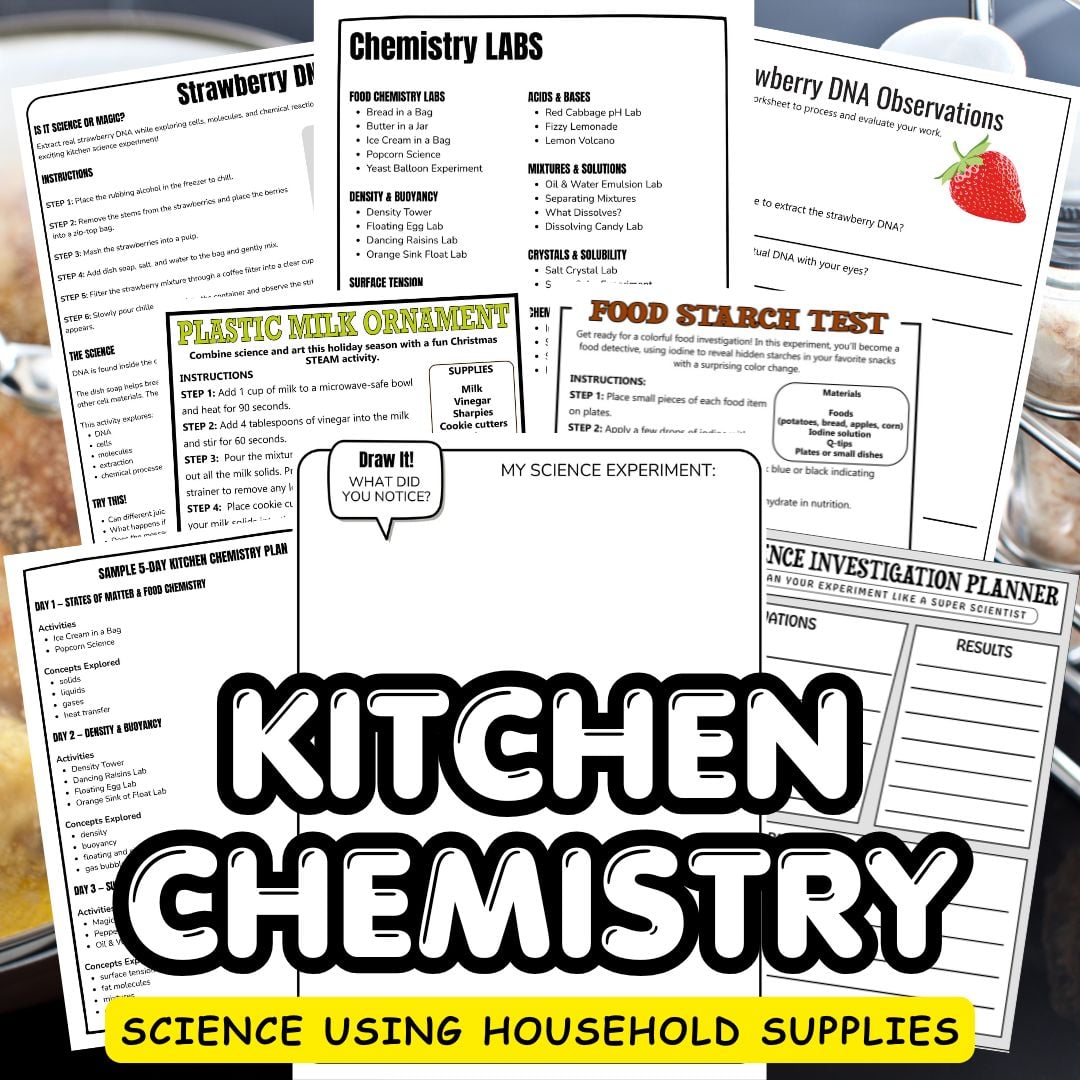
Continue the fun with our Kitchen Chemistry Pack featuring printable experiments, reusable investigation pages, science explanations, and easy hands-on activities using everyday kitchen supplies.
Perfect for home or classroom science with activities focused on:
reactions, mixtures, crystals, surface tension, polymers, and color-changing chemistry.

One Comment
Comments are closed.