
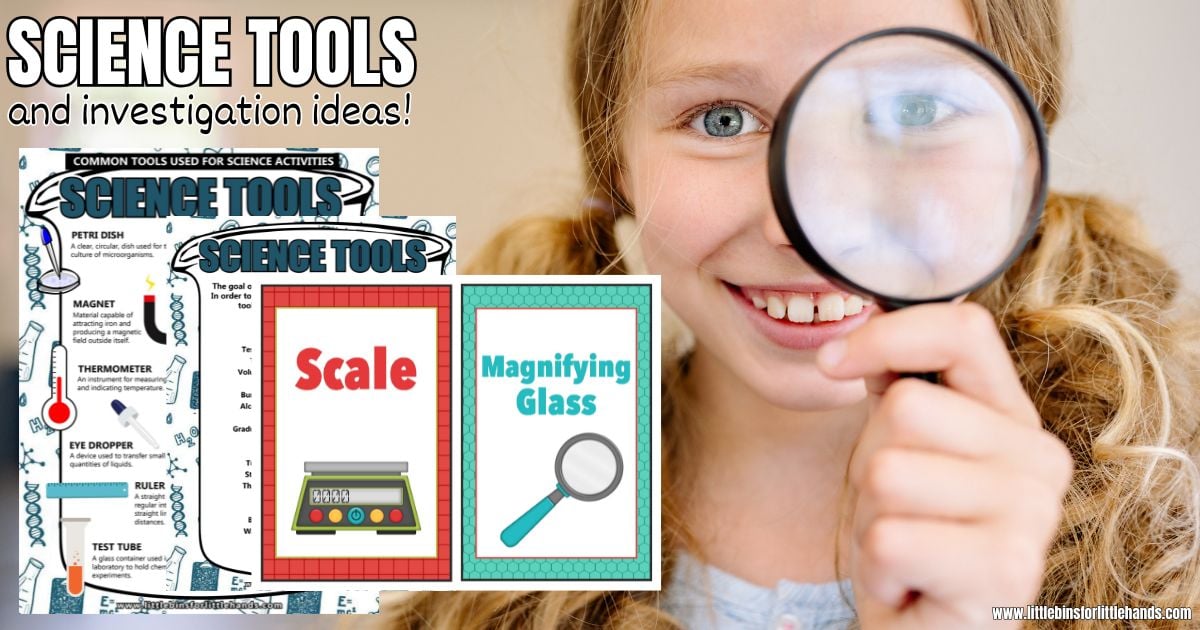
What science tools do scientists use? From observing tiny details with a magnifying glass to measuring temperature with a thermometer, science tools help us investigate, collect evidence, and answer questions about the world around us.
The best part is that young scientists don’t need a laboratory full of expensive equipment to get started. Many common science tools are inexpensive, easy to use, and perfect for hands-on investigations at home or in the classroom.
Before jumping into experiments, learn how scientists observe, measure, compare, and record information. These foundational skills will help students become more confident investigators throughout the year.
Start Here
New to science? Build a strong foundation with these resources before moving on to hands-on investigations.
- Observation Activities
- Scientific Method for Kids
- September Science Planner
What Kids Learn
By exploring common science tools, students learn how to:
- Observe carefully using their senses and simple equipment.
- Measure and compare objects.
- Collect and record data.
- Choose the right tool for an investigation.
- Support ideas with observations and evidence.
- Think and work like scientists.
Why Do Scientists Use Science Tools?
Scientists don’t simply guess—they observe, measure, compare, and collect evidence.
Different science tools help answer different kinds of questions. A thermometer measures temperature, a ruler measures length, and a hand lens reveals tiny details we can’t easily see with our eyes.
💡 Choosing the right tool allows scientists to gather accurate information and make better observations.
Try This! Science Tools Investigation
Question of the Day: Which science tool is best for each job?
Scientists use different tools to make careful observations, collect data, and answer questions. Set up a few simple science stations and let students rotate through each one. Encourage them to observe, compare, measure, and record what they discover.
- 🔍 Hand Lens: Observe a leaf, shell, feather, rock, or piece of fabric. What tiny details can you see that you couldn’t see before?
- 📏 Ruler: Measure classroom objects such as a feather, leaf, pencil, or crayon. Which object is the longest? Which is the shortest?
- ⚖️ Balance: Compare the mass of two classroom objects. Which object has more mass?
- 💧 Dropper: Transfer water between two containers.
- 🌡️ Thermometer: Compare temperatures indoors and outdoors or in different classroom locations. Which location is warmer? Which is cooler?
Think Like a Scientist
Discuss your observations after visiting each station.
- Which tool helped you make the most detailed observations?
- Which tool helped you collect measurements?
- Which tool would you use to answer a new science question?
Every science tool has a different purpose. Scientists choose the tool that helps them collect the best evidence.
Common Science Tools for Kids
Observation Tools
- Hand Lens (Magnifying Glass)
Observe insects, leaves, rocks, feathers, shells, and other small objects up close. - Microscope
Explore objects too small to see with the naked eye, including plant cells and tiny organisms. ⭐️ Our Microscope Activities for Kids guide includes printable microscope worksheets, observation pages, and simple investigations. - Binoculars
Observe birds, clouds, wildlife, and distant objects outdoors. - Petri Dish
Hold small specimens for close observation.
Measuring Tools
- Ruler
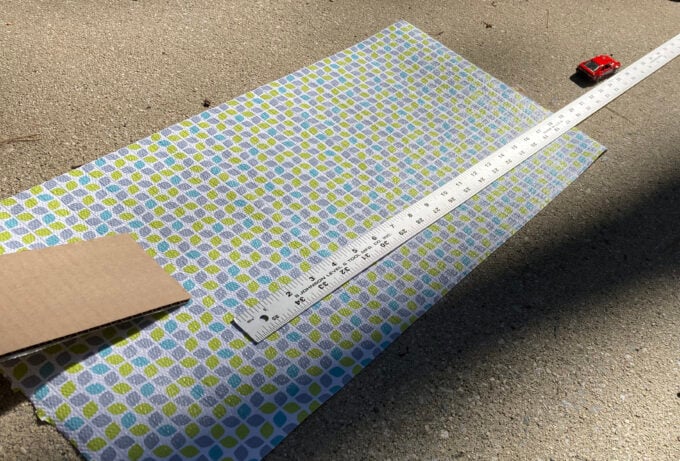
Measure and compare the length of objects. Try this ⭐️ measurement scavenger hunt! - Thermometer
Measure temperature during weather investigations, seasonal observations, and ice experiments. - Balance or Scale
Compare the mass of classroom objects. - Stopwatch
Measure how long an investigation takes.
Mixing & Transfer Tools
- Dropper
Transfer small amounts of liquid with precision. - Test Tubes
Hold and mix small amounts of liquids during investigations. - Beaker
Mix, pour, and observe liquids safely.
Safety Tools
- Safety Goggles: Protect your eyes during hands-on science investigations.
Which Science Tool Should I Use?
| If you want to… | Use this tool |
|---|---|
| Observe tiny details | Hand lens |
| Measure length | Ruler |
| Measure temperature | Thermometer |
| Compare mass | Balance |
| Transfer liquids | Dropper |
| Observe microscopic objects | Microscope |
| Time an investigation | Stopwatch |
| Observe distant objects | Binoculars |
Build a Simple Science Kit
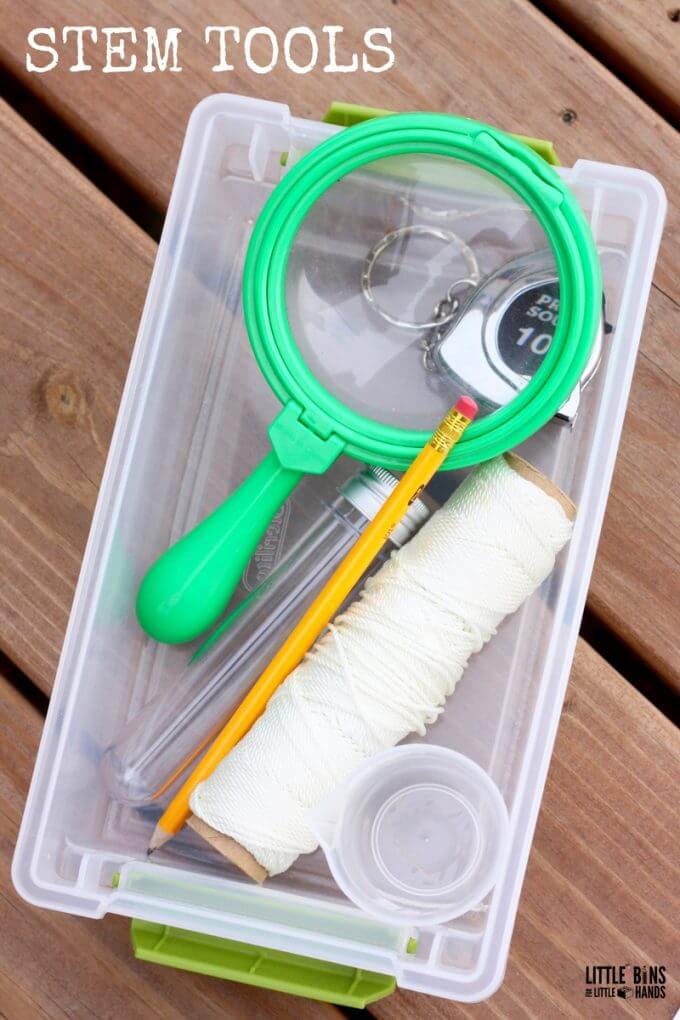
You don’t need expensive equipment to enjoy science. Grab a small caddy or storage bin and you’ll be prepared for science anytime!
Start with these basic science tools:
- Hand lens or magnifying glass
- Ruler
- Thermometer
- Dropper
- Balance
- Stopwatch
- Safety goggles
- Test tubes or small containers
These simple tools can be used in hundreds of hands-on science investigations throughout the year.
Science Tools by Science Field
Scientists use different tools depending on the questions they are trying to answer. Explore how common science tools help us investigate life, Earth, physical, and space science.
| Science Field | Common Science Tools | Try This Investigation |
|---|---|---|
| Life Science | Hand lens, microscope, tweezers, ruler | Flower Dissection – Use observation tools to examine and identify the different parts of a flower. |
| Earth & Weather Science | Thermometer, rain gauge, barometer, anemometer | Weather Station – Measure temperature, rainfall, wind speed, and air pressure to observe changing weather patterns. |
| Physical Science | Balance, droppers, magnets, funnels, filters | Separating Mixtures – Use different tools to separate materials and compare which methods work best. |
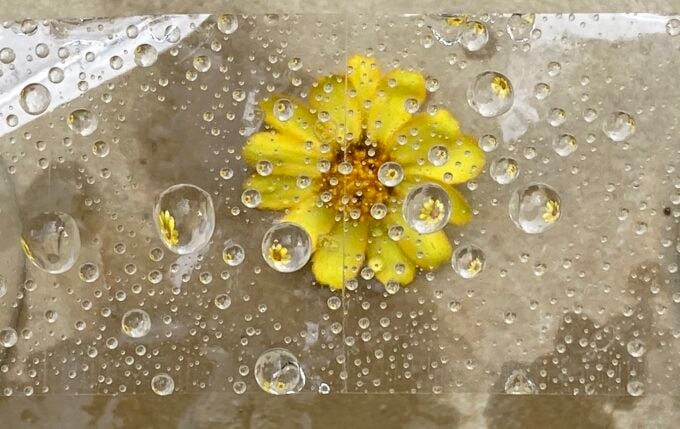
| Light Science | Magnifying glass, spectroscope, pinhole camera | Water Lens Macro Refractions – Build a simple water lens to magnify tiny objects and explore how light helps us make detailed observations. |
| Space Science | Telescope, binoculars, compass | Build a Simple Telescope – Discover how lenses help us observe distant objects in the sky and on Earth. |
Make Your Own Science Tools
Many science tools are easy to make with simple household materials. Building your own tools helps students discover how scientists observe, measure, and collect data while learning the science behind each tool.
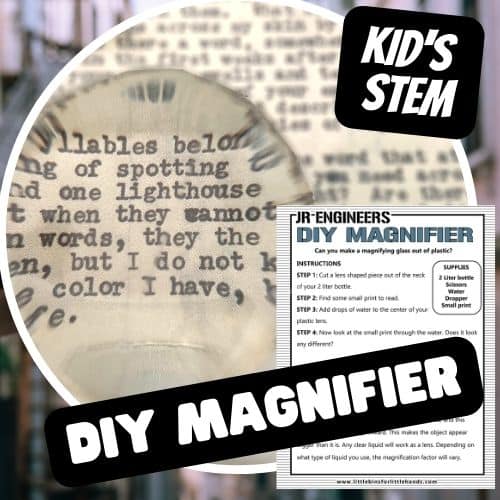
- DIY Magnifying Glass – Discover how light and curved water can make objects appear larger.
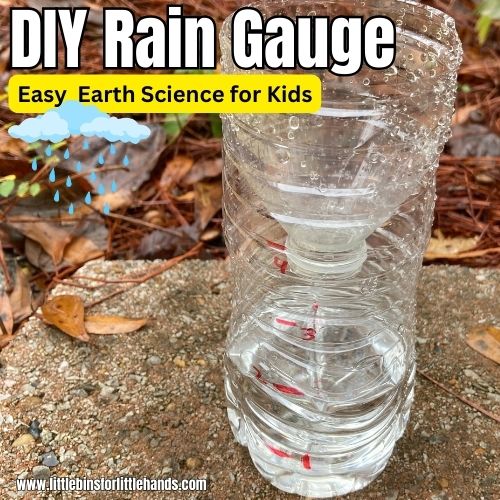
- DIY Rain Gauge – Measure rainfall and compare daily or weekly weather patterns.
- DIY Barometer – Observe changes in air pressure and learn how they relate to changing weather.
- Simple Telescope – Explore how lenses help us observe distant objects.
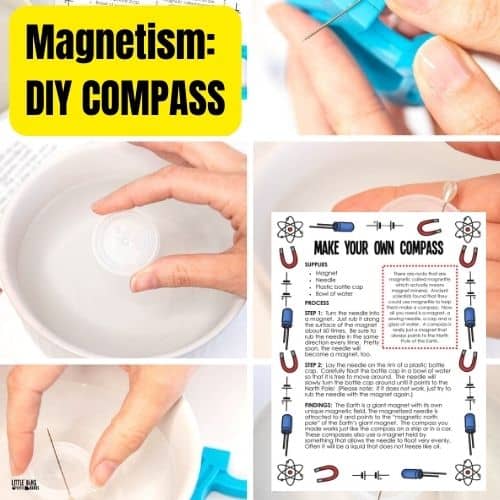
- DIY Compass – Discover how Earth’s magnetic field helps us find direction.
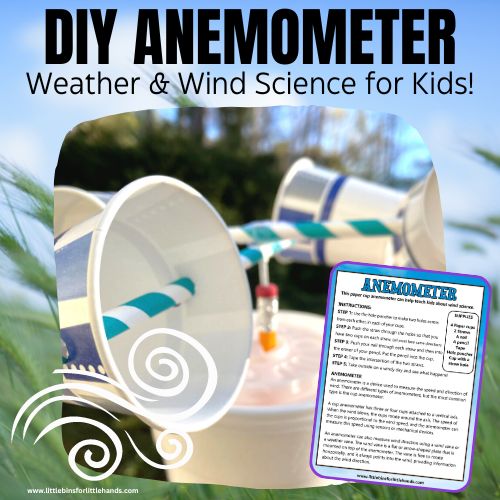
- Anemometer – Measure wind speed during weather investigations.
- Pinhole Camera – Explore how light travels in straight lines to create an image without a lens.
- Simple Spectroscope – Observe the colors that make up white light and discover how scientists study light sources.
Scientists often build, adapt, or improve their tools to answer new questions. Making simple science tools helps students understand not only how a tool works but also why scientists use it to investigate the world around them.
Free Science Tools Printable
Download your free Science Tools List to help students identify common science equipment and learn how each tool is used during investigations.
Continue Building Science Skills
Once students know how to use common science tools, they’re ready to investigate even more scientific questions. Put your new science tools to work with more hands-on investigations.
- Microscope Activites
- Science Experiments for Kids
- Weather Activities
- Magnet Activities
- States of Matter
- Earth Science Projects
- Color Science Experiments
Frequently Asked Questions
What are science tools?
Science tools are instruments scientists use to observe, measure, compare, and collect information during investigations. Common science tools include hand lenses, rulers, thermometers, balances, microscopes, and droppers.
Why do scientists use science tools?
Science tools help scientists gather accurate observations and measurements. Instead of guessing, scientists collect evidence that helps answer questions.
What science tools do elementary students need?
Most elementary investigations can be completed with a hand lens, ruler, thermometer, balance, dropper, stopwatch, and safety goggles.
What is the most important science tool?
There isn’t one “most important” science tool. Scientists choose different tools depending on the question they are investigating.
What science tools are safe for kids?
Child-friendly versions of hand lenses, thermometers, balances, rulers, droppers, binoculars, and safety goggles are all excellent choices for elementary science.
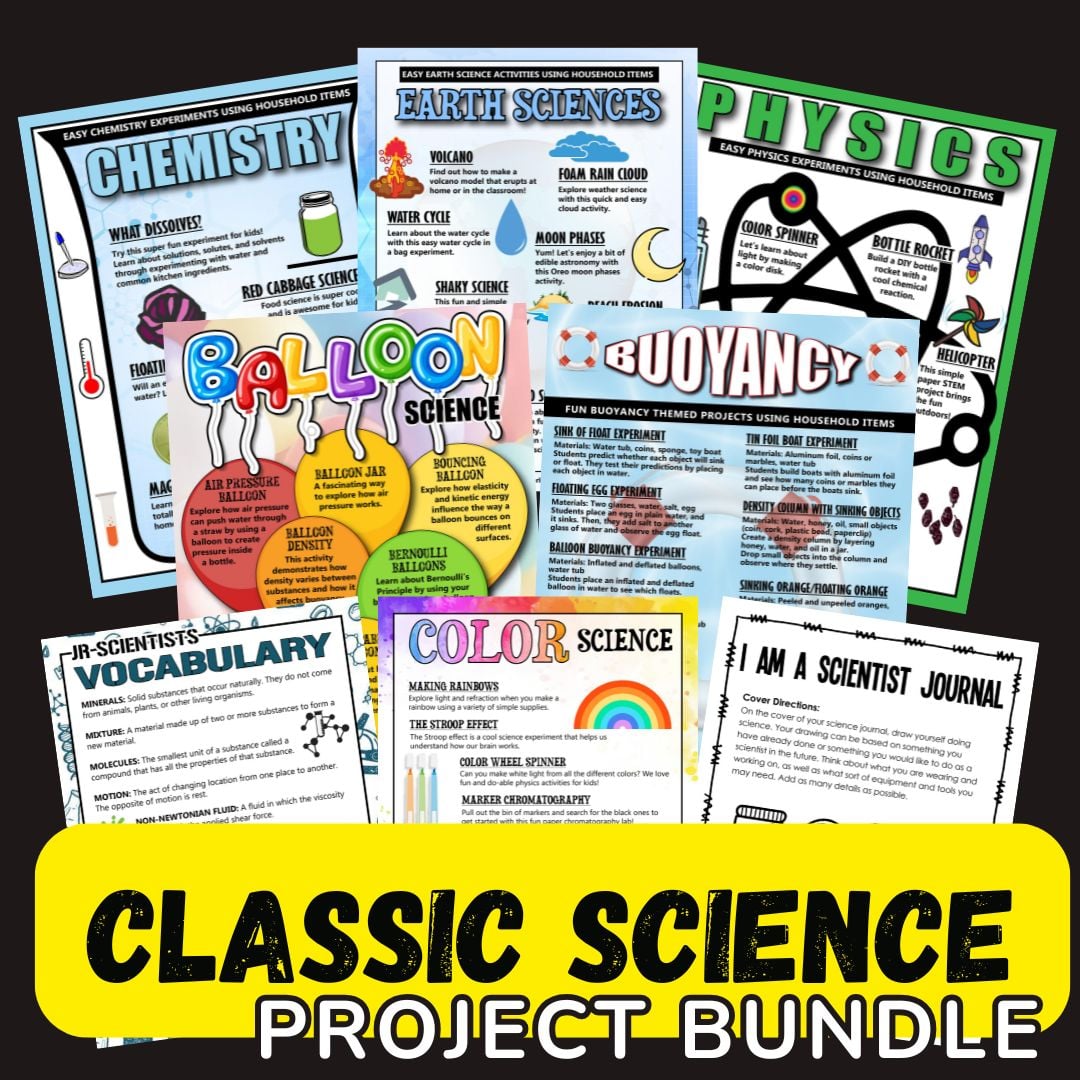
Printable Elementary Science!
Want to do meaningful science — but not start a full unit yet? This starter lab provides quick, hands-on investigations across multiple science topics, allowing students to explore how science works before diving deeper into any one subject.
Perfect for regularly trying science without extensive planning. Grades: K–5.



Science experiments with microscope is really interesting. Kids would be so curious on the world that we don’t usually see. Let them explore this things be amaze by their curiosity.
This would make a great science kit to give as a gift too!
These lists are great! What an awesome way to quickly remember what to have on hand for science!