
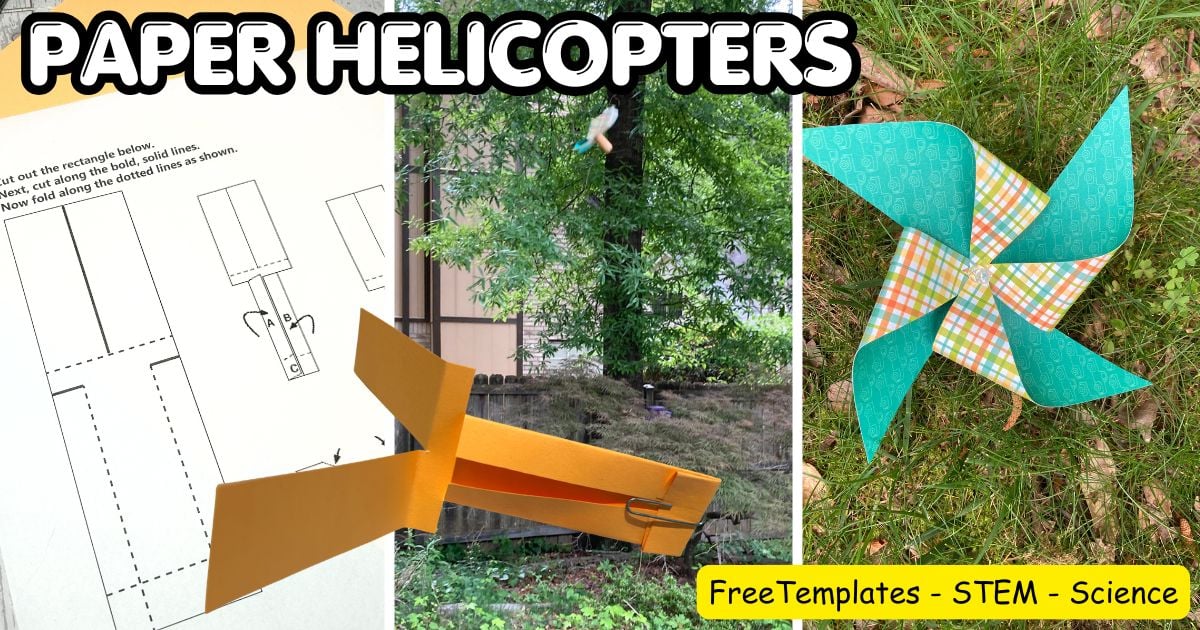
Can you build a paper helicopter that spins slowly through the air? This easy paper helicopter STEM activity lets kids explore gravity, air resistance, and motion using simple materials you probably already have at home or in the classroom.
Build one helicopter or compare two different flying helicopter designs to discover which stays in the air the longest. Then change the blades, weight, or drop height to turn it into a fun engineering investigation.
Whether you’re learning about the forces of flight or looking for a simple engineering project, this paper helicopter activity is a great way to combine creativity, problem-solving, and science.
- Best For: Grades K–2 and 3–5
- Science Concepts: Gravity, Air Resistance (Drag), Motion, Lift, Engineering Design
What Kids Learn
As kids build and test paper helicopters, they will:
- Explore how gravity pulls objects toward Earth.
- Observe how air resistance slows a falling object.
- Discover how spinning blades affect flight.
- Compare different helicopter designs.
- Practice making predictions and testing ideas like engineers.
Choose Your Paper Helicopter
Build one design or make both and compare how they fly.
Design 1: Classic Paper Helicopter
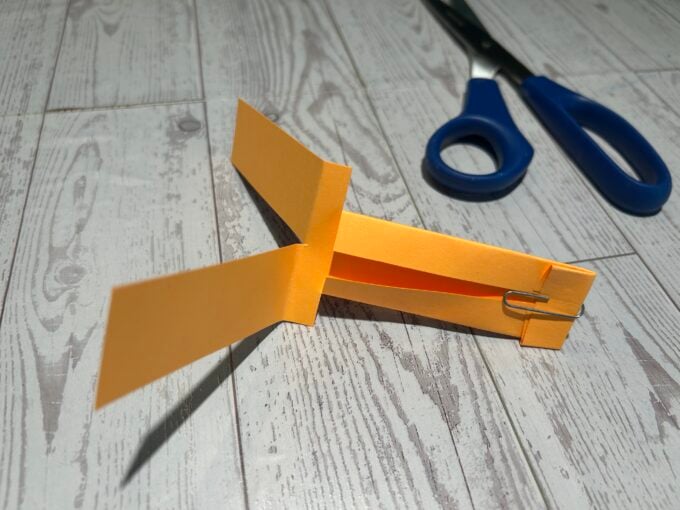
The classic paper helicopter is quick to fold and uses a paper clip to help balance the helicopter as it spins.
Perfect for:
- younger learners
- classroom STEM challenges
- testing different blade lengths and weights
Design 2: Four-Blade Paper Helicopter
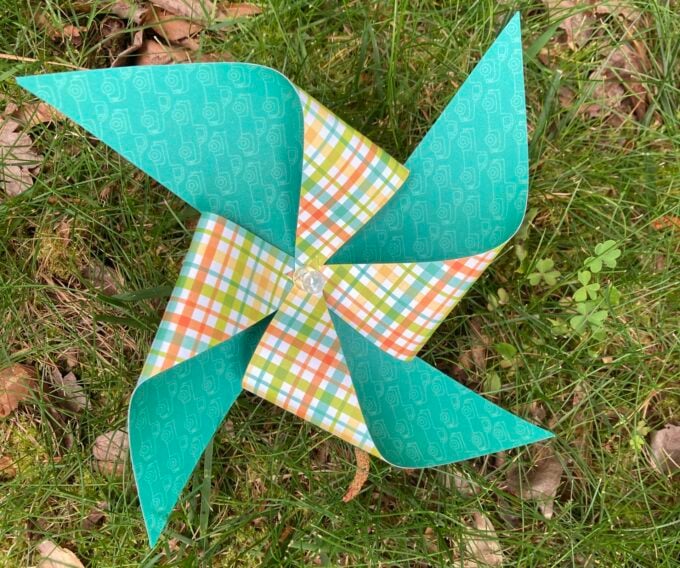
This paper helicopter uses four curved rotor blades that spin as it falls through the air. Compare how this design flies differently from the classic version.
Perfect for:
- comparing helicopter designs
- outdoor testing
- engineering investigations
Paper Helicopter Supplies
Depending on which helicopter you build, you will need:
Classic Paper Helicopter
- helicopter template
- cardstock or copy paper
- scissors
- paper clip
Four-Blade Paper Helicopter
- printable template
- cardstock
- scissors
- push pin
- wine cork
Paper Helicopter Instructions
STEP 1: Print the helicopter template on cardstock or sturdy paper.
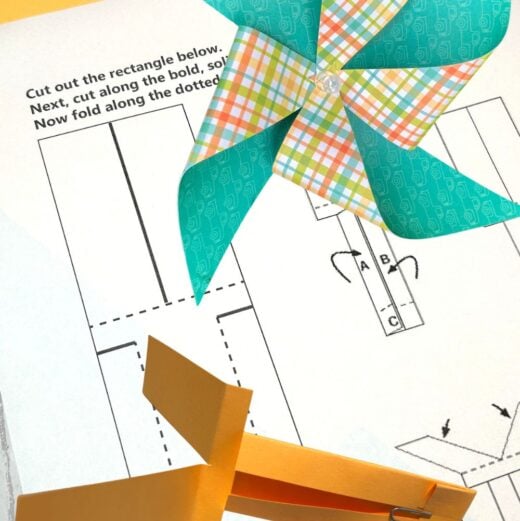
STEP 2: Cut out the helicopter template, including the center slit at the top and the side tabs near the bottom.
💡 Note: We have used our template as a pattern. You can also use the template as is if you print it on sturdy paper (not computer paper).
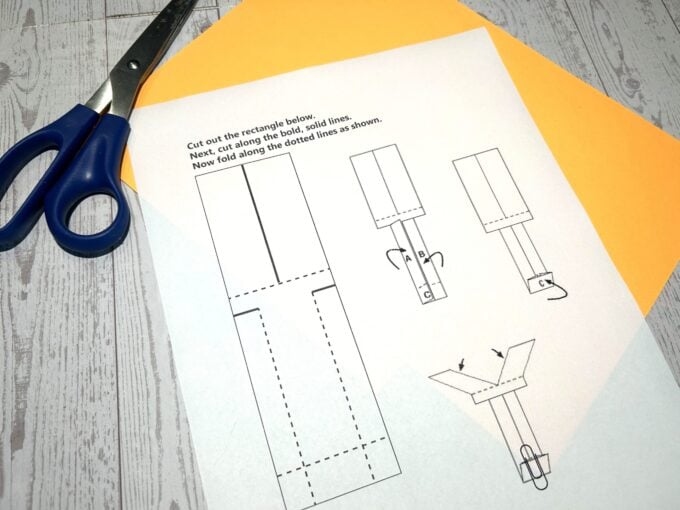
STEP 3: Fold the bottom side tabs inward, then fold the bottom flap upward around the tabs.
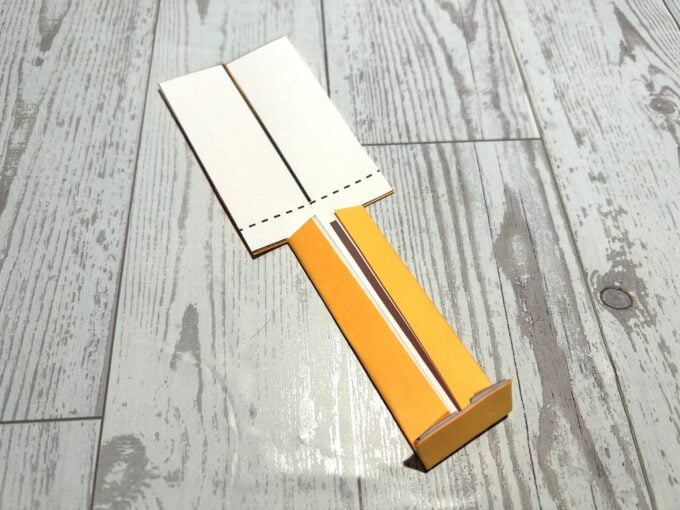
STEP 4: Fold the two rotor blades at the top in opposite directions. One blade should fold forward while the other folds backward.
STEP 5: Slide a paper clip onto the folded bottom to add weight and help stabilize the helicopter.
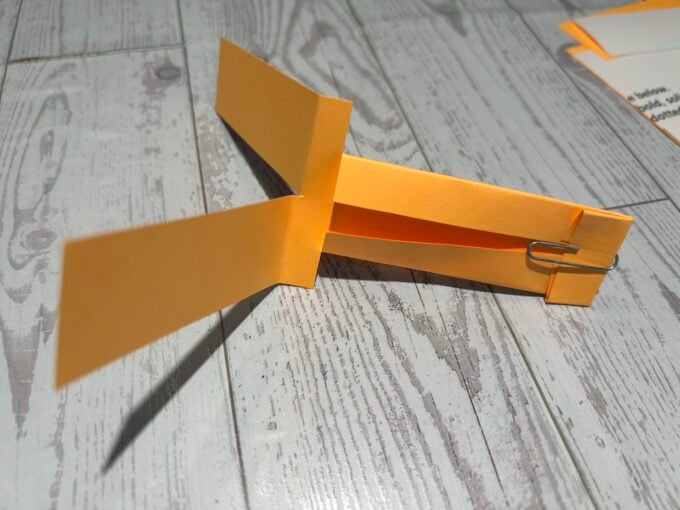
STEP 6: Hold the helicopter high above the ground and let go. Watch it spin as it slowly falls!
How To Make A Four-Blade Paper Helicopter
STEP 1: Print the four-blade helicopter template onto cardstock and carefully cut out the shape.
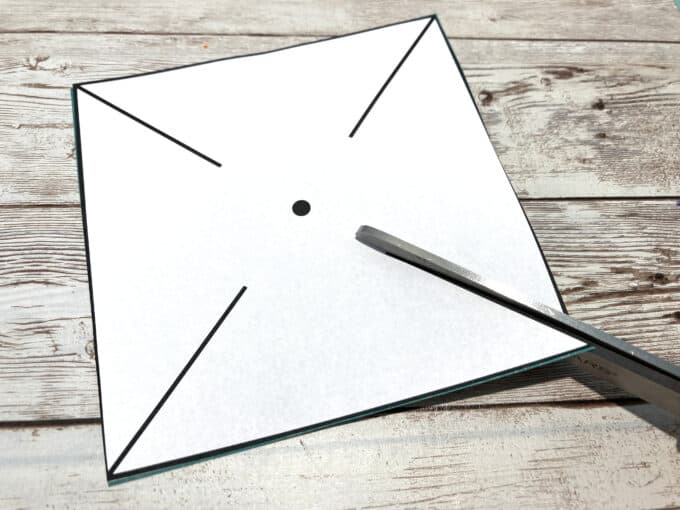
STEP 2: Gently curve each of the four blades in the same direction to help them catch the air.
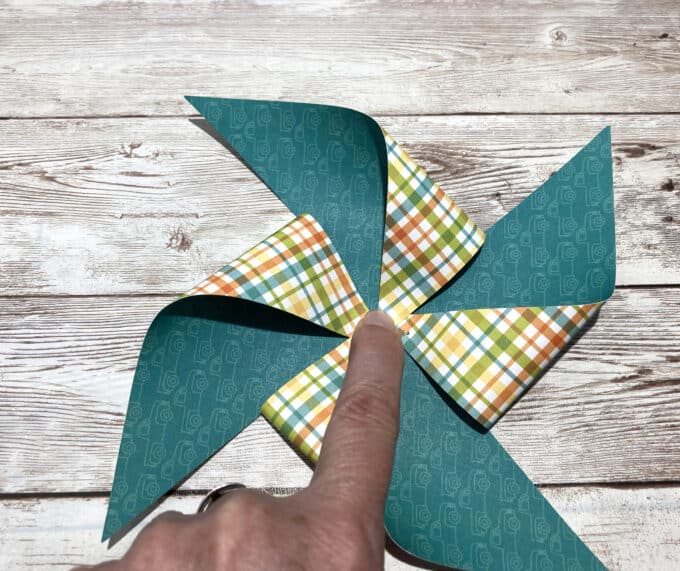
STEP 3: Use a push pin to make a small hole through the center of the helicopter.
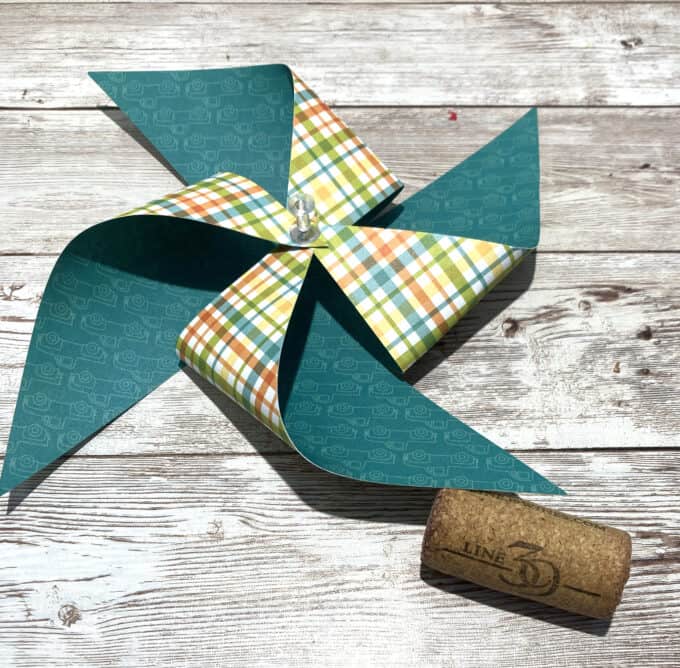
STEP 4: Insert the push pin into the top of a wine cork, leaving just enough room for the helicopter to spin freely.
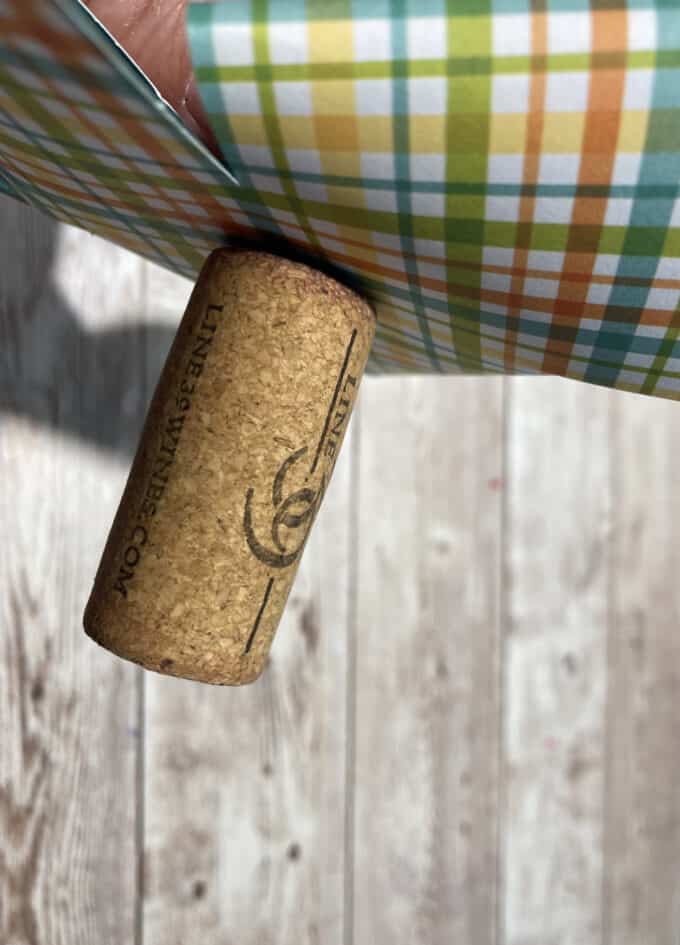
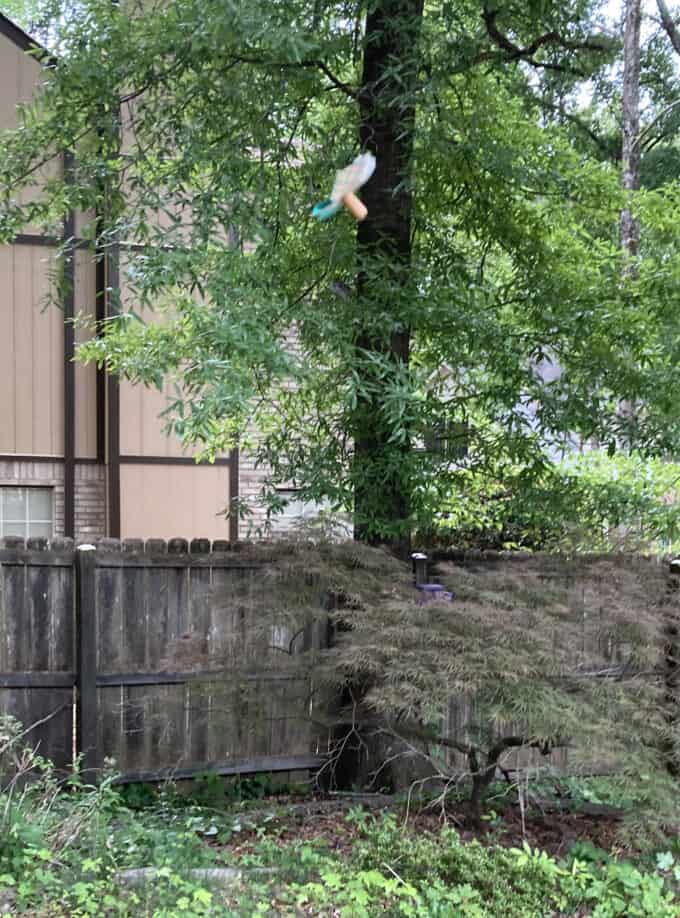
STEP 5: Hold the cork and toss the helicopter gently upward into the air.
STEP 6: Watch the blades rotate as the helicopter glides back toward the ground.
Compare Your Helicopters
Which helicopter performed the best?
| Test | Classic | Four-Blade |
|---|---|---|
| Stayed in the air longest | ||
| Spun the fastest | ||
| Flew the straightest | ||
| Favorite design |
Turn It Into An Engineering Challenge
Engineers test many different designs before deciding which works best.
Can you improve your paper helicopter?
Try changing only one variable at a time.
Test:
- blade length
- blade width
- one paper clip vs. two
- paper vs. cardstock
- drop height
- helicopter design
Measure:
- flight time
- number of rotations
- distance traveled
- landing pattern
Record your results and decide which changes improved your helicopter’s flight.
👉 Learn about the Engineering Design Process here with a free printable
Want to design even more flying creations? Explore our collection of Engineering Activities for Kids for simple challenges using paper, recycled materials, and everyday supplies.
Free Paper Helicopter Template
Build, test, and compare paper helicopter designs with this free printable template. Perfect for classrooms, STEM centers, or science at home.
👉 Grab the free paper helicopter templates here
How Does A Paper Helicopter Work?
Unlike airplanes, helicopters use rotating blades called rotors to create lift. A real helicopter has an engine that powers the blades so it can rise, hover, and move through the air.
A paper helicopter works differently. Gravity pulls it downward while air pushes upward against the folded blades as it falls. Because the blades are folded in opposite directions—or shaped to rotate—the helicopter begins to spin.
That spinning creates air resistance (drag), slowing the helicopter’s descent and helping it stay in the air longer. Small changes to the blade size, weight, or overall design can change how quickly the helicopter spins and how long it stays in the air.
👉 Learn more about Air Resistance here with Paper Air Foils.
Think Like An Engineer
After testing your helicopters, ask:
- Which design stayed in the air the longest?
- What happened when you added more weight?
- Did changing the blade size affect the flight?
- Which helicopter spun the fastest?
- What would you change next time?
Paper Helicopter FAQ
Why does a paper helicopter spin? As the helicopter falls, air pushes against the folded blades. Because the blades are angled in opposite directions or shaped to rotate, the moving air causes the helicopter to spin.
Why do you add a paper clip to a paper helicopter? The paper clip adds weight to the bottom of the helicopter, helping it stay balanced and spin more smoothly. Try testing one paper clip versus two to compare the results.
Does a paper helicopter really fly? A paper helicopter doesn’t fly like a real helicopter with an engine. Instead, it spins as it falls through the air. The spinning blades create drag, slowing the fall and making the helicopter stay in the air longer.
What makes a paper helicopter fall more slowly? Blade shape, blade length, weight, and the overall design all affect how quickly a paper helicopter falls. Testing different variables is a great way to discover which design works best.
Which paper helicopter design flies the best? There isn’t one correct answer! The classic two-blade helicopter and the four-blade helicopter each spin differently. Build both designs and compare their flight time, stability, and spinning speed.
What age is this STEM activity best for? The classic paper helicopter is great for younger learners with a little help cutting and folding. Older elementary students can compare multiple designs and collect data as part of an engineering investigation.
Want more hands-on STEM ideas that actually work?
Our Classic STEM & Engineering Projects Pack includes 50+ favorite experiments and engineering challenges with printable journal pages, instructions, and easy-to-find supplies. Perfect for classrooms, homeschool, and curious kids who love to build and test ideas.
More Flight Activities to Try
More Physics Activities
Explore more ways to investigate motion, forces, gravity, and energy.
👉 Or browse all our Physics Activities for Kids.