

Looking for easy STEM activities that kids can actually do?
This collection brings together hands-on science experiments, engineering challenges, coding projects, math activities, and STEAM ideas using simple materials. The projects work well for the classroom, homeschool, STEM clubs, small groups, and learning at home.
STEM stands for science, technology, engineering, and math. These subjects work together as kids ask questions, use tools, test ideas, solve problems, measure results, and improve their designs.
New to STEM? Start with our simple guide to What Is STEM for Kids?
Ready to jump in? Choose a project below or grab the free printable STEM pack for an easy place to begin.
👉 Get the Free Printable STEM Activities Pack below
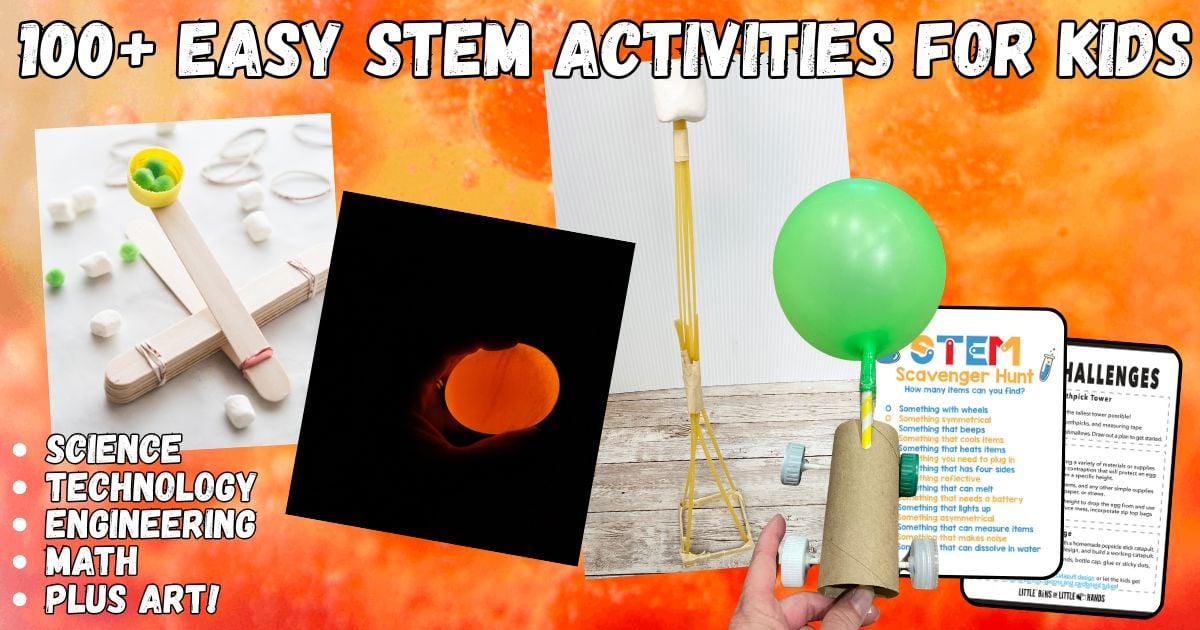
Easy STEM Activities to Try First
Not sure where to start? These projects use common supplies and introduce kids to building, testing, observation, and problem-solving.
- Paper Bridge Challenge: Build a bridge from one sheet of paper and test how much weight it can hold. Experiment with folds, shapes, and supports to make the bridge stronger.
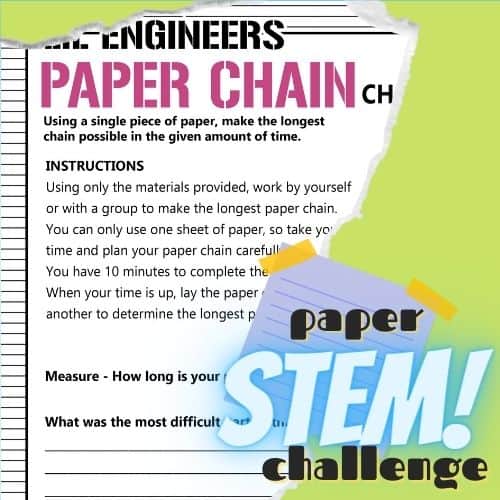
- Paper Chain Challenge: Use one sheet of paper to create the longest chain possible. Kids must think carefully about the size and number of links they cut.
- Balloon Rocket: Send a balloon racing along a string and explore how escaping air creates motion.
- Paper Helicopter Investigation: Make a simple paper helicopter and change one feature at a time. Compare how blade length, paper type, or added weight affects the fall.
- Egg Drop Challenge: Design a container that protects an egg during a fall. Test different materials and improve the design after each trial.
- Marble Run(Roller Coaster): Create a track that carries a marble from start to finish. Explore slopes, turns, speed, and gravity.
- Strong Paper Challenge: Fold, roll, or shape paper to see how much weight it can support.
- Index Card Tower: Build the tallest free-standing tower possible using index cards and a limited amount of tape.
- Sink or Float Challenge: Test a collection of objects and look for patterns in what sinks and what floats. Explore unique items to test.
- Aluminum Foil Boat Challenge: Design a boat from a specific-size piece of aluminum foil and test how many pennies it can hold before sinking.
These activities are easy entry points, but they can also be extended with measurement, recording pages, design changes, and additional trials.
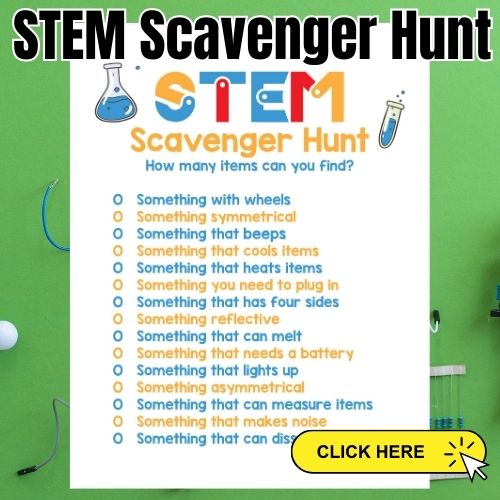
👉 Want to start right away? Grab this FREE STEM Scavenger hunt!
Science STEM Activities
Science activities help kids ask questions, make observations, test predictions, and explain what happened.
Balloon Inflation Experiment: Use baking soda and vinegar to inflate a balloon and explore a gas-producing chemical reaction.
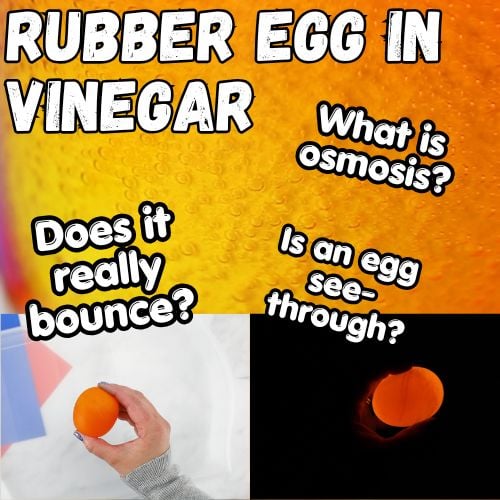
Bouncing Egg Experiment: Soak an egg in vinegar to dissolve the shell and reveal the flexible membrane underneath.
Baking Soda and Vinegar Volcano: Build a classic volcano and observe a bubbly acid-base reaction.
Grow Crystals: Grow borax, salt, or sugar crystals while learning about solutions, evaporation, and crystal formation.
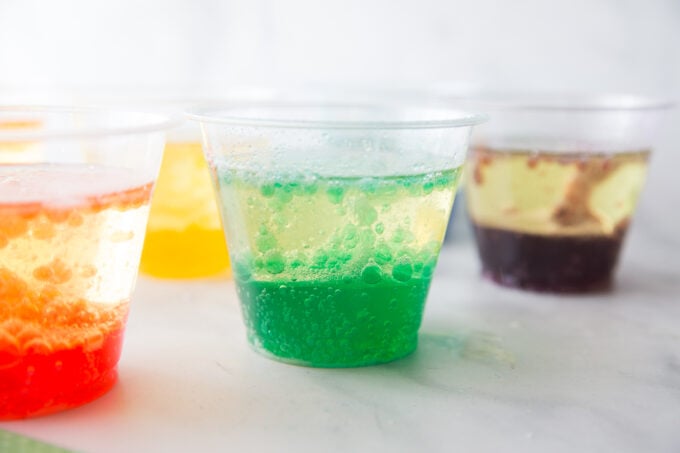
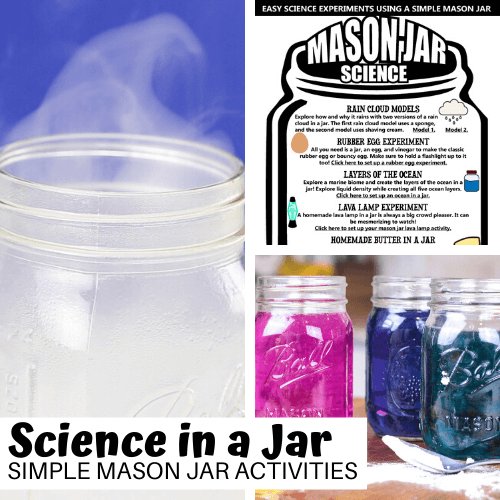
Lava Lamp Experiment: Combine oil, water, food coloring, and a fizzy tablet to explore density, liquid layers, and the movement of gas bubbles.
Oobleck: Mix cornstarch and water to explore a material that behaves like both a solid and a liquid.
What Makes Ice Melt Faster?: Test salt, sand, warm water, or other materials and compare melting rates.
Surface Tension Experiment: Add drops of water to a coin or carefully float a paperclip to investigate how water molecules hold together.
Gummy Bear Osmosis: Soak gummy bears in different liquids and compare how their size changes.
Static Electricity: Rub a balloon on hair or fabric and test how it attracts water, paper, or a lightweight can.
Balloon Rocket: Explore forces and motion with a balloon traveling along a string.
Paper Helicopter: Investigate aerodynamics and gravity with a spinning paper model.
Strawberry DNA Extraction: Use household materials to separate and observe strands of strawberry DNA.
Plant Breathing Experiment: Observe bubbles forming on submerged leaves and discuss gas exchange in plants.
DIY Planetarium: Make a simple constellation viewer and explore patterns in the night sky.
Explore even more ideas in these science collections:
Technology STEM Projects
Technology is more than screens. It includes tools, systems, devices, coding, electronics, and inventions that help solve problems.
LEGO Coding: Use building bricks and directional commands to introduce coding and sequencing.
Binary Code Projects: Spell a name or message using binary code and colored beads, blocks, or paper squares.
Hands-On Algorithms: Write or follow step-by-step directions to complete a simple task without using a computer.
Paper Circuit Card: Use copper tape, a battery, and an LED to create a light-up card.
Simple Circuit: Connect a battery, wires, and a light bulb to create a working electrical circuit.
Electromagnet: Wrap wire around a nail and investigate how electricity can create magnetism.
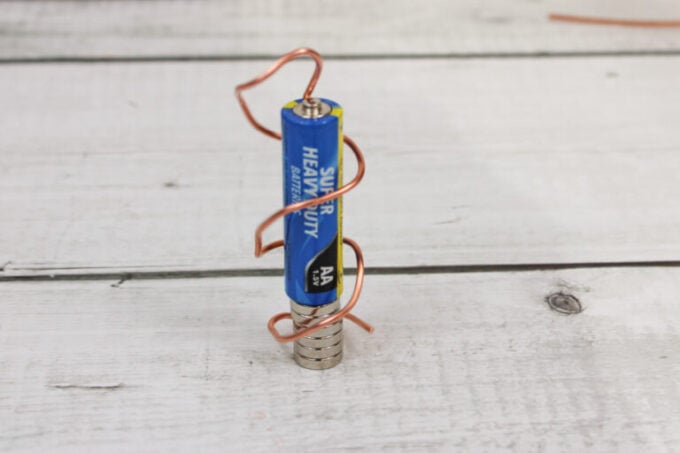
Homopolar Motor: Build a simple motor with a battery, magnet, and wire to explore how electricity and magnetism work together to create motion.
Robot Car: Assemble a basic robot vehicle and explore motors, movement, and control.💡 Technology projects are most meaningful when kids can build something, test how it functions, and explain what problem it solves.
👉 Explore more Coding Activities for Kids, including screen-free coding, binary code, and algorithm activities.
Engineering STEM Projects
Engineering challenges ask kids to design a solution that meets a goal.
Kids plan, build, test, and improve their ideas while applying science, technology, and math.
Paper Bridge Challenge: Design a paper bridge and test how much weight it can hold.
Three Little Pigs House: Build a structure that can withstand a blast of air.
Spaghetti Tower: Build the tallest tower possible from spaghetti and marshmallows.
Egg Drop Challenge: Design protection that keeps an egg from breaking during a fall.
Rubber Band Car: Build a vehicle powered by the energy stored in a twisted rubber band.
Balloon Car: Use escaping air to propel a homemade car.
Marble Roller Coaster: Design a track with hills, turns, and drops while exploring gravity and motion.
Hovercraft: Build a simple hovercraft and investigate air pressure and friction.
Paper Rocket: Build and launch a paper rocket while exploring thrust and aerodynamics.
DIY Kite: Design and test a kite while exploring lift, drag, and wind.
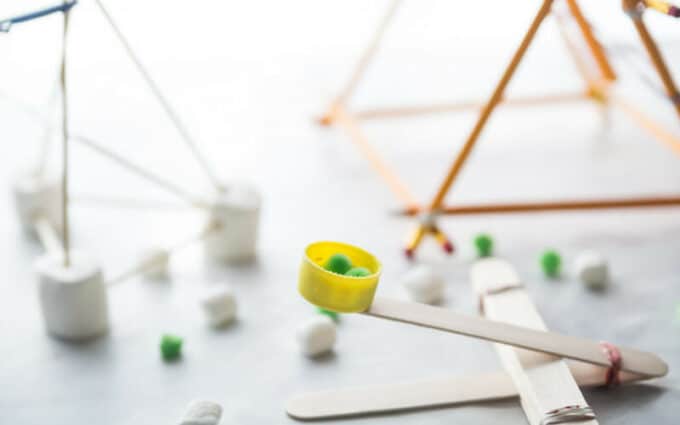
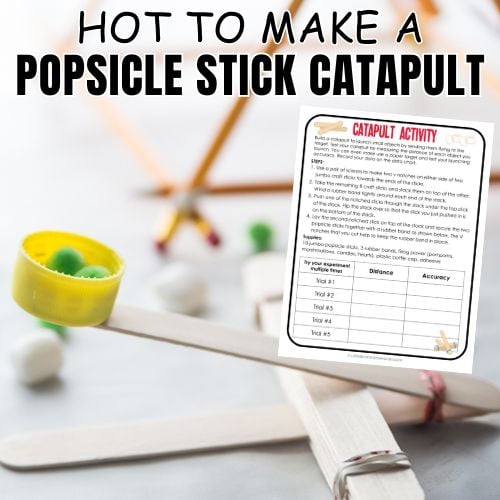
DIY Catapult: Build a catapult and investigate launch angle, force, and distance.
Simple Machines: Explore levers, pulleys, inclined planes, screws, wedges, and wheels and axles.
Water Wheel: Create a wheel that turns as moving water pushes the paddles.
Solar Oven: Use sunlight to warm or cook a small snack.
Water Filtration Challenge: Build a filter from layers of materials and observe how each layer changes dirty water.
Bottle Rocket: Build and launch a bottle rocket using air or water pressure. Explore thrust, pressure, aerodynamics.
👉 Learn more about the Engineering Design Process and explore our complete collection of Engineering Activities for Kids.
Quick STEM Design Challenges
Need a fast, low-prep challenge for the classroom or a small group?
Paper Chain: Make the longest chain from one sheet of paper.
Strong Paper: Fold or roll paper to support the greatest amount of weight.
Walking Through Paper: Cut one sheet of paper so a person can step through it.
Index Card Chair: Design a chair from one index card that can support a small toy.
Straw Boat: Build a boat that floats and can carry a small load.
Cup Tower: Build the tallest tower possible from cups.
Paper Airplane: Change one feature and compare distance or flight time.
Marshmallow Tower: Build a tall structure from marshmallows and spaghetti or toothpicks.
These challenges work well for early finishers, STEM bins, the first week of school, clubs, and indoor learning days.
👉 Also, check out these quick and easy Paper Plate STEM Projects

Math STEM Activities
Math becomes more meaningful when kids use it to build, measure, compare, and solve problems.
LEGO Math Challenges: Use bricks for counting, arrays, fractions, measurement, patterns, and problem-solving.
Toothpick Shapes: Build flat and three-dimensional shapes from toothpicks and small connectors.
3D Shape Nets: Print, cut, fold, and assemble cubes, pyramids, prisms, and other solids.
DIY Geoboard: Make a simple geoboard and use rubber bands to create shapes, angles, and patterns.
Tessellations: Arrange repeating shapes without gaps or overlaps. Try a LEGO tessellation here.
Measurement Scavenger Hunt: Search for objects and measure length, height, weight, or capacity.
100 Cup Tower: Use exactly 100 cups or objects to build the tallest stable structure possible.
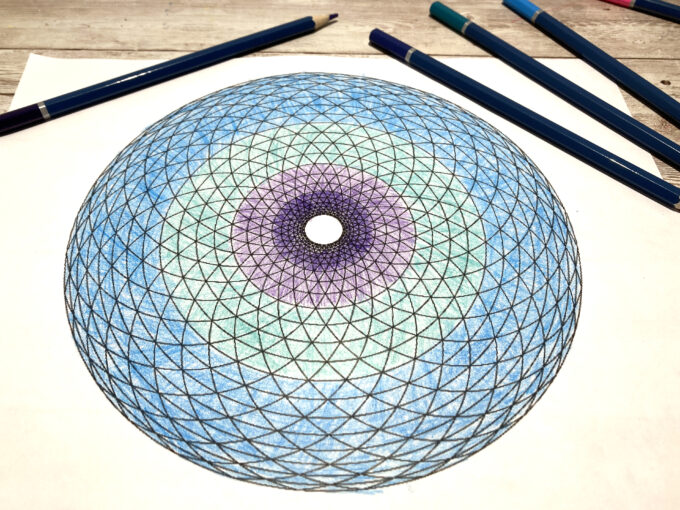
Fibonacci Activities: Explore the Fibonacci sequence through number patterns, spirals, nature observations, coloring, and design.
Pi Day Activities: Measure circles, compare circumference and diameter, and explore the number pi.
👉 Explore more Hands-On Math Activities and printable math resources.
STEAM Activities
STEAM adds art to science, technology, engineering, and math.
These projects combine creative choices with observation, experimentation, or design.
Scientific Illustration: Observe a plant, insect, shell, or other natural object closely and create a detailed labeled drawing.
Fizzy Painting: Paint with baking soda and add vinegar to create a bubbling chemical reaction.
Magnet Painting: Use magnets to move metal objects through paint and create patterns.
Salad Spinner Art: Explore circular motion while creating colorful spin art.
Marbled Paper: Investigate surface tension as colors swirl across a liquid surface.
Coffee Filter Art: Explore absorption and color mixing with coffee filters and washable markers.
Shadow Drawing: Trace and measure shadows as their position changes throughout the day.
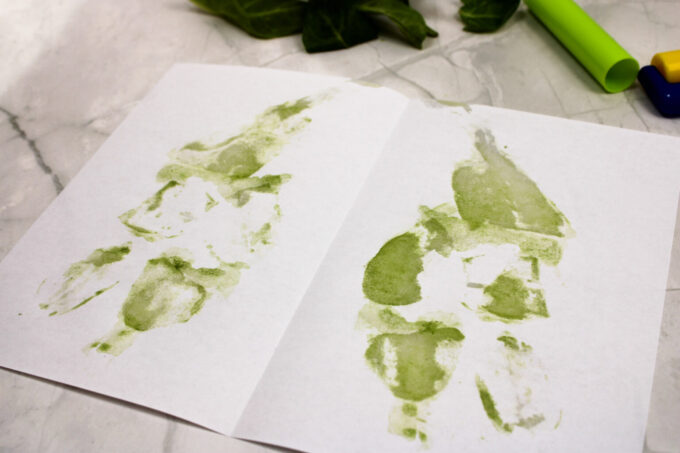
Chlorophyll Prints: Use leaves to explore plant pigments while creating prints from the green chlorophyll inside them. Also try nature-based plant hammer art for another variation of the project.
👉 Explore our complete collection of STEAM Activities for Kids for more science-and-art projects.
How to Choose a STEM Project
With so many ideas available, start by considering your group, learning goal, and available materials.
- Choose a science investigation when you want kids to observe, test a prediction, compare results, or explain why something happened.
- Choose an engineering challenge when you want kids to design, build, test, and improve a solution.
- Choose a technology project when you want kids to explore coding, circuits, tools, or systems.
- Choose a math STEM activity when you want kids to measure, calculate, compare, model, or recognize patterns.
- Choose a STEAM project when you want to combine creative expression with science, engineering, or math.
Begin with the materials you already have. Paper, tape, cardboard, cups, craft sticks, balloons, straws, building bricks, and recycled containers can be used for dozens of STEM activities.
What Kids Learn Through STEM
STEM activities support much more than science and math content.
Kids also practice:
- Asking useful questions
- Making observations
- Planning an investigation
- Choosing materials
- Measuring and comparing
- Recording results
- Explaining ideas
- Solving problems
- Working with others
- Learning from unsuccessful attempts
💡 The goal is not simply to complete the project. Kids should have an opportunity to think about what happened and use that information to make a decision or improvement.
Think Like an Engineer
Many STEM projects use a simple engineering design process.
- Ask: What is the problem or challenge?
- Imagine: What are some possible solutions?
- Plan: What will you build or test?
- Create: Build the first design.
- Test: How well does it work?
- Improve: What could you change?
Kids do not need to follow the process perfectly or complete every step in writing.
💡A quick sketch, short discussion, test, and redesign can be enough to turn a simple building activity into a meaningful engineering challenge.
👉 Learn more: What is an Engineer?

Helpful STEM Questions for Kids
Open-ended questions help kids describe their ideas and reflect on the results.
- What do you notice?
- What do you think will happen?
- What problem are you trying to solve?
- Why did you choose that material?
- How will you test your idea?
- What stayed the same?
- What did you change?
- What evidence did you collect?
- What worked well?
- What would you improve next time?
👉 The goal is not to give kids the answer. Good questions help them slow down, observe carefully, and explain their thinking. Learn more about Questions for Reflection here.
Free Printable STEM Activities Pack
Need an easy place to begin?
Our free printable STEM pack includes simple activities and reusable pages that help kids plan, build, test, record observations, and reflect on what they learned.
Use it in the classroom, at home, with homeschool groups, during the first week of school, or in a STEM club.
👉 Get the Free Printable STEM Activities Pack
Frequently Asked Questions About STEM Activities
What is a STEM activity? A STEM activity uses science, technology, engineering, or math to help kids investigate a question, use tools, design a solution, measure results, or solve a problem.
What are some easy STEM activities? Paper bridges, balloon rockets, paper chains, marble runs, cup towers, sink-or-float tests, and paper helicopters are easy projects that use common supplies.
Do STEM activities need to include all four subjects? No. A project may focus mainly on science or engineering while also including tools, measurement, or math.
What supplies do I need for STEM projects? Many projects use paper, cardboard, tape, cups, straws, string, craft sticks, balloons, foil, building bricks, and recycled materials.
What is the difference between a science experiment and an engineering challenge? A science experiment helps kids investigate how something works. An engineering challenge asks kids to design a solution that meets a goal.
Can younger kids do STEM activities? Yes. Preschoolers and kindergarteners explore STEM through building, sorting, measuring, observing, comparing, and testing simple ideas.
Can STEM activities be screen-free? Yes. Many STEM projects use only common materials and simple tools. Coding can also be introduced without screens through sequencing, algorithms, and binary code.
What age group are these STEM activities for? Many of these projects can be adapted for preschool through elementary school. Younger kids may focus on exploring and describing, while older students can measure, record data, identify variables, and explain results using evidence.
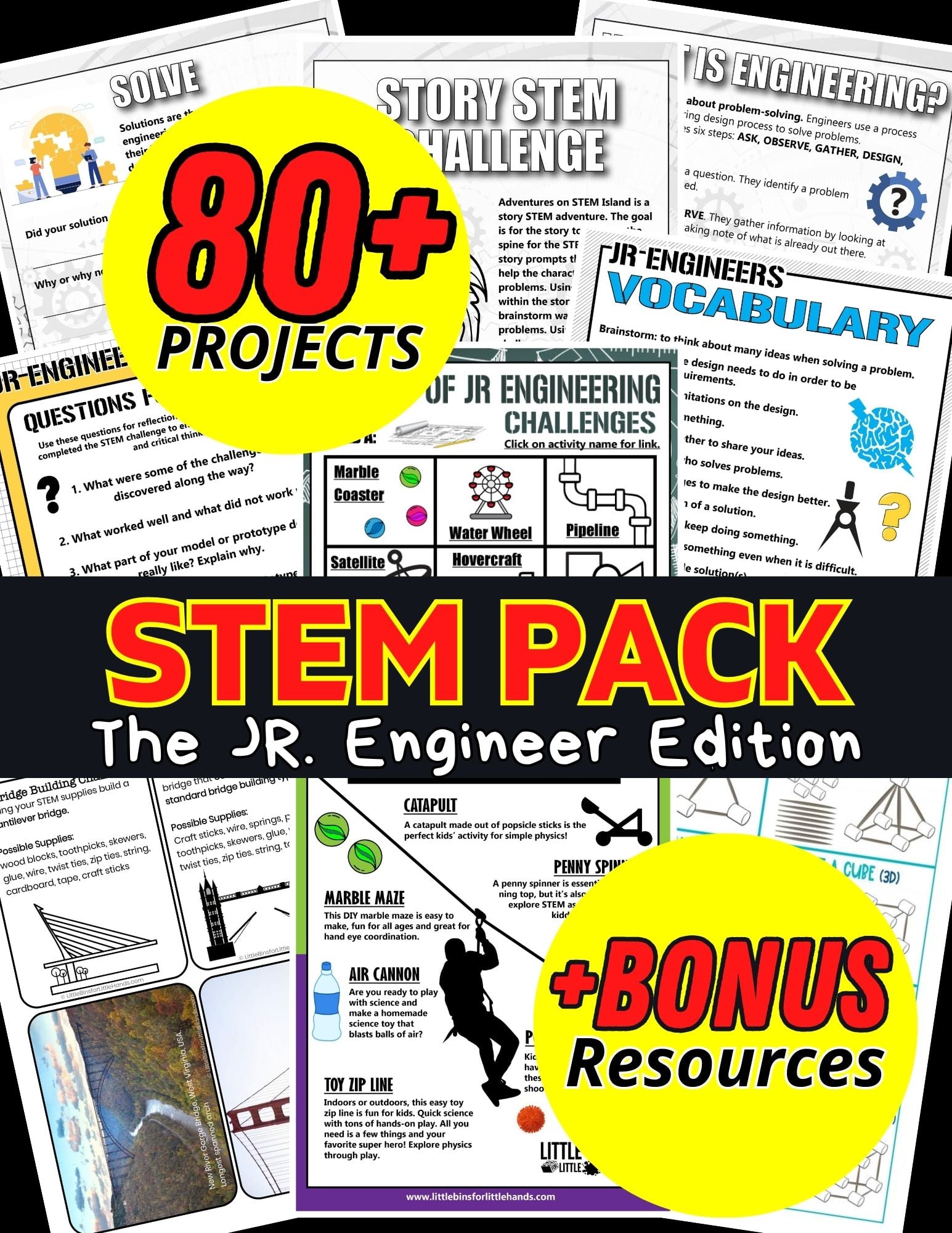
Want more hands-on STEM ideas that actually work?
Our Classic STEM & Engineering Projects Pack includes 50+ favorite experiments and engineering challenges with printable journal pages, instructions, and easy-to-find supplies. Perfect for classrooms, homeschool, and curious kids who love to build and test ideas.
Seasonal STEM Activities
STEM activities are easy to adapt for holidays, seasons, and classroom themes.
Change the colors, materials, objects, or challenge story while keeping the same science or engineering concept.

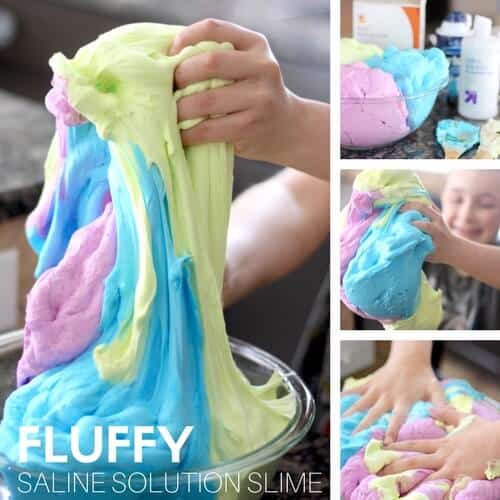

Yes definitely! You can see it here: https://littlebinsforlittlehands.com/how-to-make-slime-with-glue/