
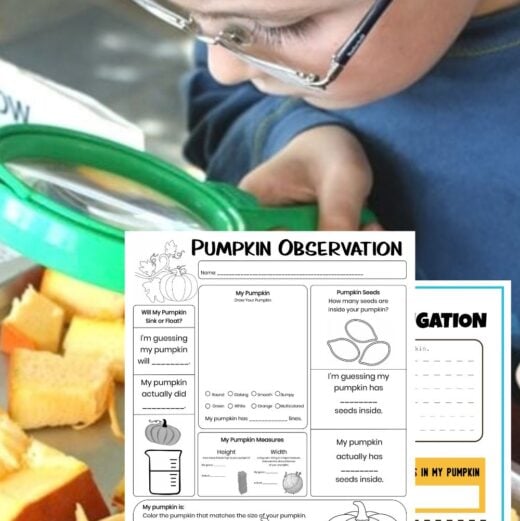
Turn a real pumpkin into a hands-on fall science investigation!
Kids can observe, describe, measure, predict, count seeds, and test whether a pumpkin sinks or floats with this easy pumpkin exploration activity and free printable worksheet. It works especially well for preschool, kindergarten, and early elementary science.
Field: Life Science, Science Skills
Grades: PreK–2
Concepts: Observation, measuring, prediction, counting, sink or float, comparing
Pumpkin Investigation Activity
A pumpkin is packed with things for kids to investigate.
🔎 Before cutting it open, let kids look closely at the outside. Then explore the inside with simple tools like magnifying glasses, tongs, bowls, and a plastic knife if appropriate.
💡 This activity encourages kids to notice details, make predictions, collect simple data, and ask questions while exploring a real pumpkin.
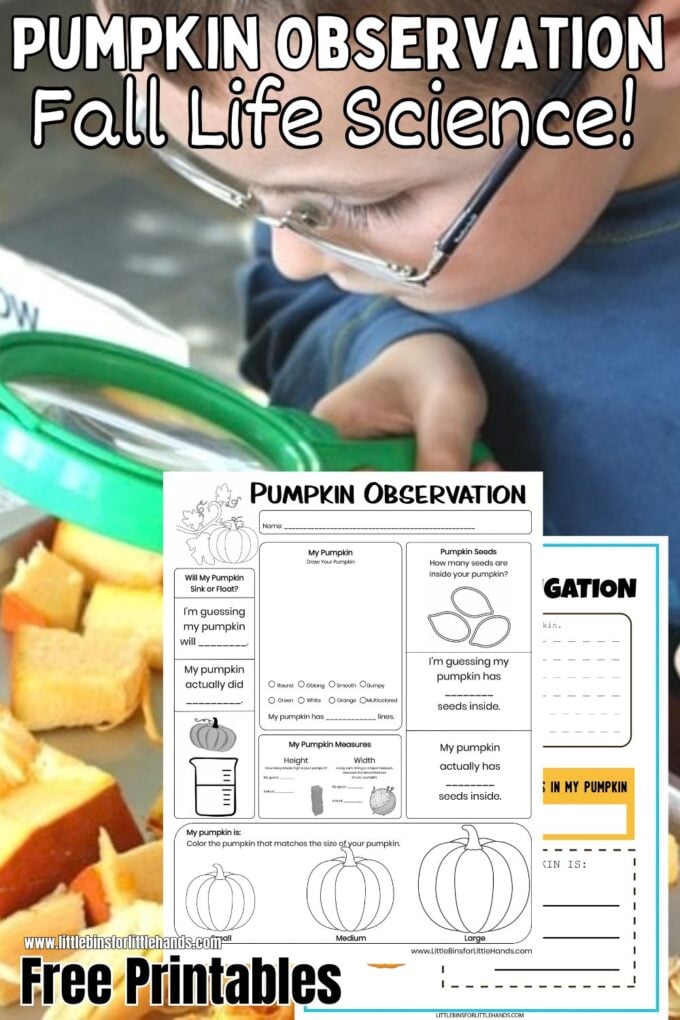
Free Pumpkin Investigation Printable
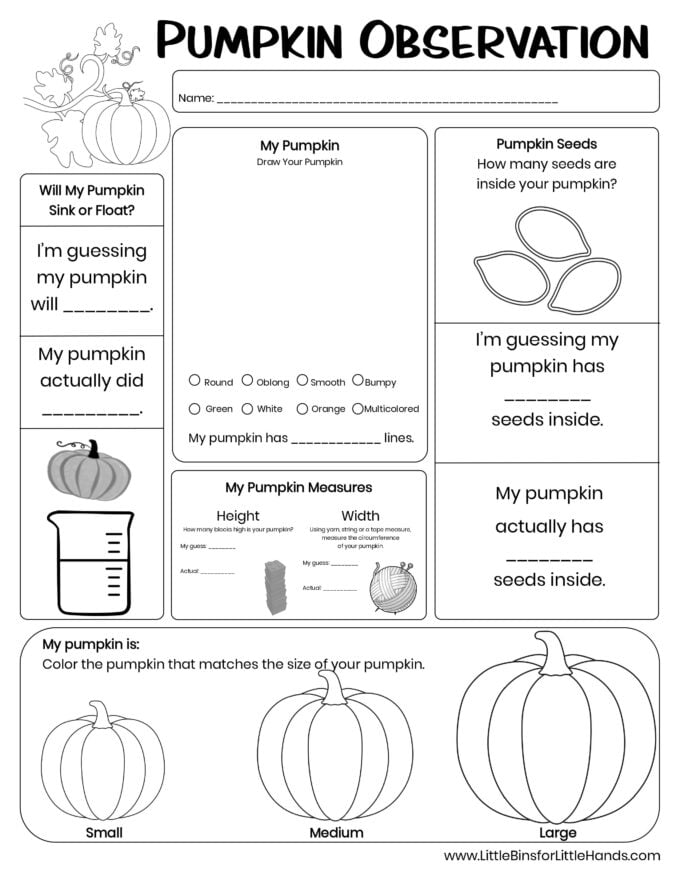
Use our free Pumpkin Investigation Printable to guide the activity and record what kids discover.
Kids can:
- Draw and describe their pumpkin
- Identify its size, shape, color, and texture
- Predict whether it will sink or float
- Test their prediction
- Estimate the number of seeds
- Count the actual seeds
- Measure the pumpkin’s height
- Measure its circumference
👉 Get the Free Pumpkin Investigation Printable
This works well for a science center, small-group activity, pumpkin unit, or hands-on fall science lesson.
Supplies
- Pumpkin
- Large tray
- Magnifying glass
- Tongs or tweezers
- Small bowls
- Water
- String, yarn, or measuring tape
- Blocks or cubes for measuring height
- Plastic knife, if appropriate
- Pumpkin Investigation Printable
How to Investigate a Pumpkin
Start with the pumpkin before you cut it open.
Have kids look closely at the outside and describe what they notice. Ask:
- What color is it?
- Is it round or oblong?
- Does it feel smooth or bumpy?
- How many lines can you see?
- Is it small, medium, or large?
Use the printable to draw the pumpkin and record observations.
Measure Your Pumpkin
Next, add some simple math. Use blocks or cubes to estimate and measure the pumpkin’s height. Then wrap string or yarn around the widest part of the pumpkin to measure its circumference.
🔎 Ask kids to make a guess first, then compare the estimate with the actual measurement.
👉 For more pumpkin measuring, check out our Pumpkin Math Activity
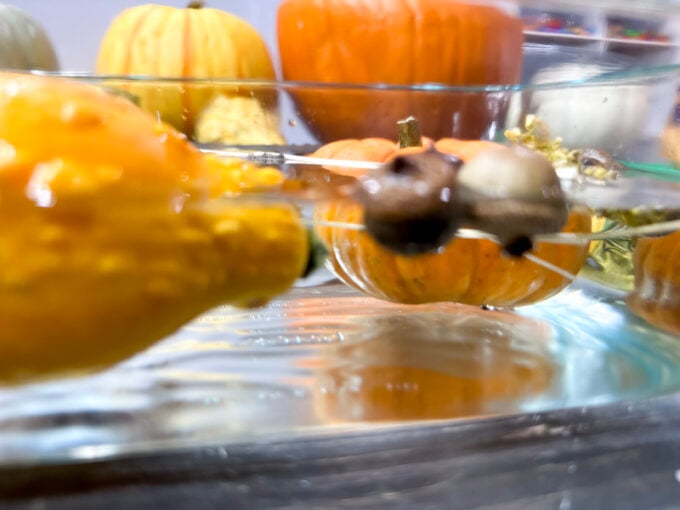
Will a Pumpkin Sink or Float?
Before placing the pumpkin in water, ask kids to make a prediction.
🔎 Will the pumpkin sink or float?
Record the prediction on the printable, test the pumpkin, and compare the result. You can extend this by testing pieces of pumpkin after you cut it open.
👉 For more fall floating and sinking, try our Fall Sink or Float Experiment.
Explore the Inside of a Pumpkin
Now cut the pumpkin open and place some of the inside pieces on a tray. Provide magnifying glasses, tongs, tweezers, and small bowls so kids can investigate. Look closely at the:
- Seeds
- Pulp
- Flesh
- Skin
- Stem
🔎 Encourage kids to describe what they see, smell, and feel.

👉 For a closer look at pumpkin anatomy, pair this with our Parts of a Pumpkin activity.
Estimate and Count Pumpkin Seeds
Before counting, ask: How many seeds do you think are inside your pumpkin?
- Write down the estimate. Then remove the seeds and count them. Grouping them into sets of 10 can make counting easier for older kids.
- Compare the estimate with the actual total.
👉 You can extend this further with our Pumpkin Seed Investigation.

Pumpkin Investigation Questions
Use simple open-ended questions while kids explore:
- What do you notice?
- What does the pumpkin feel like?
- What do you think is inside?
- What surprised you?
- How many seeds do you predict?
- What happened when you put the pumpkin in water?
- How is the inside different from the outside?
- What would you like to test next?
💡 For younger kids, the goal is not getting a “right” answer. It’s practicing observation, prediction, comparison, and curiosity.
Adapt the Pumpkin Investigation by Grade
Preschool: Focus on sensory words, colors, shapes, counting, and simple predictions.
Kindergarten: Add drawing, measuring, seed estimates, and sink-or-float predictions.
Grades 1–2: Record measurements, compare estimates with results, count and group seeds, and write short observations or conclusions.
Try More Pumpkin Science
Parts of a Pumpkin
Explore pumpkin anatomy and identify the different parts.
Pumpkin Life Cycle
Follow a pumpkin from seed to vine, flower, and mature pumpkin.
Pumpkin Seed Investigation
Estimate and count the seeds inside different fall fruits.
Pumpkin Jack Experiment
Observe how a pumpkin changes as it decomposes.
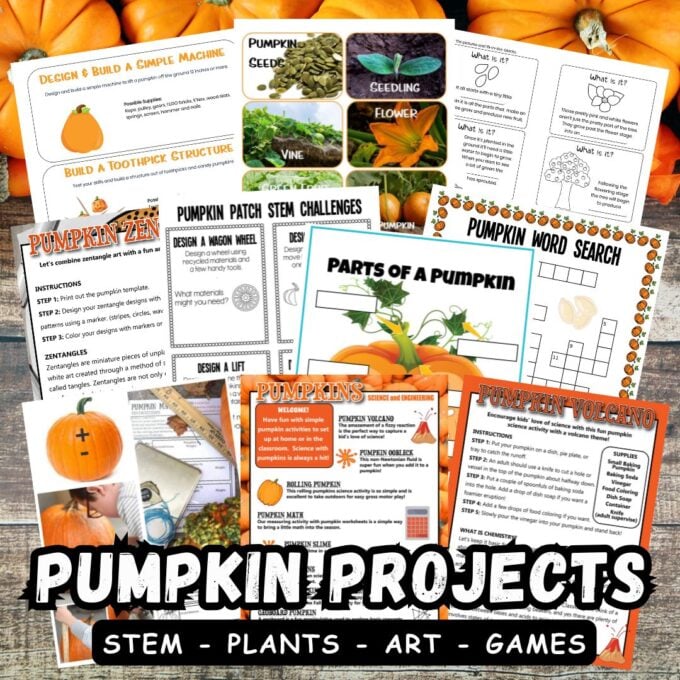
Printable Pumpkin Projects Pack
Want more ways to explore pumpkins with science, STEM, math, engineering, and art?
👉 The Pumpkin Projects Pack includes ready-to-use pumpkin activities and printables for fall learning. For younger kids, try the Preschool Pumpkin Activities Pack for ages 3–6.