
Pumpkins aren’t just for carving—they’re also a fantastic way to explore fall plant science! In this activity, kids will learn about the parts of a pumpkin using a free printable diagram and worksheet.

Learn the Parts of a Pumpkin
This fun fall science activity works well for the classroom, homeschool, or at home with your own pumpkins. Pair it with other pumpkin science experiments for even more hands-on learning!
👉 Grab your free printable parts of a pumpkin worksheet below!
Field of Science: Life Science, Plant Biology
Grade Level: K–3 (easy to adapt for preschool and older kids)
Concepts Explored:
- Plant structure (fruit, stem, seeds, pulp)
- Functions of plant parts
- Observation and classification skills
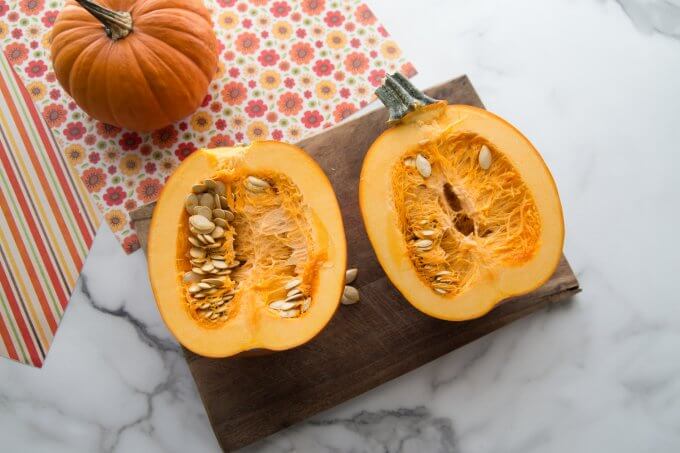
Pumpkins are fruits that grow on vines. Like other plants, they have distinct parts that serve important purposes—from protecting the seeds to facilitating the plant’s growth. By exploring the outside and inside of a pumpkin, kids can make real-world connections to how plants live and reproduce.
Supplies Needed
- Whole pumpkin (small sugar pumpkin works well)
- Knife or scooping tool (adult use only)
- Large spoon
- Free Parts of a Pumpkin Worksheet (download below)
- Optional: magnifying glass, paper towels, markers or crayons
Parts of a Pumpkin Activity
- Observe the outside – Have kids feel the skin, stem, and vine (if attached). Ask what they notice.
- Cut open the pumpkin – An adult should safely cut the pumpkin in half.
- Scoop it out – Let kids feel the pulp and seeds inside.
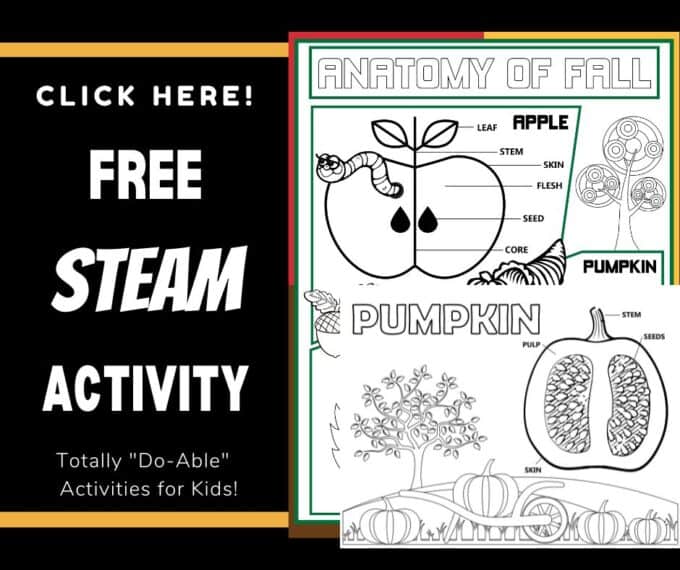
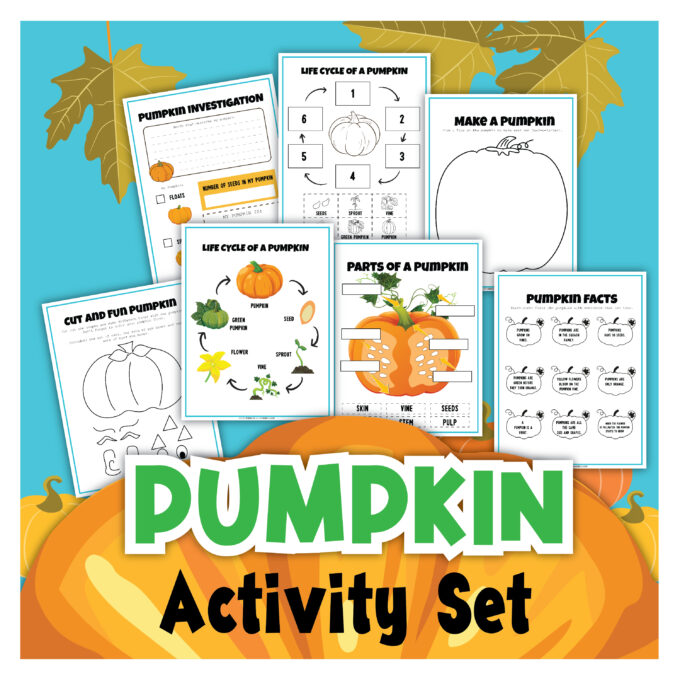
- Identify each part – Use the printable diagram to label:
- Vine
- Stem
- Skin
- Flesh
- Pulp
- Seeds
- Draw and color – Kids can use the worksheet as a coloring page, labeling each part as they go.

Pumpkin Parts
Here’s what each pumpkin part does:
- Vine – The long green part that connects pumpkins to the plant and delivers nutrients.
- Stem – The tough, woody part that stays on the pumpkin after being cut from the vine.
- Skin – The thick, smooth outer covering that protects the pumpkin. It can also be cooked and eaten!
- Flesh – The orange, edible part beneath the skin. This is what we use in pies, soups, and bread.
- Pulp – The slimy, stringy part inside that holds the seeds.
- Seeds – Large white seeds inside the pulp. Many people roast them for a tasty snack!
🔎 Fun Fact: Pumpkins are actually a type of squash, and they belong to the gourd family along with cucumbers, zucchini, and melons.
More Pumpkin Facts for Kids
- Pumpkins are about 90% water.
- They can range in size from a tiny handful to over 1,000 pounds!
- The largest pumpkin ever grown weighed more than 2,700 pounds.
- Native Americans used pumpkins for food, medicine, and even mats by drying the strips.
Extension Activities
- Pumpkin Investigation – Let students explore the insides of a pumpkin and record their observations.
- Pumpkin Life Cycle – Connect this activity to the pumpkin life cycle using our printable life cycle worksheets.
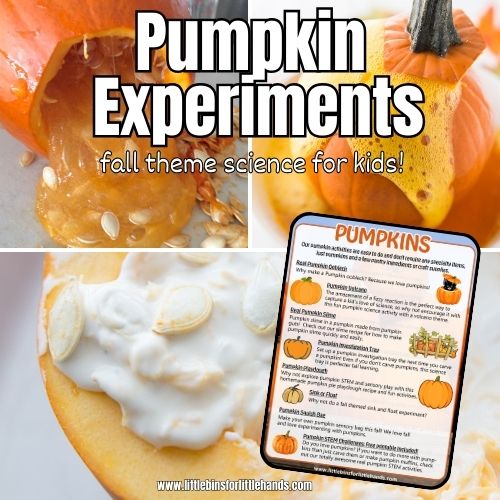
- Pumpkin Playdough – Make pumpkin playdough and shape the different parts.
- Pumpkin Slime – Use real pulp and seeds to make slime for a sensory science twist.
- Pumpkin Science Experiments – Try a pumpkin volcano, pumpkin Skittles experiment, pumpkin decomposition, or even a pumpkin clock!

Make It a Science Project
Turn this activity into a mini science fair project by asking a question:
- Which pumpkin part has the most seeds—big or small pumpkins?
- Does the thickness of the skin affect how long the pumpkin lasts?
- What happens if you plant pumpkin seeds from your activity?
🔎 Encourage kids to write a hypothesis, test their ideas, and record the results, just like real scientists. Explore the scientific method here.
FAQ About Pumpkin Parts
What are the main parts of a pumpkin?
The main parts are the vine, stem, skin, flesh, pulp, and seeds.
Which parts of a pumpkin are edible?
The skin, flesh, and seeds can all be eaten! The pulp is usually discarded but can be composted.
What’s inside a pumpkin?
Inside a pumpkin, you’ll find pulp and seeds surrounded by a thick layer of orange flesh.
Printable Fall STEM Project Packs
Visit our SHOP for easy-to-print STEM and science lesson plans for the whole year. Or join us in the Little Bins Club.