

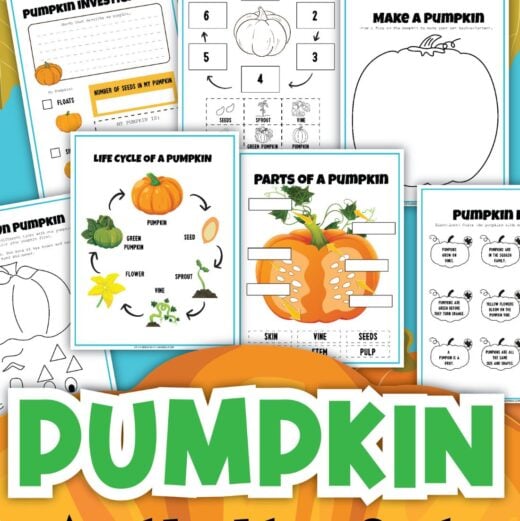
Learn the pumpkin life cycle from seed to sprout, vine, flower, green pumpkin, and mature pumpkin with simple explanations and free printable worksheets.
This is an easy fall life science activity for the classroom, homeschool, or a pumpkin theme at home.
Field: Life Science
Grades: K–3
Concepts: Plant life cycles, seeds, growth, flowers, fruit, observation
What Is the Life Cycle of a Pumpkin?
A pumpkin begins as a seed and grows into a plant that produces flowers and pumpkins of its own.
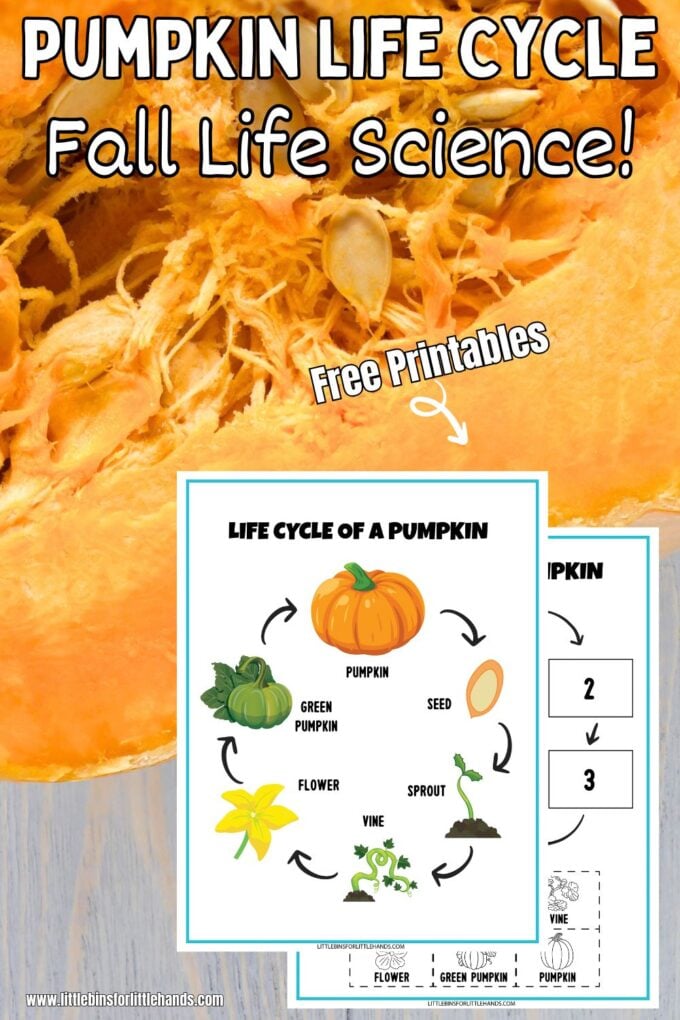
🔎 The pumpkin life cycle follows this sequence: Seed → Sprout → Vine → Flower → Green Pumpkin → Mature Pumpkin → Seeds
You can then plant those seeds to start the cycle again.
💡 Pair the printable activity with a real pumpkin so kids can connect the life cycle stages with something they can observe and explore.
Free Pumpkin Life Cycle Worksheets
Use these free pumpkin life cycle worksheets to help kids identify, sequence, and review the stages of pumpkin growth.
Kids can:
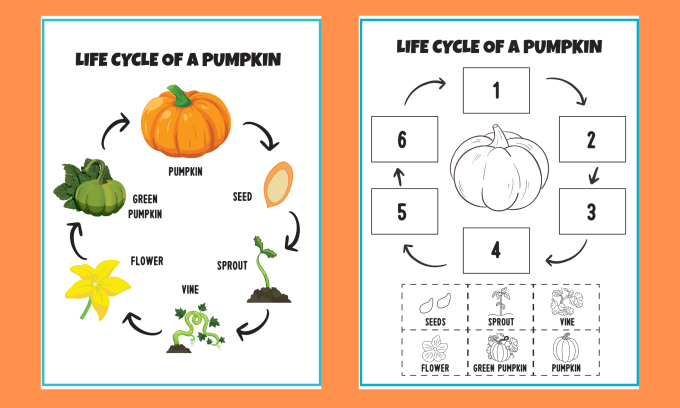
- Put the pumpkin life cycle stages in order
- Cut and paste the stages
- Color the pumpkin life cycle
- Label the stages
- Review how a pumpkin grows from seed to fruit
👉 Get the Free Pumpkin Life Cycle Worksheets
💡 These printable pages work well for a fall science lesson, pumpkin unit, science center, or take-home activity.
Stages of the Pumpkin Life Cycle
1. Seed
The pumpkin life cycle begins with a seed. When the seed has enough water, warmth, and the right growing conditions, it germinates.
2. Sprout
A small root grows downward while a shoot begins pushing up through the soil. Soon, the first leaves appear, and the young pumpkin plant begins growing.
3. Vine
Pumpkin plants grow long vines that spread across the ground. The vine develops leaves and continues growing until flower buds begin to appear.
4. Flower
Pumpkin plants produce large yellow flowers. Pollinators such as bees help move pollen between the flowers. After successful pollination, the pumpkin begins to develop.
5. Green Pumpkin
A small green pumpkin begins growing behind the flower. As it grows, the pumpkin gets larger and continues developing on the vine.
6. Mature Pumpkin
As the pumpkin ripens, many varieties change from green to orange. Inside the mature pumpkin are seeds that can grow into new pumpkin plants.
💡 That means the pumpkin life cycle can begin again.
Explore the Life Cycle With a Real Pumpkin
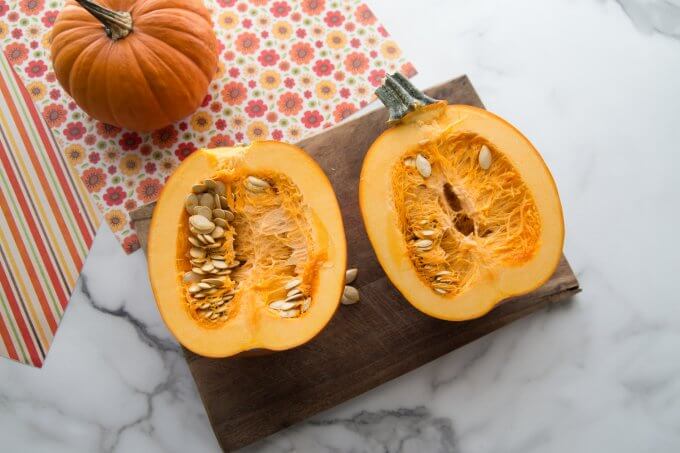
A real pumpkin makes this life cycle lesson even more hands-on. Cut open a pumpkin and let kids observe what they find inside. Look for:
- The stem
- Skin
- Flesh
- Pulp
- Seeds
🔎 Ask kids to think about where the pumpkin fits into the life cycle and what could happen to the seeds next.
👉 For a closer look at pumpkin anatomy, try our Parts of a Pumpkin activity.
Try a Pumpkin Investigation
Use a real pumpkin to extend the life cycle lesson with simple observation and measurement.
Kids can:
- Describe the outside of the pumpkin
- Predict what they will find inside
- Count the seeds
- Compare pumpkin sizes
- Observe the pulp and seeds
- Talk about how the pumpkin grew
👉 Try our Pumpkin Investigation for more hands-on ideas.
Count the Pumpkin Seeds
Once the pumpkin is open, turn the seeds into another easy investigation. Have kids estimate how many seeds are inside before counting them. You can group the seeds by tens or compare the number of seeds in different pumpkins.
👉 Try our Pumpkin Seed Investigation for an easy extension.
🔎 This is also a simple way to reinforce the idea that each seed can potentially grow into another pumpkin plant.
Pumpkin Life Cycle Questions
Use these questions during or after the activity:
- What is the first stage of the pumpkin life cycle?
- What happens after a seed sprouts?
- How does a pumpkin plant grow?
- What happens after flowers appear?
- Why are pollinators important?
- What color might a young pumpkin be?
- Where are the pumpkin seeds?
- How does the life cycle begin again?
Adapt the Pumpkin Life Cycle Activity by Grade
Preschool–Kindergarten: Focus on putting the pictures in order and learning simple words such as seed, sprout, vine, flower, and pumpkin.
Grades 1–2: Have kids sequence the stages and describe what changes from one stage to the next.
Grade 3: Add pollination, plant needs, fruit development, and a written explanation of how the pumpkin life cycle repeats.
More Pumpkin Life Science
Parts of a Pumpkin
Explore pumpkin anatomy with a real pumpkin and printable activity.
Pumpkin Investigation
Observe, measure, compare, and investigate a real pumpkin.
Count Pumpkin Seeds
Estimate and count the seeds inside pumpkins and other fall fruits.
Pumpkin Jack Experiment
Observe how a pumpkin changes as it decomposes over time.
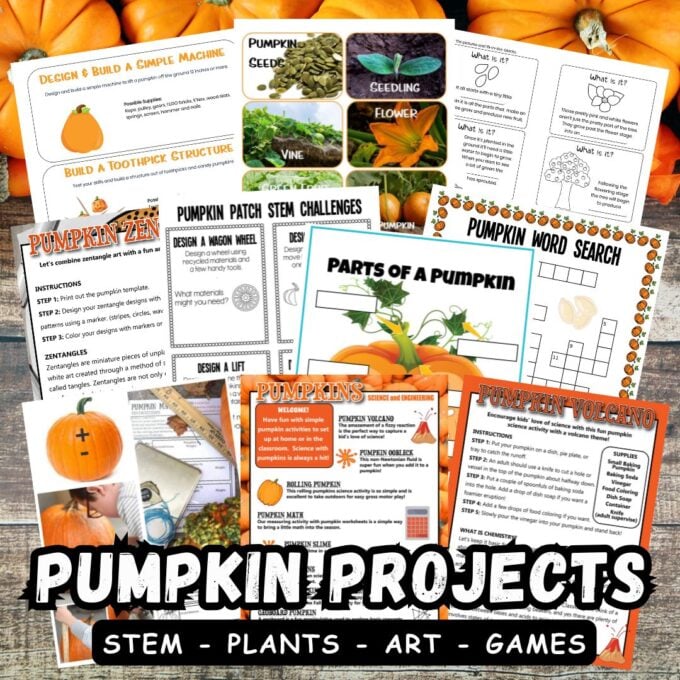
Printable Pumpkin STEM Pack
Want to keep exploring pumpkins with science, STEM, math, engineering, and art?
👉 The Pumpkin STEM Pack includes ready-to-use pumpkin projects and printables for elementary learners. For younger kids, try the Preschool Pumpkin Activities Pack with hands-on activities designed for ages 3–6.


I’ve tried numerous times now to get your Freebies for the pumpkin life cycle but the email never comes through to my inbox. I’m already a subscriber anyway, so I’m not sure why this is happening.
Feel free to email me sarah@littlebinsforlittlehands.com. If you are using a business email from a school or other organization, they might be blocking it. Make sure to also check spam and trash as it is an automated email.