

Make slime inside a real pumpkin using pumpkin guts! This seasonal slime recipe is messy, fun, and a great way to sneak in science learning during fall. Perfect for classrooms, Halloween parties, or a cozy afternoon at home.
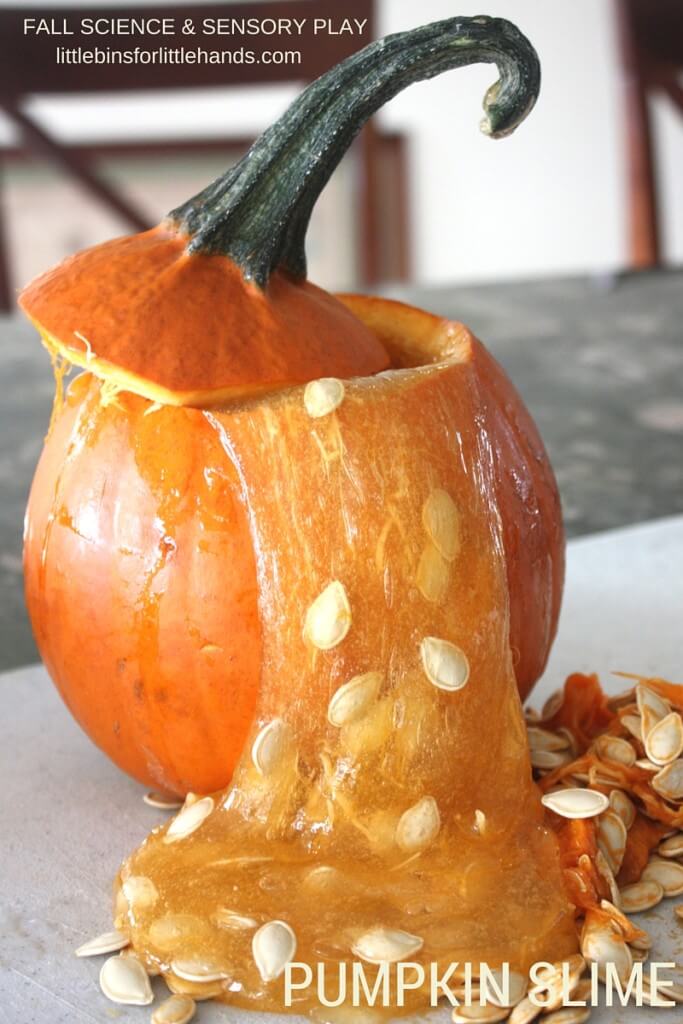
Pumpkin Slime for Fall Science
Slime is the perfect fall STEM project because kids can explore how different substances interact and change. Making pumpkin slime touches on:
- Mixtures and simple chemical changes
- Polymers and cross-linking
- States of matter (liquid vs. solid)
- Properties of materials like stretch, texture, and viscosity
Supplies Needed
- 1 small baking pumpkin
- ½ cup clear washable PVA school glue
- ½ cup room-temperature water
- ¼ cup liquid starch
- Measuring cups & spoons
- Mixing spoon
- Knife (adults only)
How to Make Pumpkin Slime
Watch the video:
- Cut off the pumpkin top and loosen the guts. Scoop some out, leaving enough for mixing.
- Mix ½ cup glue + ½ cup water in a bowl until smooth.
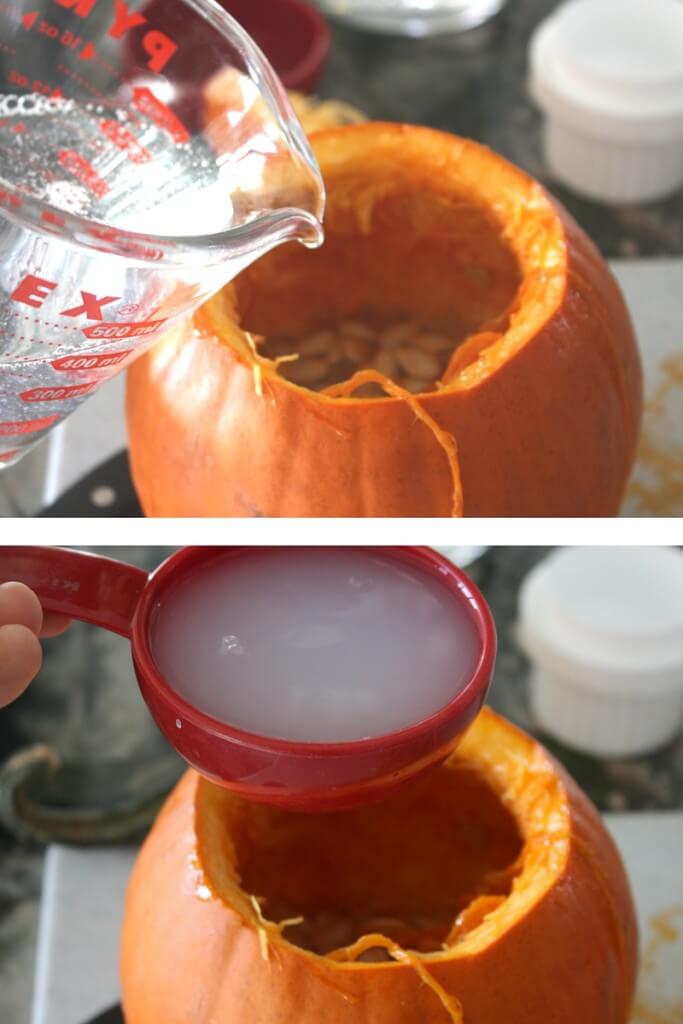
- Pour ¼ cup liquid starch into the pumpkin.
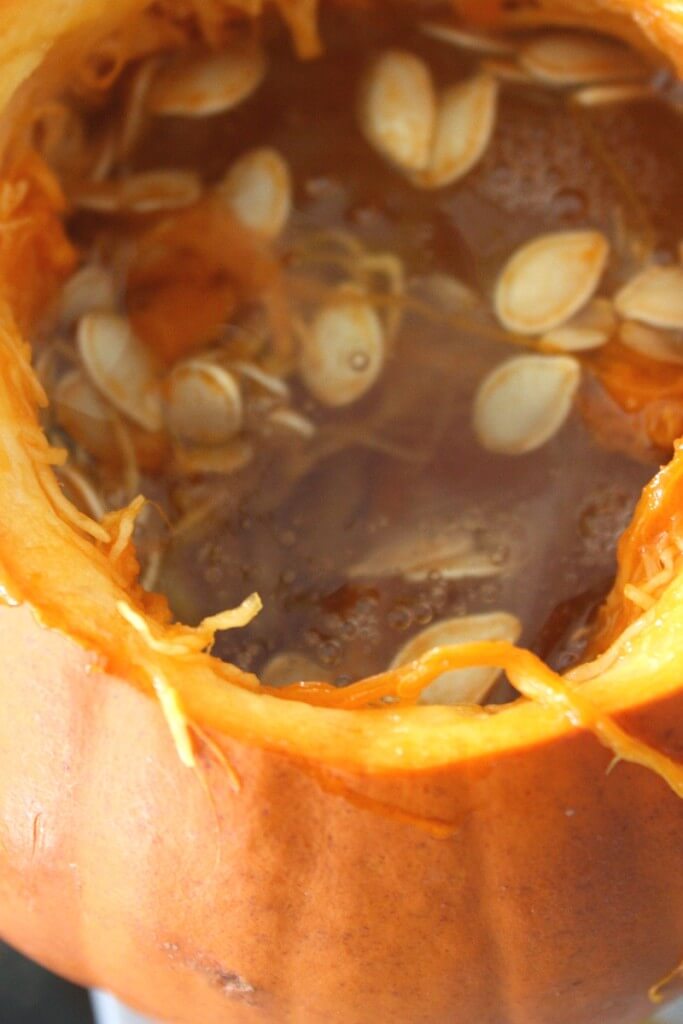
- Add the glue mixture into the pumpkin and knead until slime forms.
💡 Tip: Rub a few drops of starch on your hands to keep the slime from sticking.
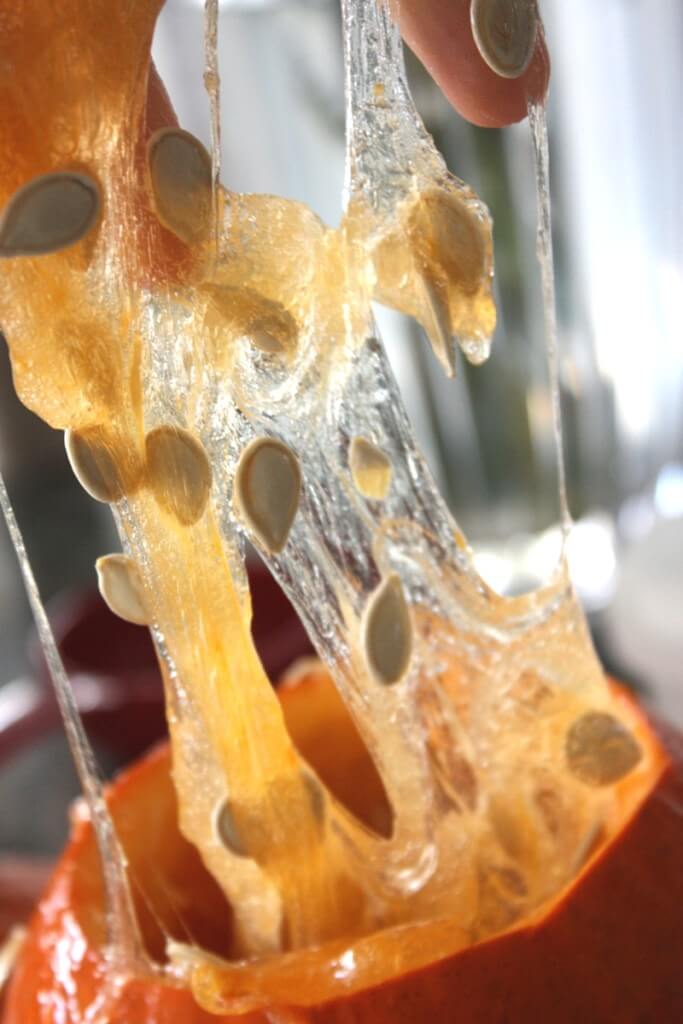
Pumpkin Slime Science Information
- Polymers in Glue: Glue contains PVA, a polymer made of long repeating molecules.
- Cross-Linking: Liquid starch introduces borate ions, which tangle and connect the glue molecules.
- Non-Newtonian Fluid: Slime flows like a liquid but stretches and holds shape like a solid.
👉 Think spaghetti: fresh noodles slide past each other, but leftover noodles stick together. That’s slime science!
Slime is a polymer experiment in action! Glue contains long chains of molecules called polymers. On their own, these chains flow like a liquid. When liquid starch is added, borate ions connect the chains together—a process called cross-linking.
The result is slime: stretchy, squishy, and both liquid and solid at the same time. Scientists call this a non-Newtonian fluid.
Recommended Grade Levels
- Preschool–1st Grade: Sensory play and simple observations
- Grades 2–5: Explore states of matter and chemistry basics
- Grades 6+: Discuss polymers and non-Newtonian fluids in depth
NGSS Guiding Question
This activity connects to Next Generation Science Standards by asking:
- K–2: What happens when different materials are mixed together?
- 3–5: How can matter be described by its observable properties?
Pumpkin Extension Activities
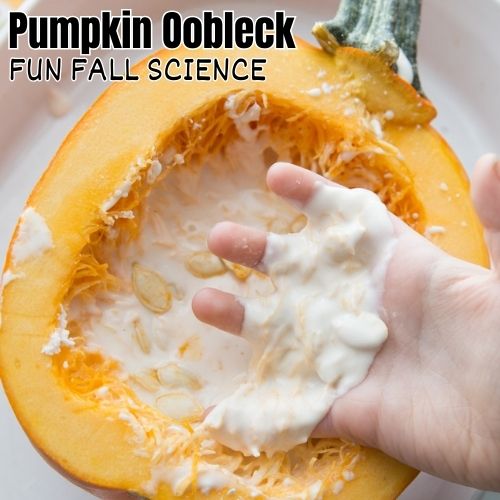
- Pumpkin Oobleck: Try a taste-safe, preschool-friendly version using cornstarch and water.
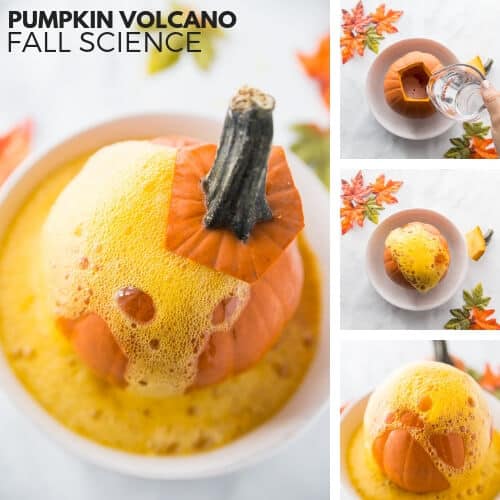
- Pumpkin Volcano: Clean out your pumpkin and turn it into a foamy baking soda and vinegar volcano.
Printable Pumpkin Activity Packs
- [Printable Pumpkin STEM Pack] – 100+ pages of science, math, engineering, and art projects for grades K–3.
- [Printable Pumpkin Preschool Pack] – 14+ pumpkin-themed activities with book lists, crafts, counting, and sensory play for preschool and Pre-K.
Explore More Fall Science
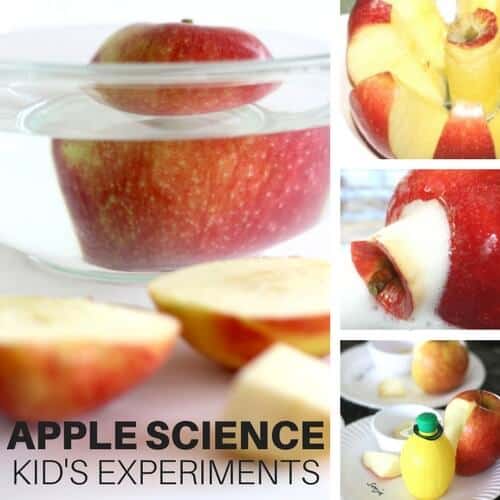
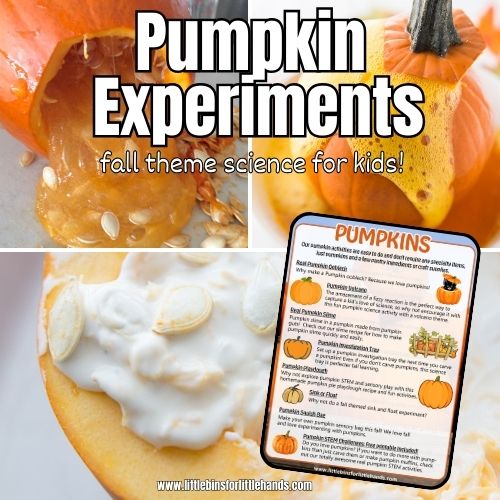
Click on the images below for more fall-themed science activities.
Free Pumpkin Book + Activity Guide


How long is the slime good for? I’m hoping to have it in my sensory table for about a week.
Hi Jenny,
We only left this slime around for a couple of days. I would check it thoroughly before each use as it contains organic matter. It might be worth refridgerating the container when not in use.
My second grader LOVED this little project as part of our Pumpkin unit study. Thank you
You mentioned in one of the comments to try with the mini pumpkins. Do you think this would be the best way to go if I am trying this with a whole class of kids? Do those mini pumpkins have enough stuff in them to actually do something like this? I guess I’ve never really opened one of those up 🙂
There’s not a lot of stuff in them but you can still easily make slime in them if that helps! The texture will just be less pumpkiny but still a lot of fun.
I am doing this pumkin SL me in my granddaughter class tomorrow. We experimented last night on a.large.pumkin per the teachers request but the slime turned out soupy. Any suggestions?
Feel free to email me sarah@littlebinsforlittlehands.com
The pumpkin may have been too big, but I can go over all the details with you!
Just made this slime!
It is really awesome.
Just a bit of a hint, if it is still to sticky keep adding little bits of the liquid starch to get it to the right consistency.
Thank you for sharing this awesome slime!
I tried this and it didn’t work
Hi feel free to email me for quick help! sarah@littlebinsforlittlehands.com