

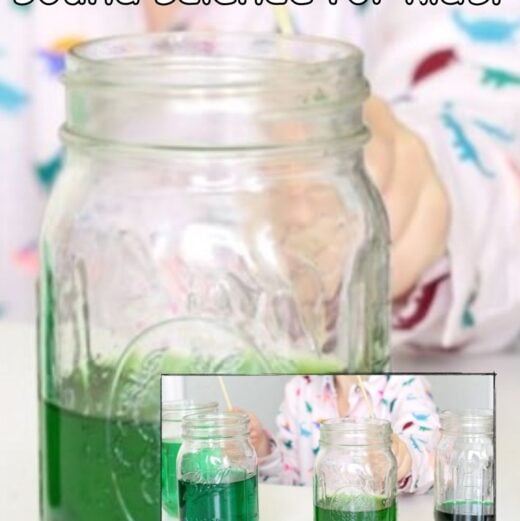
Sound is all around us, and this water xylophone sound science experiment helps kids explore how sound is made and how pitch changes using simple materials. By tapping jars filled with different amounts of water, students can hear, see, and compare sound vibrations in action.
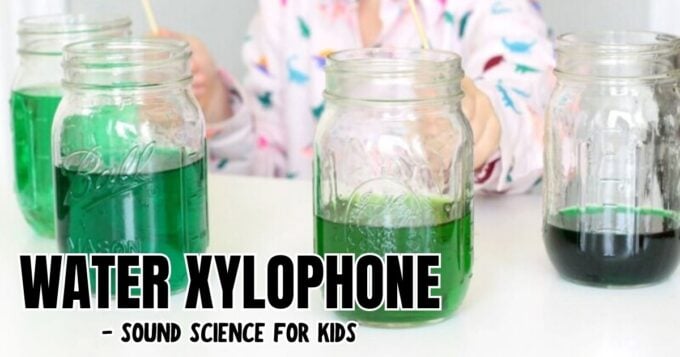
This hands-on sound experiment is easy to set up and perfect for introducing sound waves, vibration, and pitch in a playful, meaningful way.
Water Xylophone at a Glance
Field: Physics—Sound Energy
Grades: K–4
Concepts Explored: Sound is energy produced by vibrations; pitch changes based on vibration speed; sound waves move through liquids and air.
Supplies Needed
- Water
- Clear glass jars or cups (4 or more)
- Food coloring (optional)
- Wooden sticks or spoons
How to Make a Water Xylophone
- Line up the empty jars and gently tap each one to hear the starting sound.
- Fill each jar with a different amount of water.
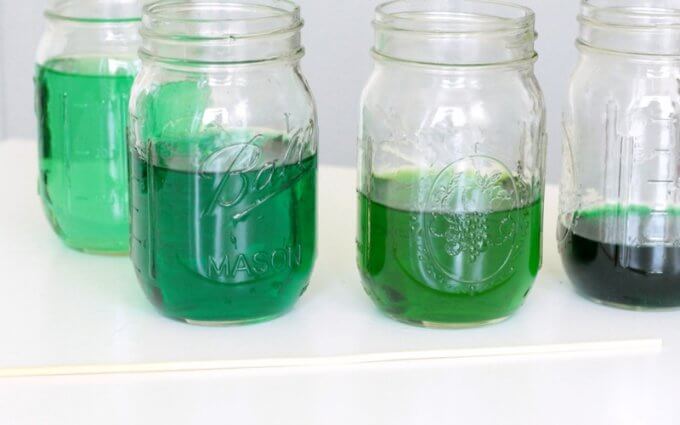
- (Optional) Add food coloring to make it easier to see the different water levels.
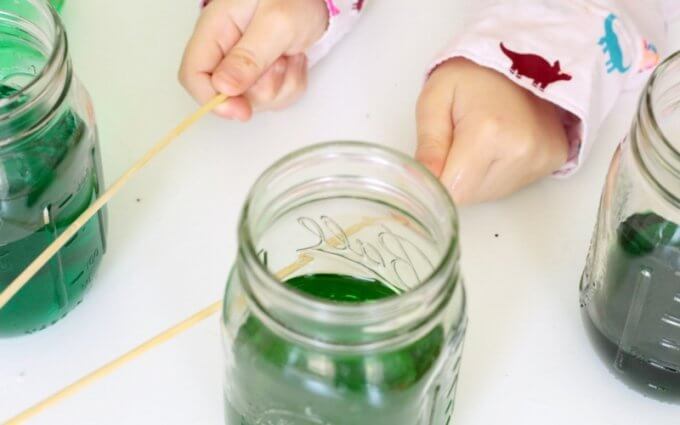
- Gently tap each jar and listen carefully.
- Compare the sounds made by jars with more water and less water.
Encourage kids to change one jar at a time and notice what happens to the sound.
How Does a Water Xylophone Work?
Sound is created when something vibrates. When you tap a jar, it vibrates, creating sound waves that travel through the air to your ears.
Adding water changes how the jar vibrates:
- More water = lower pitch
- Less water = higher pitch
The water inside the jar changes how fast the vibrations move, which changes the pitch of the sound. Students can hear this clearly as they compare each jar.
This experiment is a great way to show that sound waves are vibrations and that changing the material or amount can change the sound we hear.
Guiding Questions for Sound Science
- What is vibrating to make the sound?
- How does the sound change when more water is added?
- Which jar makes the highest sound? The lowest?
- How does this experiment show that sound is energy?
Things to Try Next
- Tap the side of the jar versus the top. Does the sound change?
- Use different tools (a wooden stick vs. a metal spoon) and compare their sounds.
- Adjust the water levels to create a new sound pattern.
- Try using the same amount of water in two jars and see if they sound the same.
For older kids, you can use a tuning app to adjust water levels and try to match musical notes.
Explore More Sound Science
The water xylophone is just one way to explore sound through vibration and pitch. Find more hands-on activities that investigate sound waves, volume, and how sound travels in our Sound Science for Kids hub.
Looking for more hands-on activities? Explore our collection of physics experiments for kids that investigate sound, energy, and motion.

Turn this activity into a full sound unit.
If your students loved this experiment, expand it into a complete sound science study with 8 investigations, recording pages, and guiding questions already done for you.



Super