
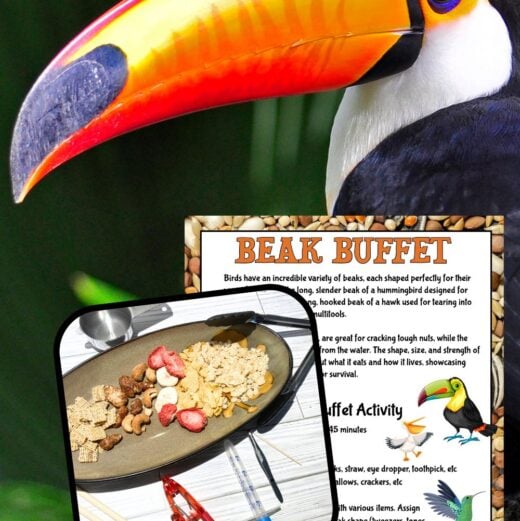
This bird beak activity is a simple, hands-on way to explore how animals are adapted to survive. Birds have different types of beaks depending on what they eat, and this fun STEM experiment lets kids test how those beaks work in real life.
Using everyday tools and food items, kids can investigate which “beak” works best for different foods while thinking like scientists.
👉 This is a great example of an animal adaptation experiment that connects structure and function in an easy, visual way.
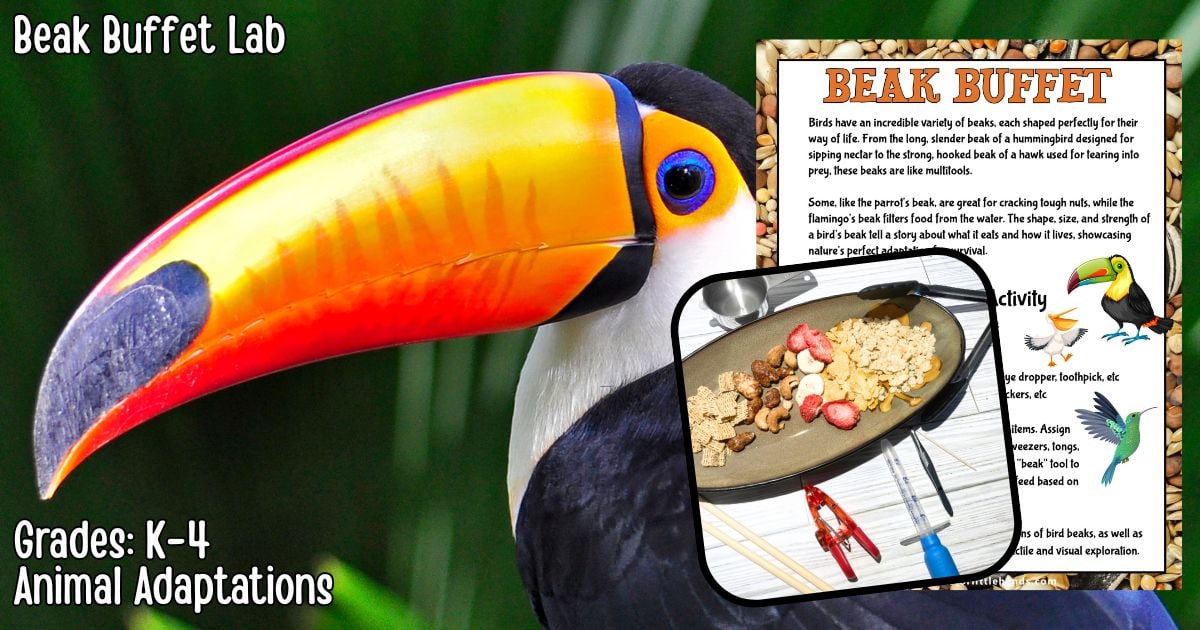
Animal Adaptations
Field: Life Science—Animal Adaptations
Grades: K–4
Concepts Explored: Animals have physical adaptations that help them survive; beak shape relates to diet; structure and function are connected; different environments require different survival strategies.
Supplies Needed
- Tweezers
- Tongs
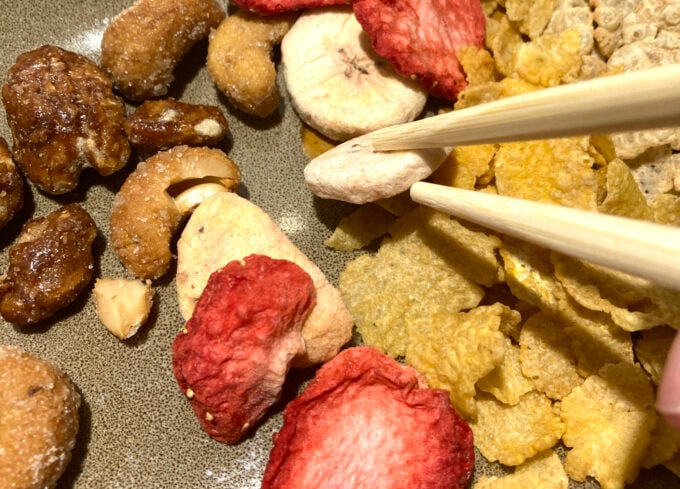
- Chopsticks
- Straw
- Eye dropper
- Toothpick
- Small cups or bowls
Food Items:
- Nuts or seeds
- Dried fruit
- Crackers or cereal
- Marshmallows
- Water

How-To Instructions
👉 Find a fully printable bird beak mini pack in our Animal Adaptations Pack.
- Set up a “beak buffet” by placing different foods in separate bowls.
- Assign each tool to represent a bird’s beak.
- Challenge kids to pick up food using only one “beak” at a time.
- Test each tool with each food.
- Observe which combinations work best.
- Optional: Time each attempt or count how many items are collected.
Observation Table
| Beak Tool | Food Type | Easy or Hard? | Notes |
|---|---|---|---|
| Tweezers | Seeds | Easy | Good grip |
| Straw | Water | Easy | Like nectar feeding |
| Tongs | Marshmallows | Medium | Too bulky |
| Chopsticks | Cereal | Hard | Needs precision |
Bird Beak Science Information
Bird beaks are a perfect example of how structure relates to function. The size, shape, and strength of a beak determine what kind of food a bird can eat and how it gathers that food.
For example:
- Long, thin beaks are used to sip nectar from flowers
- Strong, thick beaks crack seeds and nuts
- Hooked beaks tear meat
- Flat beaks filter food from water
In this activity, the tools act as models for these different beak types. When kids test each tool, they can clearly see how certain shapes work better for certain tasks.
This demonstrates how animals are adapted to their environments and why different species survive in different habitats.
Bird feeding is also part of a larger system called a food chain. A food chain shows how energy moves through an ecosystem, starting with plants and moving to animals that eat them and to other animals.
Birds play an important role in food chains as consumers. Some birds eat seeds and plants, while others eat insects, fish, or even small animals. The type of beak a bird has helps determine where it fits in the food chain.
👉 Learn more about how this works with a food chain activity for kids
Common Bird Beaks and What They Eat
Here are some real birds and how their beaks are adapted for different types of food:
- Hummingbird – Long, thin beak for sipping nectar
🔎 Try using a straw to model this type of beak - Finch – Short, strong beak for cracking seeds
🔎 Try using tweezers or fingers to pick up small seeds - Duck – Flat beak for scooping and filtering food from water
🔎 Try using a spoon or scoop - Hawk or Eagle – Sharp, hooked beak for tearing meat
🔎 Try using tongs - Woodpecker – Strong, pointed beak for drilling into wood to find insects
🔎 Try using a toothpick or skewer
These examples help show how different beak shapes are perfectly suited for the foods birds eat in their environments.
💡 Can you match each tool to the bird it represents?
NGSS Guiding Questions
- How do different beak shapes help birds get food?
- Which beak works best for different types of food?
- How does the structure of a beak relate to its function?
- What might happen if a bird’s environment changes?
More Facts for Kids
- A hummingbird’s beak can be longer than its head
- Flamingos filter food from water using their beaks
- Parrots use strong beaks to crack nuts
- Birds do not have teeth—their beaks do all the work
Make It a Science Project
Turn this activity into a simple experiment:
- Record which beak works best for each food
- Measure time or quantity collected
- Compare results between tools
- Change variables (different foods or tools)
Ask:
💡 Which bird would survive best in this environment?
Extension Activities
- Design your own bird and create a matching beak
- Build a habitat and match birds to food sources
- Compare beaks to other animal adaptations
- Pair with camouflage or migration lessons
More Animal Science Activities
👉 Explore more animal science activities here
- animal adaptations for kids
- Winter animal adaptations
- migration activities for kids
- camouflage activity for kids
- bird science activities for kids
Bird Beak FAQ
What is a bird beak activity?
A bird beak activity is a hands-on science experiment where kids use tools to model different bird beaks and test how they pick up food.
Why do birds have different beak shapes?
Birds have different beak shapes because they eat different types of food. Each shape helps them survive in their environment.
What age is this activity for?
This activity works best for kindergarten through 4th grade but can be extended with data collection for older students.
Is this a STEM activity?
Yes, it combines science, observation, and problem-solving to explore real-world animal adaptations.
How does this teach animal adaptations?
Kids test how different “beaks” work, helping them understand how physical traits support survival.
What is the easiest way to extend this activity?
Add a recording sheet or timing challenge to turn it into a full science investigation.
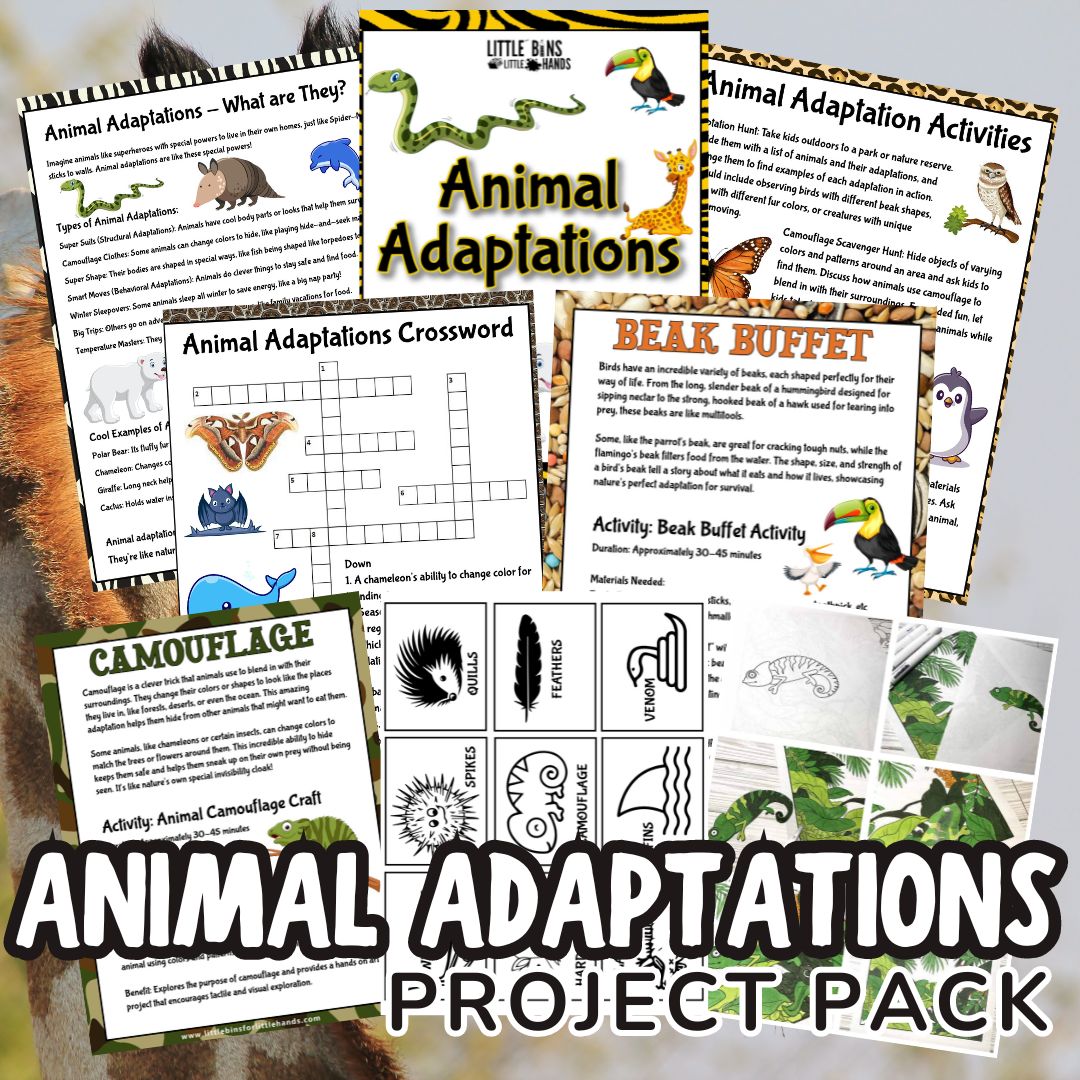
Take It Further with Animal Adaptations
If your kids enjoyed this bird beak activity, you can explore even more hands-on learning with our Animal Adaptations Project Pack.
This printable pack includes a full set of activities to help kids learn how animals survive in their environments, including: camouflage, beak buffet, sorting, science, and vocabulary.
👉 Grab the Animal Adaptations Project Pack here