

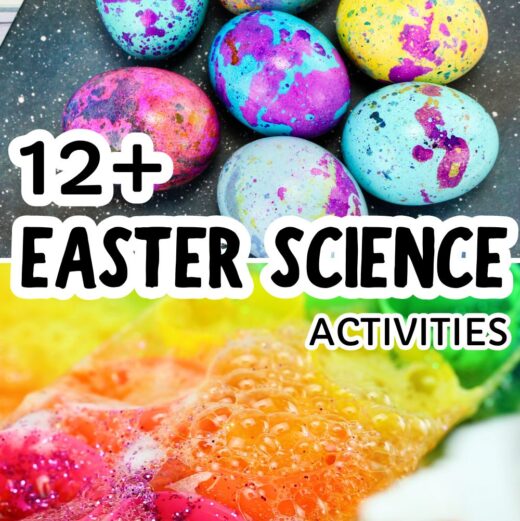
Looking for fun and easy Easter science experiments for kids? This collection of hands-on Easter science activities and STEM experiments uses plastic eggs, candy, and simple kitchen ingredients to explore chemistry, physics, and engineering.
From fizzy Easter egg reactions and Peeps science experiments to egg drop challenges and crystal eggs, these activities are perfect for preschool, elementary classrooms, or science fun at home.
Many of these Easter themed science experiments use inexpensive supplies and take just minutes to set up.
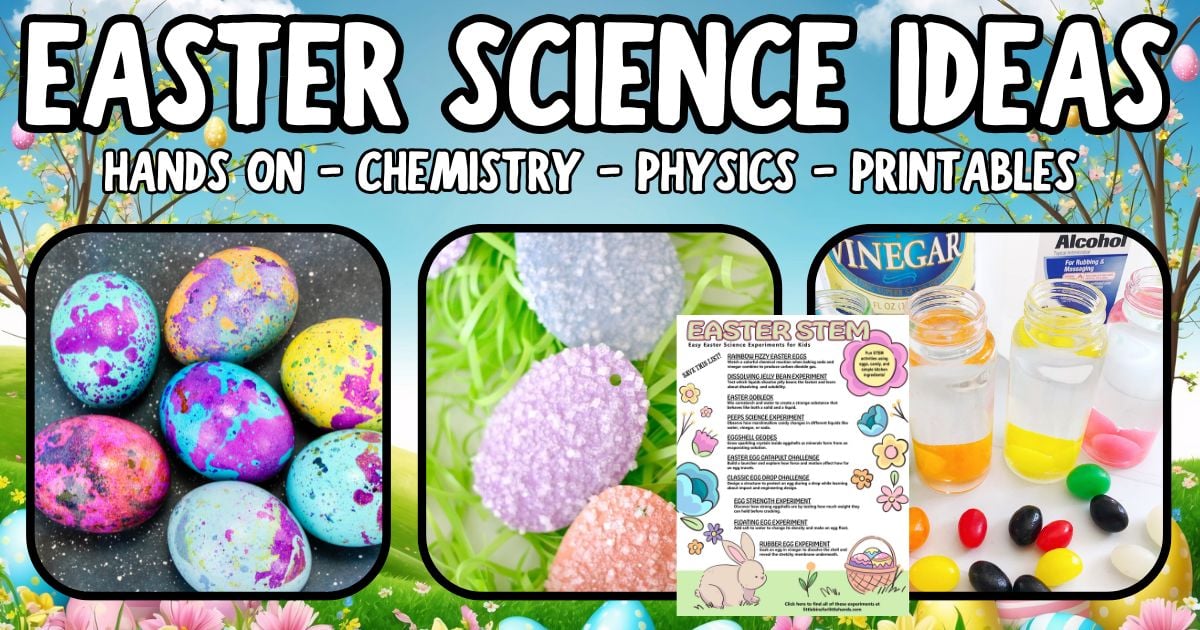
What Are Easter Science Experiments?
Easter science experiments are hands-on STEM activities that use Easter-themed materials like eggs, candy, and plastic eggs to explore scientific concepts. Kids can investigate chemistry with fizzy egg reactions, test density with floating eggs, explore physics with egg races, and design engineering challenges like egg drop experiments.
👉 Want more engineering challenges? Check out our Easter STEM Activities for Kids.
FREE Easter STEM Starter Pack
Want a printable list of simple Easter science activities?
Our Free Easter STEM Starter Pack includes: a quick experiment, STEM challenges, and a recording sheet for kids to track their discoveries.
Perfect for classrooms, homeschool, or simple spring science fun.
👉 Grab your Free Easter STEM Starter Pack here
Easter Science Experiments in This Post
•Rainbow Fizzy Easter Egg Experiment
• Easter Slime Science Recipes
• Dissolving Jelly Bean Experiment
• Crystal Easter Eggs
• Easter Egg Catapult Challenge
• Marbled Easter Eggs Science
• Vinegar Egg Dye Reaction
• Peeps Science Experiments
• Salt Crystal Easter Craft
• Classic Egg Drop Challenge
• Easter Egg Races
• Crystal Eggshell Geodes
• Easter Oobleck
Classic egg science:
Easter Science Experiments
Rainbow Fizzy Easter Egg Science Experiment
Gather your plastic eggs and get ready for an explosion of color. This activity uses a baking soda and vinegar reaction to create a colorful Easter science experiment kids love.

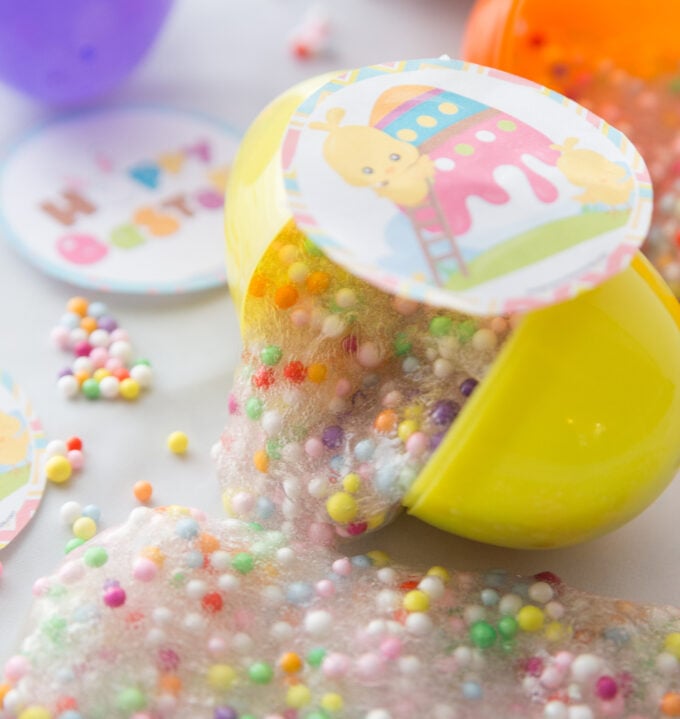
Easter Slime Science
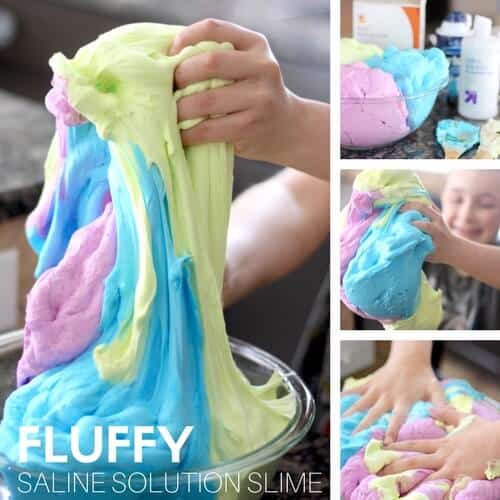
Explore several Easter slime recipes in one place including foam bead slime, fluffy slime, confetti slime, and egg-themed slime.
Slime helps kids learn about polymers and non-Newtonian materials.
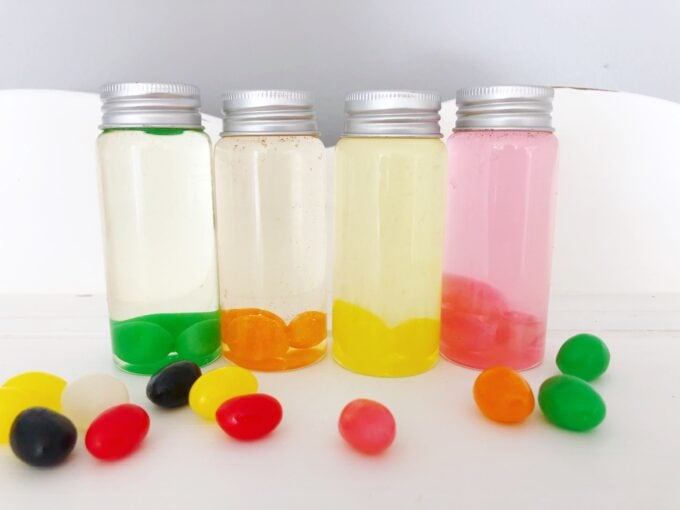
Dissolving Jelly Bean Experiment
Test which household liquids dissolve jelly beans the fastest. Kids can make predictions and record results while observing how different liquids affect candy.
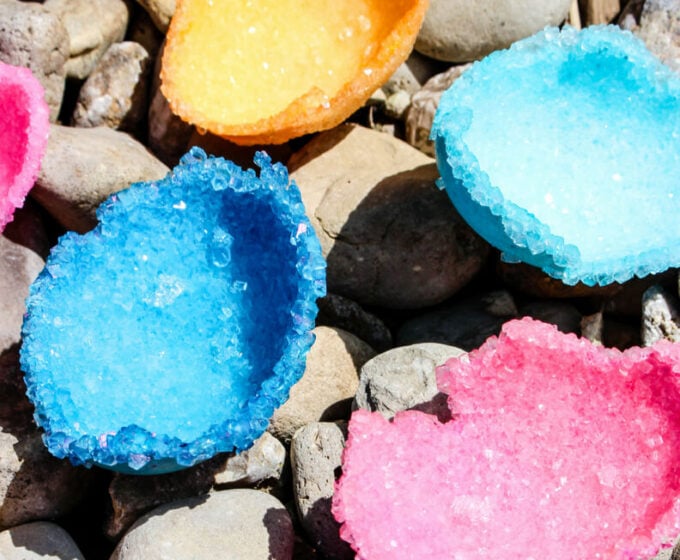
Crystal Easter Eggs
Grow beautiful crystals on eggs or egg shapes using a simple crystal-growing solution. This activity introduces kids to crystal formation and chemistry.
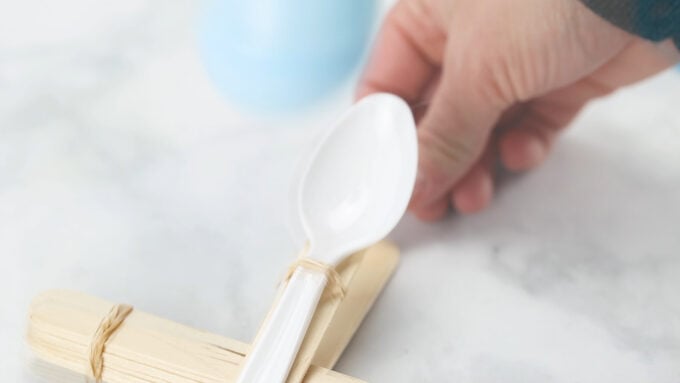
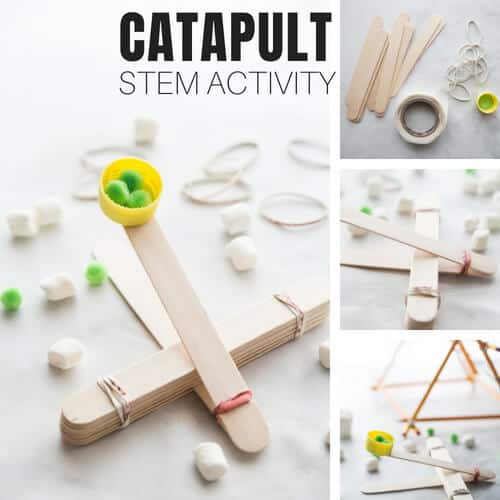
Easter Egg Catapult Challenge
Design and build an Easter egg launcher using simple materials. This fun engineering challenge introduces concepts like force, motion, and trajectory.
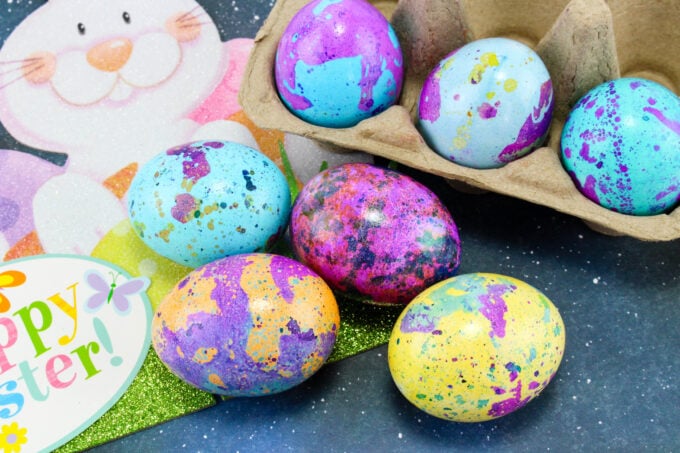
Marbled Easter Eggs Science
Create galaxy-style marbled Easter eggs using oil, vinegar, and food coloring while exploring how liquids interact and repel each other.
Dyeing Eggs with Vinegar Reaction
Put a science twist on a classic Easter tradition by combining baking soda and vinegar with egg dye for a colorful chemical reaction.
Taste-Safe Peeps Slime
Use marshmallow Peeps to make a taste-safe slime recipe perfect for younger kids.
Have extra Peeps? Try making Peeps playdough as another fun sensory science activity.
Peeps Science Experiments
Leftover Peeps make great science tools. Try testing how Peeps react in water, vinegar, soda, or oil to see how different liquids affect marshmallow candy.
Salt Crystal Easter Craft
Grow sparkling salt crystals on cardboard Easter shapes while learning about crystal formation.
Classic Egg Drop Challenge
The egg drop challenge is a classic engineering STEM activity.
Design a structure that protects a real egg when dropped from a height and test different materials and designs.
Easter Egg Races
Create ramps and race plastic eggs to explore gravity, speed, and motion.
Egg Strength Science Experiment
Eggshells are stronger than many people think. Test how much weight eggs can hold before cracking and explore the strength of curved shapes.
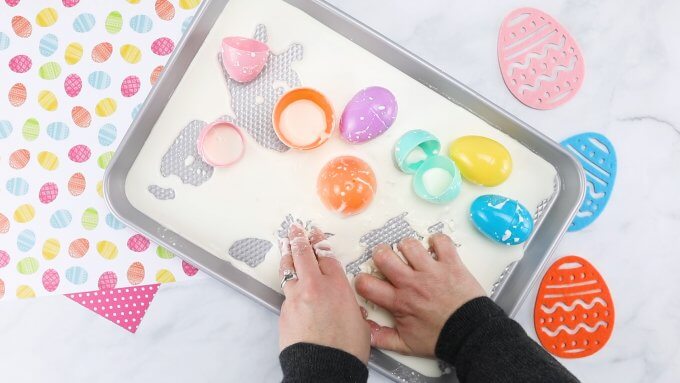
Easter Oobleck
Oobleck is a classic science activity made from cornstarch and water. This non-Newtonian fluid behaves like both a solid and a liquid. Add plastic eggs for an Easter twist.
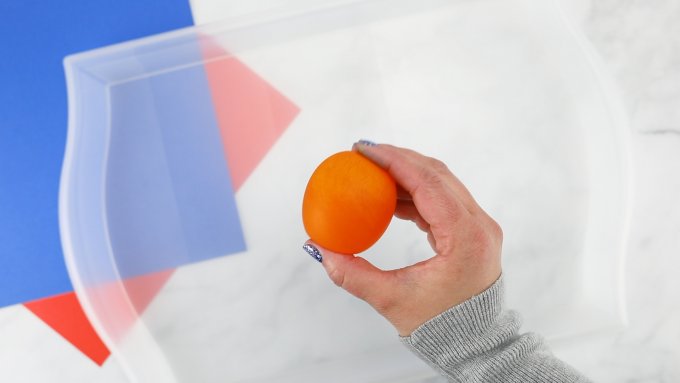
Try It! Easter Egg Sink or Float
Fill plastic eggs with different objects and test whether they sink or float. This experiment explores density and buoyancy.
Supplies
• plastic Easter eggs
• bowl of water
• small objects (beans, coins, rice, buttons)
Instructions
- Fill plastic eggs with different materials.
- Drop each egg into water.
- Observe which eggs sink and which float.
Ask kids
• What happens when you add heavier items?
• Can you make the egg float again?
Science Concept
Objects float or sink depending on density. If the egg becomes heavier than the water it displaces, it will sink.
More Real Egg Science Experiments
Real eggs are perfect for exploring fascinating science concepts.
Try these classic egg experiments:
• Floating Egg – explore density and saltwater
• Egg Osmosis – observe how liquids move through membranes
• Egg in a Bottle – demonstrate air pressure
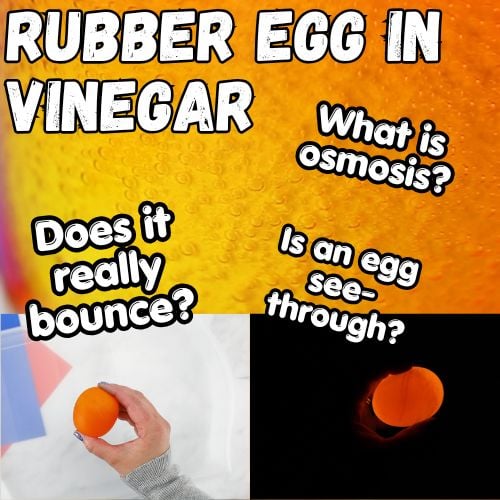
• Rubber Egg Experiment – dissolve eggshells with vinegar
Using the Scientific Method with Kids
The scientific method helps kids learn how scientists investigate questions.
Encourage kids to:
- Ask a question
- Make a prediction
- Test the experiment
- Observe results
- Share what they discovered
These steps help children develop critical thinking and problem-solving skills.
👉 Learn more about the Scientific Method for Kids here.
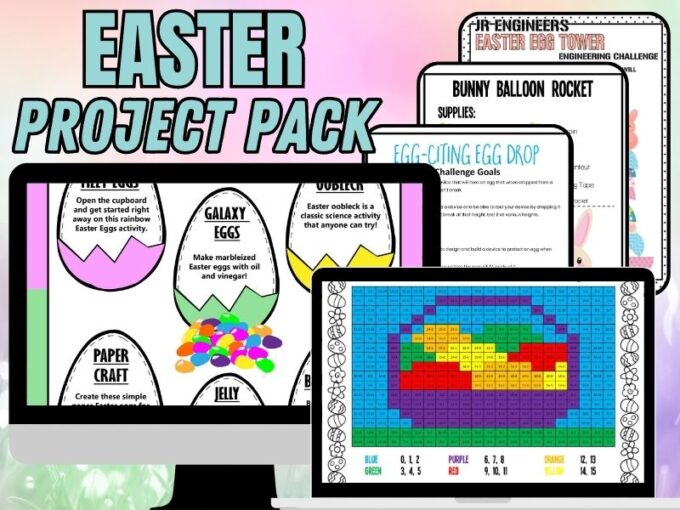
Printable Easter Project Pack
- 20+ Easter science activities and STEM projects kids that are easy to set up and fit into the time you have available even if it’s limited!
INCLUDES:
- Easter STEM Pack
- PEEPS Theme STEM Pack
- Easter Slime Science Pack

11 Comments
Comments are closed.