

Looking for fun Peeps science experiments to try this Easter? These fluffy marshmallow treats are perfect for exploring simple science concepts like density, dissolving, heat expansion, and engineering challenges.
Below you’ll find 10 easy Peeps experiments and STEM activities kids can try using simple supplies. From dissolving Peeps in liquids to building structures and launching marshmallow catapults, these hands-on activities make Easter science fun and memorable.
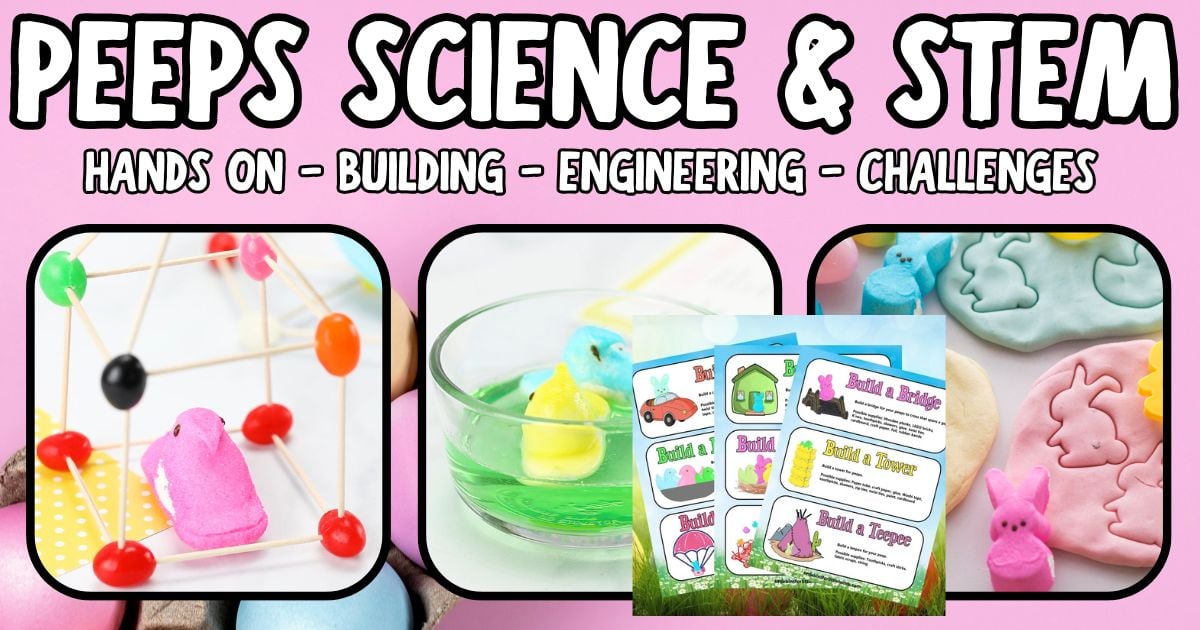
Kids will love watching Peeps expand in the microwave, dissolve in liquids, float in water, and launch from a catapult while discovering real science concepts along the way.
Field: Chemistry & Physics — Properties of Materials
Grades: K–4
Concepts Explored: Density, dissolving (solubility), heat expansion, engineering design, observation and experimentation.
Why Peeps Are Perfect for Science Experiments
Peeps may look like simple candy, but they are actually great tools for learning science.
Peeps are made mostly of:
- sugar
- gelatin
- corn syrup
- air bubbles
Because Peeps contain thousands of tiny air bubbles trapped inside the marshmallow, they behave in surprising ways when placed in water, heat, or different liquids.
10 Fun Peeps Science Experiments and STEM Activities
Try these easy Peeps STEM activities with kids this Easter.
Dissolving Peeps Experiment
What happens when Peeps are placed in different liquids?
Supplies:
- Peeps
- clear cups
- water
- vinegar
- soda or juice
Instructions:
- Fill several cups with different liquids.
- Place one Peep in each cup.
- Observe what happens over time.
- Compare which liquid dissolves the Peep the fastest.
🔎 Science concept:
Peeps dissolve because they are mostly sugar, which dissolves easily in liquids. Acidic liquids like vinegar can break down the marshmallow structure more quickly.
Peeps Color Mixing Experiment
Watch what happens when the bright colors on Peeps dissolve in water.
Place two or three Peeps of different colors into a bowl of warm water and observe how the sugar coating begins to dissolve.
As the colors spread through the water, they begin to mix.
🔎 Science concept:
This simple activity lets kids observe diffusion and basic color mixing as the food coloring moves through the water.
Peeps Sink or Float Experiment
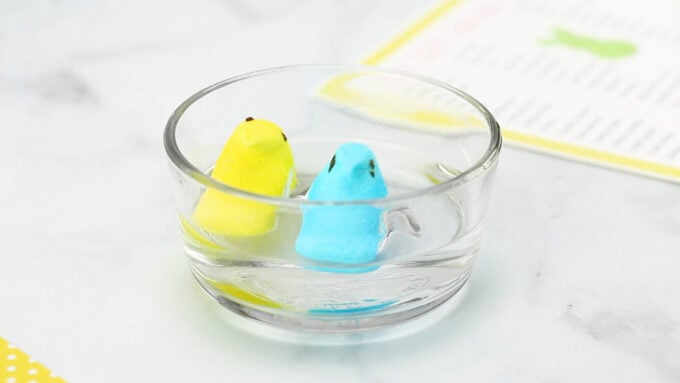
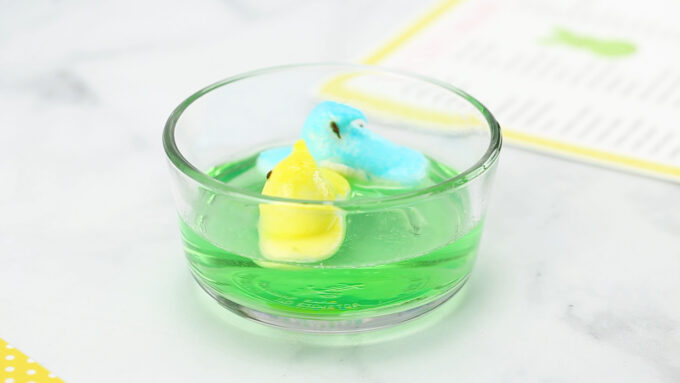
Do Peeps float or sink in water?
Instructions:
- Place a Peep in a bowl of water.
- Observe whether it floats or sinks.
- Try squishing the Peep and placing it back in the water.
Science concept:
🔎 Peeps float because they contain many trapped air bubbles, which lower their density. When the air pockets are squeezed out or the candy absorbs water, the Peep may sink.
Microwave Peeps Expansion Experiment
Watch Peeps grow huge in the microwave! 🛑 Adult assistance is required. Peeps will be very hot.
Supplies:
- Peeps
- microwave-safe plate
Instructions:
- Place Peeps on a plate.
- Microwave for 10–20-30 seconds.
- Observe how the Peeps expand.
🔎 Science concept:
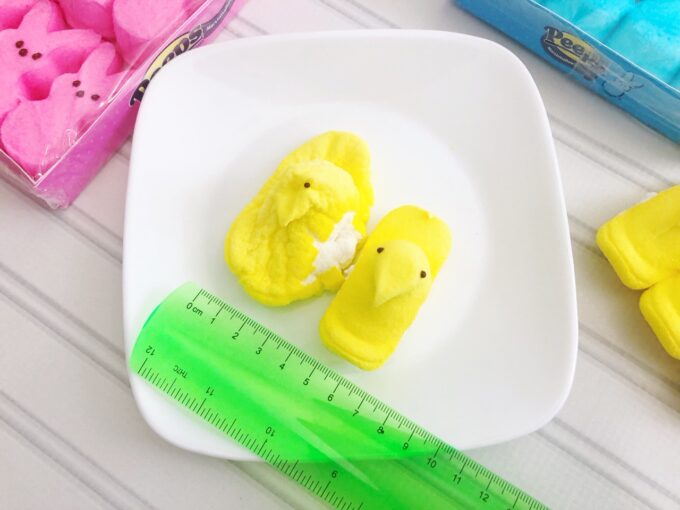
Marshmallows contain tiny air pockets. When heated, the air inside expands, causing the Peeps to puff up dramatically. Measure the Peep before and after!
Freeze Peeps Experiment
What happens if you freeze a Peep?
Instructions:
- Place Peeps in the freezer for several hours.
- Remove them and compare their texture to fresh Peeps.
🔎 Science concept:
Peeps do not freeze solid because they contain very little water. Instead, they become firm but still squishy.
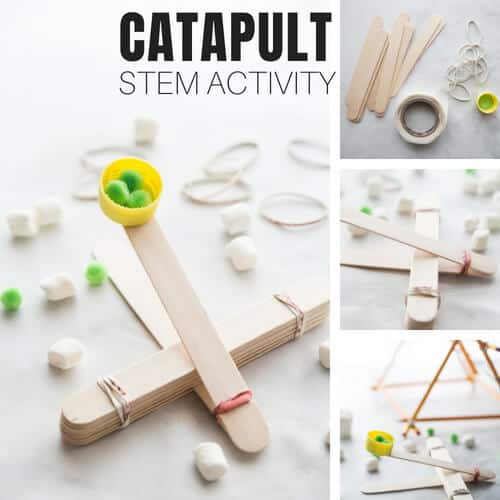
Peeps Catapult STEM Challenge
Turn your Peeps into flying marshmallow projectiles.
Supplies:
- craft sticks
- rubber bands
- plastic spoon
- Peeps
Instructions:
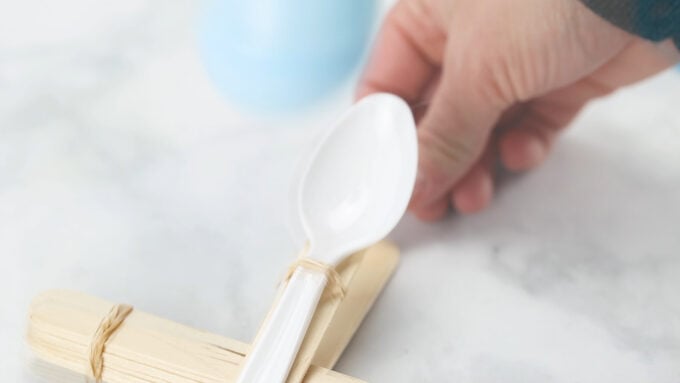
- Build a simple catapult with craft sticks and rubber bands.
- Launch Peeps and measure how far they travel.
🔎 STEM challenge:
Which shape travels farther — bunny Peeps or chick Peeps?
👉 Build our popsicle stick catapult model here
Peeps Tower Engineering Challenge
Can you build the tallest structure using Peeps?
Supplies:
- Peeps
- toothpicks
Challenge:
Work together to design the tallest tower possible. Test which structure is the most stable.
🔎 Engineering concept:
Kids explore balance, structure, and design.
Peeps Density Test – Sink or Float
Try modifying the Peeps to see how density changes.
Experiment ideas:
- squish a Peep into a ball
- tear it into pieces
- soak it in water
Compare whether the modified Peeps float or sink.
Peeps 5 Senses Observation Activity
Younger kids will enjoy exploring Peeps using their senses.
Ask questions such as:
- What do the Peeps look like?
- How do they smell?
- What do they feel like?
- What do they taste like?
This is a simple early science observation activity.
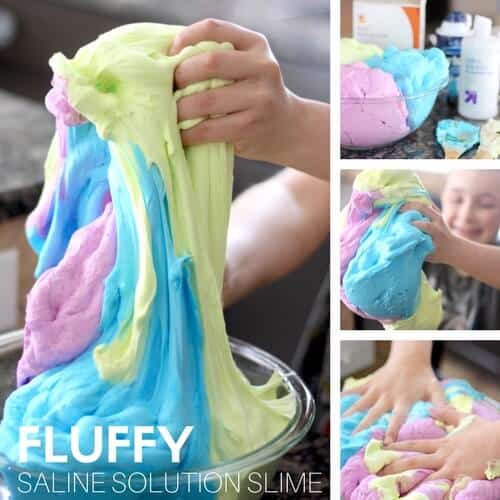
Peeps Slime Experiment
Turn Peeps into stretchy slime.
Supplies:
- Peeps
- powdered sugar
- a little oil
Melt the Peeps slightly and mix with powdered sugar until a stretchy slime forms. This activity combines chemistry and sensory play.
👉 Try the Peeps slime recipe here
Peeps Playdough
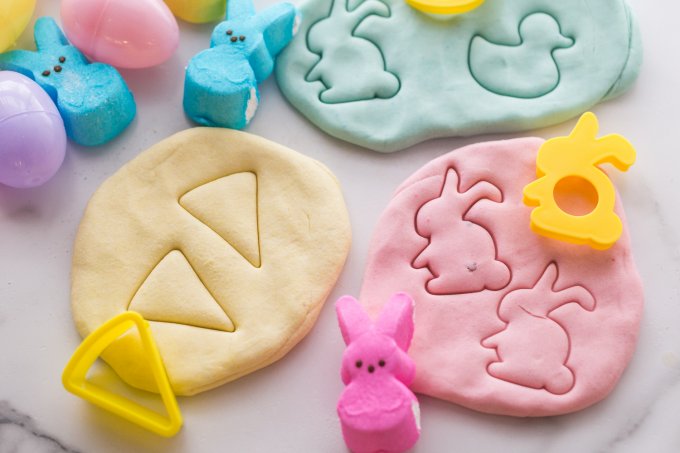
You can also turn Peeps into homemade playdough. Melt the Peeps slightly and mix with powdered sugar to form a soft dough that kids can shape and mold.
👉 Try the Peeps playdough recipe here
Peeps STEM Challenge for Kids
Want to take your Peeps science activities a step further? Try a Peeps STEM challenge!
These fun engineering challenges encourage kids to design, build, test, and improve their ideas using simple materials and a few fluffy Peeps.
STEM challenges are a great way to introduce the engineering design process while keeping learning playful and hands-on.
Watch the Video:
How the Peeps STEM Challenge Works
- Give each student or group a Peep candy.
- Choose a STEM challenge (see printable below).
- Build a solution using the available materials.
- Test the design and improve it.
Encourage kids to ask questions like:
- What materials make the strongest structure?
- How can we make the design more stable?
- What could we change to make it work better?
Example Peeps STEM Challenges
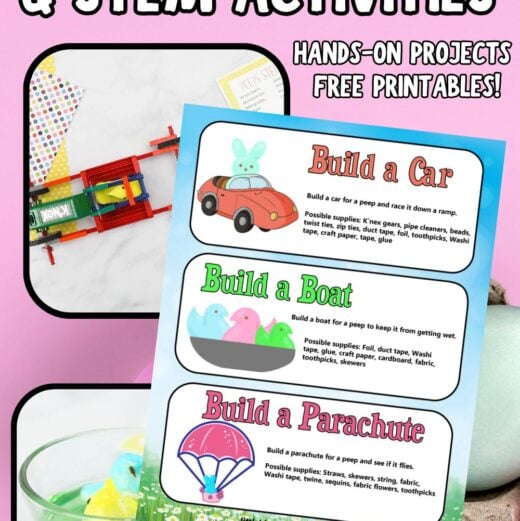
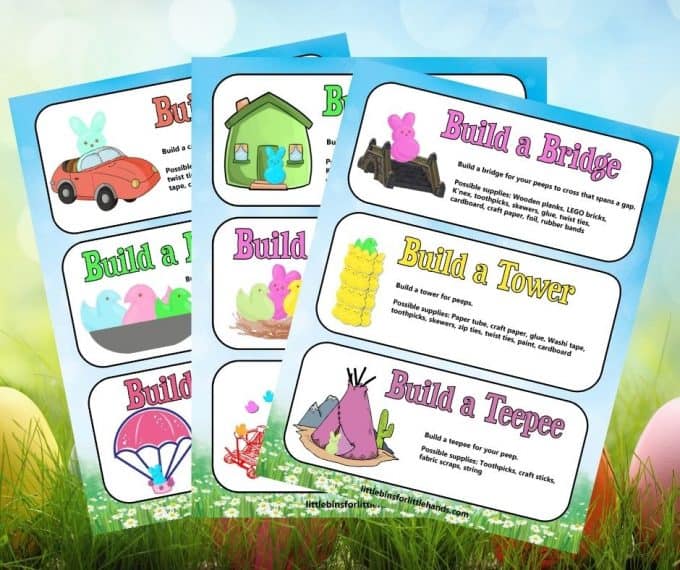
Try one of these fun engineering challenges using Peeps:
• Build a bridge for your Peep to cross
• Build the tallest tower you can using Peeps
• Build a house to protect your Peep
• Build a nest for a Peep chick
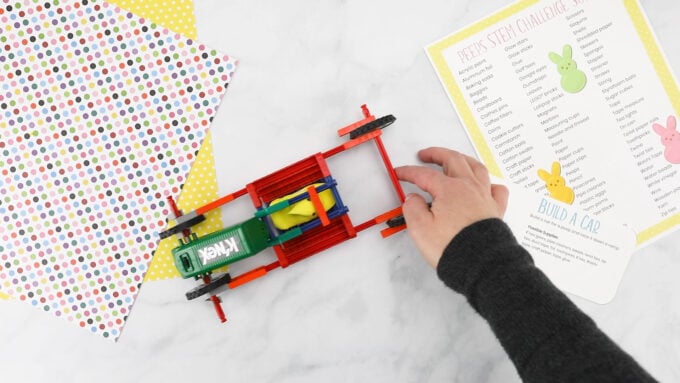
• Build a car to transport your Peep
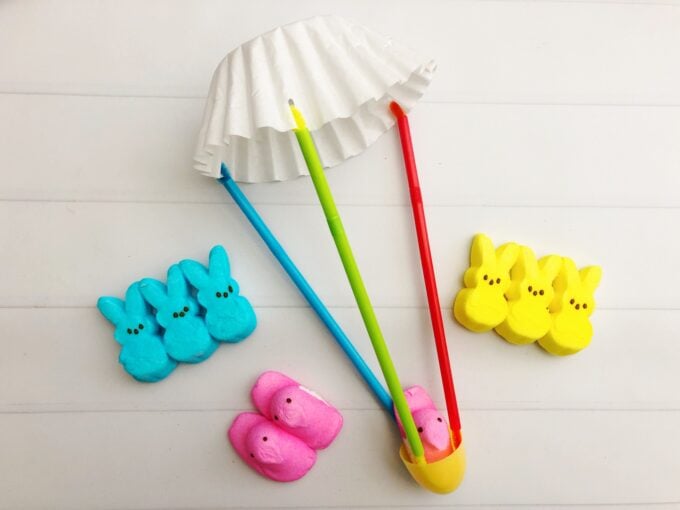
• Design a parachute to drop your Peep safely
Suggested Materials
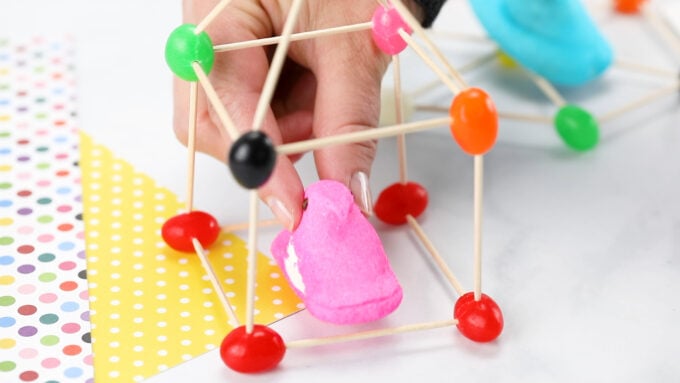
Use simple building materials such as:
- toothpicks
- craft sticks
- paper tubes
- cardboard
- string
- tape or glue
- rubber bands
Kids can experiment with different materials to discover which designs work best.
👉 Free Printable Peeps STEM Challenge Cards
STEM Tip for Kids
Encourage students to follow the engineering design process:
Ask → Imagine → Plan → Build → Test → Improve
This helps turn a simple building activity into a meaningful STEM learning experience.
The Science Behind Peeps Experiments
These Peeps activities explore several important science concepts.
Density: Density describes how much mass fits into a space. Because Peeps contain many trapped air pockets, they are less dense than water, which is why they float.
Solubility: Sugar dissolves easily in water. When Peeps are placed in liquids, the sugar dissolves and the marshmallow structure breaks apart.
Heat Expansion: When marshmallows are heated, the air trapped inside expands. This is why Peeps grow dramatically in the microwave.
Make It a Science Project
You can easily turn these activities into a science project. Learn more about the scientific method here.
Example investigation:
Question: Which liquid dissolves Peeps the fastest?
Hypothesis: Peeps will dissolve faster in vinegar than in water.
Variables to test:
- type of liquid
- temperature of liquid
- size of Peep
Collect Data: Record how long it takes for the Peeps to dissolve and compare the results.
Peeps FAQ
What happens when you put Peeps in water?
Peeps slowly dissolve in water because they are mostly made of sugar. The sugar dissolves while the marshmallow structure breaks apart. This makes Peeps a fun way to explore the science concept of solubility.
Why do Peeps expand in the microwave?
Peeps contain many tiny air bubbles trapped inside the marshmallow. When heated, the air inside expands and pushes the marshmallow outward, causing the Peeps to puff up dramatically.
Do Peeps float or sink?
Peeps usually float because the trapped air bubbles make them less dense than water. If the air bubbles are squeezed out or the Peeps absorb water, they may begin to sink.
Are Peeps good for science experiments?
Yes. Peeps are great for simple science experiments because they help demonstrate concepts like dissolving, density, heat expansion, and engineering design in a fun and visual way.
Explore More Easter Science
Looking for more seasonal STEM ideas? Visit our Easter Science Experiments and STEM Activities Hub, where you’ll find egg experiments, Easter engineering challenges, and hands-on science projects perfect for the classroom or home.
Love Candy Science?
If your kids enjoy learning science with candy, explore our Candy Science Experiments Hub to discover more fun experiments using treats like Skittles, M&M’s, gummy bears, and marshmallows.
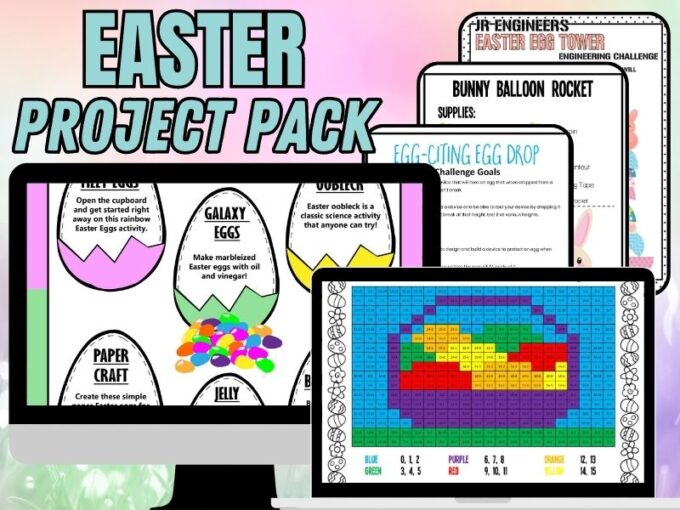
Printable Easter Project Pack
- 20+ Easter science activities and STEM projects for kids that are easy to set up and fit into the time you have available, even if it’s limited!
INCLUDES:
- Easter STEM Pack
- PEEPS Theme STEM Pack
- Easter Slime Science Pack

It might be a silly question but, what is a peep? What is it made of?
A peep is simply a marshmallow that is made into a holiday shape and coated in sugar.