
This exciting Egg Osmosis Experiment demonstrates how liquids pass through a semipermeable membrane using osmosis. Watch as the egg shrinks and swells based on the surrounding liquid. It’s an excellent science experiment to introduce biological concepts in a fun and visual way!

Egg Osmosis Experiment
The Egg Osmosis Experiment is an engaging way to visualize osmosis, diffusion, and cell membranes in action. It’s perfect for elementary and middle school students to explore how water molecules move in living organisms.
Whether in the classroom or at home, this science experiment is a fantastic hands-on learning experience that brings science to life!
Grade Level Recommendation:
- Best for: Grades 4 and older
- Younger students (K-3) may need assistance with recording observations.
- Older students (6-8) can extend the experiment by comparing different liquid solutions.
Supplies Needed
- 1 raw egg
- White vinegar
- Corn syrup
- Water
- Clear jars or glasses
- Beaker
- Paper towel
Egg Osmosis Experiment Set Up
Step 1: Prepare the Rubber Egg
- Place a raw egg in a jar and fully submerge it in white vinegar.
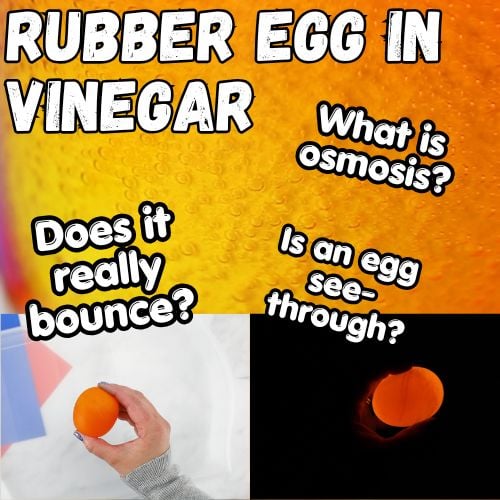
- Let it sit for 24 to 48 hours. The vinegar, which contains acetic acid, will dissolve the calcium carbonate in the eggshell, creating carbon dioxide gas bubbles.
- Carefully rinse the egg under tap water and observe its translucent egg membrane.
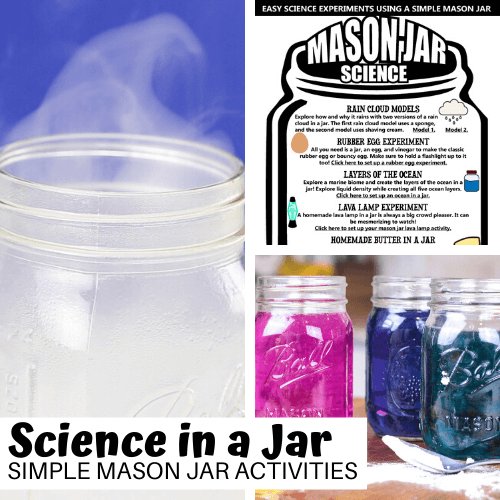
💡Explore information on the egg in vinegar experiment (make a bouncy egg) here. It’s a classic science experiment.

Step 2: Shrink the Egg with Corn Syrup
- Place the rubber egg into a jar filled with corn syrup.
- Leave it for a few hours and observe changes.
- The egg will shrink as osmosis causes water to move from an area of higher concentration of water inside the egg to an area of lower concentration outside the egg.


Step 3: Swell the Egg with Water
- Remove the egg from the corn syrup and place it into a jar of clean tap water.
- Let it sit and watch as it swells back to its original size due to diffusion of water back into the selectively permeable membrane of the egg.
- Observe and record changes in size and texture using a data table.


Osmosis Science
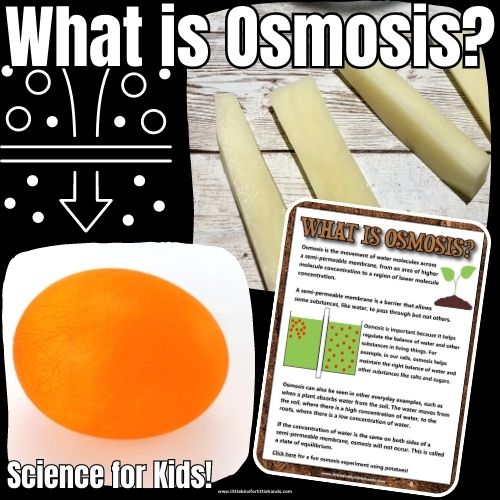
This experiment demonstrates osmosis – a special type of diffusion where water molecules move through a semi-permeable membrane from an area of high solution concentration to a low concentration.
💡Read more about what is Osmosis in science here.
- In Corn Syrup: The syrup has a lower concentration of water than the egg. Through osmosis, water inside the egg moves outside of the egg into the syrup, causing the egg to shrink.
- In Water: The outside solution concentration is higher than inside the egg. Water moves back in, causing the egg to swell again.
Real-World Connection: Osmosis plays a crucial role in biological systems, helping cell membranes regulate water movement. For example:
Hypertonic vs. Isotonic Solutions
- Hypertonic Solution: A liquid with less water and more dissolved stuff (like sugar or salt) than inside the egg (or a cell). Water leaves the egg (or cell) to balance things out, making it shrink—just like when the egg sits in corn syrup!
- Isotonic Solution: A liquid with the same amount of water inside the egg (or a cell). Since everything is balanced, water moves in and out evenly, and the egg (or cell) stays the same size. This is why our body fluids are isotonic—to keep our cells healthy!

Extend the Learning
Want to explore osmosis further? Try these fun variations:
1. Compare Different Liquids
- Try placing the egg in salt water, sugar water, or sports drinks. How do these affect the egg?
- Does a higher solution concentration make a difference?
2. Measure and Record Data
- Measure the ml of liquid before and after placing the egg.
- Create a diagram showing the egg’s changes over time.
- Record size changes in a data table.
3. Discuss Osmosis in Nature
- Explore how osmosis allows plant roots to absorb water.
- Discuss the impact of saltwater on human cells and equilibrium.
- Talk about how the shell of the egg acted as a selectively permeable membrane before dissolving.
Related Osmosis Activities
Want to keep exploring fun biology experiments? Try these next:
- Egg In Vinegar – A fun chemical reaction that produces carbon dioxide gas!
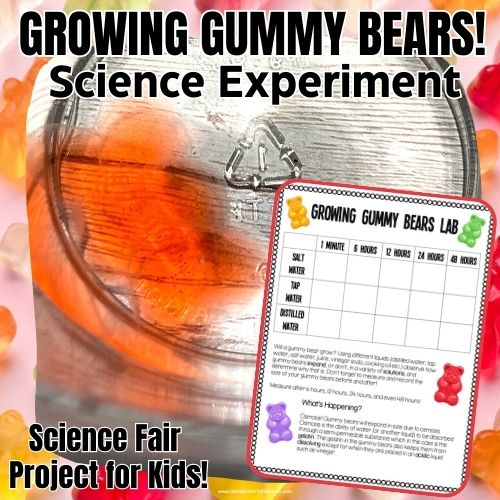
- Gummy Bear Osmosis Experiment – Watch how different solution concentrations affect gummy bears!
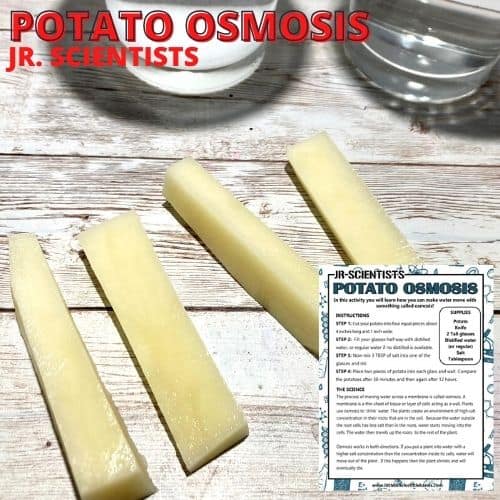
- Potato Osmosis Lab – Watch how different solution concentrations affect raw potatoes.
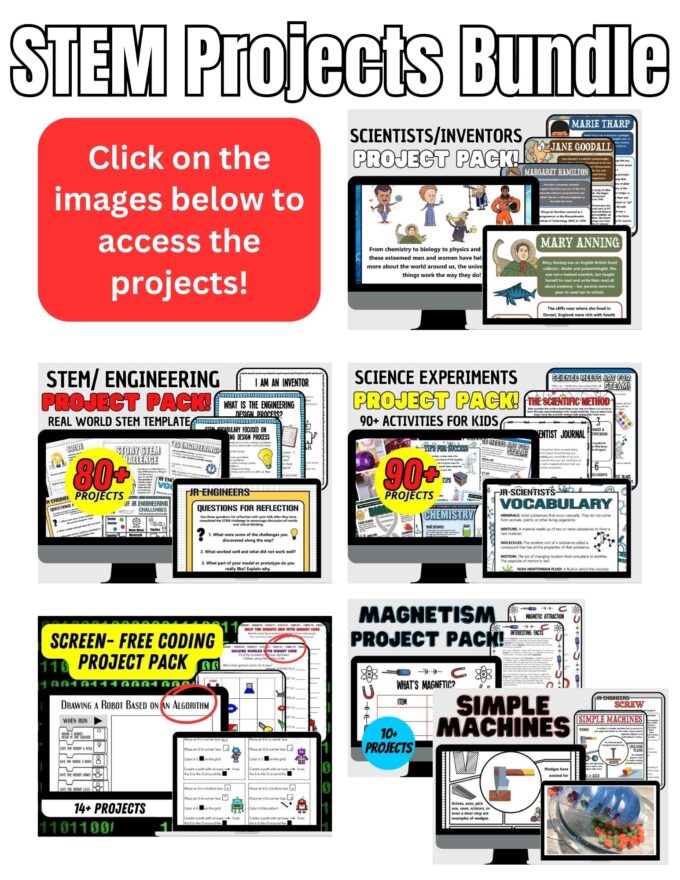
Check out our STEM Projects Bundle
The STEM Project Bundle includes a variety of hands-on packs designed to engage kids ages 5-12 in exploring science, technology, engineering, and math. Packed with activities for all age levels, it’s perfect for both home learning and classrooms.