
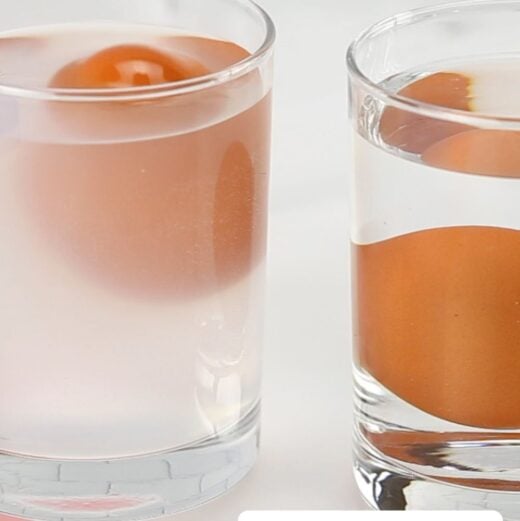
The floating egg experiment is a classic kitchen chemistry activity that demonstrates density and buoyancy using just salt, water, and eggs. By changing the amount of salt dissolved in water, kids can observe how density affects whether an object sinks or floats. This easy science experiment is perfect for exploring solutions, mixtures, and physical properties of matter with everyday materials.
👉 Explore our Kitchen Chemistry Experiments for Kids hub for simple investigations that teach chemistry concepts using food, water, salt, crystals, and other household materials.
What Kids Learn From The Floating Egg Experiment
This simple egg science activity introduces several important chemistry and physics concepts:
- Density
- Buoyancy
- Solutions
- Dissolving
- Concentration
- Physical properties of matter
Field: Chemistry—Density & Solutions
Grades: 3–6
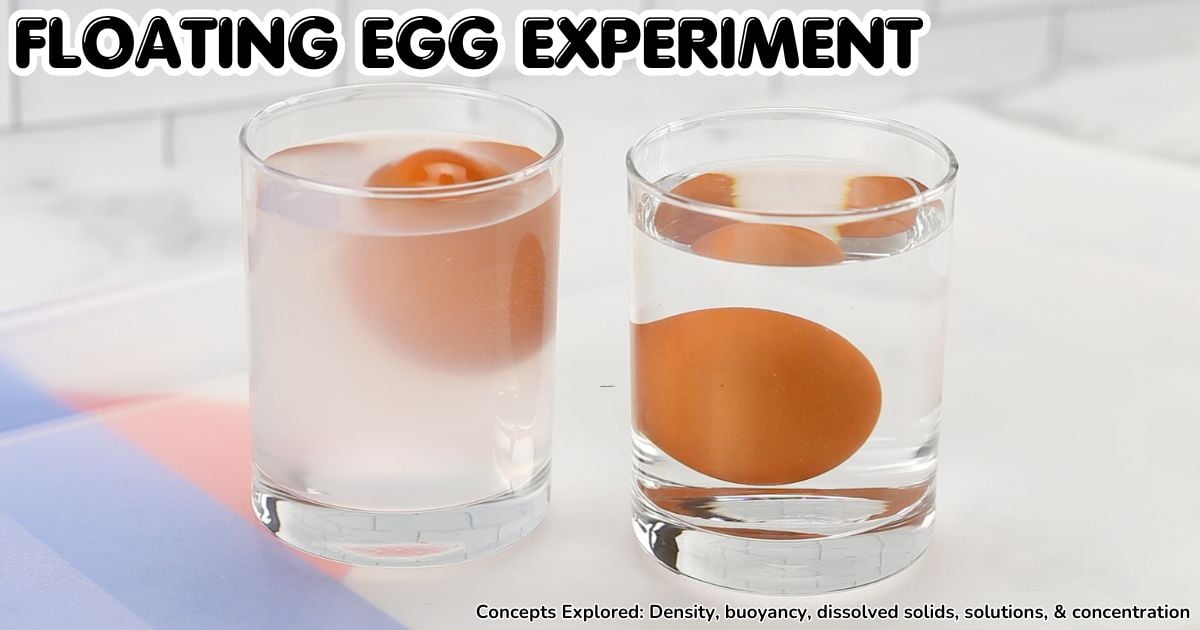
Concepts Explored: Density, buoyancy, dissolved solids, solutions, concentration, and physical properties of matter.
Floating Egg Experiment
Supplies
- 2 tall drinking glasses
- 2 uncooked eggs
- Water
- Salt
- Spoon
- Masking tape and marker (optional)
Instructions
STEP 1: Fill one glass with plain water.
STEP 2: Carefully place an egg into the glass and observe what happens.
STEP 3: Fill the second glass with the same amount of water.
STEP 4: Add salt one tablespoon at a time, stirring after each addition until dissolved.
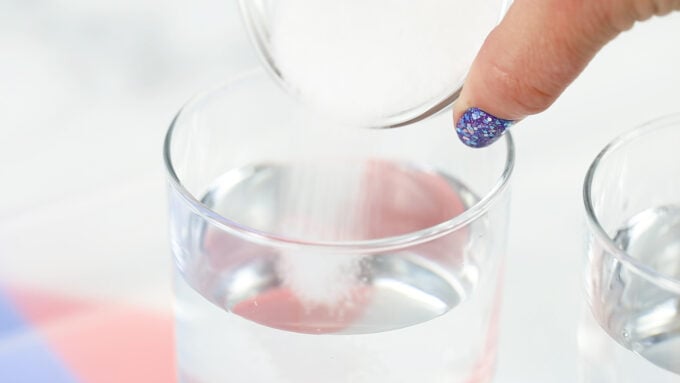
STEP 5: Continue adding salt until the second egg floats.
STEP 6: Compare the two glasses and record your observations.

What Do You Notice?
Encourage kids to observe and record what happens throughout the experiment. Use the free investigation pages below.
Ask questions such as:
- Does the egg sink, float, or hover?
- How much salt was needed before the egg started to rise?
- What happens as more salt dissolves?
- Can you make the egg stay in the middle of the glass?
- How are the two glasses different?
These observations help students identify patterns and think like scientists.
The Science Behind The Floating Egg Experiment
The floating egg experiment demonstrates two important science concepts: density and buoyancy.
What Is Density?
Density describes how much matter is packed into a given space.
Some substances are denser than others. An egg is slightly denser than plain water, which is why it sinks to the bottom of the glass.
💡 A simple way to think about density is how much “stuff” is packed into a certain amount of space.
What Happens When Salt Dissolves?
When salt is stirred into water, it may seem to disappear, but it is still there.
The salt breaks apart into tiny particles that spread evenly throughout the water. This creates a solution, a mixture in which one substance dissolves completely in another.
💡 As more salt dissolves, more particles are added to the water. This increases the density of the solution.
Why Does The Egg Float In Salt Water?
As the saltwater becomes denser, it eventually exceeds the egg’s density.
When this happens, the egg can no longer sink to the bottom and begins to float. The more dissolved salt in the water, the easier it is for the egg to float.
What Is Buoyancy?
Buoyancy is the upward force that a liquid exerts on an object.
Denser liquids provide greater buoyant force, making it easier for objects to float. The dense saltwater pushes upward on the egg more strongly than plain water does.
Why Do People Float More Easily In The Ocean?
Ocean water contains dissolved salts that make it denser than most freshwater.
Because saltwater is denser, it provides greater buoyancy and helps support your body. This is why many people find it easier to float in the ocean than in a swimming pool.
Free Kitchen Chemistry Starter Guide
Want more easy chemistry activities you can do with simple kitchen ingredients?
Grab the FREE Kitchen Chemistry Starter Guide featuring:
- 5 simple chemistry activities
- reusable observation pages
- kid-friendly science prompts
- printable investigation sheets
- easy supply lists
Perfect for home or classroom science fun.
Think Like A Scientist
Before you begin, ask:
- What do you think will happen when salt is added to the water?
- How much salt will it take before the egg floats?
- Can you make the egg hover in the middle?
Record your observations and compare your results with your predictions to see what you learned about density and buoyancy.
👉 Learn how to apply the scientific method for kids here
Make It A Science Project
Want to turn this activity into a science fair project? Try testing one variable at a time and recording your results.
Ideas to investigate include:
- How much salt is needed to make an egg float?
- Does egg size affect buoyancy?
- Do fresh and older eggs behave differently?
- Does sugar water work the same way as salt water?
- Which liquid makes an egg float the best?
Create a chart or graph to compare your results and look for patterns.
Floating Egg Experiment Extensions
- Hovering Egg Challenge: Can you carefully layer fresh water over salt water and make the egg hover in the middle?
- Compare Different Solutions: Test salt water, sugar water, and plain water.
- Measure Salt Concentration: Record exactly how much salt is required for the egg to begin floating.
- Compare Egg Freshness: Test a fresh egg and an older egg to see whether age affects buoyancy.
Fresh Egg Vs. Older Egg
Did you know that a fresh egg sinks while an older egg often floats?
As eggs age, moisture slowly evaporates through the shell, and an air pocket inside the egg grows larger. This increases buoyancy, causing older eggs to float more easily. This simple test is often used to check egg freshness at home.
Why does an egg float in salt water?
Salt increases the density of the water. When the saltwater becomes denser than the egg, the egg floats.
What scientific concept does the floating egg experiment demonstrate?
This experiment demonstrates density, buoyancy, solutions, and dissolved solids.
Is the floating egg experiment chemistry or physics?
It includes both chemistry and physics. Dissolving salt in water is chemistry, while buoyancy and floating are physics concepts.
Can you make an egg hover in the middle of water?
Yes. By carefully layering fresh water over salt water, you can create an area where the egg remains suspended between the two layers.
Why do people float more easily in the ocean?
Saltwater is denser than freshwater, which increases buoyancy and helps support the body.
Is the floating egg experiment a good science fair project?
Yes. Students can test different amounts of salt, different liquids, or different types of eggs while following the scientific method.
More Kitchen Chemistry Activities
👉 Explore all of our science experiments for kids here
- Growing Crystals
- Candy Science Experiments
- States of Matter Activities
- Physical and Chemical Change Experiments
- Oobleck & Non Newtonian Fluids
- Magic Milk


Explore More Kitchen Chemistry
Continue the fun with our Kitchen Chemistry Pack featuring printable experiments, reusable investigation pages, science explanations, and easy hands-on activities using everyday kitchen supplies.
Perfect for home or classroom science with activities focused on:
reactions, mixtures, crystals, surface tension, polymers, and color-changing chemistry.