
Looking for an easy way to teach ocean zones for kids? This printable ocean zones activity pack helps students learn how the ocean changes with depth, sunlight, temperature, pressure, and animal life.
Students can read about the ocean zones, look at a visual diagram, label the ocean layers, complete printable worksheets, and connect what they learn to a hands-on ocean layers activity.
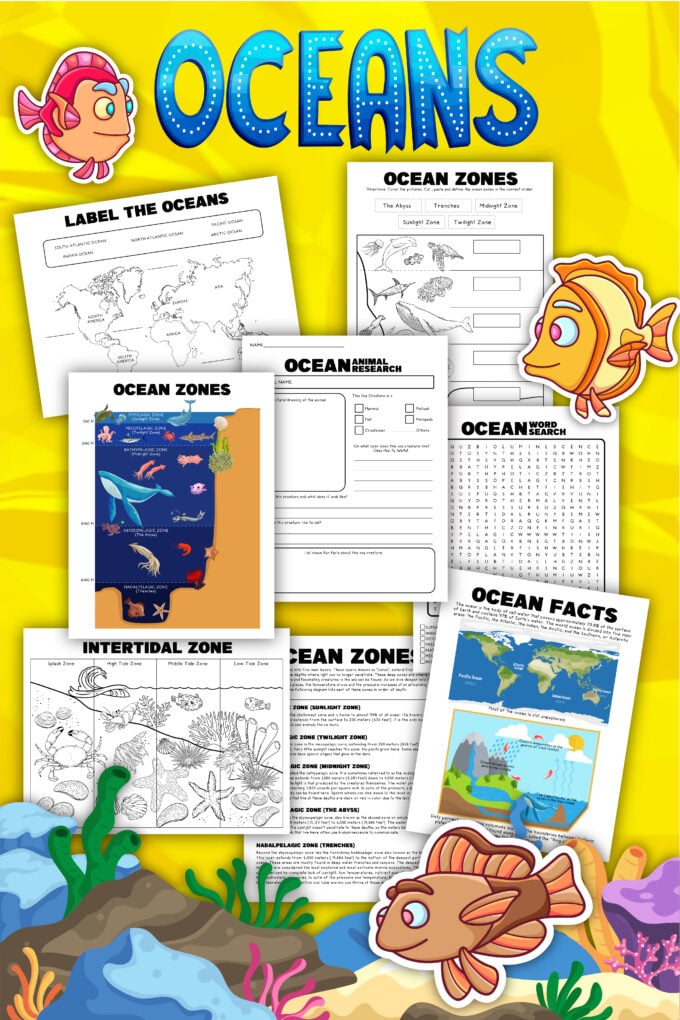
This ocean zones printable pack works well for grades 2–5 and makes a great addition to an ocean unit, an Earth science lesson, a science center, a homeschool study, or a summer science theme.
👉 Add this to a whole ocean activities theme here.
What Are Ocean Zones?
Ocean zones are layers or areas of the ocean. These zones change as you travel deeper below the surface.
As the ocean gets deeper:
- less sunlight reaches the water
- the temperature usually gets colder
- pressure increases
- different animals are able to survive
The ocean is much deeper and more varied than it looks from the surface. Studying ocean zones helps kids understand why certain animals live near the top of the ocean while others live in very deep, dark water.
The 5 Main Ocean Zones
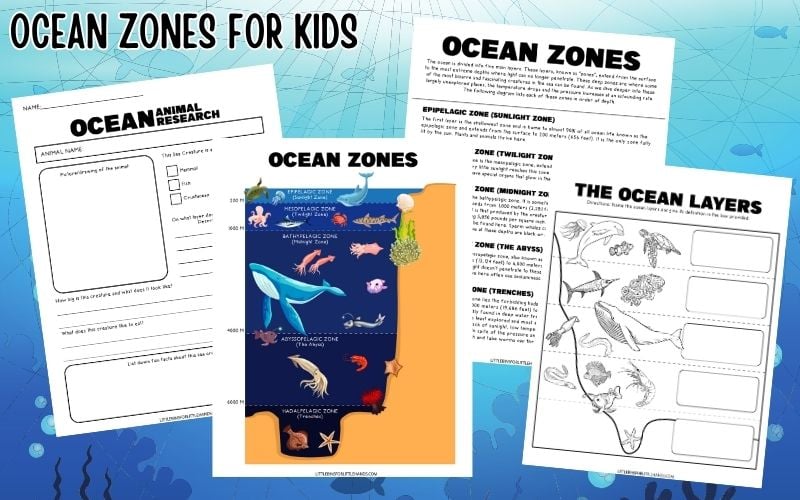
The five main ocean zones are:
- Epipelagic Zone — Sunlight Zone
- Mesopelagic Zone — Twilight Zone
- Bathypelagic Zone — Midnight Zone
- Abyssopelagic Zone — The Abyss
- Hadalpelagic Zone — Trenches
Each zone has different conditions, which affects the animals and organisms that can live there.
Sunlight Zone
The sunlight zone, also called the epipelagic zone, is the top layer of the ocean.
This zone gets the most sunlight, so many plants and animals live here. Phytoplankton, sea turtles, dolphins, jellyfish, fish, and many other ocean animals can be found in or near this zone.
Because sunlight reaches this layer, it supports many ocean food chains.
Twilight Zone
The twilight zone, also called the mesopelagic zone, is below the sunlight zone.
Only a small amount of sunlight reaches this layer. It is much dimmer than the top layer, and plants do not grow here. Some animals in this zone have special adaptations, such as large eyes or bodies that can glow.
Midnight Zone
The midnight zone, also called the bathypelagic zone, is completely dark.
Sunlight does not reach this part of the ocean. It is cold, dark, and under high pressure. Some animals that live here make their own light through bioluminescence.
The Abyss
The abyss, also called the abyssopelagic zone, is very deep, dark, and cold.
Very few animals live here compared to the upper ocean zones. Animals that do live in this zone are adapted to extreme conditions.
Trenches
The trench zone, also called the hadalpelagic zone, includes the deepest parts of the ocean.
Ocean trenches are narrow, deep valleys in the ocean floor. These are some of the most extreme environments on Earth. Even here, some living things can survive.
What Changes As The Ocean Gets Deeper?
As students learn about ocean zones, have them look for these big changes:
- Light decreases. The ocean gets darker with depth.
- Temperature changes. Deep water is usually very cold.
- Pressure increases. Deep ocean animals must survive intense pressure.
- Animal life changes. Different animals live in different zones.
- Food sources change. Deep ocean animals may depend on falling materials from above or special adaptations.
These simple patterns help students understand the ocean as a system, not just a large body of water.
Free Ocean Zones Printable Pack
Want the printable pages to go with this lesson?
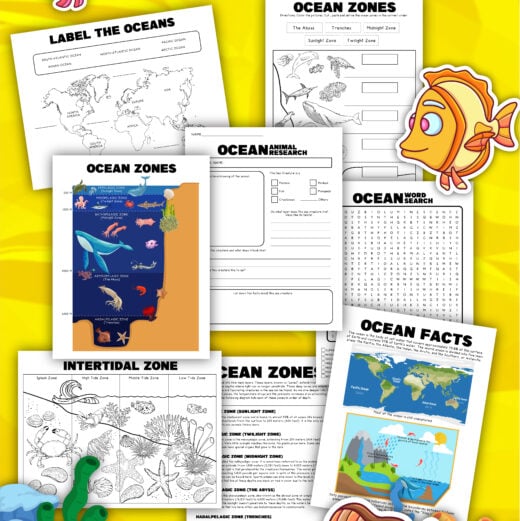
Grab the free Ocean Zones Printable Pack to help students read, label, sort, and respond as they learn about the layers of the ocean.
Inside the free pack, you’ll find pages such as:
- ocean facts
- ocean zones diagram
- ocean zones reading page
- ocean layers worksheet
- ocean animal research page
- label the oceans map
- printable ocean review activities
Use these pages for science notebooks, ocean units, early finishers, homeschool science, or classroom centers.
How To Use The Ocean Zones Printable Pack
You can use the printable pack in several simple ways.
Start with the ocean zones diagram and reading page. Then have students complete the ocean layers worksheet or answer questions in a science notebook.
Set out the diagram, worksheet, and animal research page. Students can work independently or with a partner to label, read, and respond.
Use the printable pages before hands-on activities such as ocean currents, ocean waves, density, or ocean layers in a jar.
Students can glue the ocean layers worksheet into a science notebook and add definitions, drawings, or examples of animals from each zone.
Try A Hands-On Ocean Layers Activity
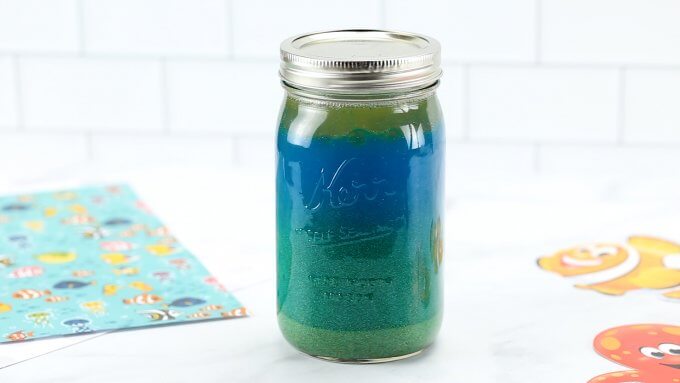
👉 After students learn about ocean zones, try a hands-on model with the Layers of the Ocean in a Jar activity.
In that activity, students use different liquids to create a colorful density jar. The layers in the jar help students visualize the idea of ocean layers.
It is important to explain that the jar is a model. Liquids form layers because of density, while real ocean zones are defined by depth, light, temperature, pressure, and living things.
Ocean Zones Activity Ideas
Here are a few simple ways to extend the printable pack.
Have students label the five main ocean zones and write a short description for each.
Ask students to choose one animal that might live in each zone. They can draw and label each animal.
Use the animal research page to learn more about one ocean animal, where it lives, what it eats, and how it survives.
Have students compare the sunlight zone and midnight zone. Ask:
How are they different?
What changes with depth?
What kinds of animals might live there?
Students can create their own ocean zones drawing with labels, colors, and animal examples.
Ocean Zones Vocabulary
Keep vocabulary simple and focused.
- Ocean Zone: A layer or area of the ocean with certain conditions.
- Sunlight Zone: The top ocean zone where sunlight reaches.
- Twilight Zone: A dim ocean zone where only a little sunlight reaches.
- Midnight Zone: A dark ocean zone where sunlight does not reach.
- Abyss: A very deep, dark, cold part of the ocean.
- Trench: A very deep valley in the ocean floor.
- Pressure: The force pushing on something. Pressure increases as the ocean gets deeper.
- Bioluminescence: Light made by a living thing.
Want The Full Ocean Unit Organized For You?
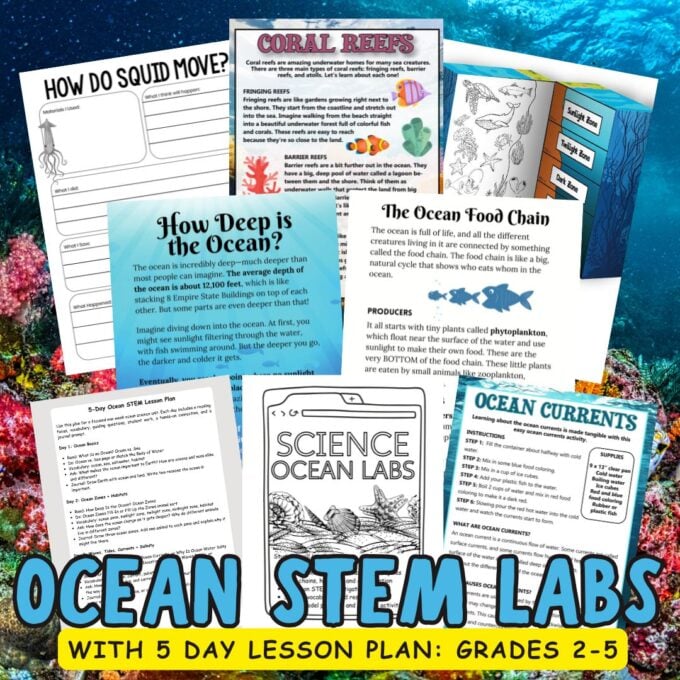
The Ocean STEM + Science Pack for grades 2–5 gives you a complete, organized way to teach ocean science without pulling everything together from scratch.
The pack includes:
- 5-day ocean STEM lesson plan
- ocean science reading lessons
- student response pages
- core vocabulary with kid-friendly definitions
- guiding questions
- ocean life and animal science pages
- hands-on STEM investigations
- ocean animal life cycles
- ocean triorama, diorama, and coral reef STEAM projects
- final reflection pages
Students explore ocean zones, waves, tides, currents, salinity, ocean animals, food chains, adaptations, pollution, conservation, density, buoyancy, erosion, and more.
More Ocean Activities For Kids
Try these ocean science activities next:
- Ocean Currents Demonstration
- Layers Of The Ocean
- Oil Spill Cleanup Experiment
- Beach Erosion Demonstration
- Ocean Acidification Experiment
👉 Explore all of our ocean activities for kids here.
Ocean Zones FAQ
What are ocean zones for kids?
Ocean zones are layers or areas of the ocean. These zones change with depth, light, temperature, pressure, and animal life.
What are the five ocean zones?
The five main ocean zones are the sunlight zone, twilight zone, midnight zone, abyss, and trenches.
Which ocean zone gets the most sunlight?
The sunlight zone gets the most sunlight. It is the top layer of the ocean and supports many ocean food chains.
Why is the deep ocean dark?
The deep ocean is dark because sunlight cannot travel all the way down to the deepest layers.
What happens as the ocean gets deeper?
As the ocean gets deeper, there is less light, colder water, more pressure, and different kinds of animals.
What is the best ocean zones activity for kids?
A printable ocean zones diagram, label-the-layers worksheet, and ocean layers in a jar model work well together. Students can read, label, draw, and then build a model to understand the concept.