

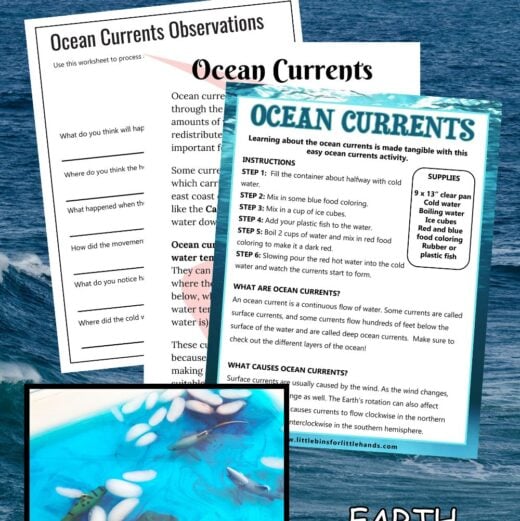
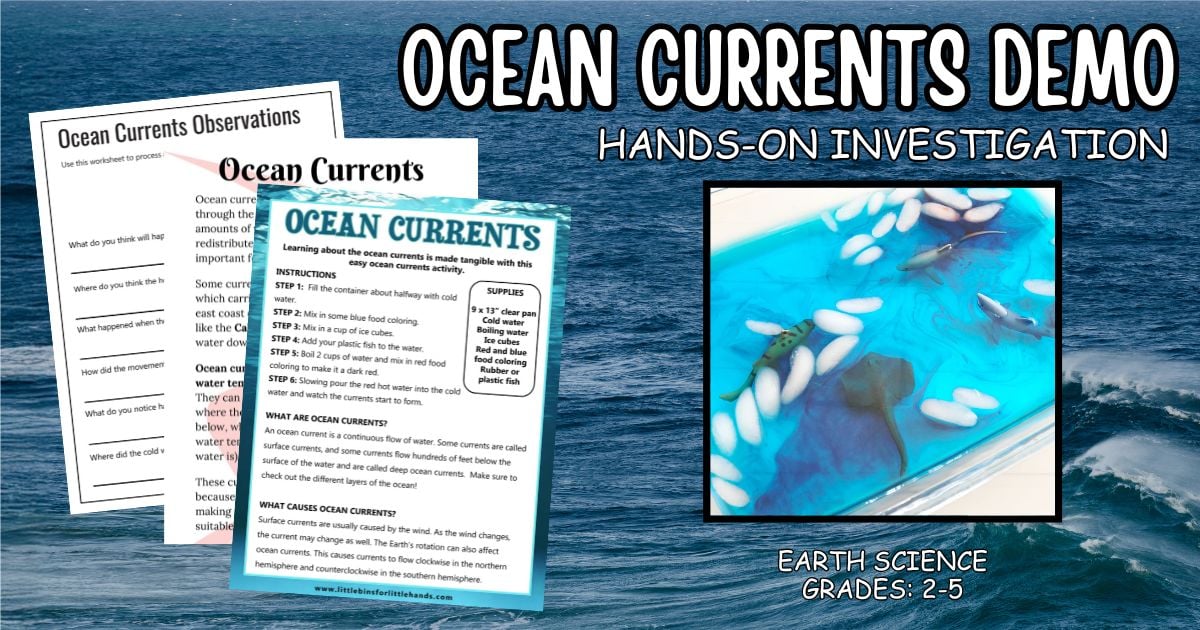
Looking for an easy ocean currents activity for kids? This simple ocean current demonstration helps students see how water can move because of temperature and density differences.
Kids will use colored warm and cold water to model how currents move through the ocean. It is a great hands-on activity for an ocean unit, an Earth science lesson, a STEM center, or a summer science project.
This ocean currents demo works best for grades 2–5 with adult help for the warm water.
What Is An Ocean Current?
An ocean current is a large flow of ocean water moving in one direction. You can think of ocean currents like rivers moving through the ocean.
Some currents move near the surface of the ocean. Others move deep below the surface. These currents help move heat, nutrients, oxygen, and tiny living things through the ocean.
Ocean currents are important because they affect ocean habitats, weather patterns, climate, and marine life.
👉 Look through our ocean science activities hub for more hands-on investigations.
Ocean Currents Activity Quick Guide
Science Field: Earth Science and Physical Science
Best For: Grades 2–5
Time Needed: 20–30 minutes
Topic: Ocean currents, water movement, temperature, density
Adult Help: Needed for hot water
Supplies Needed
- Clear 9 x 13 pan or clear container
- Cold water
- Very warm or hot water
- Ice cubes
- Red food coloring
- Blue food coloring
- Measuring cup or heat-safe cup
- Optional: small plastic ocean animals
Safety Note: Adult help is needed when heating and pouring hot water. For younger students, use very warm tap water instead of boiling water.
How To Set Up The Ocean Currents Activity
Step 1
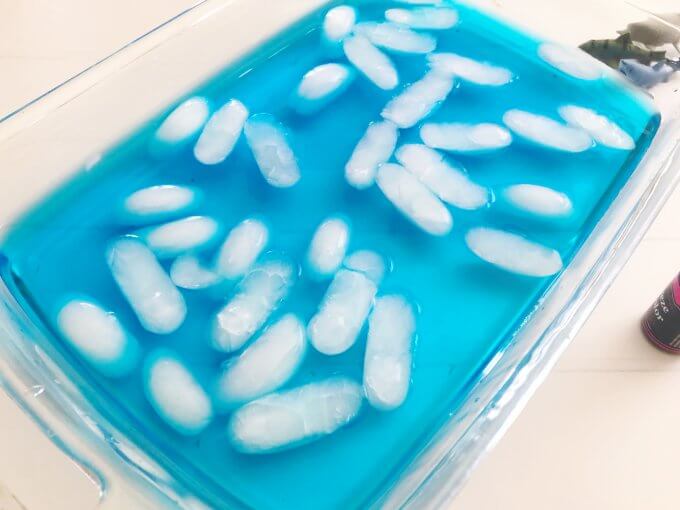
Fill the clear pan about halfway with cold water.
Step 2
Add several drops of blue food coloring to the cold water and stir gently.
Step 3
Add a few ice cubes to make the water colder. Let the water sit for a minute.
Step 4
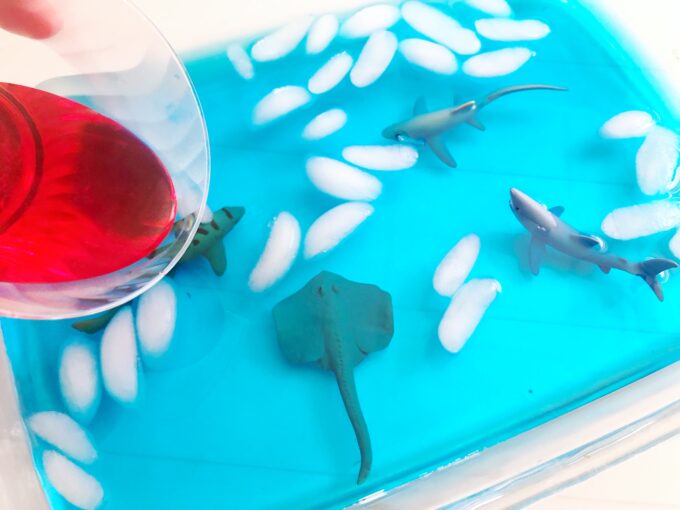
In a separate cup, mix very warm or hot water with red food coloring.
Step 5
Slowly pour the red warm water into one side of the pan.
Step 6
Watch carefully. Look at how the red and blue water move through the container.
Step 7
Have students draw what they notice. Use arrows to show the direction the water moved.

What Should Kids Notice?
Students should look for movement in the water. The warm red water may move differently from the cold blue water.
Ask students to observe:
- Where did the red water move first?
- Did the red and blue water mix right away?
- Did any water sink or rise?
- Where did the colors move slowly?
- Where did the colors mix together?
- What pattern did the moving water make?
This is a good time to remind students that this activity is a model. A model helps us understand a scientific idea, but it is not exactly the same as the real ocean.
What Causes Ocean Currents?
Ocean currents can be caused by several things, including:
- wind
- Earth’s rotation
- water temperature
- salinity, or how salty the water is
- density differences
Surface currents are mostly caused by wind moving across the top of the water.
Deep ocean currents are often affected by water temperature, salinity, and density. Cold, salty water is usually denser than warm water, so it can sink and help move water through the ocean.
This ocean currents activity focuses on temperature and density. It does not show every part of real ocean currents, but it gives kids a clear visual model of how water can move when warm and cold water meet.
Why Does This Ocean Current Activity Work?
Warm water and cold water do not always move the same way.
Warm water is usually less dense than cold water. Cold water is usually denser than warm water. Denser water tends to sink, while less dense water tends to rise or stay above denser water.
When warm and cold water meet, the difference in temperature and density can cause the water to move. This movement creates a current in the container.
🔎 In the ocean, currents can form when water changes temperature or salinity. These currents help move water around the planet.
Free Ocean Currents Mini Lesson
Want the printable version of this activity?
Grab the free Ocean Currents STEM Mini Lesson with a short reading page, vocabulary, guiding question, activity directions, and student recording page.
It is an easy way to turn this ocean currents demo into a complete mini science lesson for grades 2–5.
More Ocean Activities For Kids
Try one of these ocean science activities next:
- Layers Of The Ocean
- Oil Spill Cleanup Experiment
- Beach Erosion Demonstration
- Ocean Acidification Experiment
Want The Full Ocean Unit Organized For You?
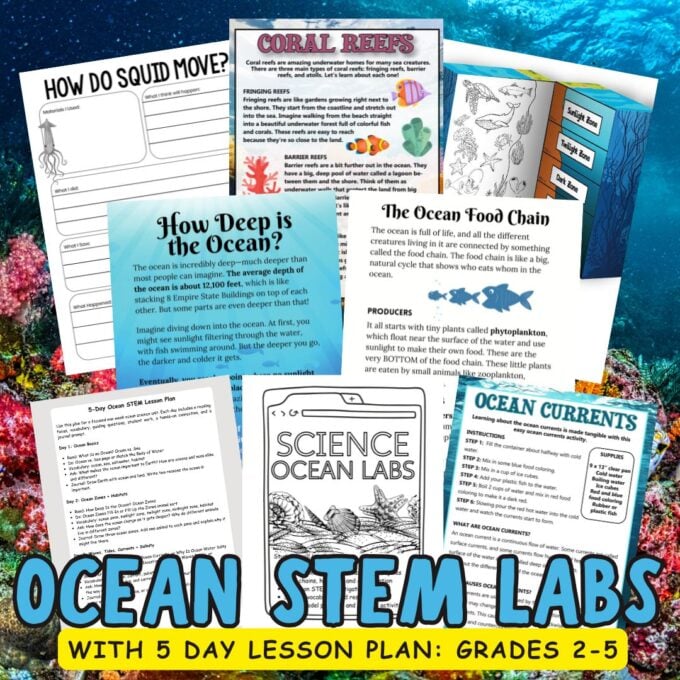
If you want more than one ocean activity, the Ocean STEM + Science Pack for grades 2–5 gives you an organized way to teach ocean science without pulling everything together from scratch.
The pack includes:
- 5-day ocean STEM lesson plan
- ocean science reading lessons
- student response pages
- core vocabulary with kid-friendly definitions
- guiding questions
- ocean life and animal science pages
- hands-on STEM investigations
- ocean animal life cycles
- ocean triorama, diorama, and coral reef STEAM projects
- final reflection pages
Students explore ocean zones, waves, tides, currents, salinity, ocean animals, food chains, adaptations, pollution, conservation, density, buoyancy, erosion, and more.
👉 OCEAN STEM LABS PROJECT PACK
Ocean Currents Activity FAQ
What is an ocean current for kids?
An ocean current is a large flow of ocean water moving in one direction. Currents can move near the surface or deep below the ocean.
What causes ocean currents?
Ocean currents can be caused by wind, Earth’s rotation, temperature differences, salinity differences, and density differences.
What does this ocean currents activity show?
This activity shows how warm and cold water can move differently because of temperature and density differences.
What grade is this ocean currents activity best for?
This activity works well for grades 2–5. Younger students can focus on observation and drawing, while older students can add vocabulary and written explanations.
Is this a demonstration or an experiment?
This activity works best as a demonstration or guided investigation. It helps students see one important idea about ocean currents using a simple model.
Are ocean currents and waves the same thing?
No. Waves are moving energy that travels through water. Currents are larger flows of ocean water moving in one direction.
Why are ocean currents important?
Ocean currents move heat, nutrients, oxygen, and tiny organisms through the ocean. They also affect weather, climate, and ocean habitats.




One Comment
Comments are closed.