
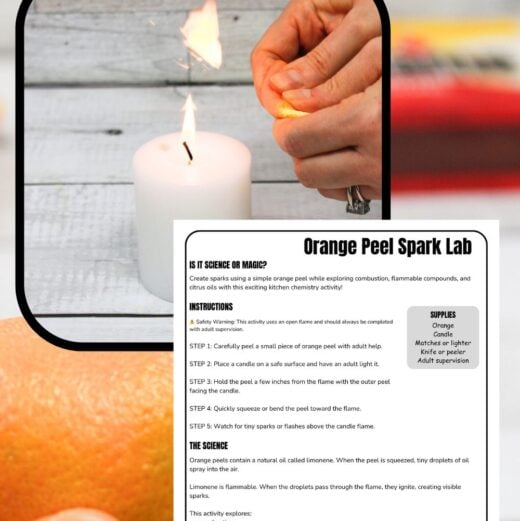
Want a chemistry activity that actually surprises older kids? This orange peel spark experiment uses natural citrus oils and a candle flame to demonstrate combustion in a quick, memorable science experiment. When the orange peel is squeezed near the flame, tiny sparks appear as flammable oils ignite in the air.
This simple kitchen chemistry activity is perfect for upper elementary and middle school students exploring combustion reactions, chemical properties, and flammable compounds. It works well for classroom demonstrations, chemistry labs, STEM activities, or science investigations at home.
👉 Looking for more activities for older students? Explore our Middle School Science Experiments hub for hands-on chemistry, physics, and STEM investigations.
The Science Behind the Orange Peel Spark Experiment
Field: Chemistry—Combustion Reactions
Grades: 5–8
Concepts Explored: Combustion, flammable compounds, limonene, citrus oils, vaporization, chemical reactions, observation, and experimentation
Orange peels contain a natural chemical compound called limonene. Limonene is a flammable hydrocarbon found in citrus oils.
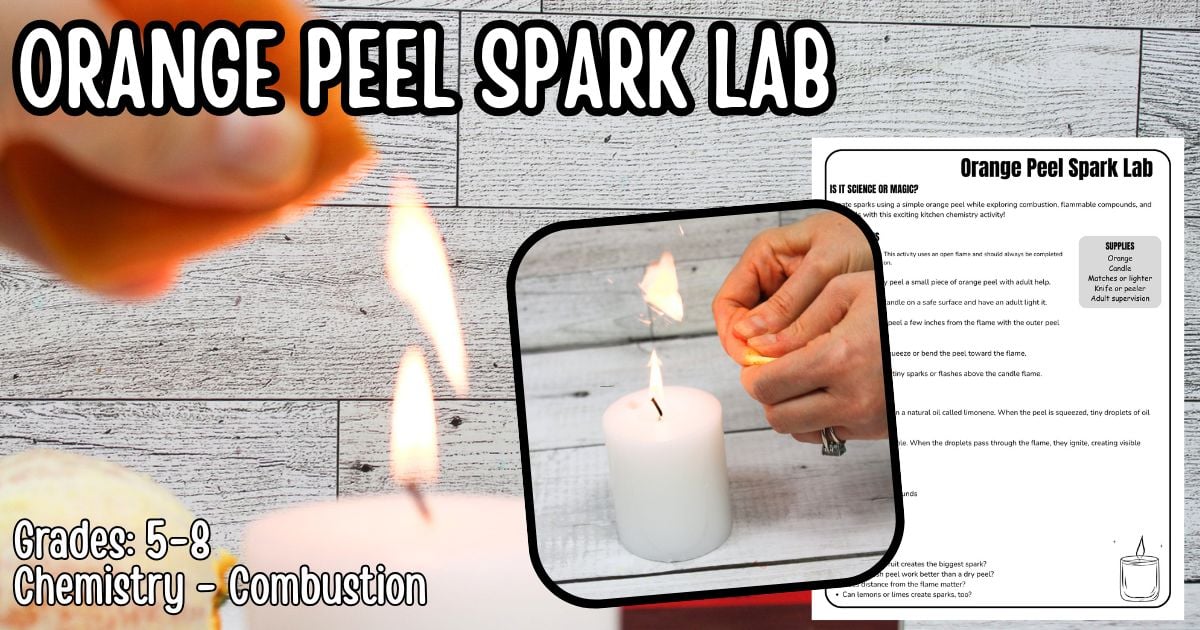
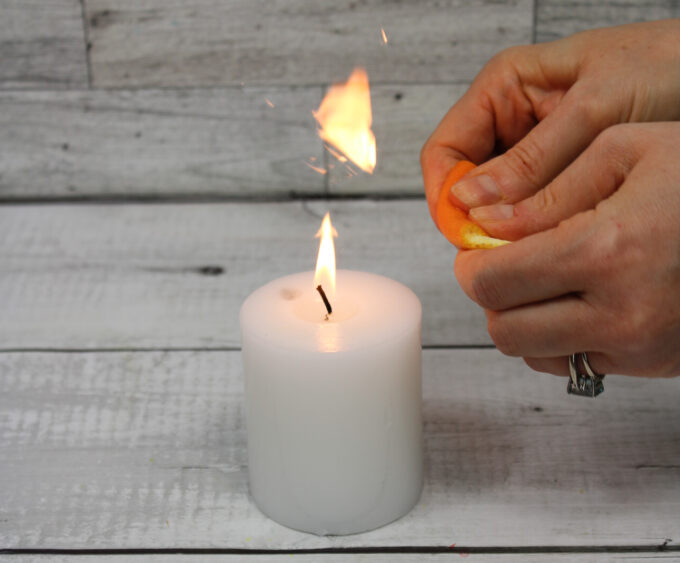
When you squeeze the peel, tiny droplets of oil spray into the air. These droplets quickly mix with oxygen around the flame. Because the droplets are so small, they ignite easily, creating visible sparks or flashes above the candle.
🔎 This experiment demonstrates how flammable substances can combust when exposed to heat and oxygen.
Supplies Needed
- 1 orange
- Knife or orange peeler (adult supervision required)
- Candle
- Matches or lighter (adult supervision required)
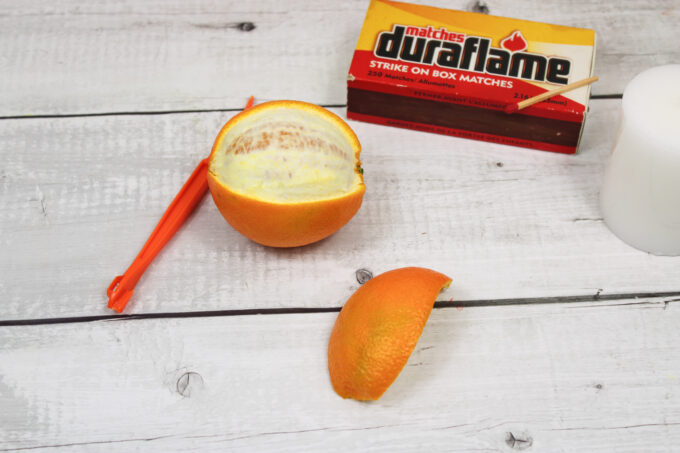
How To Do the Orange Peel Spark Experiment
- Gather all supplies and prepare a safe workspace away from flammable materials.
- Carefully remove a small piece of orange peel using a knife or peeler.
- Place the candle on a stable surface and have an adult light it.
- Hold the orange peel a few inches from the flame with the outer peel facing the candle.
- Quickly squeeze or bend the peel toward the flame.
- Watch for small sparks or flashes as the citrus oils ignite.
Fire Safety and Adult Supervision
🛑 Because this activity uses an open flame and flammable oils, adult supervision is required at all times.
Safety reminders:
- Keep long hair and loose clothing away from the flame.
- Perform the experiment on a clear, nonflammable surface.
- Never leave the candle unattended.
- Extinguish the flame completely when finished.
Why Does the Orange Peel Spark?
The outer layer of an orange peel contains tiny pockets filled with citrus oil. When pressure is applied, those oils spray outward as a fine mist.
The main chemical in the oil, limonene, is highly flammable. As the droplets pass through the flame, they rapidly combust, producing visible sparks.
This happens because:
- combustion requires fuel, oxygen, and heat,
- the citrus oil acts as the fuel,
- the candle provides the heat source,
- and oxygen in the air supports the reaction.
The tiny oil droplets also have a large surface area exposed to oxygen, allowing them to ignite more easily than a larger amount of liquid would.
Free Printable Chemistry Investigation
Grab the free Orange Peel Spark Experiment printable with:
- step-by-step directions,
- observation prompts,
- chemistry explanation,
- and investigation questions for older students.
Perfect for upper-elementary and middle-school science labs.
What Students Observe
- Bright flashes or sparks near the flame
- A stronger citrus smell as oils are released
- Tiny droplets spraying from the peel
- Changes in the size or brightness of the flame
Continue Exploring Kitchen Chemistry
Enjoyed this chemistry activity? The Kitchen Chemistry Pack includes hands-on investigations focused on: density, dissolving, acids and bases, crystal growing, polymers, food science, and chemical reactions
Designed for grades 2-6, with reusable lab and investigation pages included.
👉 GET THE KITCHEN CHEMISTRY PACK

Orange Peel Experiment FAQ
Why does an orange peel spark near a flame? Orange peels contain a flammable oil called limonene. When the peel is squeezed, tiny droplets spray into the air and ignite near the candle flame.
Is the orange peel spark experiment a chemical reaction? Yes. The sparks are caused by combustion, which is a chemical reaction between the citrus oil and oxygen in the air.
What chemical in orange peels is flammable? The main flammable compound is limonene, a natural hydrocarbon found in citrus oils.
Can you use other citrus fruits for this experiment? Yes. Lemons, limes, and grapefruits also contain flammable citrus oils and may produce sparks when squeezed near a flame.
Is this experiment safe for kids? This activity should always be done with adult supervision because it uses an open flame and flammable oils.
Why do tiny droplets ignite more easily? Small droplets have more surface area exposed to oxygen, allowing combustion to happen more quickly.
More Chemistry Activities to Try Now
- Density Tower Experiment
- Invisible Ink with Lemon Juice
- Convection Heat Spiral Experiment
- Homemade Lava Lamp
👉 Explore more hands-on activities in our Chemistry Experiments for Kids hub.