
Science doesn’t always fit neatly into a 20-minute block. Some experiments bubble right away. Others need time — ice melts slowly, plants grow, and changes happen when no one is watching. That’s often where science gets skipped.
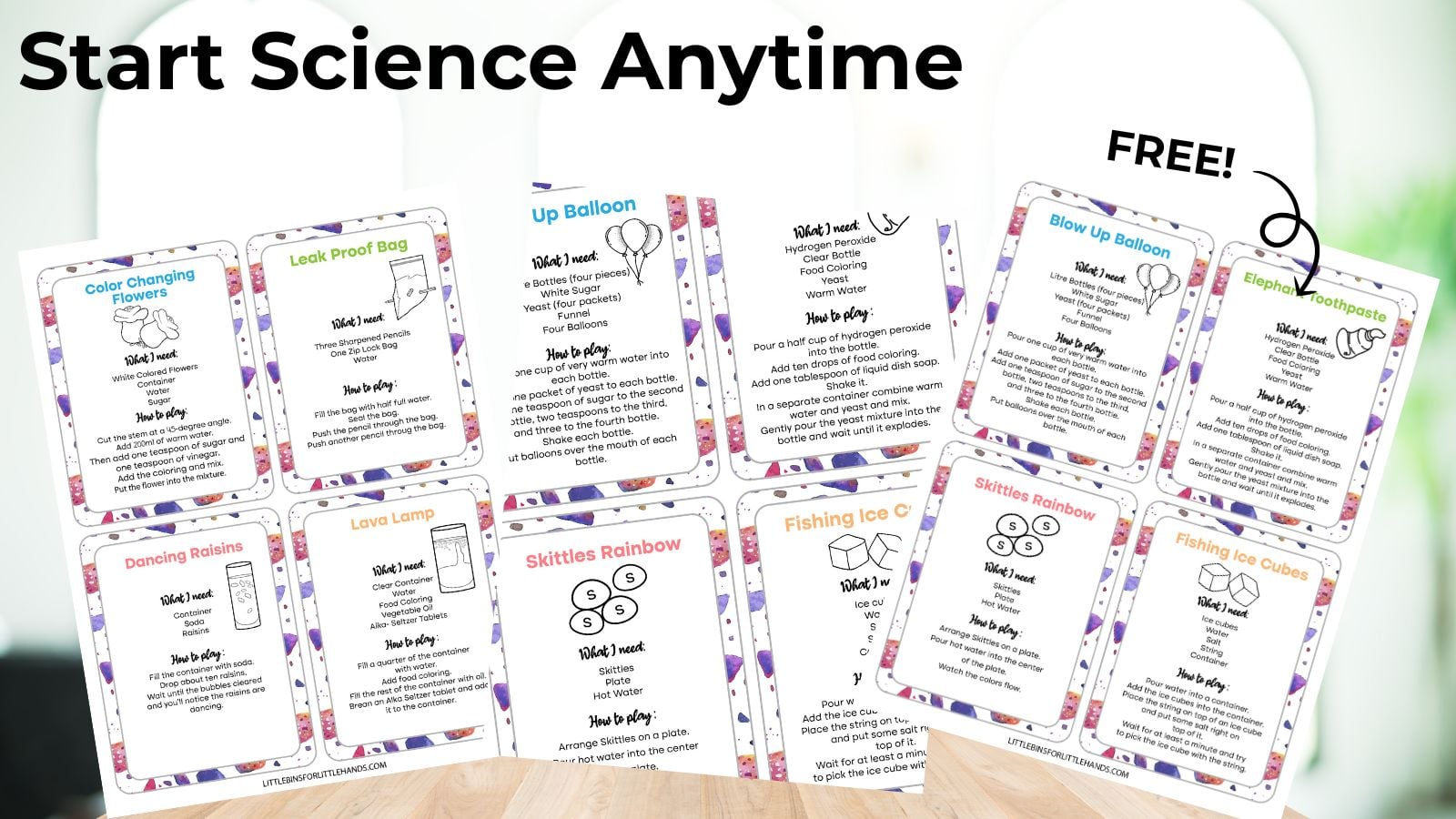
These printable science activity cards solve a different problem: they give kids a clear place to start an investigation, even when the results unfold over minutes, hours, or days.
Instead of waiting for a full lesson or step-by-step directions, kids can gather materials, begin exploring, and return later to observe what changed.
👉 If you’re looking for complete step-by-step experiments, you can explore our full collection of hands-on investigations in our easy science experiments for kids guide.
Grade Band: PreK – Grade 4 (approximately ages 4–10)
Why Traditional Experiments Don’t Always Fit the Day
Full science experiments are valuable — but they require planning, explanation, supervision, and time to finish everything in one sitting.
That makes them hard to use during:
- classroom centers
- homeschool rotations
- mixed-age learning
- early finisher time
- busy afternoons
- substitute days
When science must be completed all at once, it is often postponed.
These activity cards take a different approach. They allow children to begin science immediately, even if the learning continues later.
What Science Activity Cards Are
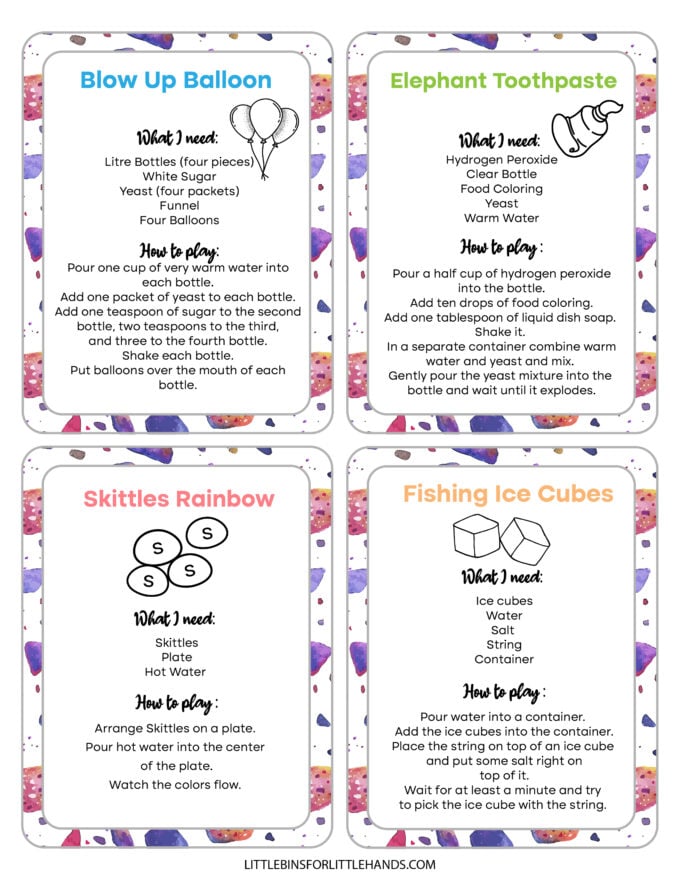
Each card is a short investigation prompt using common materials.
The card doesn’t try to explain everything up front. Instead, it gives kids just enough direction to start exploring.
Some activities produce quick results. Others invite children to return and notice changes over time.
That mirrors how real science works.
What Kids Practice While Using the Cards
Because the cards are open-ended, kids naturally develop important skills:
- making predictions
- observing carefully
- comparing results
- noticing change over time
- adjusting ideas
- explaining what they see
Instead of asking “Am I done?”, they begin asking “What do you think will happen next?” That shift is where real scientific thinking begins.
Types of Investigations Included
The cards rotate through different science domains so children experience a wide range of ideas.
Chemistry & Matter
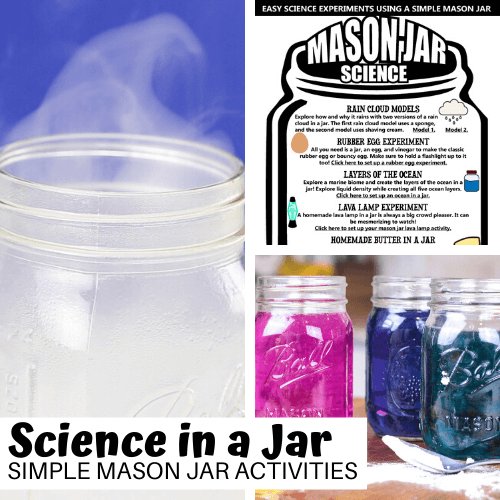
Kids observe reactions, color changes, dissolving, and density differences using safe, familiar materials.
Some activities react immediately. Others continue changing as materials settle or dissolve.
Physics & Motion
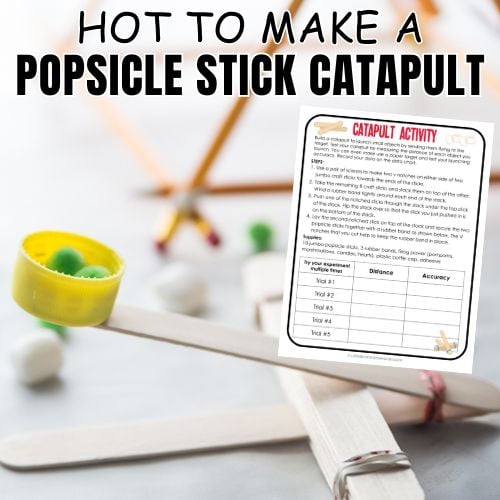
Kids explore force, vibration, air, and movement by building and testing simple ideas.
They learn by changing one thing at a time and observing the results.
Earth & Weather Science
These investigations model real-world processes like freezing, melting, precipitation, and temperature change.
Many activities are designed to be revisited later, reinforcing the idea that science happens over time.
Life Science
Growth and living systems can’t be rushed.
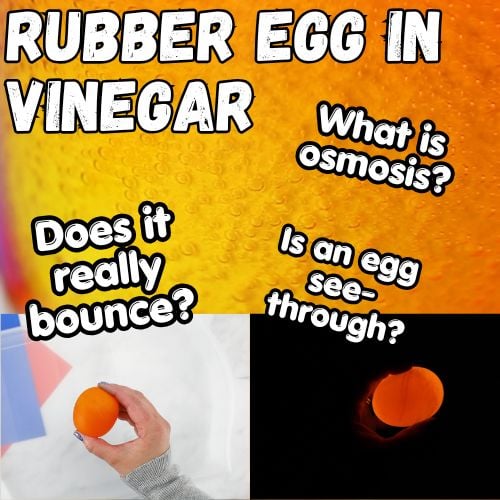
Activities such as sprouting seeds or changing flower color encourage patience, observation, and care.
Engineering Challenges
Some cards intentionally have no single “right” outcome.
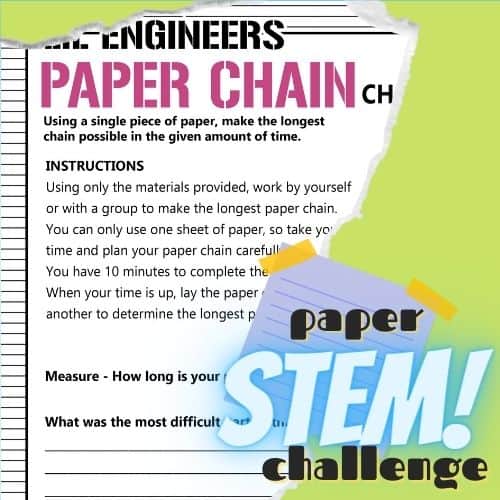
Kids build, test, adjust, and improve — learning that failure is part of the process.
How to Use the Cards
The cards work best as investigation starters, not one-and-done tasks.
Science centers
Children begin an activity and check back later.
Homeschool routines
One card starts the day; observations continue naturally.
Early finishers
Students begin exploring without waiting for instruction.
Family learning
Kids start an investigation and share what they notice later.
Short learning windows
Science happens even when time is limited.
You don’t need a full lesson plan — the card creates the momentum.
Turning Observation Into Learning
You don’t need to explain vocabulary first.
Simple prompts guide thinking:
- What do you notice now?
- What changed since last time?
- Why do you think that happened?
- What could we try differently?
These questions naturally support the scientific method without formal instruction.
When You Want Full, Guided Experiments
Sometimes kids want deeper explanations, vocabulary, or structured lessons.
For organized science topics with step-by-step investigations, you can explore:
👉 Main science experiments hub
The activity cards support everyday exploration, while full experiments provide extended learning.
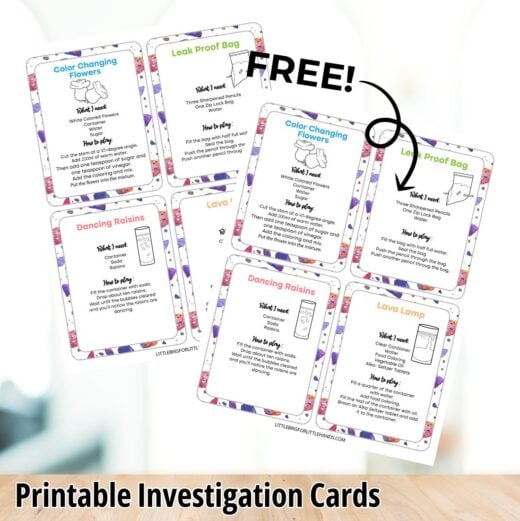
Printable Science Activity Cards
If you’d like the ready-to-print version organized for easy use in bins, binders, or centers:
👉 Printable science cards pack
They’re designed for repeated use so kids can revisit investigations as their thinking grows.
Why Parents and Teachers Use These
They make science possible on real days — not just ideal ones.
- Less prep
- More curiosity
- Ongoing learning
Most importantly, children learn that science doesn’t end when the activity pauses.
Frequently Asked Questions
What ages are these best for?
PreK through Grade 4. Younger children explore with help; older children observe and compare independently.
Do all activities have instant results?
No. Some activities change over time, which helps kids learn patience and observation.
Do I need special supplies?
No. All activities use common household or classroom materials.
How long do activities take?
Starting takes just a few minutes. Observing may happen over minutes, hours, or days.
The Real Goal
- Not finishing fast.
- Not checking a box.
Learning that science is something you begin — and keep noticing. That’s how curiosity turns into understanding.
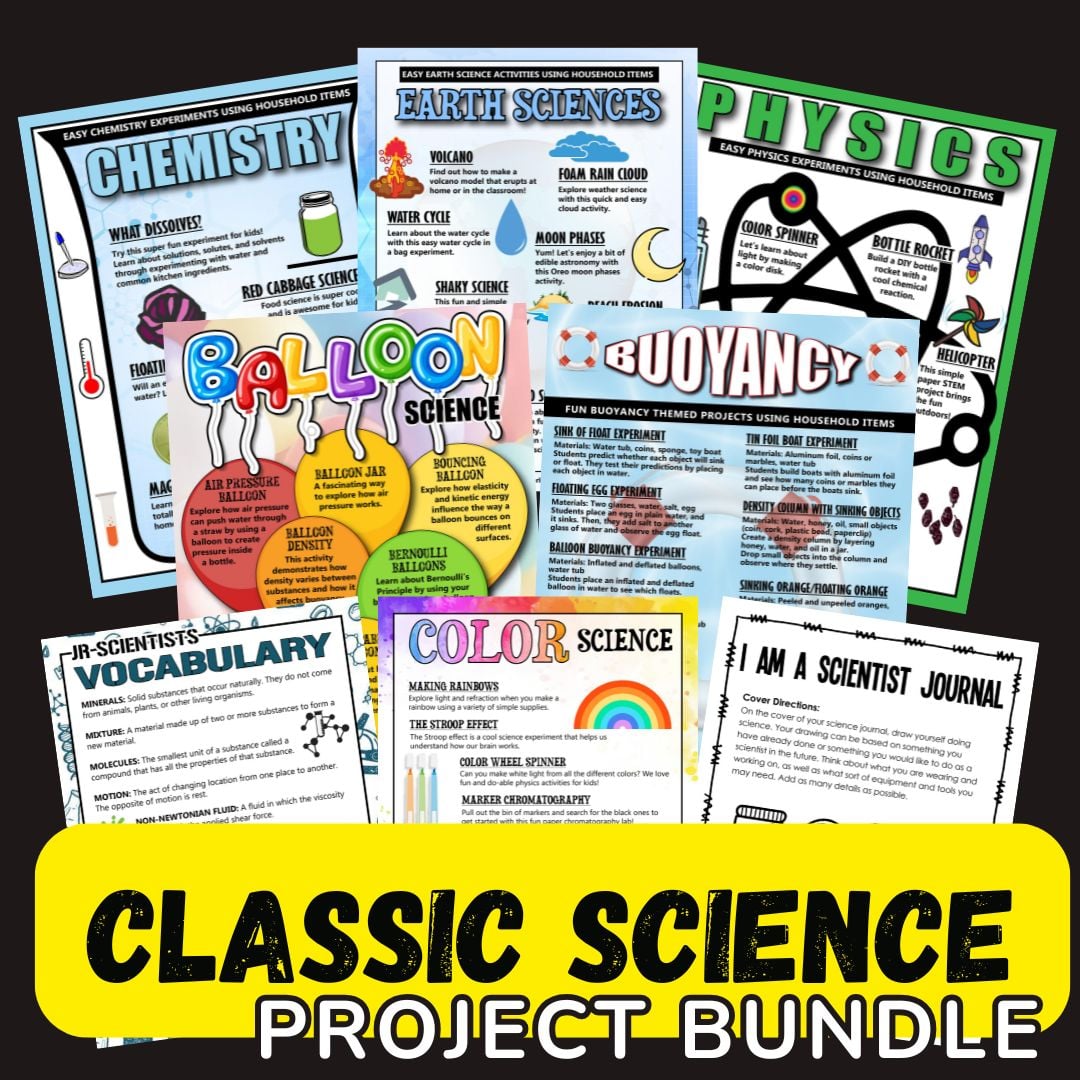
Printable Elementary Science!
Want to do meaningful science — but not start a full unit yet? This starter lab provides quick, hands-on investigations across multiple science topics, allowing students to explore how science works before diving deeper into any one subject.
Perfect for regularly trying science without extensive planning. Grades: K–5.