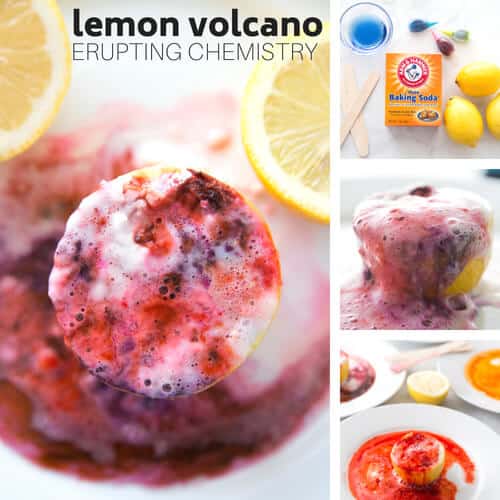

Want to learn how to make a volcano for kids that actually erupts?
This classic baking soda volcano is the perfect hands-on science project for home or the classroom. In this tutorial, you’ll learn how to build a realistic salt dough volcano model from scratch and create a safe chemical reaction that mimics a real volcanic eruption.

This homemade volcano is ideal for:
• Science fair projects
• Earth science units
• STEM activities
• Rainy day science fun
Let’s build and erupt your own volcano!
Below, you’ll find step-by-step instructions for making an easy baking soda volcano with simple household ingredients.
💡 Looking for a quick, mess-free version? Try our paper volcano diorama instead.
Volcano Project At a Glance
Science Concept: Chemical reactions & Earth science
Best Ages: K–4
Prep Time: 15 minutes (plus drying time)
Eruption Time: Instant and repeatable
Mess Level: Medium (use a tray!)
Want to learn more about real volcanoes, eruption types, and how they form? Visit our complete Volcano Guide for Kids for facts, diagrams, and additional hands-on activities.
Supplies:
- A batch of salt dough
- Small plastic water bottle
- Paint
- Baking Soda
- Vinegar
- Food Coloring
- Dish soap (optional)
How to Make a Volcano
Watch the Video:
STEP 1: First, you will want to whip up a batch of our salt dough
- 2 cups all-purpose bleached flour
- 1 cup of salt
- 1 cup of warm water
Combine all the dry ingredients in a bowl and form a well in the center. Add the warm water to the dry ingredients and mix until it forms a dough.
TIP: If the salt dough looks a little runny, you might be tempted to add more flour. Before you do this, allow the mixture to rest briefly! That will give the salt a chance to absorb the extra moisture.

STEP 2: You want to form the salt dough around a small empty water bottle. Create a composite or shield volcano shape that you learned about above.
Depending on the shape you want, the time to let it dry, and the bottle you have, you might want to make two batches of salt dough! Set your volcano aside to dry for at least 24 hours.
We made a composite-shaped volcano!
TIP: If you have leftover salt dough, you can make these earth-inspired ornaments!

STEP 3: Once your volcano is dry, it’s time to paint it and add your creative touches to resemble the actual land form.

STEP 4: Once your volcano is ready to erupt, you need to prepare for the eruption. Add a tablespoon or two of baking soda, food coloring, and a squirt of dish soap to the opening.

STEP 5: Time for the volcano to erupt! Make sure your volcano is on a tray to catch the lava flow. Pour the vinegar into the opening and watch. The kiddos are going to want to do this one over and over again!

What Is a Volcano? (Volcano Facts for Kids)
Now that you’ve built your model, let’s explore the real science behind volcanoes.
A volcano is a landform where molten rock from deep inside the Earth rises to the surface. While it may look like a mountain, a volcano is actually an opening in Earth’s crust through which magma, gas, and ash can escape.
When magma reaches the surface, it is called lava.
There are two main types of volcano shapes:
- Composite volcanoes (stratovolcanoes) — Tall, steep-sided volcanoes that look like cones. These often erupt explosively.
- Shield volcanoes — Wide volcanoes with gently sloping sides. These usually produce slower-moving lava flows.
Active, Dormant, or Extinct?
Volcanoes are also classified by their activity:
- Active — Currently erupting or likely to erupt again (like Mauna Loa in Hawaii).
- Dormant — “Sleeping” but may erupt in the future.
- Extinct — Not expected to erupt again.
Magma vs. Lava — What’s the Difference?
It’s actually both!
- Magma is molten rock underground.
- Lava is molten rock after it erupts onto the Earth’s surface.
The name changes depending on where it is.
How Does a Volcano Erupt?
Real volcanoes erupt because pressure builds up from trapped gases dissolved in magma deep beneath Earth’s surface. As heat and pressure build up deep underground, gases expand and push magma upward through cracks in the Earth’s crust.
Eventually, the pressure becomes strong enough to force the magma out — causing an eruption.
Some volcanoes explode with ash and debris. Others release slow-moving lava flows. The eruption style depends on:
- The shape of the volcano
- The thickness of the magma
- How much gas is trapped inside
The more confined the pressure, the more explosive the eruption can be.
How Our Baking Soda Volcano Models a Real Eruption
Our baking soda and vinegar volcano does not use real magma, but it safely demonstrates the same concept of gas pressure.
When baking soda reacts with vinegar, it creates carbon dioxide gas. That gas builds pressure and pushes the liquid up and out of the volcano opening — just like gas pushes magma upward in a real eruption.
Want to explore this reaction even more? Read our guide to baking soda and vinegar experiments.
You can also try:
- Our Mentos and Coke experiment (another gas-pressure reaction)
- Our sandbox volcano (for explosive-style eruptions)
Want a reusable version kids can rebuild again and again?
Try our LEGO volcano model
Take Your Volcano Study Further
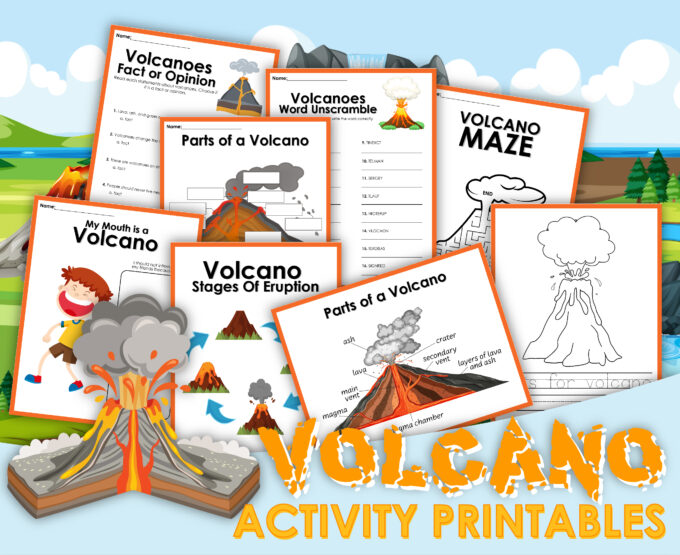
Get our complete Volcano Activity Pack with printable diagrams, vocabulary cards, labeling pages, and hands-on extensions that make teaching Earth science simple and engaging.
👉 Explore the Volcano Pack here.
Volcano Project FAQ
What is the best material to make a volcano model?
Salt dough is inexpensive, easy to shape, and dries hard, making it ideal for realistic volcano models.
Why does baking soda and vinegar erupt?
The reaction creates carbon dioxide gas, which builds pressure and forces the liquid upward—similar to gases pushing magma out of a real volcano.
How long does salt dough take to dry?
At least 24 hours. Larger volcanoes may need 48 hours.
Can I make this volcano without salt dough?
Yes! Try sand, clay, paper mâché, or a LEGO volcano model.

Ready to go deeper into rocks, crystals, and volcano science?
Our Rocks and Geology for Kids Pack includes 8+ hands-on activities, mini-units on soil layers and the rock cycle, plus 3 interactive dioramas students love to build.
👉 Click here to explore the full pack.