
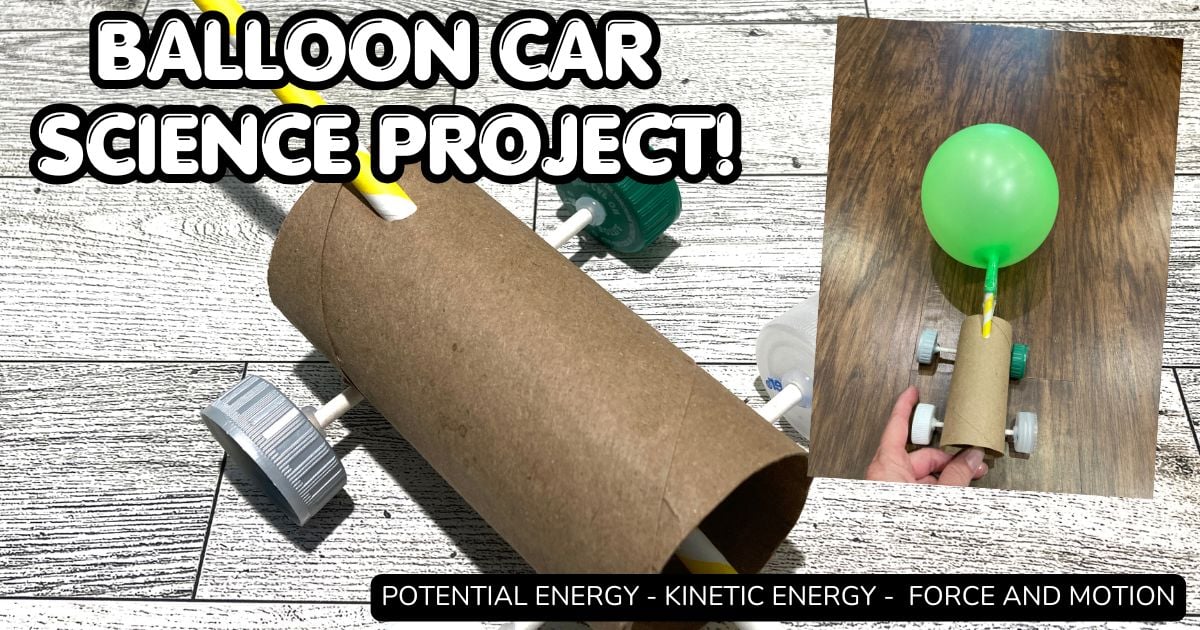
Can you build a car powered only by air? This balloon car STEM project challenges kids to design, build, and test a vehicle that moves without batteries, motors, or pushing.
As the balloon releases air, students can observe force, motion, energy transfer, friction, and Newton’s Laws of Motion in action. It’s a fun way to combine physics and engineering while encouraging creativity, problem-solving, and hands-on learning.
Whether you’re teaching force and motion in the classroom, homeschooling, or looking for an engaging STEM challenge, a balloon-powered car is a simple engineering project that kids love to build, test, and improve.
👉 Explore more force and motion engineering activities here
Science Concepts
Learn how to make a balloon-powered car with simple materials while exploring force, motion, air pressure, friction, and energy transfer. A fun STEM project that combines physics and engineering for kids.
- Field of Science: Physics & Engineering
- Recommended Grade Level: Grades 3–5
- Concepts Explored: Force and Motion, Air Pressure, Thrust, Potential Energy, Kinetic Energy, Friction, Newton’s Laws of Motion, Engineering Design
Supplies
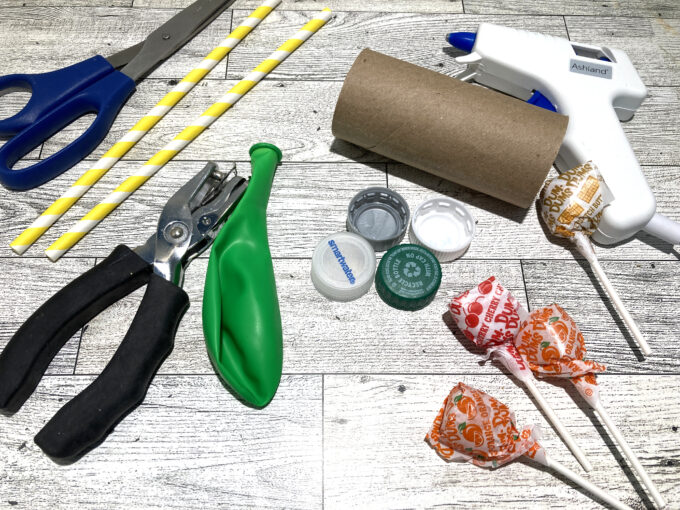
Grab free printable instructions below! What different materials can you use to make a balloon-powered car? How about a cardboard box or plastic bottles?
- Balloon
- Lollipop sticks
- Toilet paper tube
- Hole puncher
- Hot glue gun
- Tape
- Straws or Wooden skewers
- Scissors
- 4 Plastic bottle caps
How to Make a Balloon Car
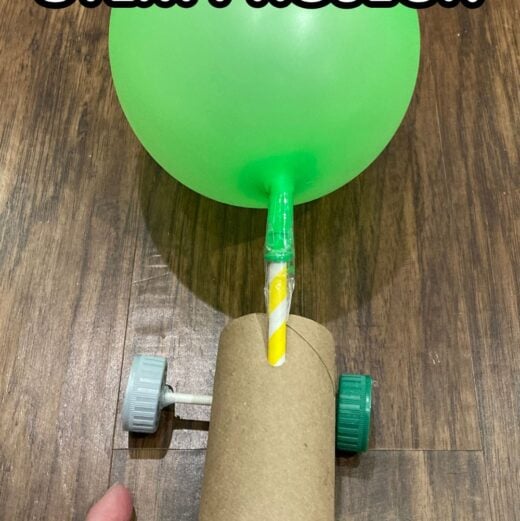
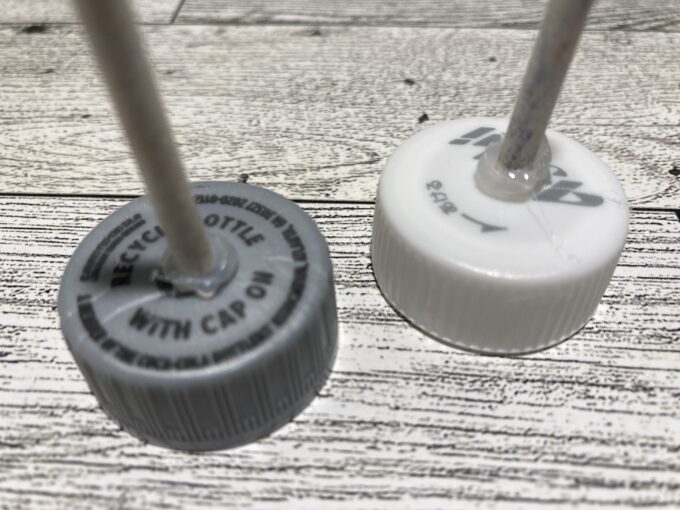
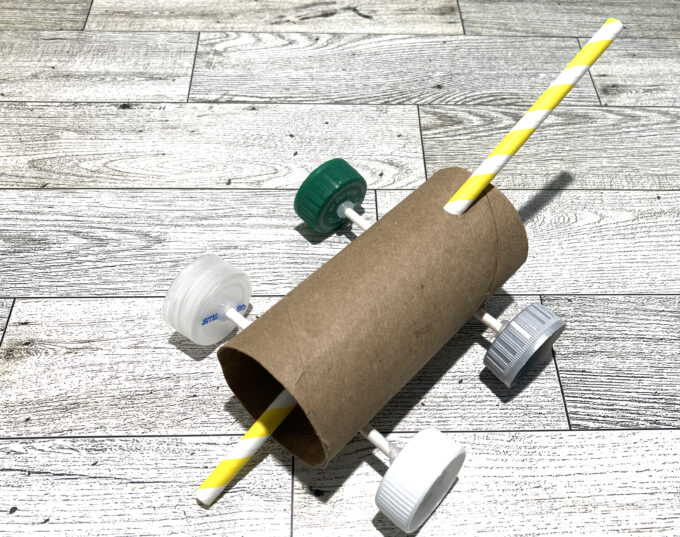
STEP 1: Cut off two lollipop sticks and hot-glue them to two bottle tops. Alternatively, you can drill holes in the plastic bottle caps and insert wooden skewers to serve as axles.
STEP 2: Use the hole puncher to punch four holes in the toilet paper tube to attach the wheels.
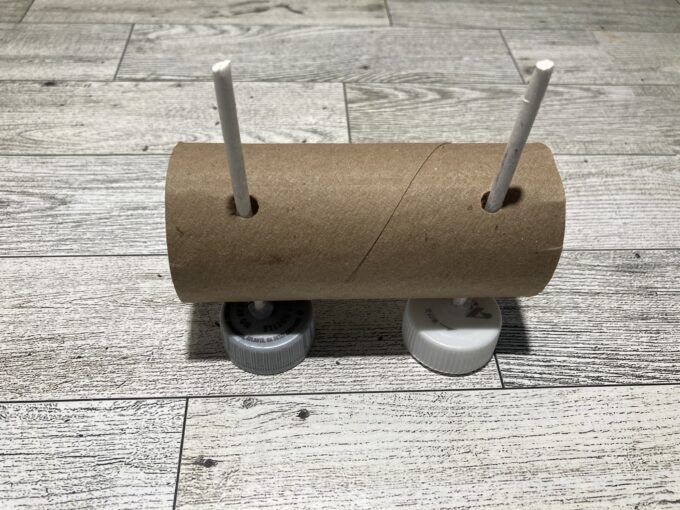
STEP 3: Stick the lollipop sticks through the holes, and then glue on the remaining two tops/wheels.
STEP 4: Punch another hole in the top of the tube near the front of the car and stick a straw through the hole.
STEP 5: Tape the end of the balloon to the straw.
STEP 6: Now blow through the straw to inflate the balloon.
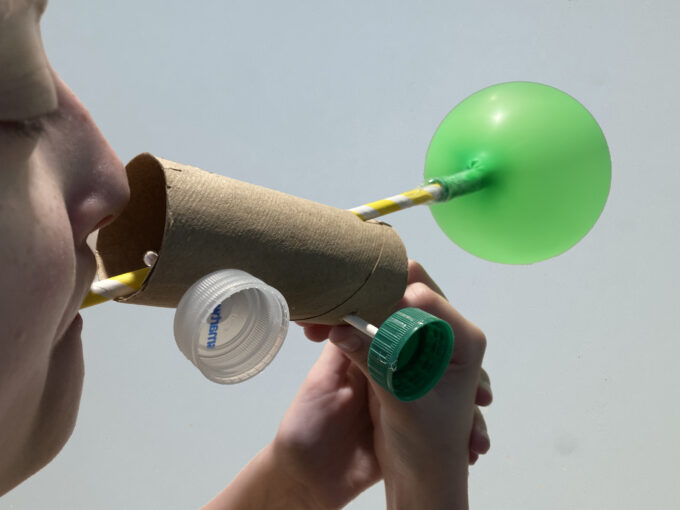
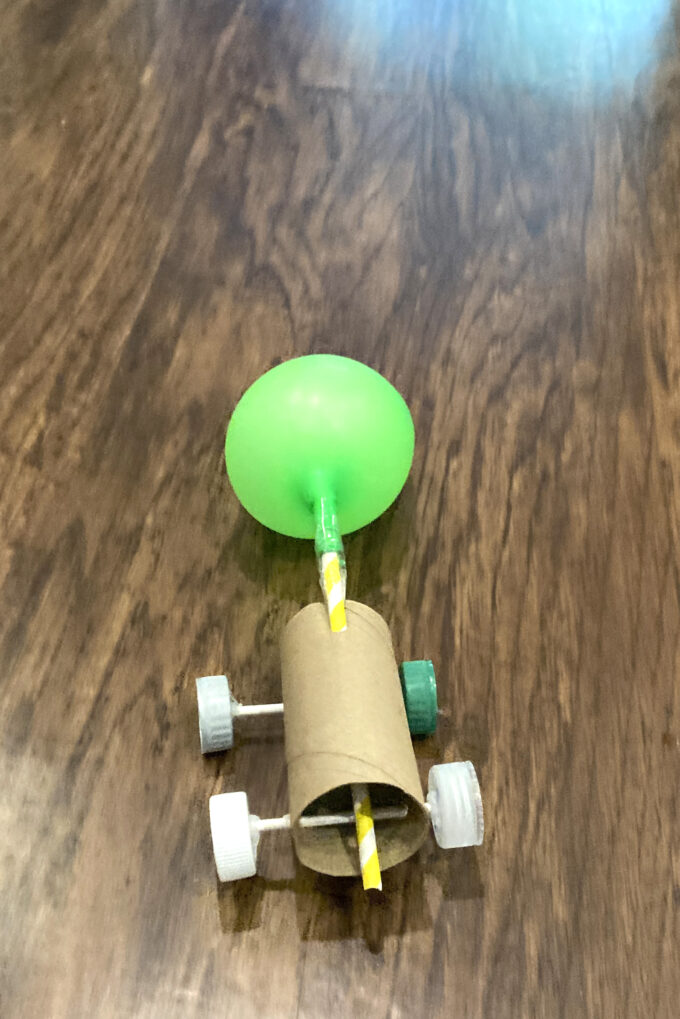
Set down the car while holding the straw closed, then let go and watch the fun! How far can your car go?
💡Alternatively, you can build a LEGO balloon vehicle!
Test and Improve Your Balloon Car
Engineers rarely stop after the first design. Instead, they test, observe, and improve their ideas to see what works best.
Try changing one variable at a time and compare your results.
Test:
- Balloon size
- Wheel size
- Vehicle weight
- Surface type
- Straw length
Measure:
- Distance traveled
- Time traveled
- Speed
- Stability
Ask:
- Which design traveled the farthest?
- Which design moved the fastest?
- Which balloon size worked best?
- What changes improved performance?
- What would you redesign next?
This simple investigation helps students practice observation, data collection, and problem-solving while exploring force and motion concepts.
The Science Behind a Balloon-Powered Car
When you build a balloon-powered car, you’re exploring several important physics concepts in action. As the balloon releases air, stored energy is converted into motion, causing the car to move forward without a motor or batteries.
Potential Energy and Kinetic Energy
When you inflate the balloon, you store potential energy in the stretched balloon. As the air escapes, that stored energy changes into kinetic energy, the energy of motion. The transfer of energy is what powers the car forward.
👉 Learn more about Potential and Kinetic Energy.
Newton’s Laws of Motion
A balloon-powered car is a great example of Newton’s Laws of Motion.
Newton’s First Law states that an object will remain at rest unless acted on by an outside force. The car remains still until the air begins escaping from the balloon.
Newton’s Second Law explains how force affects motion. The air pushing out of the balloon creates a force that accelerates the car forward. Generally, more air means more force and greater acceleration.
👉 Explore more: Newton’s Laws Experiments.
Action and Reaction Forces
As air rushes backward out of the balloon, the car moves forward. This demonstrates Newton’s Third Law of Motion, which states that for every action, there is an equal and opposite reaction.
Friction
The car does not move forever because friction acts against its motion. Friction occurs where the wheels contact the surface, gradually slowing the car down.
Try testing your balloon car on different surfaces. Smooth surfaces usually create less friction, allowing the car to travel farther, while rough surfaces create more friction and slow the car more quickly.
👉 Explore more: Friction Science Experiment
Engineering Connections
Engineers often test and improve designs to make them perform better. Try changing the balloon size, wheel size, or vehicle weight and compare your results. Small design changes can have a big impact on speed, distance, and stability.
👉 Learn more: Engineering Design Process for Kids
Free Balloon Car Project Printable
Grab the free balloon car printable instructions and project page to extend the learning. Use it to record observations, compare designs, and track results as you test your balloon-powered car.
Related Force and Motion Activities
Continue exploring force, motion, and engineering with these hands-on STEM projects:
- Push and Pull Ramp Experiment
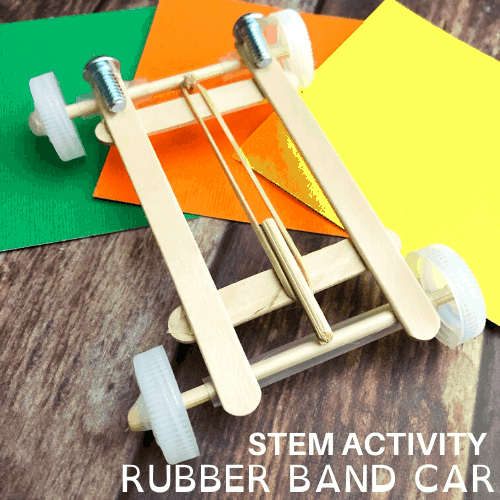
- Rubber Band Car
- Wind Powered Car
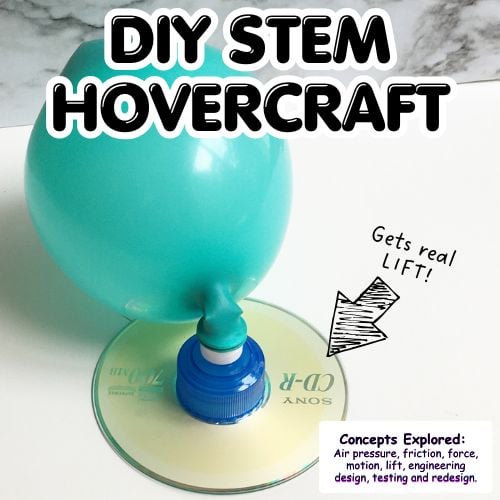
- Hovercraft
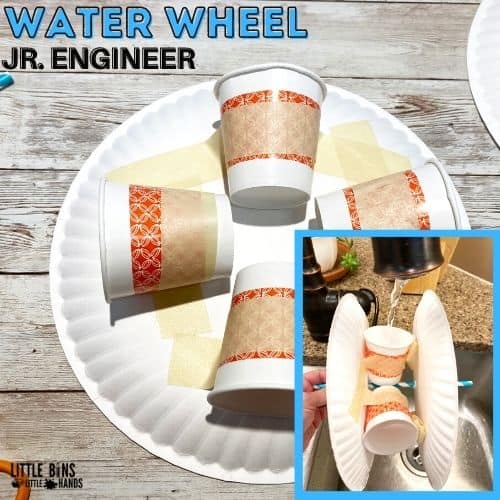
- Water Wheel Project
- Marble Roller Coaster

FAQ
How does a balloon car move?
As air rushes out of the balloon, it creates a force that pushes the car forward.
What science concepts does a balloon car demonstrate?
Students explore force and motion, air pressure, thrust, friction, energy transfer, and Newton’s Laws of Motion.
What age is appropriate for a balloon car project?
This activity works well for grades 3–5 but can easily be adapted for younger or older students.
Can a balloon car be used as a science fair project?
Yes. Students can test variables such as balloon size, wheel design, vehicle weight, or surface type and compare the results.
Why doesn’t the car keep moving forever?
Friction between the wheels and the surface gradually slows the car until it stops.
More STEM Resources
- Force and Motion Activities
- Engineering Activities for Kids
- Physics Experiments for Kids
- Plan a STEM Lab or Maker Space
Continue the Engineering Challenge
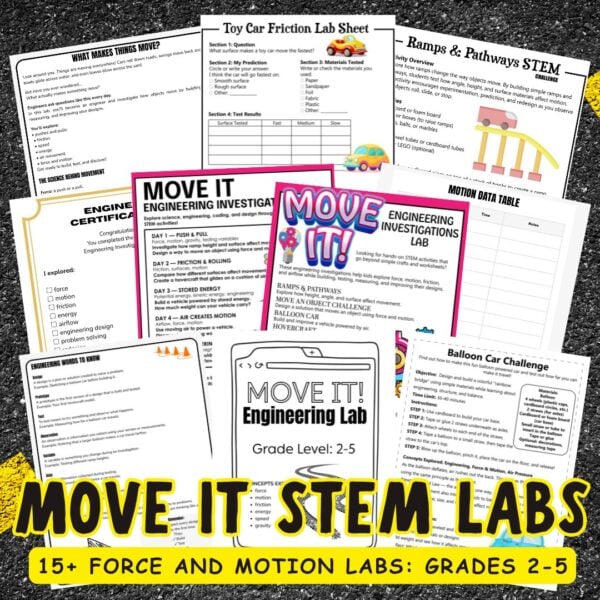
This balloon-powered car is featured in the Move It! Engineering Investigations Lab, a collection of force and motion engineering activities that encourage students to build, test, measure, and improve their designs.
Inside you’ll find balloon cars, rubber band cars, hovercrafts, water wheels, marble roller coasters, engineering notebook pages, investigation planners, and a complete 5-day STEM plan for grades 2–5.
👉 Grab the Move It! STEM labs here