
Sound waves aren’t something we can usually see—but this fun dancing sprinkles sound wave experiment makes vibrations visible! Using simple materials, kids can watch sound waves in action as music causes tiny sprinkles to jump and move.
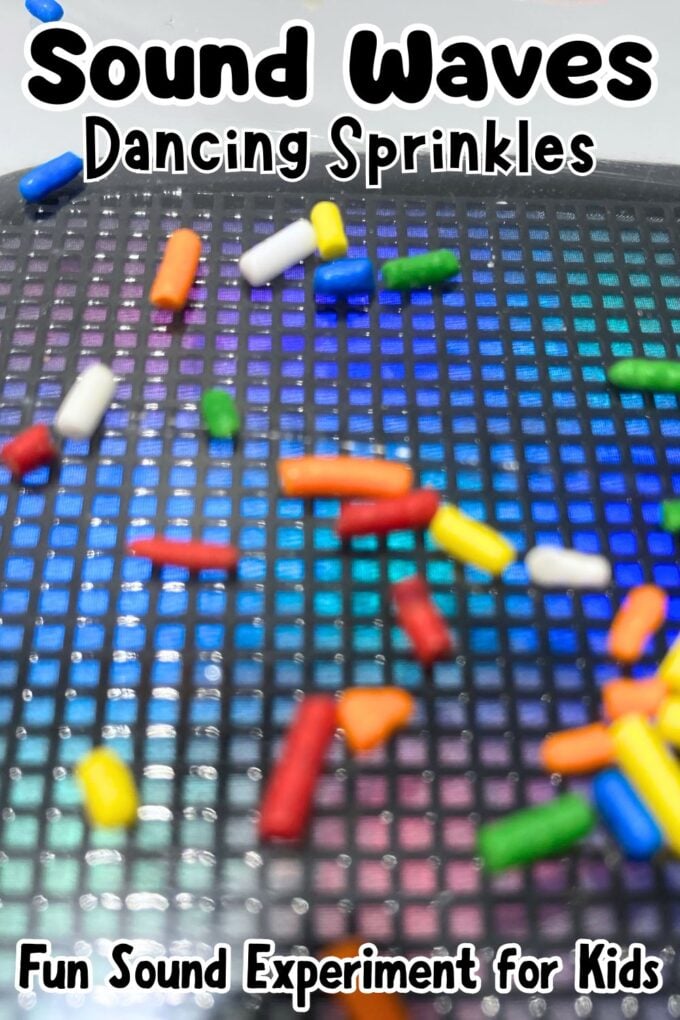
This hands-on sound science activity is perfect for exploring vibrations, pitch, and volume in a way kids can see, hear, and test for themselves.
This activity is part of our Sound Science for Kids collection, where children explore how sound travels, vibrates, and changes using hands-on experiments.
Sound Wave Experiment at a Glance
Field: Physics — Sound Energy
Grades: 2–5
Concepts Explored: Sound is energy made by vibrations; sound waves transfer energy through materials; volume and pitch affect vibration strength and movement.
Supplies Needed
- Bowl
- Plastic wrap
- Rubber band
- Sprinkles or rice
- Speaker or phone
How to Do the Dancing Sprinkles Experiment
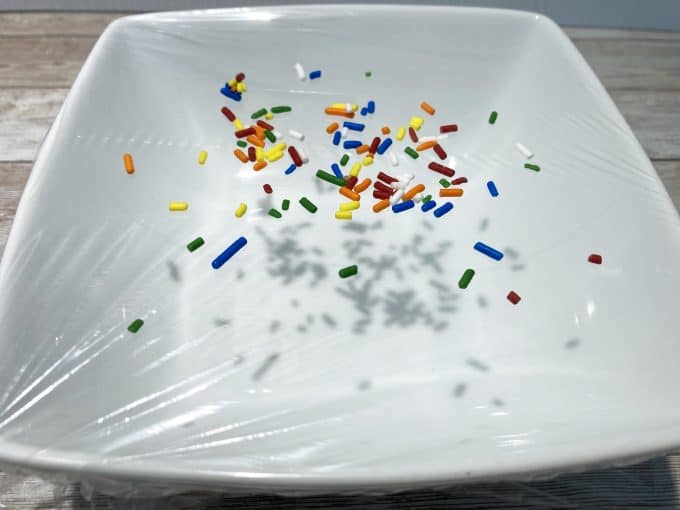
- Stretch plastic wrap tightly over the top of a bowl.
- Secure the plastic wrap with a rubber band so it is pulled tight.
- Sprinkle a small handful of sprinkles or rice on top of the plastic wrap.
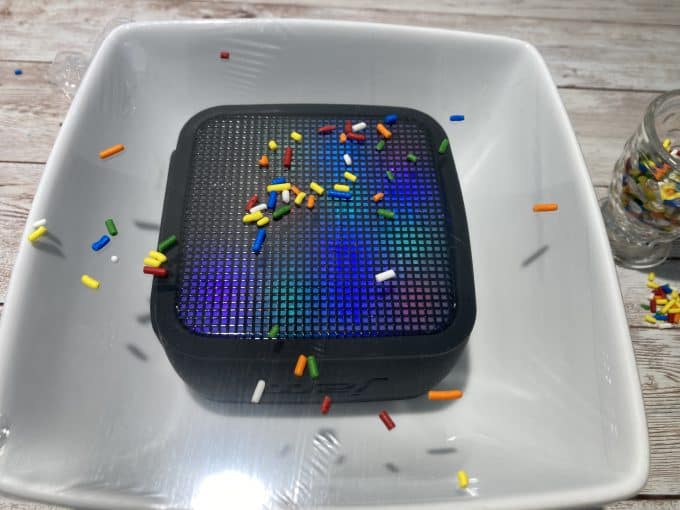
- Place a speaker or phone next to the bowl so it touches the edge.
- Play music and slowly turn up the volume. Watch what happens to the sprinkles!
Tip: For a stronger effect, place the speaker directly under the bowl (without touching the plastic wrap).
The Science Behind the Dancing Sprinkles
Sound is a type of energy made by vibrations. When music plays through a speaker, it creates sound waves that cause nearby materials to vibrate.
In this experiment, the sound waves make the plastic wrap vibrate. These vibrations transfer energy to the sprinkles, causing them to move or “dance” on the surface.
Louder sounds create stronger vibrations, which move the sprinkles more. Softer sounds create weaker vibrations, so the sprinkles move less. Pitch also matters—some sound frequencies cause more visible movement than others, depending on how the plastic wrap responds to the vibrations.
Make It a Science Project
Turn this activity into a simple science investigation by changing one variable at a time:
- Test different volume levels
- Try different types of music
- Change the size or shape of the container
- Compare sprinkles to rice or salt
Have students observe, record results, and explain how sound energy affects movement.
NGSS Guiding Questions for Sound Science
- What happens when sound causes an object to vibrate?
- How does changing volume affect vibration strength?
- How do different pitches change the movement of the sprinkles?
- How does sound show that energy can move through materials?
More Sound Science Activities to Explore
Find more hands-on activities that investigate sound waves, volume, and how sound travels in our Sound Science for Kids hub.
Looking for more hands-on activities? Explore our collection of physics experiments for kids that investigate sound, energy, and motion.