
Rain is one of the most common types of weather we experience, but have you ever wondered how rain actually forms?
Rain begins high in the sky inside clouds. Tiny droplets of water gather together in the atmosphere until they become heavy enough to fall to the ground as rain.
In this guide, kids will learn:
• where rain comes from
• why clouds make rain
• how rain forms step by step
• how to demonstrate rain formation with a simple model
💡 If you’re exploring a weather unit, make sure to also visit our Weather Science Activities for Kids for more hands-on experiments and STEM projects.
What Is Rain?
Rain is a type of precipitation, which is water that falls from the atmosphere onto the Earth.
Other forms of precipitation include:
• snow
• sleet
• hail
Rain forms when tiny droplets of water inside clouds grow larger and heavier until gravity pulls them down toward the ground.
These droplets fall through the air and reach the Earth’s surface as rain.
Where Does Rain Come From?
Rain comes from clouds.
Clouds form when water from oceans, lakes, rivers, and land evaporates into the air. This water becomes water vapor, which is an invisible gas.
As the water vapor rises into cooler parts of the atmosphere, it begins to condense into tiny droplets of liquid water. Millions of these droplets gather together to form clouds.
👉 If you’d like to explore how the sky is organized into layers, learn more about the layers of the atmosphere for kids.
At first, the droplets are extremely small and light, allowing them to remain floating in the sky.
But as more water gathers, the droplets combine and grow larger.
💡 Eventually, the cloud becomes too full of water, and the droplets fall to Earth as rain.
Rain Cloud Model Demonstration
One way to help kids understand how rain forms is to build a simple rain cloud model.
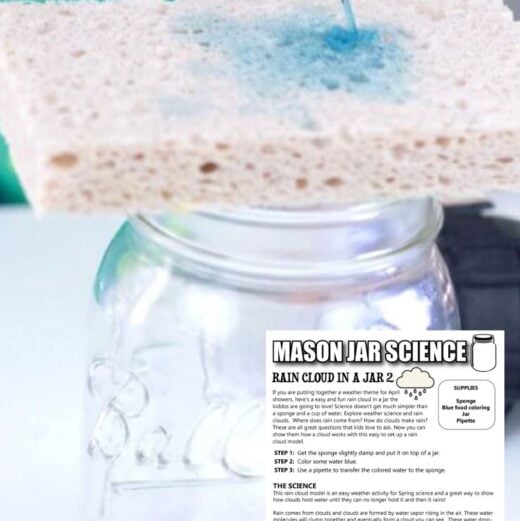
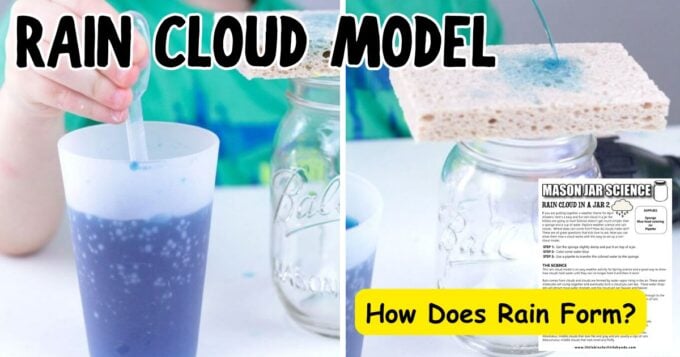
In this activity, a sponge represents a cloud holding water in the sky. As more water is added, the sponge eventually becomes saturated and begins to drip — just like a cloud releasing rain.
This demonstration is quick, visual, and perfect for classrooms because it uses only simple supplies.
How To Make a Rain Cloud Model
Supplies
• sponge
• clear jar or cup
• blue food coloring
• pipette or dropper
• water
Instructions
STEP 1
Place a sponge on top of a clear jar.
STEP 2
Mix a small amount of blue food coloring with water.
STEP 3
Use a pipette or dropper to slowly add the colored water onto the sponge.

STEP 4
Continue adding water and observe what happens.
As the sponge absorbs more water, it eventually becomes over-saturated, and the water begins to drip through into the jar below — just like rain falling from a cloud.
💡 Scientists measure real rainfall using a tool called a rain gauge.
Grab Your Free Weather Science Worksheets
Want to extend this activity?
Download our Weather Science Worksheet Pack with observation pages, weather vocabulary, and simple recording sheets perfect for classroom or homeschool weather lessons.
👉 Get your free printable weather worksheets here.
Why Do Clouds Make Rain?
Clouds are made of millions of tiny water droplets or ice crystals.
Inside a cloud, these droplets constantly collide and combine with one another. As they combine, they form larger droplets.
When the droplets become too heavy for the cloud to hold, gravity pulls them downward and they fall as rain.
This is why dark clouds often signal rain. Darker clouds usually contain more water droplets and are closer to releasing precipitation.
What Types of Clouds Bring Rain?
Not all clouds produce rain. Some clouds stay thin and light, while others grow large and heavy with water droplets.
The most common rain-producing clouds include:
- Nimbostratus clouds: These thick, dark clouds often cover the entire sky and bring steady rain for long periods of time.
- Cumulonimbus clouds: These tall storm clouds can produce heavy rain, thunderstorms, lightning, hail, and sometimes tornadoes.
- Stratus clouds: These low gray clouds may produce light drizzle or mist.
Clouds that produce rain usually appear darker and thicker because they contain more water droplets. Observing the sky and identifying cloud types is a great way for kids to predict changes in the weather.
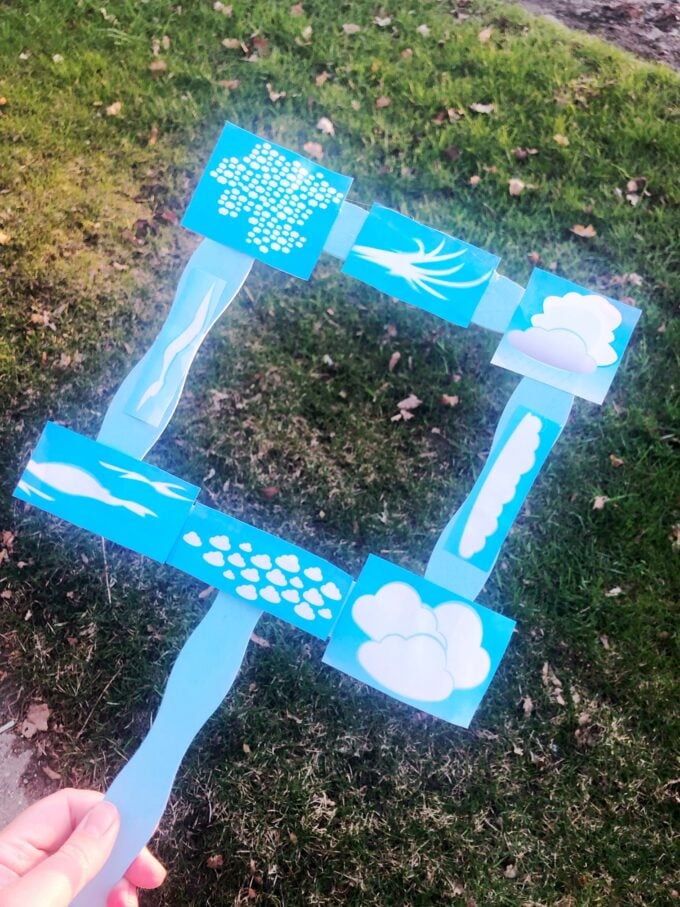
👉 You can explore cloud observation with our Cloud Viewer Activity, which helps kids identify real clouds in the sky.
How Does Rain Form Step by Step?
Rain formation happens in several stages.
1. Evaporation
Water from oceans, lakes, rivers, and soil heats up and turns into water vapor.
2. Rising Air
Warm air carries the water vapor upward into the atmosphere.
3. Condensation
As the vapor rises into cooler air, it cools and turns back into tiny droplets that form clouds.
4. Droplets Grow
The droplets collide and combine, forming larger droplets.
5. Precipitation
When the droplets become heavy enough, gravity pulls them down to the Earth as rain.
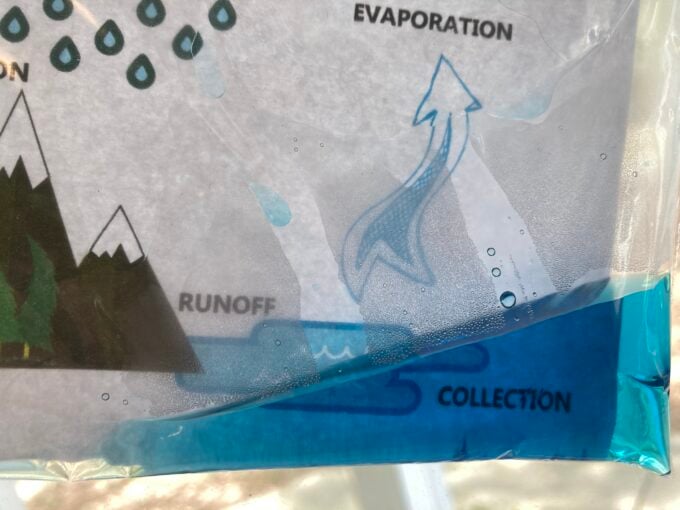
This entire process is part of the water cycle, which moves water continuously around our planet.
Why This Rain Cloud Model Works
Try These Rain Cloud Activities
If you want to explore rain clouds in different ways, try these activities:
• Shaving Cream Rain Cloud Experiment — watch rain fall through a cloud model in a dramatic visual experiment.
• Cloud in a Jar Experiment — explore how clouds form using condensation.
These activities help kids connect weather science concepts to real-world observations.

Measure Real Rainfall
Meteorologists measure rainfall using a tool called a rain gauge. A rain gauge collects rainwater so scientists can measure how much rain falls during a storm.
Kids can try this at home by making a simple rain gauge and tracking how much rain falls each day or during a storm.
🔎 Try building a DIY Rain Gauge for Kids and record your observations.
More Weather Activities for Kids
Weather science is a great way to help kids understand how the natural world works.
You can explore more hands-on experiments in our Weather Science Activities for Kids, including investigations about clouds, wind, storms, and the water cycle.
Spring is also a great season to study weather because changing temperatures bring more clouds and rain. Visit our Spring Science Activities for Kids for seasonal STEM ideas that explore weather, plants, and Earth science.
These activities work well for classrooms, homeschool lessons, STEM centers, and curious kids at home.
FAQ
Why does it rain?
Rain happens when water droplets in clouds grow large and heavy enough to fall to the ground.
Where does rain come from?
Rain comes from clouds that form when water vapor in the air cools and condenses into tiny droplets.
How do clouds hold water?
Clouds hold millions of tiny droplets that float in the air until they combine into larger drops that fall as precipitation.
Why are rain clouds dark?
Rain clouds appear darker because they contain more water droplets, which block sunlight from passing through the cloud.
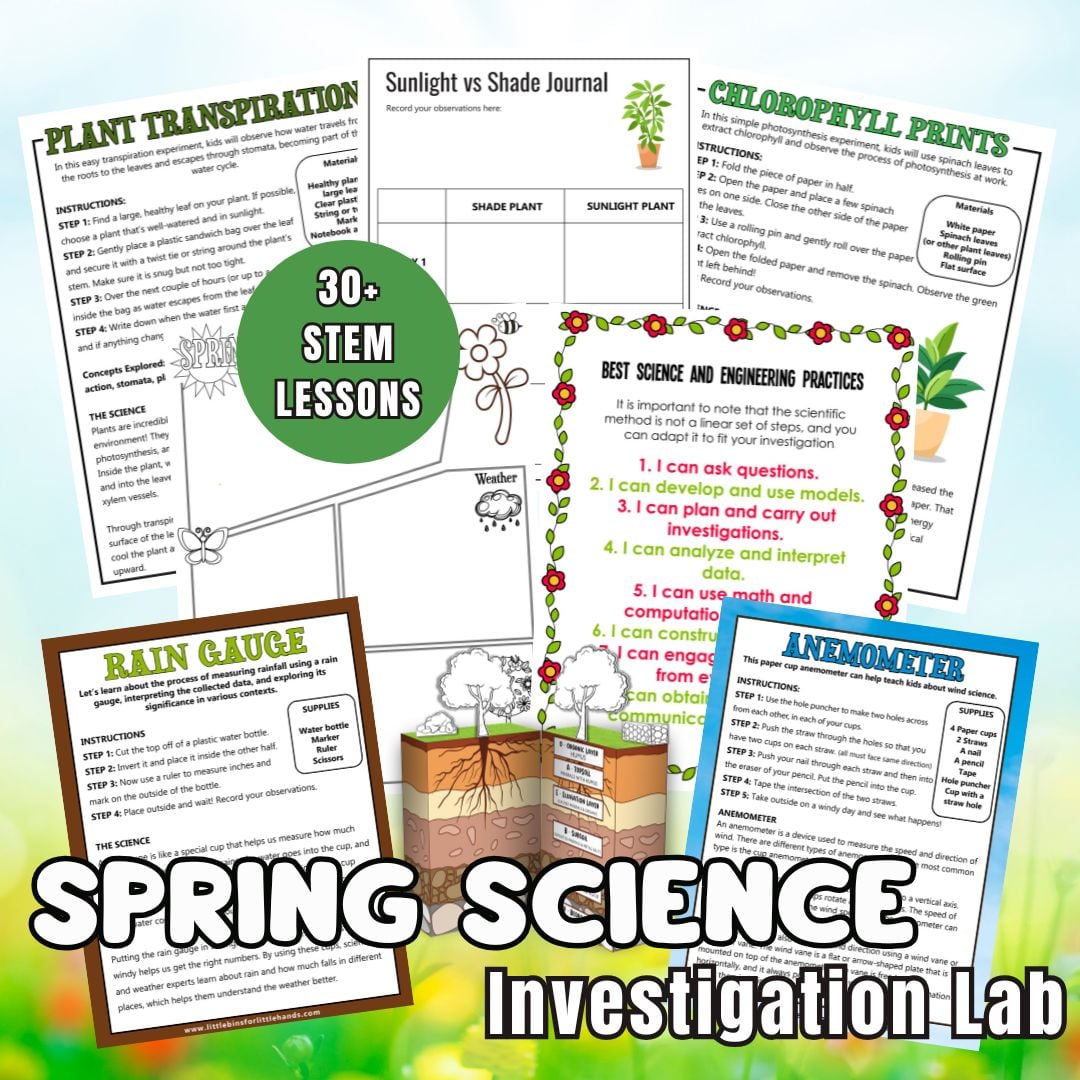
If you’re looking for a ready-to-use collection of investigations, explore our Spring STEM Project Pack, which includes 30 hands-on science and engineering activities covering plants, weather, earth science, life cycles, and STEM challenges.