

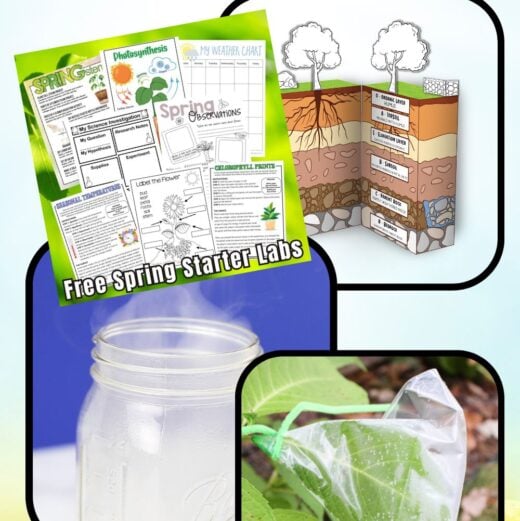
Spring is the perfect season to explore science with kids. Seeds begin to sprout, animals become more active, and the weather starts to change. These natural changes create wonderful opportunities for hands-on spring science activities that encourage curiosity and observation.
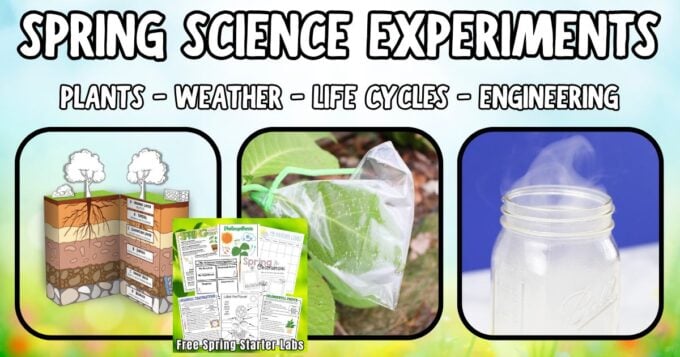
Whether you are planning a classroom science unit, homeschooling your children, or simply looking for engaging activities at home, these spring STEM activities for kids make it easy to explore real scientific ideas. From plant growth experiments to weather investigations and life cycle studies, each activity helps children observe the world around them and think like scientists.
Free Spring Science Starter Pack
Looking for an easy way to begin exploring spring science?
Download the Free Spring Science Starter Pack, which includes printable investigation pages, weather tracking charts, and simple observation activities designed to introduce kids to seasonal science.
This starter pack provides a few hands-on investigations that are perfect for classrooms, homeschool lessons, or curious young scientists.
👉 Get the free Spring Science Starter Pack here
Spring Science Activities for Kids
Below you will find some of our favorite spring science experiments and STEM activities, organized by topic to make planning easy.
These activities explore key spring science themes including:
- plant growth
- changing weather
- animal life cycles
- earth science
- engineering challenges
Each activity encourages children to observe, ask questions, and investigate scientific ideas through hands-on learning.
Plant Science Activities
Spring is the perfect time to study how plants grow and change. Seeds begin to sprout, leaves appear, and flowers bloom, providing many opportunities for plant science investigations. These activities help kids explore seed germination, plant structures, and the ways plants move water and nutrients.
Hands-on plant experiments are especially helpful for helping children understand how living things grow and respond to their environment.
Try these engaging plant science activities:
- Bean Seed Germination in a Jar – Observe how a bean seed sprouts and develops roots and shoots.
- Grow Seeds in Eggshells – Reuse eggshells as tiny planters while studying plant growth.
- Germinate Seeds in a Bag – Watch seeds sprout through the side of a clear bag for easy observation.
- Color Changing Flowers – Discover how plants absorb water through their stems.
- DIY Mini Greenhouse – Create a simple greenhouse to observe how plants grow in warm, humid conditions.
- How Leaves Drink Water – A simple demonstration showing how plants transport water.
- Observe Transpiration – Learn how plants release water vapor through their leaves.
- Plant Life Cycle Activities – Explore how plants grow from seeds to mature plants.
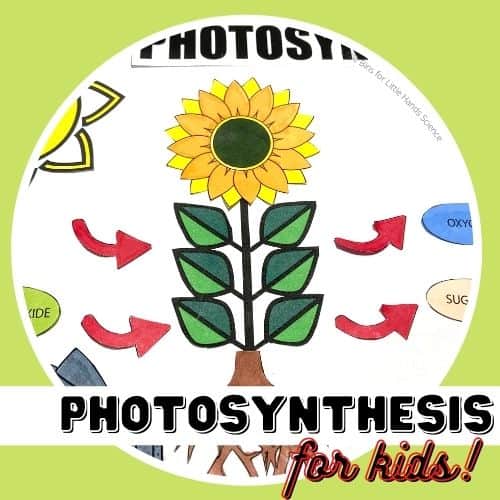
- Photosynthesis Activity – Introduce how plants use sunlight to produce food.
- Flower Life Cycle Lapbook – Construct a flower life cycle lapbook to learn about plants and how they grow
🔎 Explore More Plant Science Activities for Kids
Weather Science Experiments
Spring weather can change quickly, making it a great time to explore meteorology. Rain showers, thunderstorms, and changing temperatures help children observe how the atmosphere works. These weather experiments help kids understand how clouds form, how storms develop, and how weather patterns affect our daily lives.

Weather science also encourages kids to practice observation and data collection as they track daily conditions.
Try these hands-on weather activities:
- Rain Cloud in a Jar – Model how rain forms in clouds.
- Tornado in a Jar – Create a swirling tornado to demonstrate rotating air currents.
- Water Cycle in a Plastic Bag – Observe evaporation and condensation in action.
- Static Electricity Lightning Experiment – Demonstrate how electrical charges can build in clouds.
- DIY Spectroscope – Discover the hidden colors inside light.
- Homemade Weather Station – Build simple weather instruments and track daily conditions.
- Pine Cone Weather Station – Observe how pine cones respond to humidity changes.
🔎 Explore More Weather Activities for Kids
Earth Science and Geology Activities
Spring is also a great time to explore the earth beneath our feet. Soil, rocks, and minerals play an important role in plant growth and ecosystems. These geology activities help children learn how rocks form, how soil supports plant life, and how wind and water shape the land.

Hands-on earth science experiments make abstract ideas easier for kids to understand.
Explore these earth science investigations:
- Edible Rock Cycle – Use simple ingredients to demonstrate the rock cycle.
- Tectonic Plates Model – Show how Earth’s plates move and interact.
- Borax Crystal Experiment – Observe how crystals grow as minerals form solid structures.
- Soil Layers Model – Visualize the layers of soil that support plant growth.
- Soil Erosion Demonstration – Explore how water can move soil and shape the land.
- Playdough Earth Layers Model – Build a model of Earth’s internal layers.
🔎 More Geology Activities for Kids
Animal and Bug Life Cycles
Spring is full of life cycles as animals grow and change. Insects emerge, frogs develop from tadpoles, and butterflies complete their metamorphosis. These life cycle activities help kids understand how animals grow, develop, and survive in their environments.

Studying life cycles helps children recognize patterns in nature and understand how living organisms change over time.
Explore these life cycle activities:
- Ladybug Life Cycle Printable – Learn the stages of a ladybug’s life.
- Bee Life Cycle Lapbook – Discover how bees grow and help pollinate plants.
- Butterfly Life Cycle Activities – Learn the transformation from caterpillar to butterfly.
- Frog Life Cycle Printable – Explore amphibian metamorphosis.
- DIY Bird Feeder – Attract birds and observe their behavior.
- Build an Insect Hotel – Create a habitat for beneficial garden insects or for bees (bee habitat).
🔎 More Bug and Animal Life Cycle Activities
Spring STEM Challenges
Engineering challenges are a fun way to combine science, creativity, and problem-solving. These spring STEM activities encourage children to design, build, and test solutions while learning basic engineering concepts.

Students practice making predictions, testing ideas, and improving their designs.
Try these spring STEM challenges:
- Egg Drop Challenge – Design a structure that protects an egg from breaking.
- DIY Water Filter – Design and test a water filter to clean “polluted” water.
- Lemon Battery – Explore electricity with a lemon-powered lightbulb.
- Rain Gutter Regatta – Design a boat that travels through a rain gutter race course.
- DIY Windmill Project – Explore how wind energy can power movement.
- Wind Powered Car – Build a vehicle that moves using wind energy.
- Animal Shelter STEM Challenge – Design a shelter to protect animals from the weather.
🔎 More Engineering Activities for Kids (plenty of spring ideas)
Looking for a Complete Spring STEM Unit?
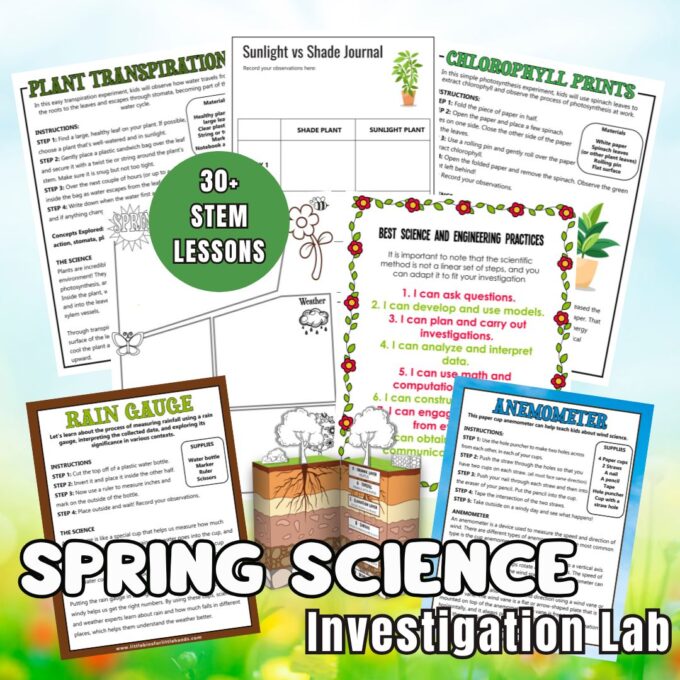
If you would like a ready-to-use collection of investigations, the Spring STEM Project Pack includes 30 hands-on science and engineering activities that expand on many of the ideas above. Includes NGSS guiding questions, journal prompts, and how to use guides!
This printable resource includes:
• step-by-step activity instructions
• supply lists and setup guidance
• printable investigation pages
• science explanations for kids
• observation and recording sheets
👉 Explore the Spring STEM Project Pack Here
Spring Science Activities FAQ
What are good spring science activities for kids?
Spring science activities often focus on plants, weather, life cycles, and earth science. Popular experiments include seed germination investigations, rain cloud experiments, pollination activities, and weather observation projects.
What are easy spring STEM activities for elementary students?
Simple spring STEM activities include seed growing experiments, tornado in a jar, rain cloud experiments, and engineering challenges like building wind-powered cars or mini greenhouses.
Why is spring a great season for science activities?
Spring brings many natural changes such as plant growth, animal life cycles, and changing weather patterns. These seasonal changes provide excellent opportunities for observation and scientific exploration.
What age group are spring science activities best for?
Most spring science activities work well for kindergarten throug




5 Comments
Comments are closed.