Sound is all around us, but how do our ears turn vibrations into something we can hear? In this post, kids will learn how we hear sound by exploring the parts of the ear and what each part does. This simple, kid-friendly explanation helps connect sound science to the human body.
The Science Behind It
Field: Biology — Human Body & Senses
Grades: K–4
Concepts Explored: Sound vibrations; how sound enters the ear; how vibrations move through the ear; how the brain interprets sound.
What Is Sound?
Sound is a type of energy made by vibrations. When something vibrates, it creates sound waves that move through air, water, or solid materials.
When sound waves reach our ears, they do not stop there. Instead, they travel through different parts of the ear, generating vibrations that transmit signals to the brain.
Parts of the Ear and What They Do
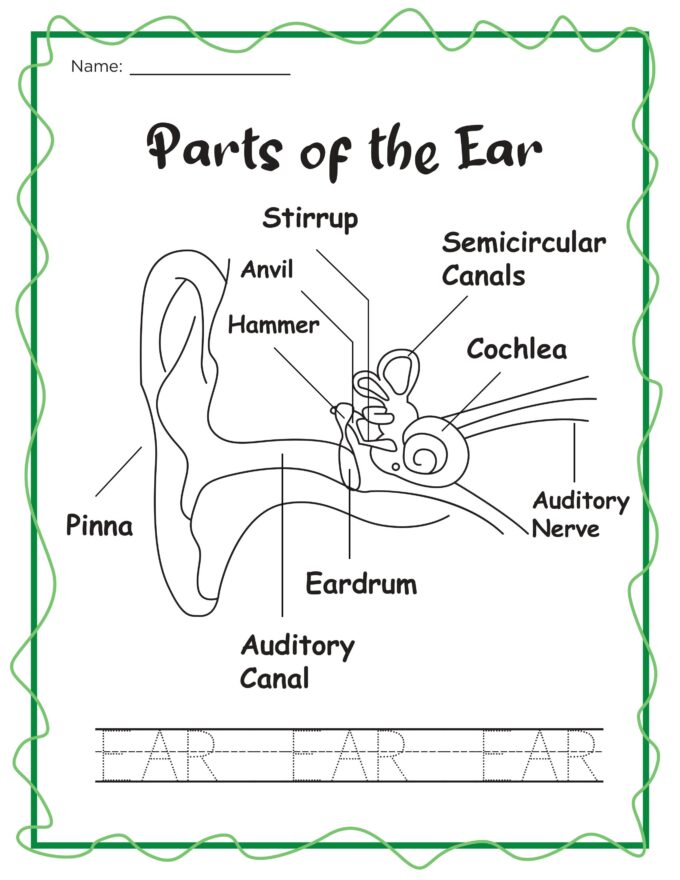
The ear has three main parts that work together to help us hear.
Outer Ear
The outer ear includes the part you can see and the ear canal.
- Collects sound waves from the environment
- Directs sound into the ear canal
Middle Ear
The middle ear contains the eardrum and three tiny bones.
- The eardrum vibrates when sound waves hit it
- The tiny bones help amplify (increase) the vibrations
Inner Ear
The inner ear includes the cochlea and auditory nerve.
- The cochlea changes vibrations into signals
- The auditory nerve sends messages to the brain
- The brain interprets the signals as sound
How Hearing Works (Step-by-Step)
- Sound waves enter the outer ear
- The eardrum vibrates
- Tiny bones in the middle ear amplify the vibrations
- The cochlea converts vibrations into signals
- The brain understands the signals as sound
This process happens very quickly — often in less than a second.
You can see how sound vibrations travel from one person to another in our cup-and-string telephone experiment, where vibrations move through a solid material before being heard.
Connecting Hearing to Sound Science
When kids experiment with sound — tapping jars, plucking rubber bands, or blowing through straws — they are creating vibrations.
Those vibrations are the same kind that make the eardrum move. Activities like a water xylophone or a rubber band guitar help kids understand what their ears do every time they hear a sound.
👉 Explore hands-on activities that show how sound is made in our Sound Science for Kids hub.
Sound Vocabulary for Kids
Vibration – Back-and-forth movement that makes sound
Eardrum – A thin membrane that vibrates when sound enters the ear
Cochlea – A spiral-shaped part of the inner ear that helps process sound
Sound Wave – Energy that travels through materials
Auditory Nerve – Sends sound signals to the brain
More Facts About Hearing
- Humans can hear thousands of different sounds
- Some animals hear sounds humans cannot
- Loud sounds can damage the eardrum
- Protecting ears helps keep hearing healthy
Extension Activities
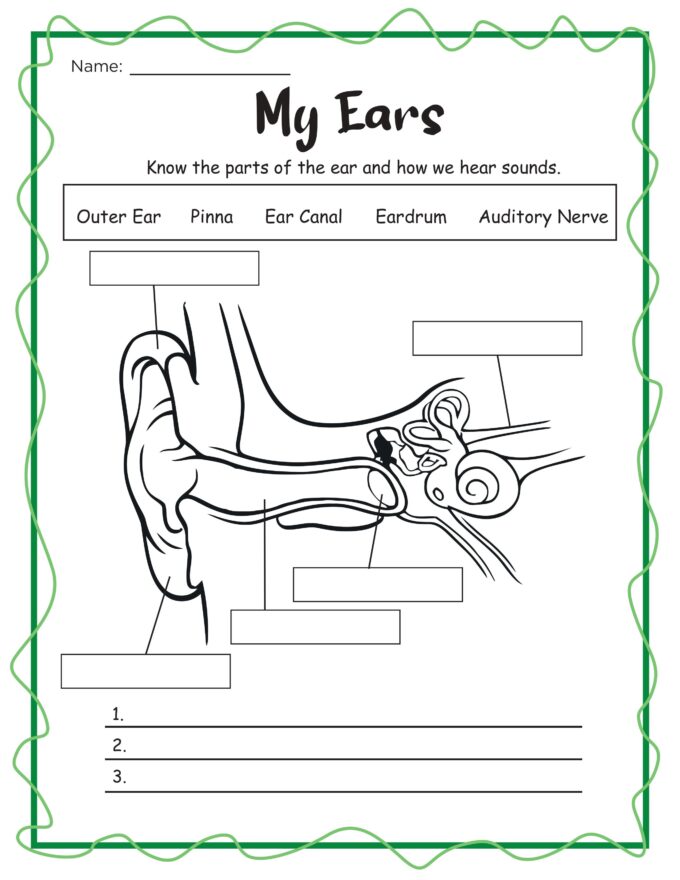
- Label the parts of the ear using a diagram
- Compare human ears to animal ears
- Explore how loud and soft sounds affect hearing
- Discuss ways to protect your ears

Make It a Science Project
Ask students:
- How does sound change before it reaches the ear?
- What part of the ear vibrates first?
- How does the brain help us understand sound?
Students can draw or model the ear to show how sound travels.
Related Science Activities
- Explore vibration and pitch in the Sound Science for Kids hub
- Learn more about the five senses in human body activities
- Connect sound to biology through hearing and communication

Free Printable Parts of the Ear Worksheet Pack
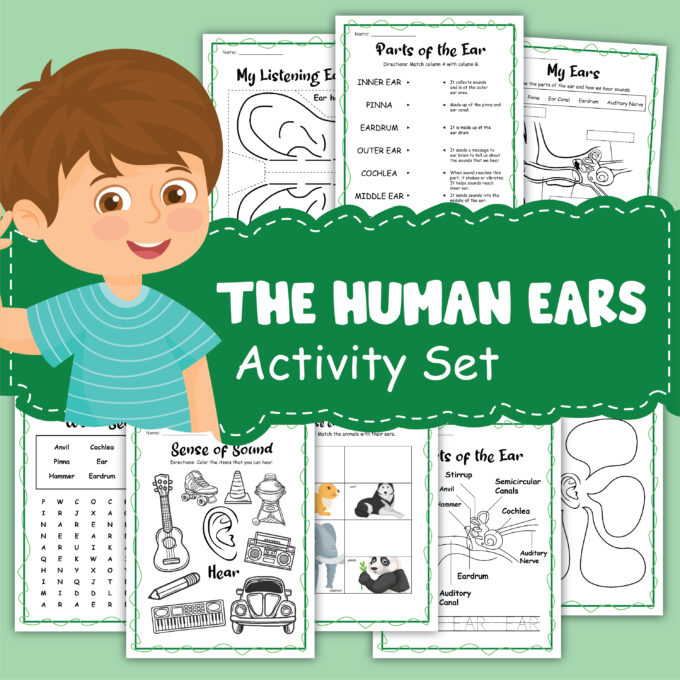
Add this free parts of the ear printable pack to a sound science lesson or human anatomy unit.

Turn this activity into a full sound unit.
If your students loved this experiment, expand it into a complete sound science study with 8 investigations, recording pages, and guiding questions already done for you.