

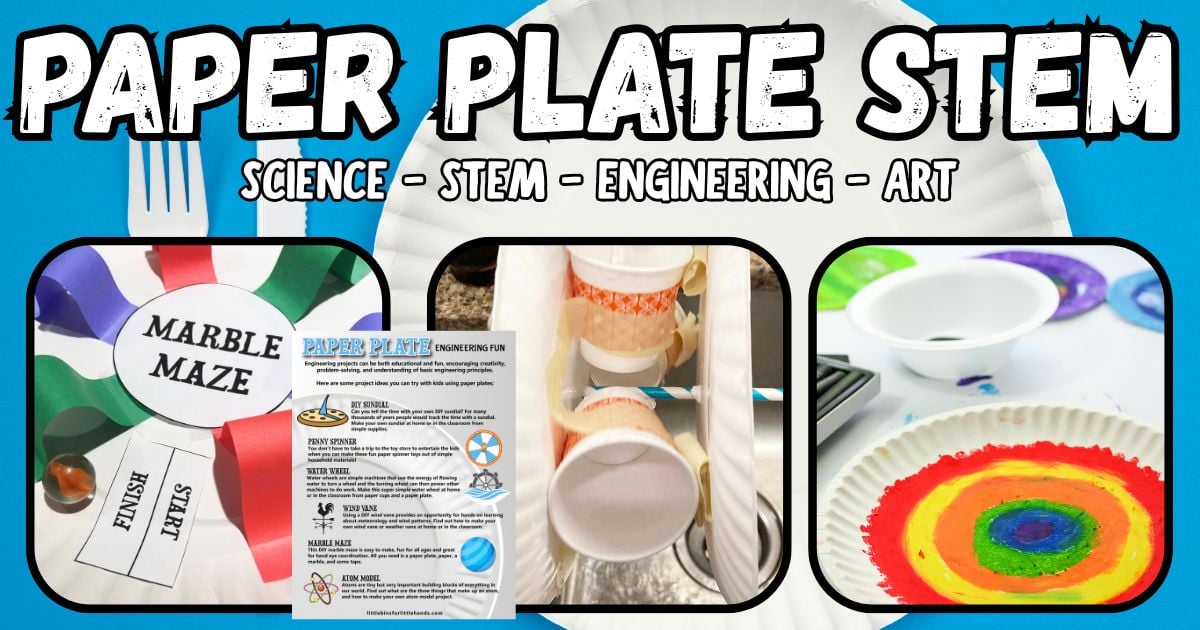
Looking for easy paper plate STEM activities? A stack of inexpensive paper plates is all you need to create exciting science experiments, engineering challenges, weather investigations, and physics projects for kids.
Paper plates are one of the best low-cost STEM supplies because they’re lightweight, easy to cut, sturdy enough to build with, and available almost anywhere. Whether you’re planning a classroom STEM center, homeschool lesson, summer activity, or rainy day project, these hands-on ideas make learning simple and fun.
👉 Many of the activities below include free printables, step-by-step instructions, and opportunities for kids to test, improve, and redesign their creations using the engineering design process.
Why Use Paper Plates for STEM?
Paper plates aren’t just for crafts—they’re excellent building materials for STEM challenges.
Kids can:
- Design and build moving models
- Explore forces and motion
- Investigate weather and Earth science
- Experiment with magnets
- Learn about light and color
- Practice observation and problem-solving
- Think like engineers by testing and improving their designs
Best of all, most of these projects use supplies you probably already have at home or in the classroom.
Paper Plate Physics Activities
Create a colorful spinning toy that demonstrates motion, balance, and rotational force. Kids can experiment with different numbers of pennies to see how weight changes the way the spinner moves.
👉 Kids Explore: force, motion, balance, rotation, engineering
Combine art and science as you explore how our eyes perceive color. As the paper plate spins, the colors blend together, creating an amazing demonstration of color theory.
👉 Kids Explore: light, color, optics, motion
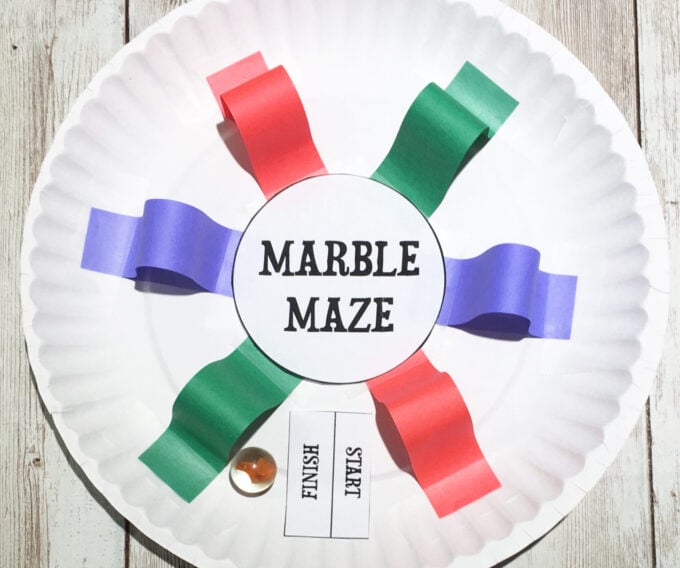
Design and build a marble maze using a paper plate and simple materials. Kids can test different layouts, redesign obstacles, and improve their maze through trial and error.
👉 Kids Explore: engineering, gravity, motion, problem-solving
Paper Plate Engineering Challenges
Move a magnet through a maze without touching it! This simple activity introduces magnetism while encouraging kids to think like engineers as they improve their maze designs.
👉 Kids Explore: magnets, magnetic force, engineering design
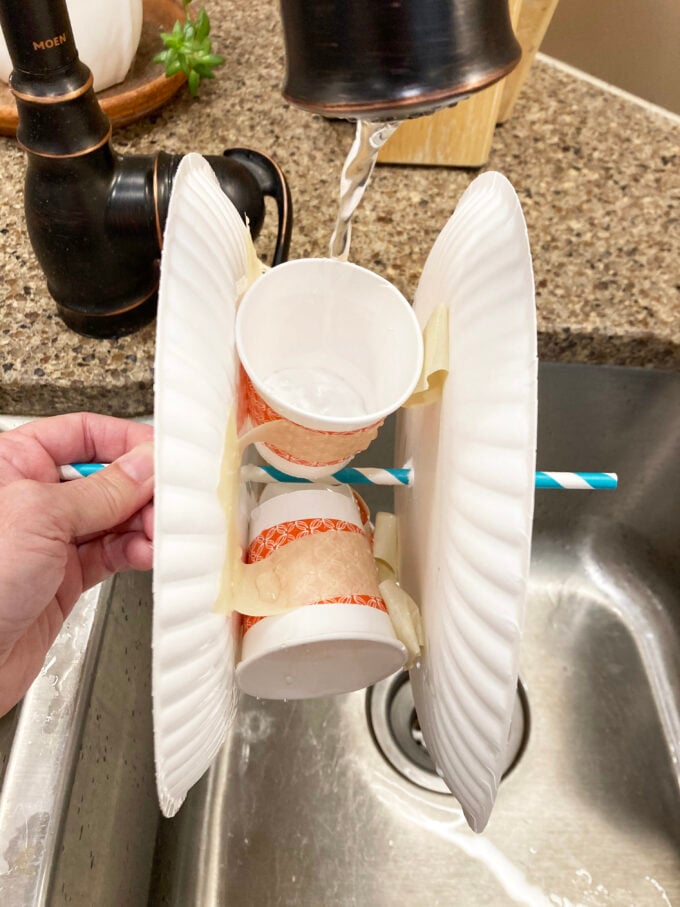
Build a working water wheel using paper plates and discover how moving water can transfer energy. Experiment with different amounts of water to see how performance changes.
👉 Kids Explore: hydropower, energy transfer, engineering
Earth and Weather Science Activities
Long before clocks, people used the Sun to tell time. Build a simple paper plate sundial and observe how the shadow changes throughout the day.
👉 Kids Explore: Earth’s rotation, shadows, time, astronomy
Create an easy weather tool that helps kids observe wind direction. Then compare daily weather patterns by recording their observations.
👉 Kids Explore: weather, meteorology, observation skills
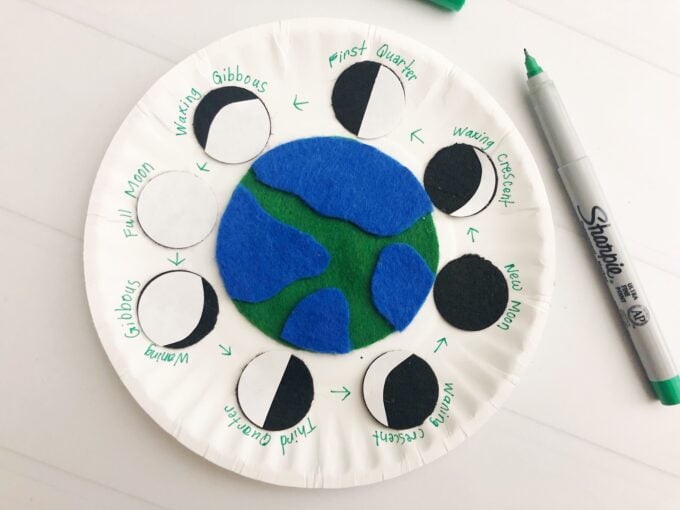
Moon Phases or Puffy Paint Moon Craft
Explore the changing appearance of the Moon with a simple paper plate moon phases model. As kids build through each phase in order, they’ll discover why the Moon appears to change shape throughout the month and learn about its orbit around Earth.
👉 Kids Explore: astronomy, Earth and space science, observation, patterns
Physical Science Activities
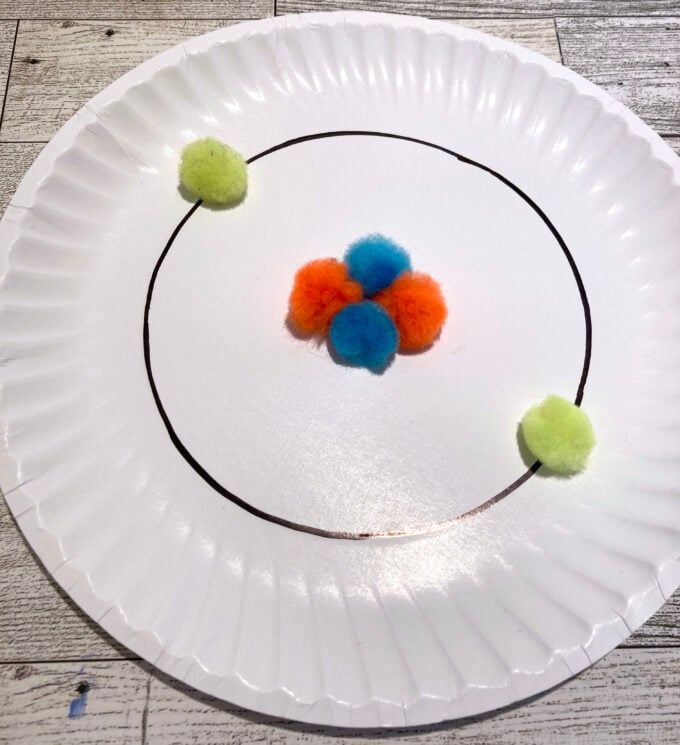
Build a simple atom model with a paper plate to introduce the basic structure of matter. This visual activity helps make abstract science concepts easier to understand. Plus look for free printable atom information.
👉 Kids Explore: atoms, matter, physical science
Add a STEAM Twist
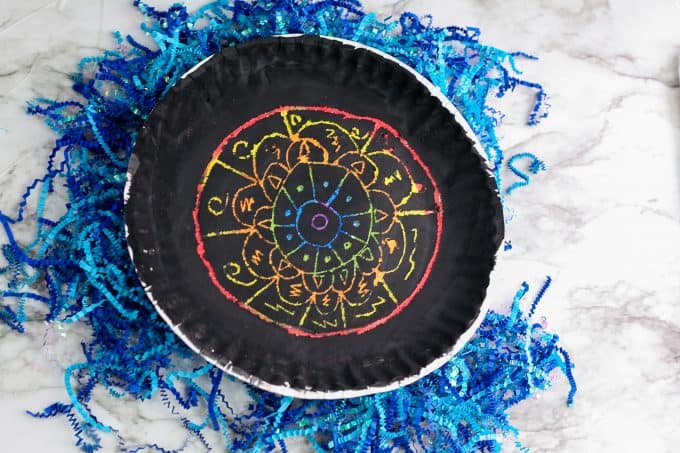
Turn a paper plate into colorful scratch art while exploring creativity alongside science, technology, engineering, art, and math. It’s an easy way to bring more STEAM into your activities.
Think Like an Engineer
Engineers don’t expect their first design to be perfect! Encourage kids to build, test, observe, and improve their creations as they work through each activity.
Ask questions like:
- What problem are you trying to solve?
- What do you think will happen?
- What worked well?
- What could you change to make it work better?
- Can you build another version and compare the results?
Remind kids that making changes after testing is an important part of engineering.
What Kids Learn
These paper plate STEM activities encourage children to:
- Ask questions and make predictions
- Plan and build simple models
- Test ideas through experimentation
- Observe and record results
- Solve problems creatively
- Improve designs using the engineering design process
- Build confidence through hands-on learning
Perfect for preschoolers, kindergarten, elementary classrooms, homeschool lessons, after-school clubs, and summer STEM fun.
Free Printable Paper Plate STEM Guide
Want an easy way to get started?
Download the free Paper Plate STEM Guide for quick activity ideas, printable resources, and links to each project so you can begin building right away.
Frequently Asked Questions
What are paper plate STEM activities? Paper plate STEM activities use inexpensive paper plates to explore science, technology, engineering, and math concepts through hands-on building and experimentation.
What age are these activities best for? Most activities work well for preschool through upper elementary with simple adjustments. Younger children may need help cutting and assembling, while older students can expand the engineering challenges.
Why are paper plates good for STEM? Paper plates are inexpensive, lightweight, easy to decorate, and sturdy enough for building simple engineering projects. They’re ideal for classrooms and groups because they require very little preparation.
What materials do I need? Most projects use common household or classroom supplies such as tape, scissors, markers, craft sticks, magnets, marbles, pennies, string, and paper plates.
New to STEM?
If you’re just getting started with STEM activities, these resources will help you feel confident planning hands-on learning at home or in the classroom.
Learn the Basics
- What Is STEM? Learn what STEM means and why hands-on activities are so effective.
- Engineering Design Process: Introduce kids to the simple steps engineers use to solve problems.
- What Is an Engineer? Discover how engineers use creativity and critical thinking every day.
Build STEM Skills
- Engineering Vocabulary: Learn common STEM words kids will encounter.
- Real World STEM Examples: See how STEM is used in everyday life.
- Reflection Questions: Encourage kids to think about what worked, what didn’t, and how they can improve.
Keep the Learning Going
- STEM Challenge Calendar
- Favorite STEM Books
- Engineering Books for Kids
- Our Favorite STEM Supplies & Bonus Challenge
- STEM Activities with Paper
Want more hands-on STEM ideas that actually work?
Our Classic STEM & Engineering Projects Pack includes 50+ favorite experiments and engineering challenges with printable journal pages, instructions, and easy-to-find supplies. Perfect for classrooms, homeschool, and curious kids who love to build and test ideas.