


STEM stands for science, technology, engineering, and math. It is a hands-on approach to learning that encourages kids to ask questions, test ideas, solve problems, and learn from the results.
STEM does not need to involve expensive kits, advanced technology, or complicated lessons. Kids can explore STEM by building a paper bridge, testing a balloon rocket, measuring how far a car travels, or investigating which materials work best for a particular task.
The most important part of STEM is not creating a perfect finished project. It is giving kids a chance to think, experiment, make changes, and try again.
👉 Ready to get started? Explore our complete collection of STEM projects and activities for kids.

What Does STEM Stand For?
STEM brings together four connected areas of learning.
Science
Science helps kids investigate and understand the world around them.
Kids use science when they make observations, ask questions, make predictions, conduct experiments, and use evidence to explain what happened.
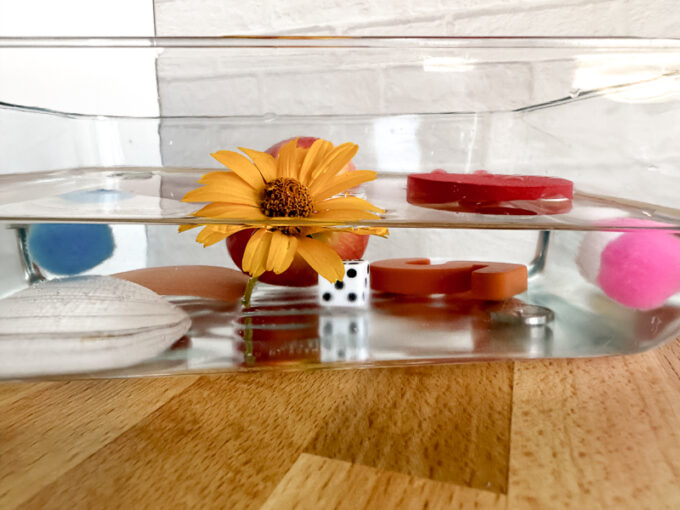
👉 For example, testing which objects sink or float helps kids investigate the properties of different materials.
Technology
Technology includes the tools, materials, and systems people create and use to complete tasks or solve problems.
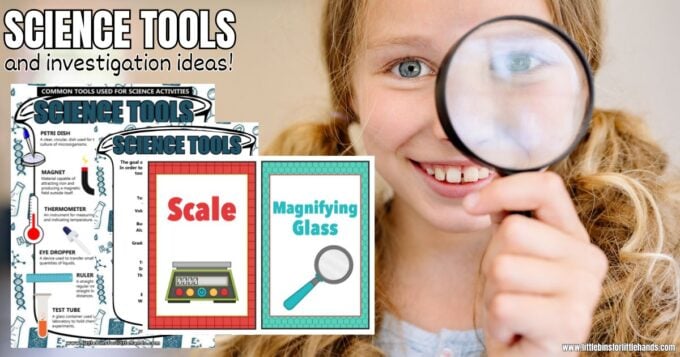
Technology does not always mean computers, tablets, or robots. Rulers, scissors, wheels, timers, cameras, magnifying glasses, and measuring tools are also examples of technology.
💡 Kids use technology whenever they choose and use tools to complete a task or investigation. Check out our science tools investigation for ideas.
Engineering
Engineering is the process of designing solutions to problems.
Kids use engineering when they identify a problem, brainstorm ideas, make a plan, build a model, test the design, and make improvements.
👉 A paper bridge challenge is an engineering activity because kids must design, build, test, and improve a structure.
Math
Math helps kids measure, compare, organize, and understand information.
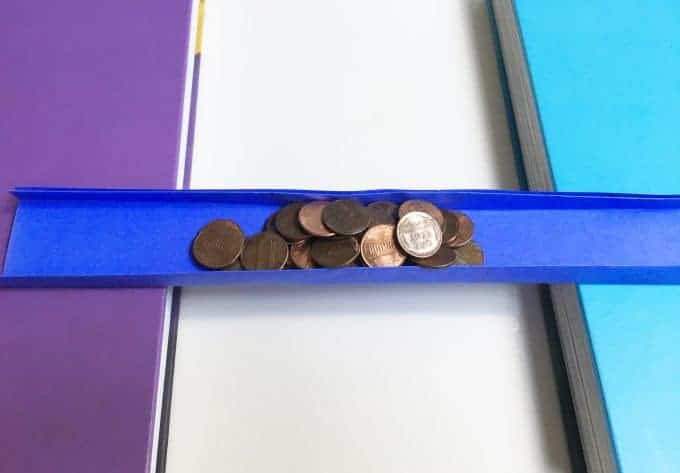
Kids use math during STEM activities when they count materials, measure distance, record time, compare results, identify shapes, or create a graph.
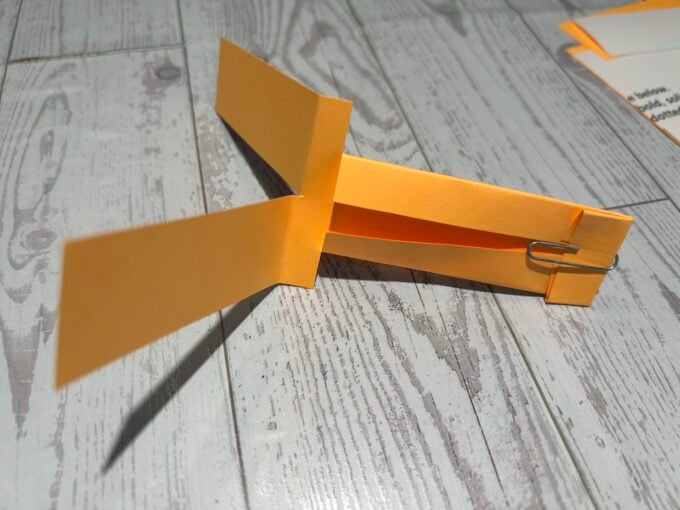
👉 A paper helicopter investigation might include measuring the helicopter, timing each fall, and comparing the results.
What Is STEM Education?
STEM education connects science, technology, engineering, and math through hands-on learning.
Instead of studying each subject only on its own, kids use skills from several areas to investigate a question or complete a challenge.
For example, kids building a balloon-powered car might:
- Explore forces and motion through science
- Use wheels, axles, and tools through technology
- Design and improve the car through engineering
- Measure distance and compare results through math
💡 Not every activity needs to include all four STEM areas equally.
One project may focus mostly on engineering. Another may begin as a science investigation and include math through measuring, timing, counting, or graphing.
STEM helps kids connect what they are learning to something they can observe, build, test, or improve.
What Makes an Activity STEM?
A STEM activity usually begins with a question, problem, or challenge.
Kids might be asked to investigate which material works best, build something that meets a goal, or change one part of a design to see what happens.
- Start with a clear question or challenge. Kids should understand what they are trying to discover, build, or solve.
- Include hands-on exploration. Kids need an opportunity to work with materials, tools, models, or real-world examples.
- Allow kids to make choices. Give them some control over the materials, design, or testing process.
- Make room for testing and observation. Kids should be able to try an idea and notice what happens.
- Use measurement when it adds useful information. Kids might compare height, length, distance, time, weight, or the number of successful trials.
- Leave room for improvement. A good STEM challenge gives kids an opportunity to change an idea and test it again.
💡 STEM activities are often open-ended. Different kids may create different designs or reach the goal in different ways.
STEM Challenge or Science Experiment?
Science experiments and engineering challenges are closely connected, but they have slightly different goals.
A science experiment usually investigates a question about how something works. Kids may change one variable, observe the results, collect data, and use evidence to explain what happened.
👉 For example, kids might investigate which material absorbs water or what makes an ice cube melt faster.

An engineering challenge asks kids to design a solution that meets a goal. Kids plan, build, test, and improve their designs.
For example, kids might build a paper bridge that holds weight or create a container that protects an egg during a fall.
Both types of activities include questioning, testing, observation, and evidence. The main difference is whether kids are primarily trying to understand something or design a solution.
Why Are STEM Activities Important?
STEM activities help kids practice skills they can use across many subjects and in everyday life.
Hands-on STEM learning can build:
- Curiosity
- Observation skills
- Creative thinking
- Problem-solving
- Communication
- Collaboration
- Measurement skills
- Data collection
- Persistence
STEM also helps kids see unsuccessful results as useful information.
A bridge that bends, a tower that falls, or a marble that rolls off the track gives kids something specific to study. They can decide what caused the problem, make a change, and test the idea again.
💡 The goal is not simply to finish the project. The goal is to think through the process and learn from the results.
Easy Examples of STEM Activities
You can introduce STEM with simple materials you probably already have at home or in the classroom.
- Paper Bridge Challenge: Build a bridge from paper and test how much weight it can hold. Kids explore shape, structure, balance, and strength.
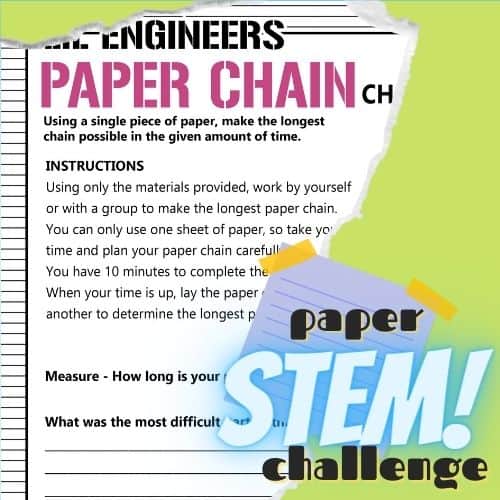
- Paper Chain Challenge: Create the longest paper chain possible using one sheet of paper. Kids must plan how to cut and use a limited amount of material.
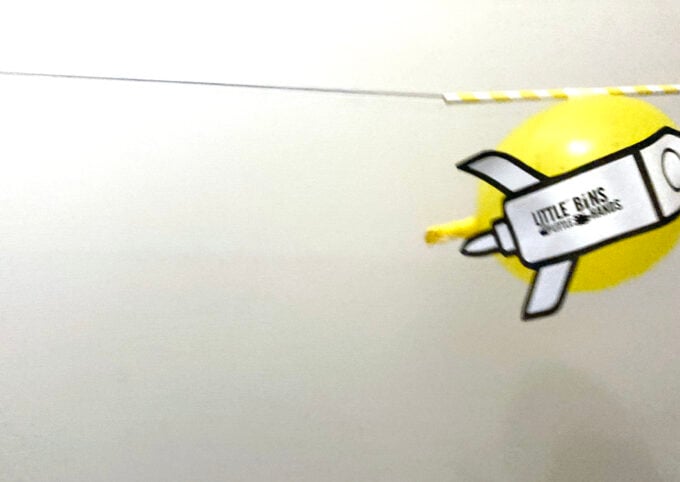
- Balloon Rocket: Send a balloon along a string and investigate how escaping air creates motion.
- Paper Helicopter Investigation: Build a paper helicopter and change one feature at a time to see how it affects the fall.
- Paper Tower: Use a limited number of paper sheets to build the tallest free-standing tower possible.
- Marble Run: Design a path that allows a marble to travel from beginning to end without falling off.
- Egg Drop Challenge: Create a container that protects an egg during a fall.
- Strong Shapes Challenge: Build with different shapes and investigate why triangles are often used in strong structures.
- Simple Machines Project: Build or explore a lever, pulley, wheel and axle, inclined plane, screw, or wedge.
👉 Find more ideas in our complete collection of STEM projects and activities for kids.
STEM Activities by Age
Preschool and Kindergarten STEM
Young children are natural STEM learners.
They explore STEM when they:
- Build with blocks
- Sort objects
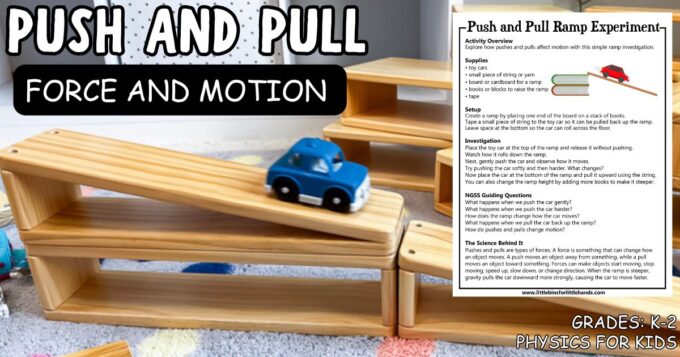
- Roll items down ramps
- Mix colors
- Test magnets
- Compare sizes
- Explore water
- Observe plants and animals
- Ask questions about how things work
For younger kids, keep STEM playful and concrete. Focus on observing, describing, comparing, building, and trying again rather than expecting long written explanations. A simple activity may begin with a question such as:
- Which objects roll?
- What materials are magnetic?
- Which container holds the most water?
- What can you build with five blocks?
- What happens when two colors mix?
Explore more toddler STEM activities, preschool STEM activities, and kindergarten STEM activities.
Elementary STEM
Elementary students are ready to plan investigations, record results, and explain their thinking in greater detail.
They can begin to:
- Make predictions
- Identify variables
- Measure accurately
- Record data
- Compare multiple trials
- Draw and label designs
- Explain results using evidence
- Improve a design based on testing
Try giving kids a clear challenge while allowing them to choose how they will solve it.
👉 Explore our elementary STEM activities, engineering challenges, and easy science experiments.
How to Get Started With STEM
You do not need to create a complete STEM program before trying your first activity.
Start with one simple question or challenge.
- Choose a question or problem.
Try a paper bridge, index card tower, marble run, or paper helicopter investigation. - Gather simple materials.
Paper, tape, cardboard, craft sticks, cups, straws, string, foil, and recycled containers work well for many projects. - Let kids make a plan.
They can draw an idea, discuss it with a partner, or describe what they intend to try. - Build, test, or investigate.
Allow enough time for kids to explore without stepping in too quickly. - Discuss the results.
Ask kids to describe what happened, what worked, and what evidence they collected. - Improve and try again.
Encourage kids to make one useful change and retest the idea.
👉 This basic process can be adapted for almost any STEM activity. Learn more about using the Engineering Design Process with Kids.
Helpful STEM Questions for Kids
Good questions help kids explain their thinking without giving them the answer.
Try asking:
- What do you notice?
- What do you think will happen?
- Why did you choose that material or design?
- How will you test your idea?
- What stayed the same?
- What did you change?
- What evidence do you have?
- What would you improve next time?
💡 These questions work with science investigations, engineering projects, building challenges, and classroom discussions. You can read more about questions for reflection here.
Do STEM Activities Need Technology?
No. STEM activities do not need to include screens, robots, or computer programming.
Technology in STEM includes tools and systems created to complete tasks and solve problems.
A ruler used to measure a bridge, a timer used during an investigation, or a wheel-and-axle system added to a vehicle are all examples of technology in action.
Coding concepts can also be introduced without screens through sequencing, algorithms, directional games, and binary code activities.
The technology part of STEM is about understanding and using tools, not simply using a digital device.
Do You Need Special STEM Supplies?
Most beginner STEM projects can be completed with inexpensive classroom, craft, or recycled materials.
Useful supplies include:
- Paper
- Index cards
- Cardboard
- Tape
- String
- Aluminum foil
- Craft sticks
- Straws
- Paper cups
- Building bricks
- Rubber bands
- Balloons
- Rulers
- Scissors
- Recycled containers
A small collection of open-ended materials can be reused for many different challenges.
You can also create a simple STEM bin, so supplies are ready whenever you need a quick activity. Grab our quick STEM supplies checklist and a STEM challenge to start!
Explore STEM Activities by Topic
Choose an area to explore based on what your kids are interested in or what you are currently teaching.
STEM Challenges
Open-ended problems that encourage kids to design, build, test, and improve.
Engineering Projects
Build bridges, towers, vehicles, simple machines, marble runs, and other working designs.
Science Experiments
Investigate chemistry, physics, biology, Earth science, weather, space, and more.
Coding Activities
Explore algorithms, binary code, sequencing, and screen-free computer science.
LEGO STEM Activities
Use familiar bricks for engineering, math, science, and problem-solving challenges.
Paper Engineering Projects
Build bridges, towers, chains, helicopters, structures, and other designs using simple paper.
STEAM Activities
Connect STEM with Art to explore biology, earth science, math, and more with creative projects.
Real World STEM
Explore how to connect STEM learning to real-world problem solving.
Start With a Free 5-Day STEM Challenge
Not sure which STEM project to try first? Our free 5-Day STEM Challenge Pack provides a simple way to introduce building, testing, and problem-solving.
Use it:
- At home
- In the classroom
- With a homeschool group
- During the first week of school
- In a STEM club
- As an early finisher activity
The projects use simple materials and give kids an opportunity to plan, build, test, and improve.
👉 Grab the free 5-Day STEM Challenge Pack.
Frequently Asked Questions About STEM
What does STEM stand for? STEM stands for science, technology, engineering, and math.
What is STEM for kids? STEM for kids is a hands-on approach to learning that encourages children to investigate questions, use tools, design solutions, measure results, and solve problems.
What is an example of a STEM activity? Building and testing a paper bridge is a STEM activity. It may include science by exploring forces, technology by using tools, engineering by designing the bridge, and math by measuring and comparing results.
What is the difference between STEM and science? Science focuses on understanding the natural world through observation and investigation. STEM connects science with technology, engineering, and math to investigate questions and solve problems.
Is STEM appropriate for young children? Yes. Preschoolers and kindergarteners explore STEM when they build, sort, measure, observe, compare, mix, test, and ask questions about the world around them.
Does every STEM activity include all four subjects? No. An activity may focus more heavily on one or two STEM areas while still incorporating skills from the others.
Do STEM projects need to work the first time? No. Testing, noticing problems, making changes, and trying again are important parts of STEM learning.
Do STEM activities need to use computers? No. STEM activities can be completely screen-free. Technology can include simple tools such as rulers, wheels, scissors, timers, and measuring equipment.
What skills do STEM activities teach? STEM activities help kids practice observation, measurement, problem-solving, creativity, communication, collaboration, persistence, and critical thinking.
Want more hands-on STEM ideas that actually work?
Our Classic STEM & Engineering Projects Pack includes 50+ favorite experiments and engineering challenges with printable journal pages, instructions, and easy-to-find supplies. Perfect for classrooms, homeschool, and curious kids who love to build and test ideas.


21 Comments
Comments are closed.