
Penguins are a favorite animal for winter science learning, and they’re perfect for helping kids explore habitats, life cycles, and animal adaptations. In this penguin activities guide, children will discover penguin facts, how penguins survive freezing temperatures, what they eat, and how they grow from egg to adult.
You’ll also find simple hands-on penguin activities you can use at home or in the classroom.
Are Penguins Arctic Animals?
Many kids think penguins live with polar bears — but they actually live on the opposite side of Earth.
Penguins live in Antarctica (South Pole)
Polar bears live in the Arctic (North Pole)
They never meet in the wild!
👉 You can explore Arctic animals here: Arctic Animals Activities for Kids
Where Penguins Live
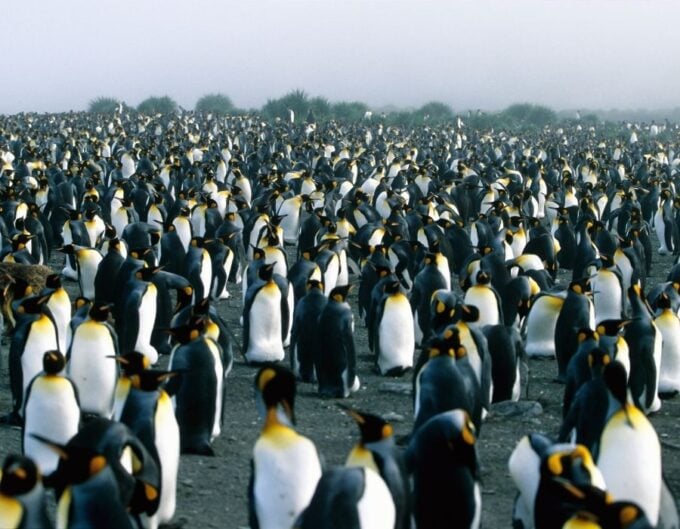
Penguins live along icy coasts and in the cold ocean around Antarctica. They spend most of their lives in water because that’s where they hunt and move the fastest.
Think About It:
Would it be easier to catch food on land or underwater?
Penguin Adaptations (How Penguins Stay Warm)
Penguins survive extreme cold because their bodies are adapted to their environment. These features are called adaptations.
👉 Learn more about animal adaptations for kids.
Waterproof Feathers
Penguins have tightly packed feathers coated with oil. Water slides off while warm air stays trapped near their skin.
Try This
Drip water on wax paper and fabric. Which keeps water out better?
Blubber Insulation
Under their skin is a thick layer of fat called blubber that traps heat and protects them from icy water.
👉 Try a similar insulation test: Polar Bear Blubber Experiment
Huddling Behavior
During storms, penguins stand close together and slowly rotate so each penguin warms up.
Penguin Huddle Activity
Stand shoulder-to-shoulder in a circle
Move one child outside the group
Ask who feels colder
Kids just modeled Antarctic survival.
Flippers for Swimming
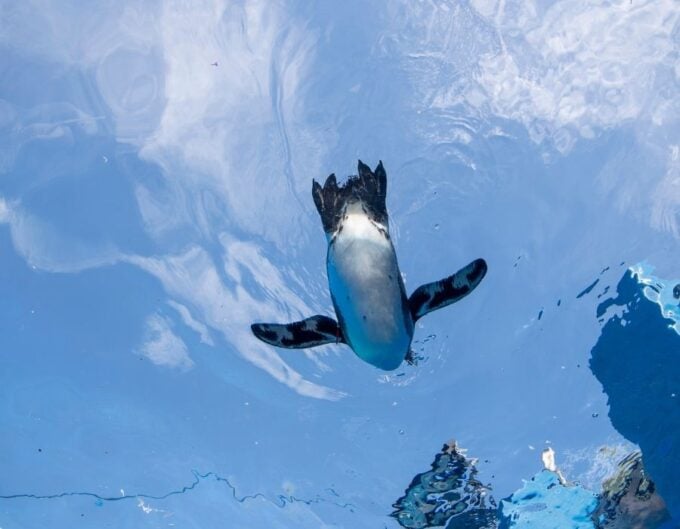
Penguins don’t fly in the air — they “fly” underwater using strong flippers to chase fish.
What Penguins Eat
Penguins are carnivores. They eat:
• fish
• squid
• krill (tiny shrimp-like animals)
They swallow food whole and rely on speed to catch prey.
Sorting Activity
Fish ✔
Grass ✘
Krill ✔
Berries ✘
Squid ✔
Penguin Life Cycle for Kids
What Happens During Each Stage?
Egg
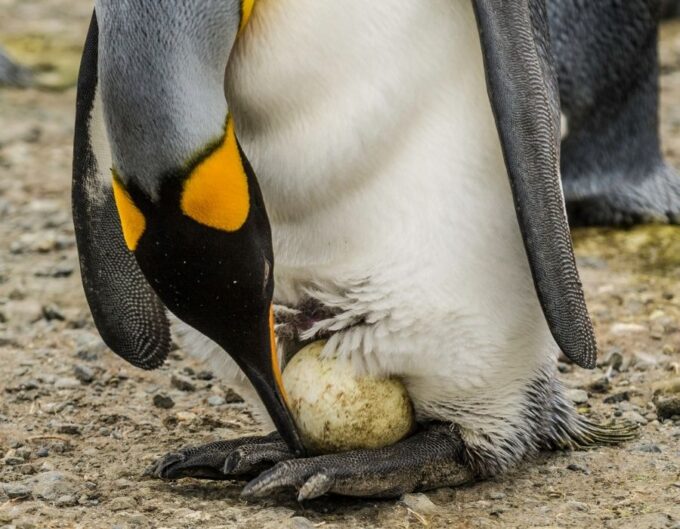
The parent penguin keeps the egg warm on its feet under a special fold of skin called a brood pouch. If the egg touches the ice, it can freeze quickly.
Chick
After hatching, the chick is covered in soft down feathers. It cannot swim yet and depends completely on its parents for warmth and food.
Juvenile Penguin
The chick grows waterproof feathers and begins entering the ocean. This is when it learns to swim and catch food on its own.
Adult Penguin
Fully grown penguins hunt, swim long distances, and eventually return to land to lay eggs and start the life cycle again.
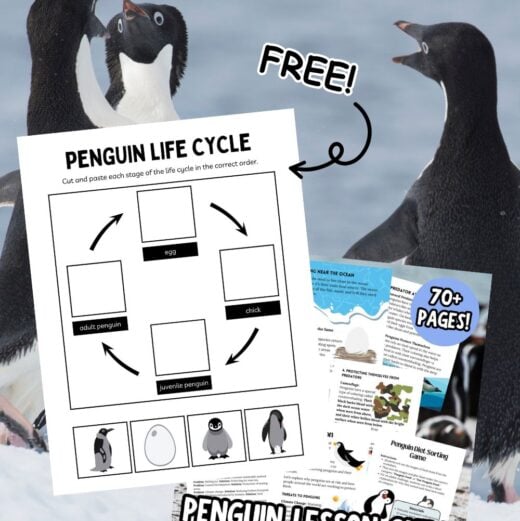
Free Penguin Activity
Start your penguin study with a hands-on activity kids love. Download the Penguin Life Cycle Sequencing Activity:
Movement Activity — Waddle Like a Penguin
Place a paper “egg” on each child’s foot (if necessary, lightly tape it in place) and walk without dropping it. Kids quickly discover why penguins waddle!
Why Penguins Matter
Penguins are part of the ocean food chain. Changes in sea ice and ocean temperature affect their food supply and survival. Learning about penguins helps kids understand how animals depend on their environment.
👉 Explore how food chains work for kids.
Continue Learning
Now travel to the North Pole and see how a different animal survives freezing water:
👉 Polar Bear Adaptations for Kids
Or explore the entire frozen ecosystem:
👉 Arctic Animals Activities for Kids

Want a Full Penguin Study?
If your kids enjoyed the activity, the full printable Penguin Unit includes:
• life cycle sequencing
• anatomy labeling
• matching games
• reading pages
• review activities
👉 Penguin Unit and Lesson Study