
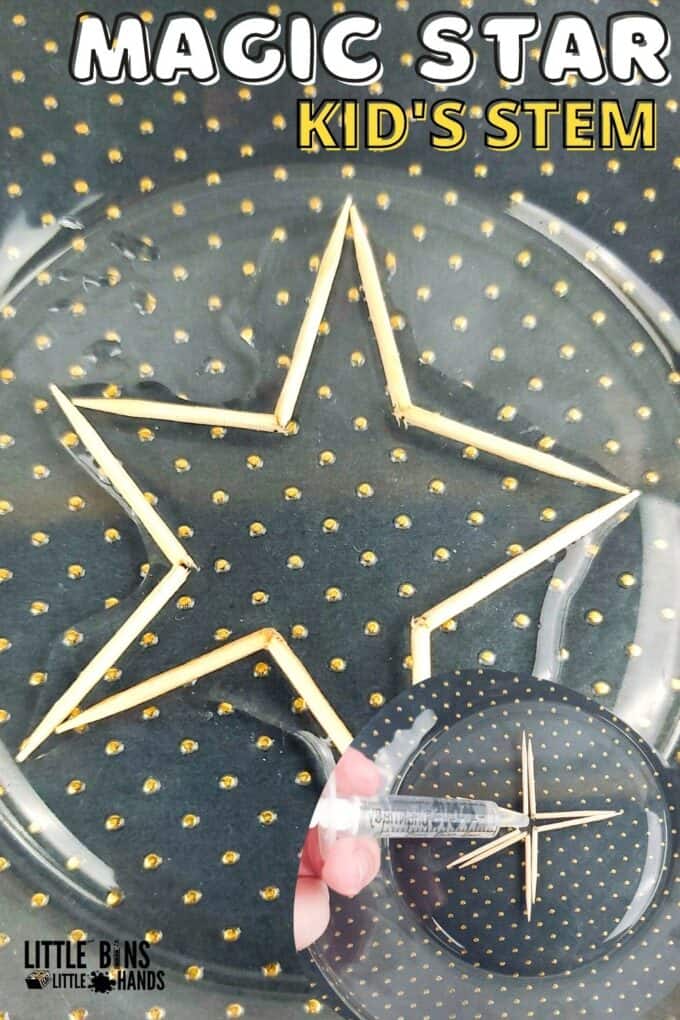
Is it magic, or is it science? Either way, this toothpick star STEM activity is sure to impress! Make a star out of broken toothpicks by only adding water. Learn about capillary action with a quick science activity. It could even be your next toothpick party trick!
Toothpick Star Experiment
Recommended Grade Level: This activity is suitable for 3rd-5th Grade and works well as part of a plant science lesson plan. You can tie it into discussions about how plants absorb water through their roots! See below for how to differentiate it for younger kids.
💡 Our toothpick star trick is a fun example of capillary action at work.
Supplies:
- 5 toothpicks
- Small plate
- Small bowl of water
- Medicine dropper
Set Up the Experiment
Watch The Video:
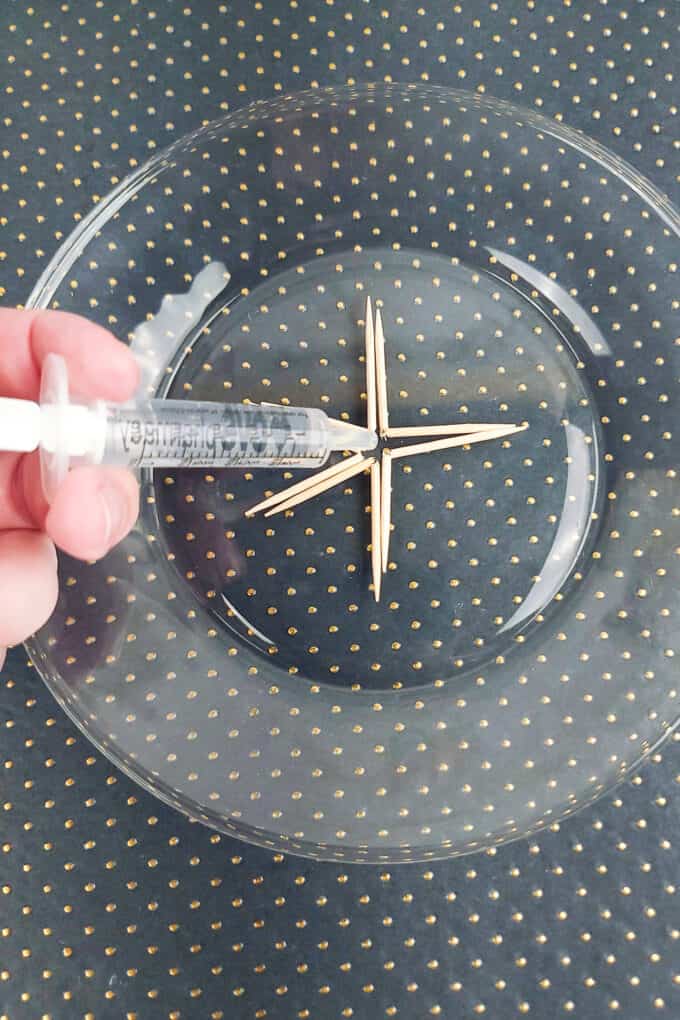
STEP 1. Take the 5 toothpicks and bend them until they bend in half but be careful not to let them break fully apart.
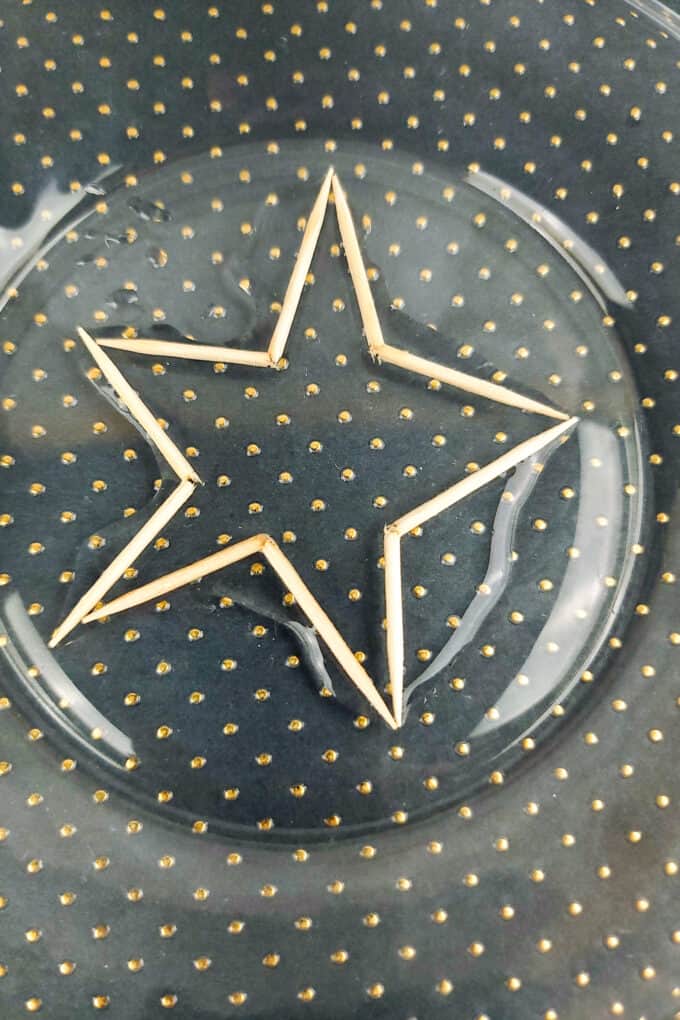
STEP 2. Arrange the toothpicks so they create a closed star pattern as seen below.
STEP 3. Fill up the medicine dropper with water.
STEP 4. Slowly add water drops to the toothpicks’ center and watch the star move!
How Does It Work?
The toothpicks are made of dry wood. When water is placed in the middle of the closed star, the wood absorbs the water, which expands the wood. But how does the wood absorb water?
The adhesive forces between the water and the wooden toothpick are stronger than the cohesive forces inside the water. This adhesive force (called cohesion) pulls the water molecules into the narrow spaces within the wood.
This process is called capillary action. The result is that the water travels to the tips of the broken toothpicks.
The bent wood fibers expand and straighten out as the wood absorbs more water. Then, each toothpick pushes against the others. As the toothpicks straighten, the inside of the star opens up.
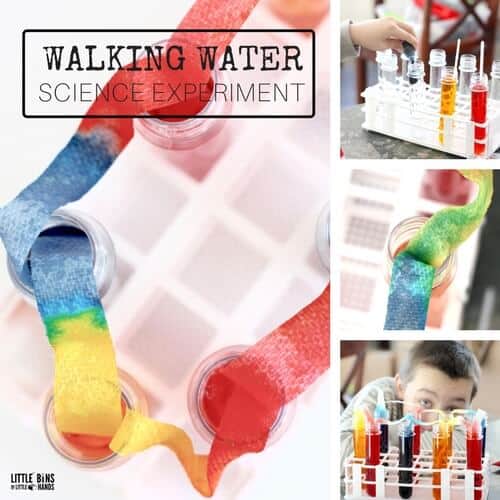
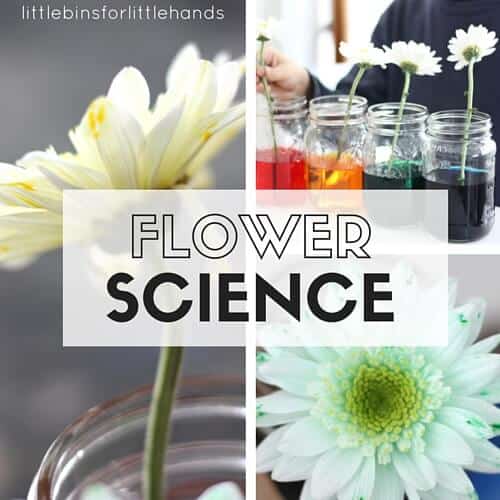
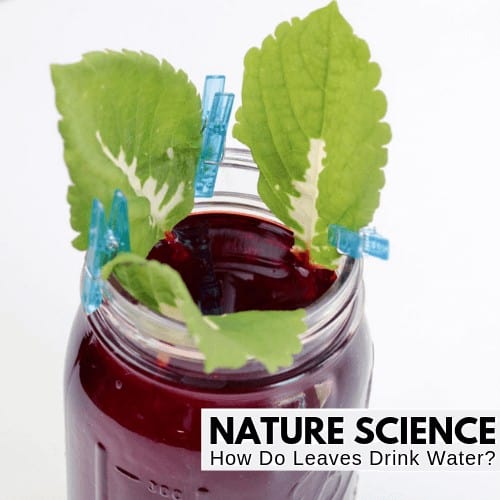
Capillary action can also be seen in plants. It’s how plants move water from their roots to the leaves. Here are a few other activities that demonstrate capillary action at work…
How to Differentiate
This “Magic Star” activity is perfect for kindergarten through 2nd Grade to explore fine motor skills and basic scientific observation. It introduces the concept of surface tension, where water molecules stick together and create a pulling effect. Watching the toothpicks move helps students visualize how surface tension allows water to interact with objects in everyday life.
More Fun Science Experiments To Try
Join the Library Club Today!
Support Real Learning with Real Projects! When you join the Library Club Membership, you’re not just getting instant access to our complete library of art and STEM printables (plus this project)—you’re helping us keep hands-on, high-quality learning alive. Thoughtfully created resources made by real people who care about inspiring kids through creativity, curiosity, and connection.