

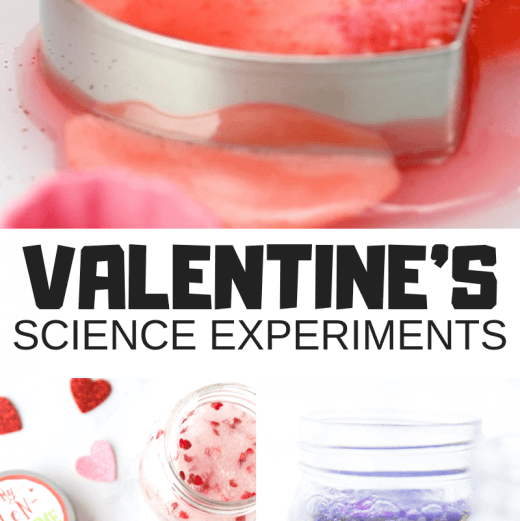
Looking for hands-on Valentine’s Day science experiments that are easy to set up and fun to explore? These kid-friendly Valentine science activities combine chemistry, physics, and life science using simple household supplies—perfect for preschoolers through elementary-aged kids.
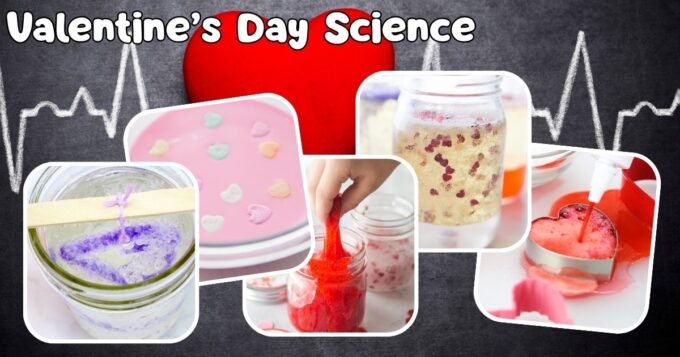
Whether you’re planning a Valentine science lesson for the classroom, homeschool, or at home, you’ll find plenty of engaging experiments right here.
Explore Science for Valentine’s Day
These Valentine’s Day science experiments focus on observing changes, testing ideas, and exploring cause and effect. Kids can practice making predictions, observing results, and discussing what happened—core science skills that work well across age levels.
Our Valentine science activities are:
- Easy to set up
- Budget-friendly
- Flexible for ages 3–10
- Ideal for short lessons or science centers
Valentine’s Day Science Experiments
Click on the experiment titles below to see full instructions, supply lists, and setup tips. You may already have many of the materials on hand.
💡 With older kids, encourage predictions, observations, and simple data collection to connect these activities to the scientific method.
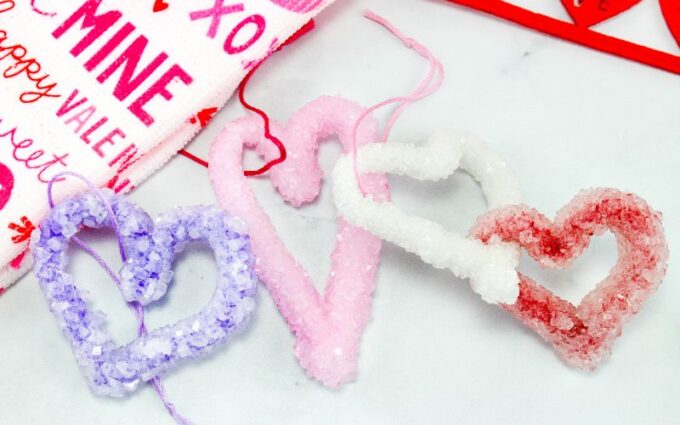
Crystal Hearts
Grow crystal hearts using borax or salt and observe how crystals form as solutions cool or evaporate. This is a great introduction to crystal growth and solutions with a Valentine theme. Alternatively, you can grow salt crystal hearts.
Dissolving Candy Heart Experiment
Test conversation candy hearts in different liquids to explore solubility and dissolving rates. Kids can compare what happens in water, vinegar, and other liquids.
Candy Hearts Oobleck
Mix cornstarch and water to create heart oobleck, a non-Newtonian fluid that behaves like both a solid and a liquid. Adding candy hearts makes this classic states-of-matter experiment perfect for Valentine’s Day.
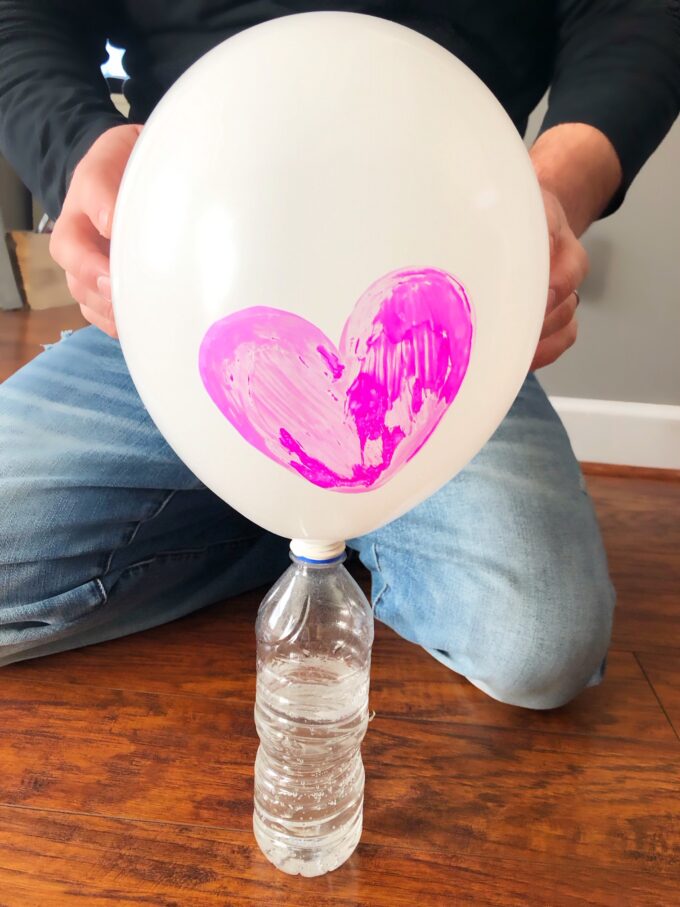
Valentine Baking Soda Balloon Experiment
Explore a classic chemical reaction with a Valentine twist! In this baking soda balloon science experiment, kids combine baking soda and vinegar to observe how a gas is produced and how it can inflate a balloon.
Melting Chocolate Experiment
Explore chocolate’s reversible changes by observing what happens when chocolate is heated and cooled. This experiment is a delicious way to introduce physical changes.
Secret Love Messages (Invisible Ink)
Use lemon juice to write secret messages and reveal them with heat. This experiment introduces chemical reactions and how substances change when exposed to energy.
Valentine Love Potion (Baking Soda & Vinegar)
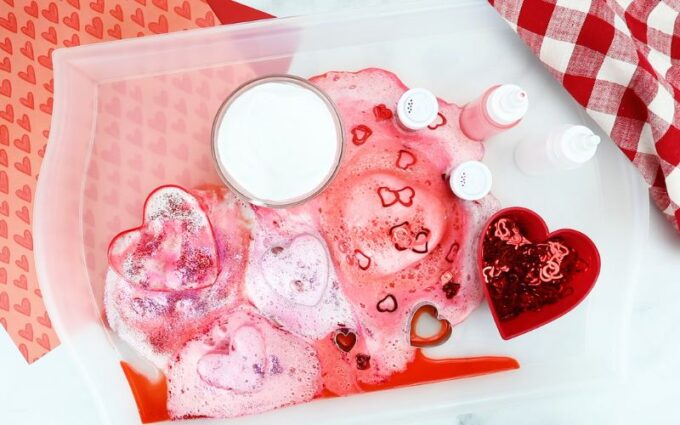
Create fizzy Valentine’s Day potions with baking soda and vinegar to explore acid-base reactions and gas formation.
Water Displacement (Valentine Theme)
Use hearts or Valentine objects to explore water displacement and volume. A simple way to introduce measurement and physical properties.
Valentine Oil and Water Experiment
Investigate liquid density and immiscible liquids by exploring oil and water with Valentine themes.
Valentine Slime Experiments
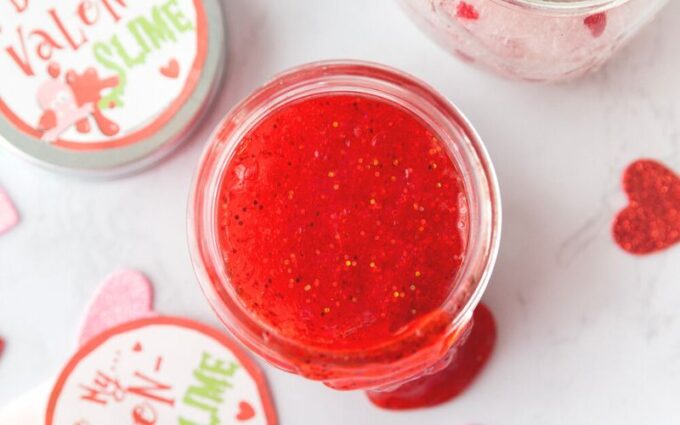
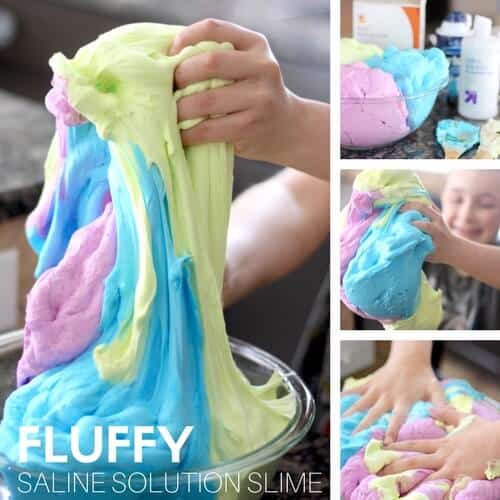
Explore polymer science with Valentine-themed slime recipes. Try glitter slime, heart slime, or fluffy slime, and compare their texture and stretch.
Valentine Bubble Science
Blow bubbles and observe their shape, movement, and surface tension. Valentine bubble science is a fun way to explore physics concepts with minimal setup.
Hearts Viscosity Experiment
Compare how different liquids flow to explore viscosity. Kids can observe which liquids move faster or slower through a Valentine-themed setup.
Valentine Lava Lamp
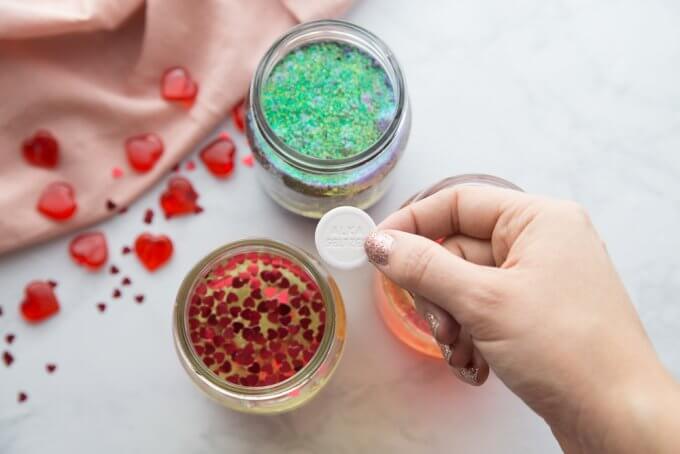
Create a classic lava lamp using oil, water, and effervescent tablets to explore density and chemical reactions.
Valentine Skittles Experiment
Watch candy colors dissolve and spread in water as you explore diffusion and dissolution.
Fizzy Baking Soda Heart Painting
Create colorful, fizzy heart paintings while exploring a simple chemical reaction.
Cupid’s Magic Milk
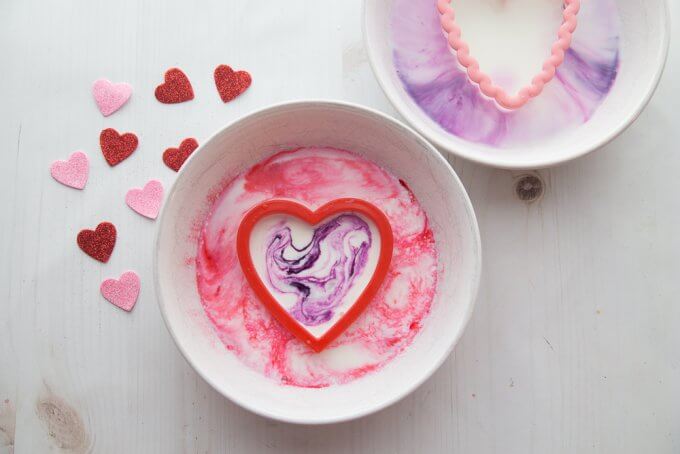
Explore surface tension with milk, food coloring, and dish soap in a Valentine-themed twist on this classic experiment.
Free Valentine’s Day Science Guide and Challenge Cards
Plan a fun week of Valentine’s Day science with this free guide.
Valentine Life Science Experiments
These Valentine science activities focus on biology and the human body, making them a great fit for life science units.
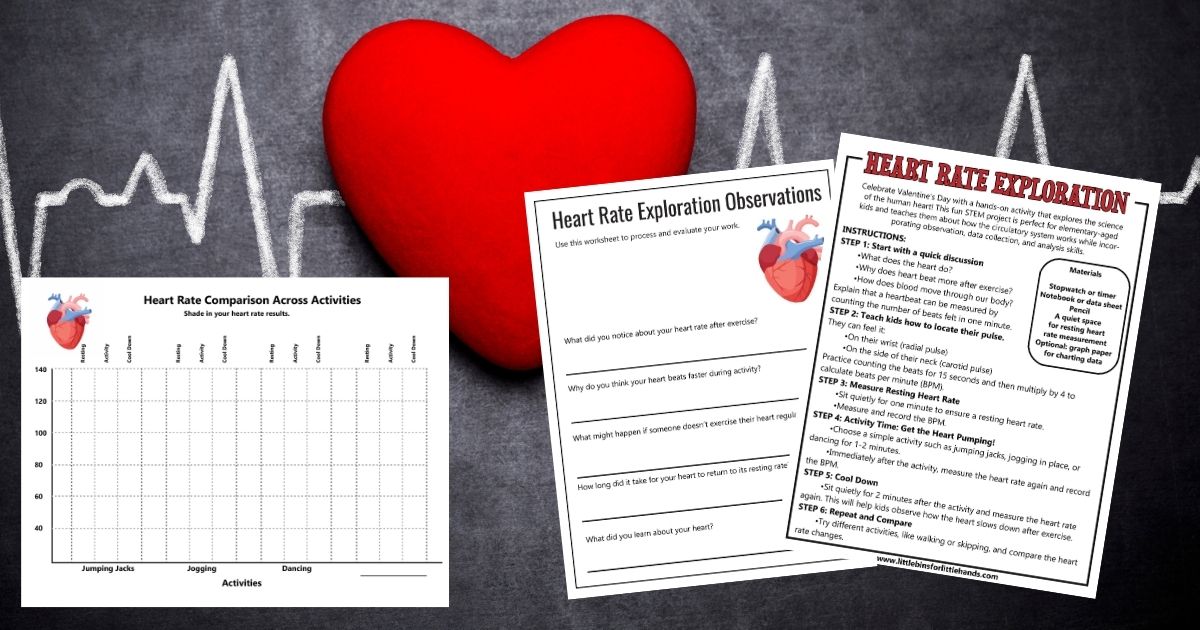
Valentine Heart Rate Experiment
Measure heart rate before and after movement to explore how exercise affects the body. Kids can compare results and discuss why heart rate changes.
DIY Heart Model
Build a simple heart model to learn about heart structure and how blood moves through the body. This hands-on activity supports understanding of structure and function in life science.
Free Printable Science Valentine Cards
Looking for Valentine cards kids can actually use? Our free printable science Valentine cards feature science themes and experiment prompts, making them perfect for classrooms, homeschool groups, and science-loving kids.
These science Valentine cards pair well with the experiments above and add a fun, educational twist to Valentine’s Day.
Explore More Valentine Science by Topic
Looking for a specific area of science? You can explore even more Valentine-themed activities in these collections:
- Valentine Chemistry Experiments – reactions, solutions, slime, and fizzing activities
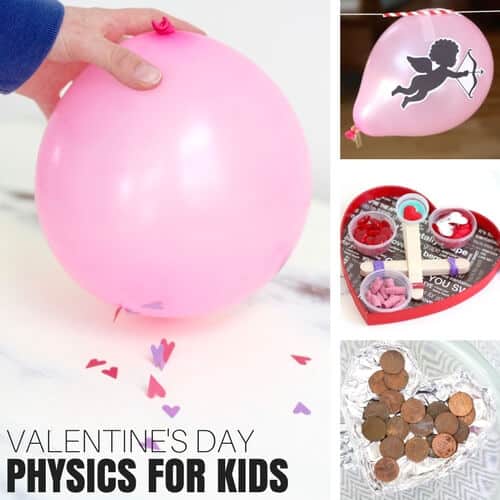
- Valentine Physics Experiments – motion, bubbles, density, and physical properties
💡 These collections group experiments by science field for easier planning.
Looking for Valentine STEM Challenges?
If you’re searching for engineering, coding, or building challenges, check out our full collection of Valentine’s Day STEM activities and challenges, including LEGO builds, circuits, coding projects, and design challenges.
More Valentine’s Day Activities for Kids
- Valentine Slime
- Valentine’s Day Art Projects
- Valentine Cards You Can Make
- Valentine’s Day Coloring Pages
- Printable Valentine’s Day Activities
- Valentine’s Day Activities For Preschoolers
- Valentine Sensory Bin Ideas
Printable Valentine STEM Project Pack
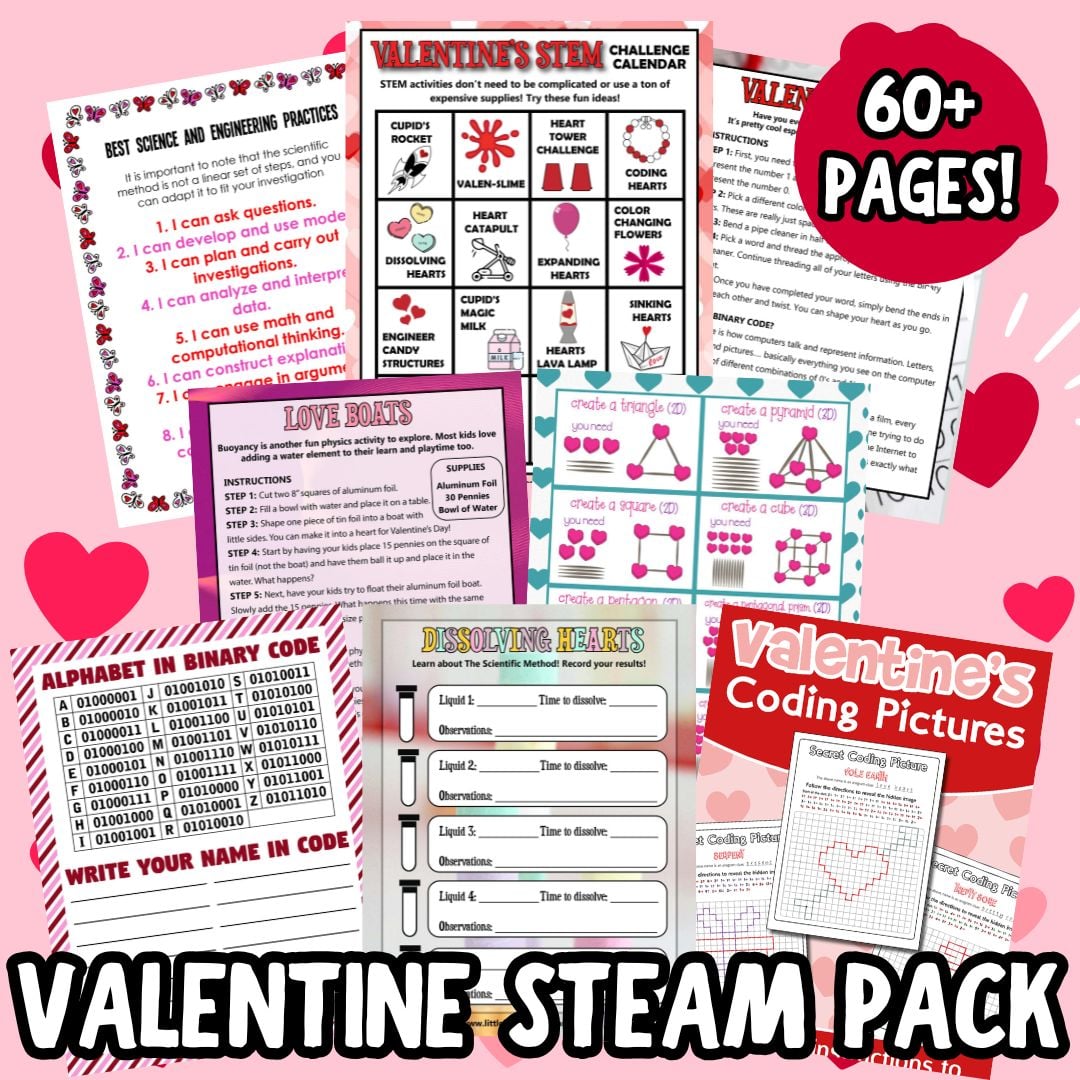
Countdown to Valentine’s Day with hands-on STEM learning! This printable pack includes engineering challenges, STEM prompts, templates, and visual instructions designed to make Valentine STEM easy to plan and fun to teach! ❤️

One Comment
Comments are closed.