

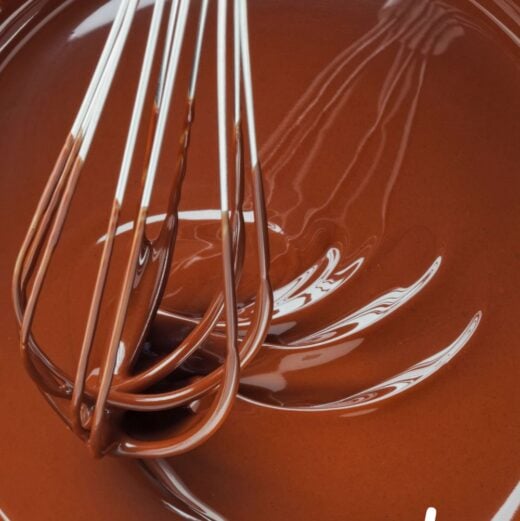
Chocolate science is an easy and delicious way to explore chemistry with kids! In this melting chocolate experiment, kids investigate physical changes, reversible changes, and states of matter using simple kitchen ingredients. Watch solid chocolate melt into a liquid, then harden again as it cools, in this fun, hands-on kitchen chemistry activity for kids.
👉 Looking for more edible science activities? Explore our favorite kitchen chemistry experiments for kids, including candy science, polymers, crystal growing, and fizzy reactions.
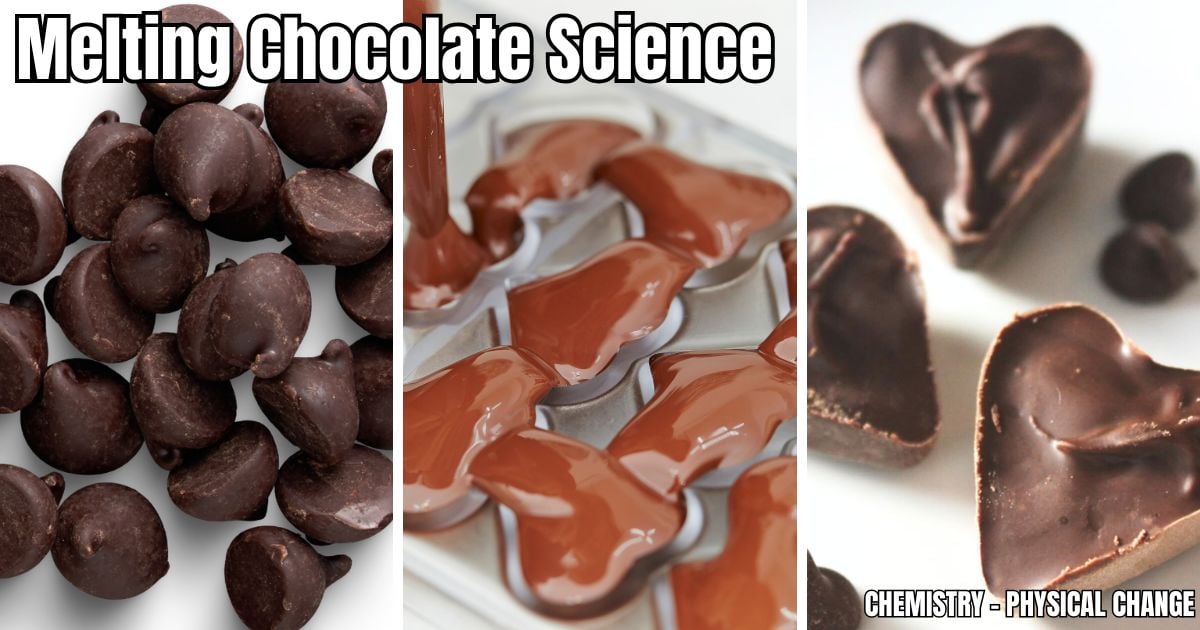
What Kids Learn From Melting Chocolate
This melting chocolate experiment is a simple way to introduce:
- Physical changes
- Reversible changes
- States of matter
- Heating and cooling
- Observation skills
Kids can observe how heat changes chocolate from a solid to a liquid and how cooling changes it back to a solid.
Field: Chemistry—Physical Changes
Grades: K–3
Concepts Explored: Physical change, reversible change, melting, cooling, solids and liquids, states of matter.
Melting Chocolate Science Experiment
This edible science activity only requires chocolate chips and a mold or wax paper. Silicone molds, cookie cutters, or wax paper all work well.
Supplies:
- Chocolate chips
- Heat-safe bowl
- Pot with water
- Baking mold or wax paper
- Spoon or spatula
Instructions:
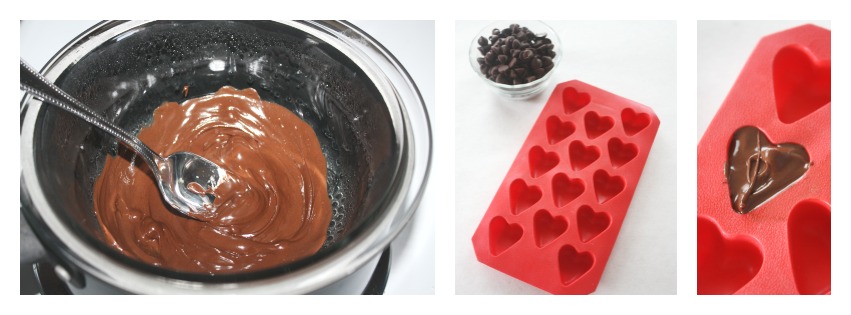
STEP 1: Add chocolate chips to a heat-safe bowl.
STEP 2: Fill a pot with a small amount of water and place the bowl over the pot to create a simple double boiler. The bowl should not touch the water.
STEP 3: Heat slowly and stir as the chocolate melts.
STEP 4: Pour the melted chocolate into molds or onto wax paper.
STEP 5: Allow the chocolate to cool and harden again. Refrigerate for faster results.
Making Observations
Encourage kids to observe the chocolate before heating, while melted, and after it hardens again.
Ask questions like:
- What does the chocolate look like before heating?
- What happens when heat is added?
- How does the chocolate change as it cools?
- Is the chocolate still the same substance?
This activity is a great opportunity to practice observation skills using the five senses. Kids can describe the chocolate’s texture, appearance, smell, and taste at each stage.
🛑 Always supervise children carefully around hot materials.

The Science Of Melting Chocolate
What is a reversible change? A reversible change is a change that can be undone. Melting and freezing water is one example. Melting and hardening chocolate is another.
Chocolate undergoes a phase change when heat is added. It begins as solid chocolate chips. As the chocolate warms up, it melts into liquid chocolate. When the melted chocolate cools, it hardens back into a solid again.
Melting chocolate is a physical change because the chocolate changes form but does not become a new substance.
A chemical change creates a completely new substance and is usually irreversible. Baking bread in a bag is an example of a chemical change because you cannot turn the cake back into the original ingredients.
👉 Melting crayons is another fun example of a reversible physical change.
Explore Physical Changes With Kids
Want to keep exploring physical changes and states of matter? Grab our free printable Physical Changes Mini Pack filled with simple science activities, challenge pages, and hands-on examples using everyday materials.
Inside you’ll find:
- Printable physical change activities
- Simple science explanations
- Real-world examples of reversible and irreversible changes
- Fun observation and discussion pages
- Easy experiments using household supplies
Perfect for preschool through elementary-age kids at home or in the classroom.
Melting Chocolate FAQ
Is melting chocolate a physical or chemical change?
Melting chocolate is a physical change because the chocolate changes form but does not become a new substance.
Why is melting chocolate reversible?
The melted chocolate can cool and harden again, returning to a solid form.
Does melting chocolate change its ingredients?
No. Heat changes the chocolate’s state, but the ingredients stay the same.
What type of science is melting chocolate?
Melting chocolate is a chemistry activity that demonstrates physical changes and states of matter.
What is a reversible change for kids?
A reversible change is a change that can be undone. Melting and cooling chocolate are examples of reversible changes.
What happens to chocolate when heated?
When heated, chocolate changes from a solid to a liquid because its particles move more freely.
More Kitchen Chemistry Activities
Try more fun edible and kitchen chemistry experiments:
- Candy science experiments
- States of matter activities
- Physical and chemical change experiments
- Growing sugar crystals
- Make butter in a jar
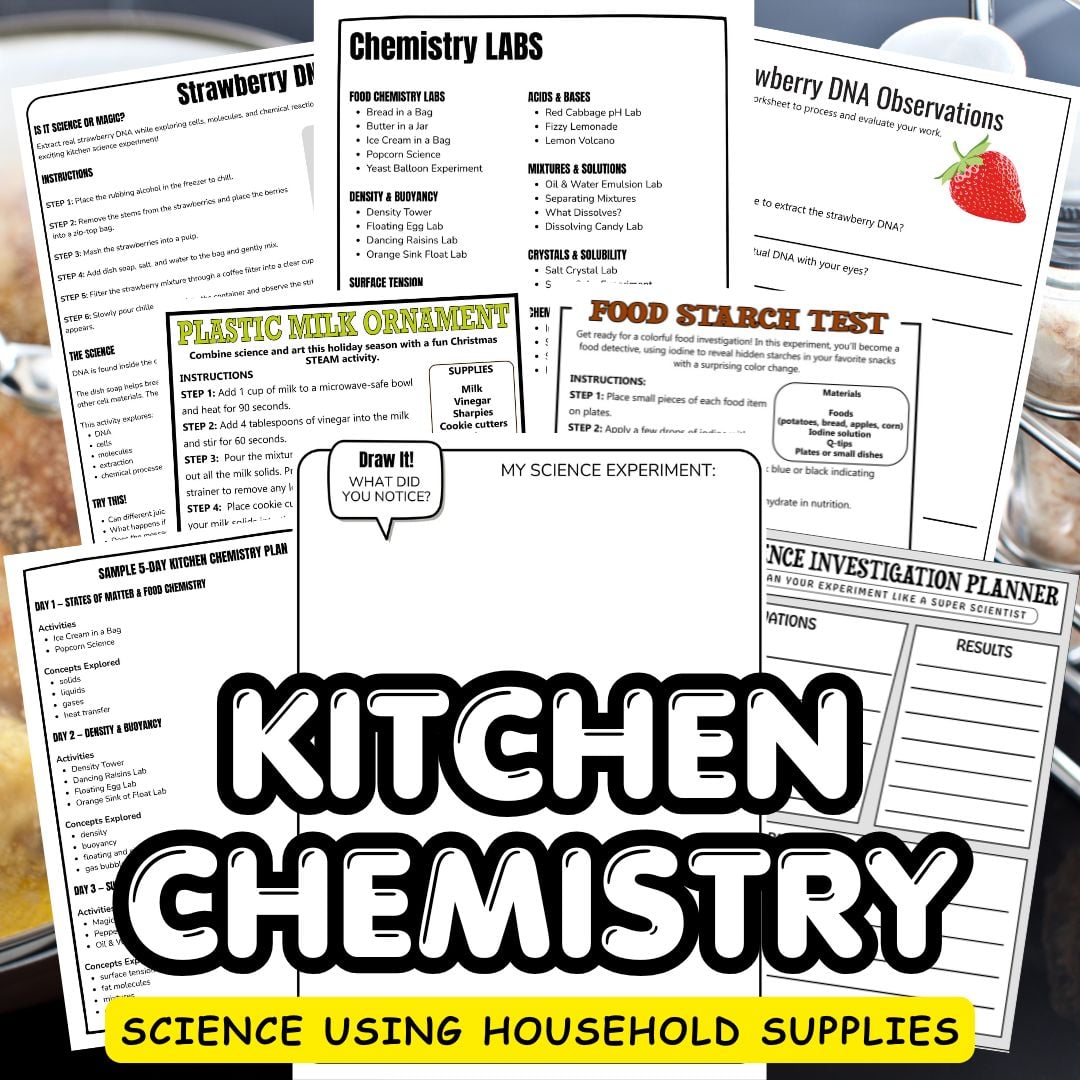
Explore More Kitchen Chemistry
Continue the fun with our Kitchen Chemistry Pack featuring printable experiments, reusable investigation pages, science explanations, and easy hands-on activities using everyday kitchen supplies.
Perfect for home or classroom science with activities focused on:
reactions, mixtures, crystals, surface tension, polymers, and color-changing chemistry.


Never mind, I saw that you only explored reversible changes. I’m trying to see if there are any procedures for chemical reactions with chocolate. I’d be grateful if you could provide me with any assistance. Thanks in advance