


Celebrate the 4th of July with colorful Baking Soda Fireworks! This easy baking soda and vinegar science experiment uses star cookie cutters, colorful vinegar, and a simple chemical reaction to create fizzing “fireworks” kids will love.
With just a few kitchen supplies, preschoolers and elementary-aged kids can explore chemistry through hands-on play while learning about acids, bases, and chemical reactions. It’s the perfect STEM activity for the 4th of July, summer camp, homeschool, or classroom celebrations.
What Kids Will Learn
Grade Level: Pre-K to Elementary
Concepts: Chemical Reactions, Acids and Bases, Carbon Dioxide Gas, Observation Skills, Scientific Method
- Explore a simple acid-base reaction.
- Observe how carbon dioxide gas is produced.
- Practice making predictions and observations.
- Strengthen fine motor skills with pipettes.
- Build science vocabulary through hands-on learning.
Supplies
You’ll need:
- Baking soda
- White vinegar
- Red and blue liquid food coloring
- Star cookie cutters
- Tray or baking sheet
- Small cups
- Pipettes or eyedroppers
Optional: Add glitter or star confetti for extra sparkle.
How to Make Baking Soda Fireworks
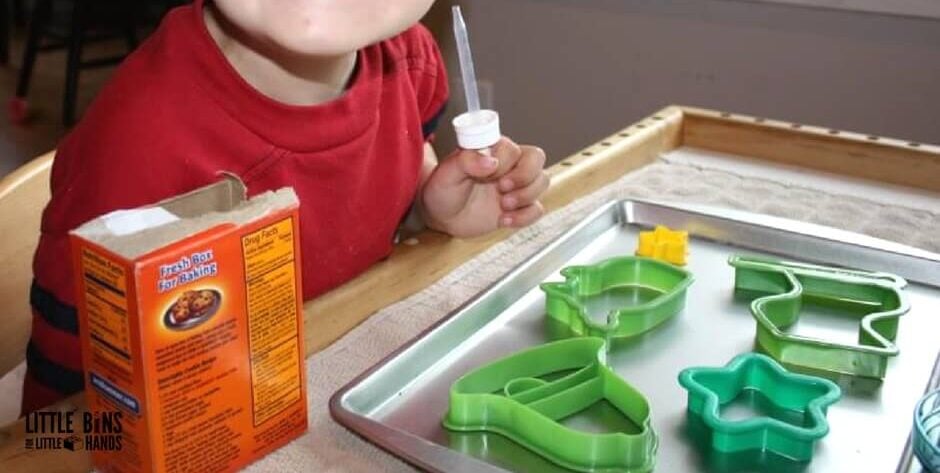
Using star cookie cutters turns this classic baking soda and vinegar experiment into a festive cookie cutter science activity for the 4th of July.
STEP 1
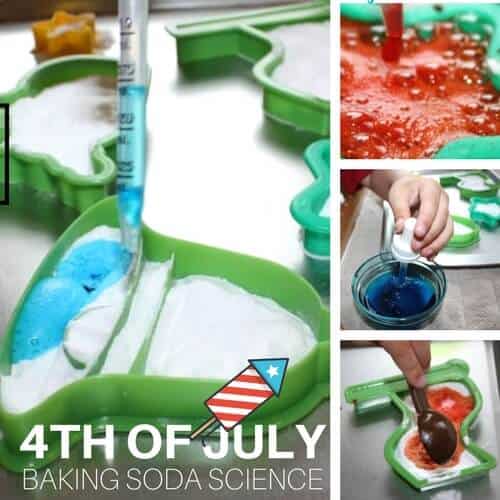
Place the star cookie cutters on a tray or baking sheet. Fill each cookie cutter with baking soda until it is mostly full.
STEP 2
Pour vinegar into two small cups. Add several drops of red food coloring to one cup and blue food coloring to the other.
STEP 3
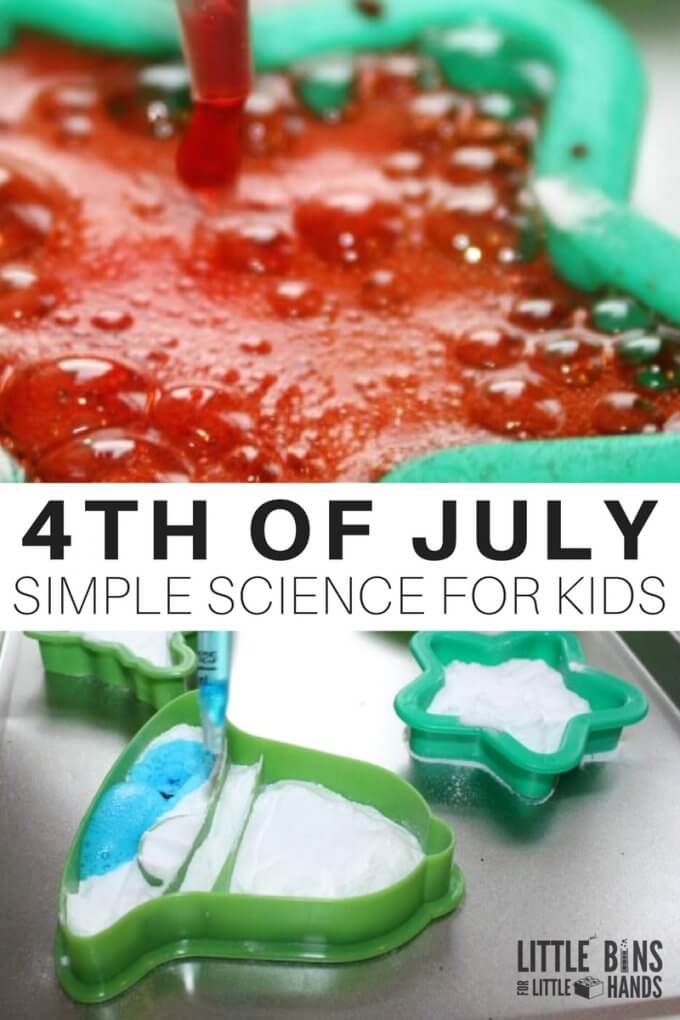
Use pipettes or eyedroppers to slowly squeeze the colored vinegar onto the baking soda. Watch the colorful fizzing reaction begin!
STEP 4
Continue adding more vinegar to create bubbling “fireworks.”
FREE 4th of July Starter Pack
Looking for a few quick holiday activities? Grab our FREE printable starter pack featuring:
- 4th of July Activity Ideas Guide
- Word Search
- Crossword Puzzle
- I Spy
Perfect for keeping kids busy before the fireworks begin!
👉 Download the FREE 4th of July Starter Pack
Think Like a Scientist
Scientists observe, compare, and ask questions.
Before you begin, ask:
- What do you think will happen when the vinegar touches the baking soda?
- Why do bubbles form?
- What happens when the red and blue colors mix?
- Which color creates the biggest fizz?
- How could you make the reaction last longer?
Describe your observations using words like reaction, gas, bubble, acid, and base.
The Science Behind Baking Soda Fireworks
Why does baking soda fizz?
Baking soda is a base, and vinegar is an acid. When mixed, they undergo a chemical reaction that produces carbon dioxide gas.
The bubbles you see are the carbon dioxide gas escaping into the air. The food coloring doesn’t change the reaction—it simply makes the colorful fizz look like miniature fireworks.
💡 This activity is a fun way to introduce kids to chemistry using safe, everyday household ingredients.
Extend the Activity
Scientists often compare similar materials to discover how they behave differently.
Try comparing:
- Baking soda + vinegar
- Baking powder + water
Observe each reaction and ask:
- Which one made the biggest fizz?
- Which reaction lasted the longest?
- Why do you think they were different?
Did You Know? Baking soda needs an acid, such as vinegar, to produce a strong chemical reaction. Baking powder already contains both a base and an acid, so adding water creates a much smaller fizz.
👉 Want to explore baking powder even more? Try our Baking Powder Science Experiment next!
Frequently Asked Questions
Why does baking soda fizz with vinegar? Baking soda is a base, and vinegar is an acid. When they react, they produce carbon dioxide gas, which forms bubbles and a fizz.
Is this a chemical reaction? Yes! Mixing baking soda and vinegar creates new substances, including carbon dioxide gas, making this a chemical reaction.
Can I use lemon juice instead of vinegar? Yes. Lemon juice is also an acid and will react with baking soda in a similar way.
Can I reuse the baking soda? No. Once the baking soda has reacted with the vinegar, it has changed. Add fresh baking soda if you’d like to repeat the activity.
What age is this activity best for?This activity is ideal for preschool through elementary-aged children. Younger kids enjoy the colorful reaction, while older students can learn more about acids, bases, and chemical reactions.
Can I turn this into a science fair project? Yes! Compare different acids, amounts of baking soda, or different liquids to investigate how each one affects the reaction.
More 4th of July Science Activities
Continue the fun with these patriotic STEM projects:
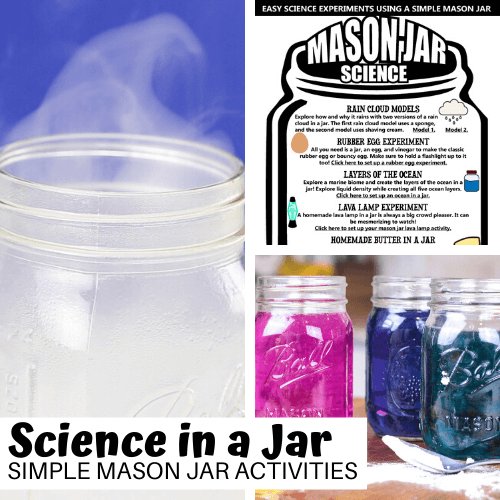
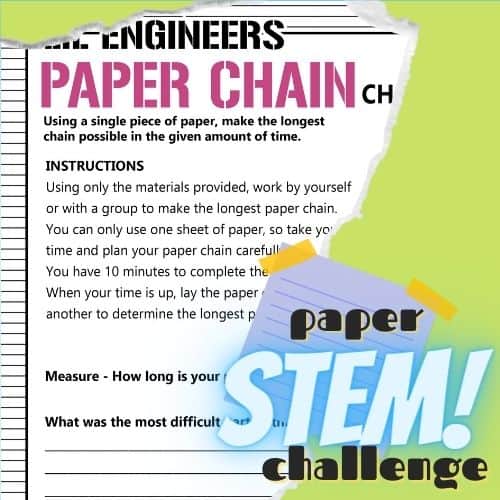
👉 Find 15+ 4th of July Science and STEM activities here

More to Explore
Keep experimenting with chemistry and summer STEM!
- Baking Soda and Vinegar Experiments – Explore more exciting fizzing reactions.
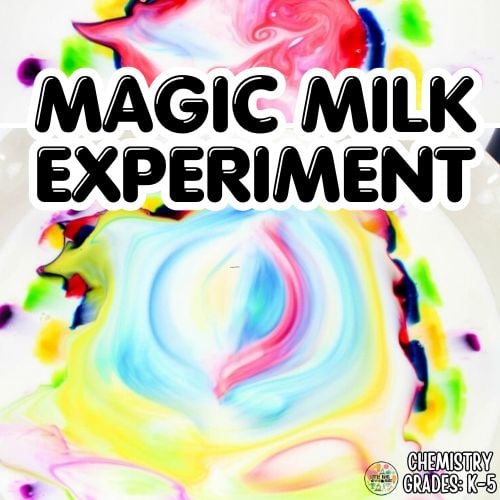
- Chemistry Experiments for Kids – Discover simple chemistry activities using everyday supplies.
- Summer Science Experiments – Keep kids learning with fun seasonal STEM projects.
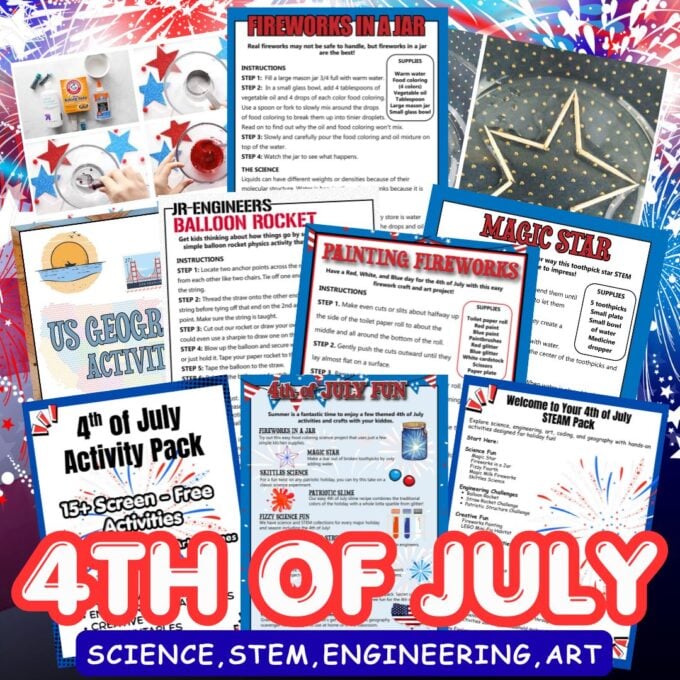
Printable 4th of July STEAM Activity Pack
Looking for even more holiday fun?
Our 4th of July STEAM Activity Pack includes over 50 pages of printable science, engineering, art, coding, geography, and screen-free activities for kids.
Inside you’ll find:
- Fireworks science experiments
- Rocket STEM challenges
- Fireworks art
- Secret coding pages
- Geography activities
- Word games
- Observation pages
- Printable templates
Print your favorite activities and enjoy a full weekend of hands-on learning and patriotic fun.
👉 Grab the 4th of July STEAM Activity Pack


Very interesting fun game idea, I like your creativity. Thank you so much for sharing your idea. 🙂
This is fun and exciting!Thanks for sharing!
This is so much fun! I will be featuring it tomorrow on Share It Saturday!
Very fun!! Thank you for sharing at Sharing Saturday!
What a fun, holiday twist on an old standby activity!