
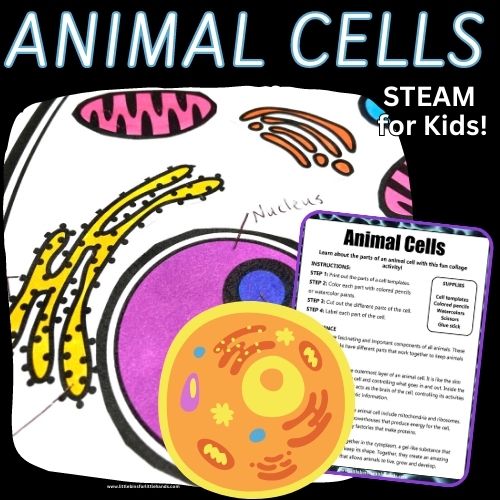
Science can be incredibly engaging when paired with hands-on activities, and our free Animal Cell Diorama Printable is the perfect tool to help your students explore biology. Whether you’re a teacher or a parent, this project is designed to make learning about cells fun, interactive, and memorable.

Supplies Needed For An Animal Cell Diorama
Cells are the building blocks of all living organisms, and understanding their structure and function is essential for grasping more complex biological concepts. This diorama helps kids visualize and understand cell anatomy creatively.
To get started, you’ll need just a few basic supplies:
- Printed Animal Cell Diorama Template: Download and print our free printable below (black and white and color options available).
- Scissors
- Glue or tape
- Colored pencils or markers
- A shallow container or a piece of cardstock: For the diorama base.
How to Make Your Animal Cell Diorama
STEP 1: Start by printing the animal cell diorama template. This includes all the cell parts you will cut out and assemble.
STEP 2: Carefully cut out the different parts of the cell along the dotted lines.
STEP 3 (Optional): Add color to each part to make your cell model more vibrant.
STEP 4: Use glue or tape to attach the cell parts to the diorama base. Arrange them according to the layout provided in the instructions.
STEP 5: Once assembled, use the labels provided in the printable to name each part of the cell.

Parts of the Cell: A Simple Overview
Animal cells are fascinating structures that play an essential role in the life of all animals. Animal cells contain a nucleus and structures called organelles, which have different functions.
A single cell can form a living organism. In higher-order animals, cells are organized together to form structures such as tissues, organs, bones, blood, etc., and will have specialized tasks.
Animal cells are different from the cells of plants. They don’t make food like plant cells do. Learn about plant cells here.
- Cell Membrane. This is a thin barrier that surrounds the cell and acts as a guard for the cell. It controls what molecules are allowed in and out of the cell.
- Cytoplasm. A gel-like substance that fills the cell and helps it to keep its shape.
- Nucleus. This organelle contains the cell’s genetic material or DNA and controls the activities of the cell.
- Nucleolus. It is found within the nucleus, and is responsible for producing and assembling the cell’s ribosomes which are then transported to the cytoplasm.
- Vacuole. A simple storage unit for food, nutrients or waste products.
- Lysosomes. Break down materials such as lipids, carbohydrates, and proteins into their parts. They also are responsible for breaking down and getting rid of waste products from the cell.
- Centrioles. Animal cells have 2 centrioles which are located near the nucleus. They help with cell division.
- Golgi Apparatus. Also called golgi body. These organelles package proteins into vesicles (a fluid like sac or vacuole) so they can be transported to their destination.
- Mitochondria. An energy molecule that provides power to almost every function throughout the cell.
- Ribosomes. Tiny particles found in large numbers in the cytoplasm, which make proteins.
- Endoplasmic reticulum. A large folded membrane system that puts together lipids or fats and creates new membranes.
Free Printable Animal Cell Diorama
This activity works for upper elementary to middle school students (grades 5-8). It provides an excellent introduction to cells and a hands-on supplement to lessons.

More Plant and Animal Activities
- Animal Cell Coloring Sheet
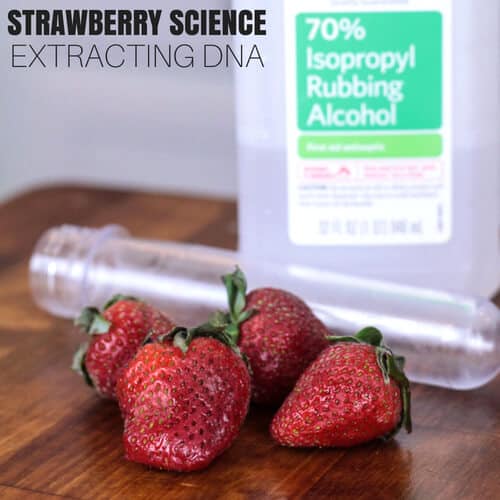
- Strawberry DNA Extraction Lab
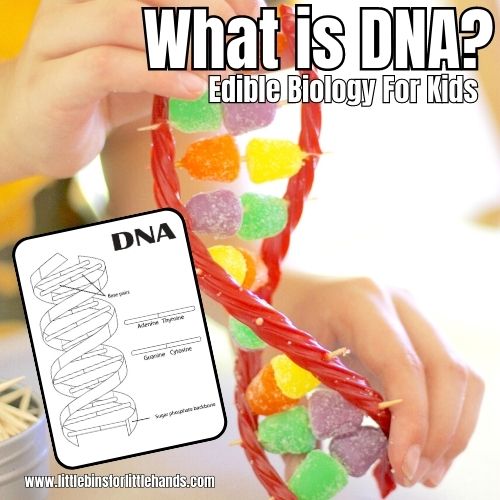
- Candy DNA Model
- DNA Coloring Worksheet
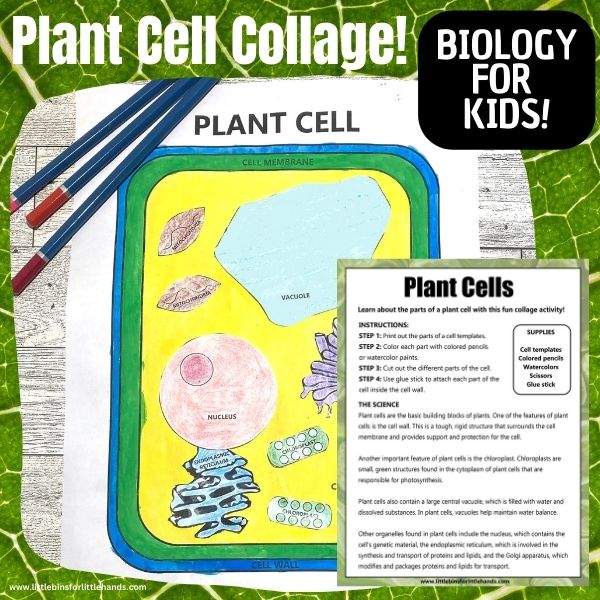
- Plant Cell Collage Activity
- 3D Plant Cell Diorama
- How Plants Breathe Experiment
- Photosynthesis Worksheets
Printable Animal and Plant Cell Pack
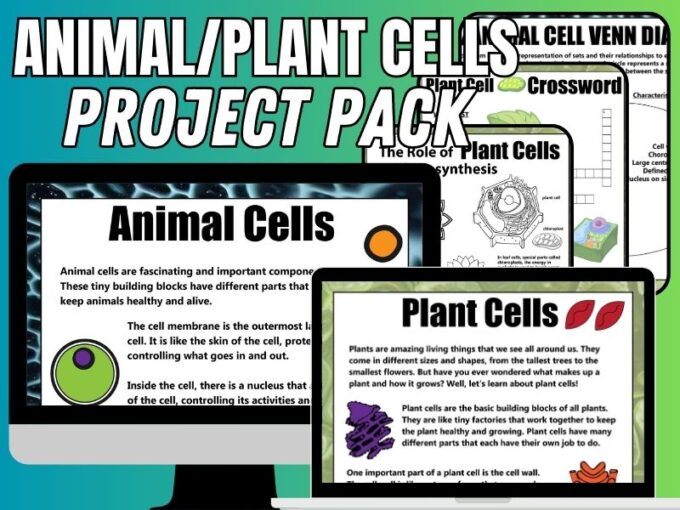
Want to explore animal and plant cells even more? Our project pack features extra activities to learn all about cells. Grab your pack here and get started today.