
This printable savannah biome project is perfect for kids to explore animal habitats while getting creative. Ideal for classrooms, homeschoolers, and curious kids, this diorama is a fantastic way to learn about the unique features of the savannah biome and its inhabitants.

Savannah Biome Project
Introducing biomes to students is a fantastic way to build a strong foundation in key environmental science concepts like ecosystems and animal habitats.
By exploring different biomes, such as savannahs, forests, and oceans, kids can discover the various plant and animal life that thrive in each unique environment. They’ll learn how these organisms interact and adapt to their surroundings.
This hands-on learning aligns perfectly with science standards and helps foster a greater awareness and appreciation of the natural world, encouraging students to care for the environment.
Supplies Needed:
- Savannah Diorama Printable (see below)
- Scissors
- Glue or tape
- Crayons, colored pencils, or markers (for coloring the animals and landscape)
- Cardstock or a small cardboard box (to make the diorama base sturdy)
How to Make the Savannah Diorama
STEP 1: Print the Savannah Biomes Diorama sheets. Use cardstock for a sturdier project.
STEP 2: Use crayons, colored pencils, or markers to color in the animals and landscape elements. This step allows creative expression while learning about the savannah’s ecosystem.
STEP 3: Carefully cut out the background, ground piece, and animals. This is a great way to practice fine motor skills.
STEP 4: Assemble the diorama by folding along the lines on the background and ground pieces to create a 3D effect. Then attach the background to the base (cardstock or cardboard) using glue or tape. Place and glue the ground piece in front of the background.
STEP 5: Add the animals to the diorama by gluing or taping them in place. Arrange them to mimic the savannah’s natural environment.
STEP 4: Assemble the diorama by folding along the lines on the background and ground pieces to create a 3D effect. Then attach the background to the base (cardstock or cardboard) using glue or tape. Place and glue the ground piece in front of the background.

STEP 5: Add the animals to the diorama by gluing or taping them in place. Arrange them to mimic the savannah’s natural environment.
Free Printable Savannah Diorama
This project is ideal for children aged 6-12 and can be adapted for younger or older students by varying the complexity of the tasks.

Extend The Learning
Extend the learning with these additional activities:
- Research Project: Have students research one of the animals from the diorama and present their findings, including its adaptations to the savannah environment. Grab these free animal research sheets.
- Compare Biomes: Create a series of dioramas featuring different biomes (like the taiga, arctic, or coral reef) and compare them. Discuss the differences in climate, vegetation, and animal life. Make a Venn Diagram!
- Story Writing: Encourage kids to write a short story or comic strip about an animal’s life in the savannah. Where does it live? What does it eat? How does it adapt to the environment? Does it have predators?
What Is A Savannah?
The Savannah biome is found on several continents, including Africa, Australia, Asia and South America, and is characterized by open grasslands and scattered trees. The African Savannah is the most well known.
It has two main seasons: a long, dry season and a shorter, wet season. The Savannah is known for its warm temperatures year-round and its ability to support a wide variety of wildlife, including large herbivores like elephants, zebras, and giraffes, as well as predators like lions and cheetahs.
The vegetation is primarily composed of grasses, with occasional trees and shrubs that are well adapted to survive the dry conditions. The trees in the Savannah, like acacias and baobabs, are typically spaced apart, allowing plenty of sunlight to reach the ground.
This biome plays a crucial role in the ecosystem, supporting lots of different species and contributing to global biodiversity.
Savannah Biome and Animal Adaptations
Teaching students about the savannah provides an opportunity to discuss animal adaptations and biodiversity. For instance, lions, zebras, and elephants have developed various strategies to thrive in this environment, such as migration patterns and social behaviors that enhance survival.
By integrating the study of the savannah, you can help students grasp the concepts of animal habitats and the remarkable ways life adapts to survive in diverse environments. This understanding meets national science standards and encourages a deeper appreciation of the natural world.
More Printable Animal Activities
💡 Explore our complete Animal Activities collection [here].
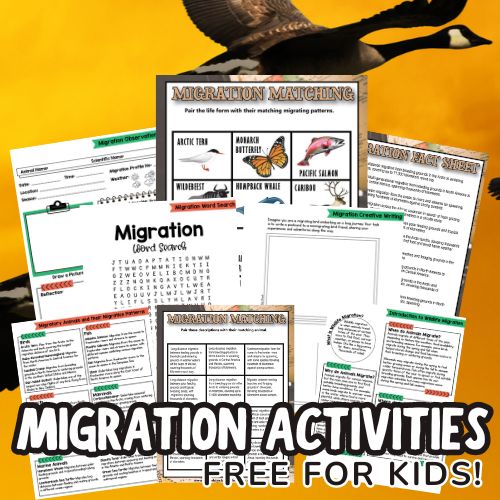
- Animal Migration
- Pollinators
- Explore Reptiles
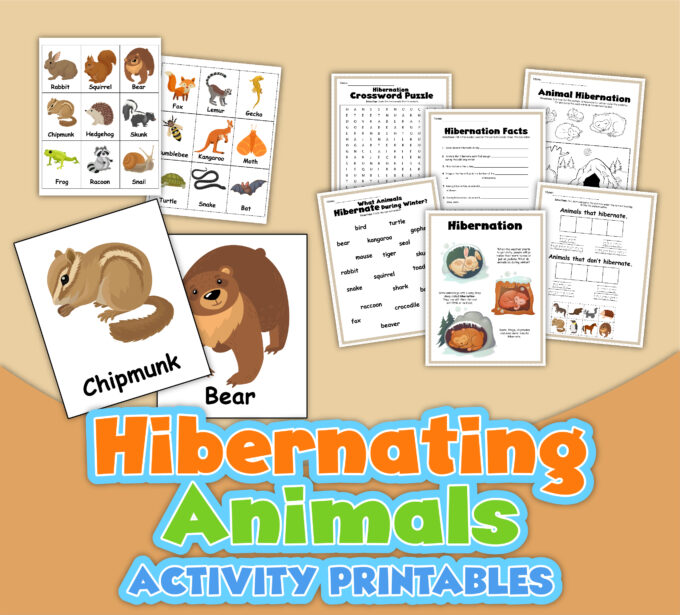
- Hibernating Animals
- Animals of the World
- Invertebrates and Vertebrates


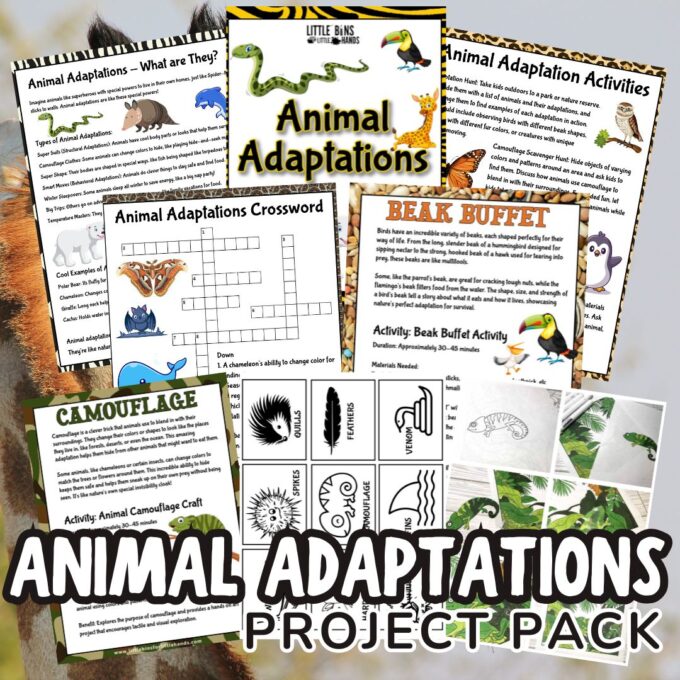
Printable Animal Adaptations Activities Pack
Suitable for elementary-age students at home or in the classroom!
Discover the wonders of the animal kingdom with our engaging Animal Adaptations Activity Pack! Packed with hands-on activities like the Beak Buffet and Camouflage Collage, your students will dive into how animals adapt to their environments.
From fun crosswords and word searches to informative sheets and interactive fill-in-the-blanks, this pack is designed to make learning about animal adaptations fun and educational. Bring the excitement of the natural world into your classroom today!
Explore the fascinating world of animal adaptations with our comprehensive Activity Pack, featuring:
- Beak Buffet: Discover how different beak shapes are adapted for specific diets.
- Camouflage Collage: Unveil the art of blending in with surroundings through a hands-on collage activity.
- Challenging Crosswords and Word Searches: Test knowledge while having fun with interactive puzzles.
- Informative Sheets: Dive deep into the science behind various animal adaptations with our informational resources.
- Interactive Fill-in-the-Blanks: Engage students with interactive worksheets that reinforce key concepts.
- And much more! Our pack ensures an enriching learning experience for all with a variety of activities to choose from.