
This free 3D printable plant cell diorama makes cell biology come to life! It is a fantastic hands-on activity that is perfect for exploring a plant cell’s parts while creating a scientific model. Add this to your biology lesson plans.

Plant Cell Diorama for Kids
Get ready to explore biology with this printable plant cell diorama! This interactive craft helps kids visualize the main parts of plant cells, including the nucleus, chloroplasts, vacuole, mitochondria, and cell membrane.
💡Explore more hands-on plant experiments here.
Recommended Grade Level: Grades 4 and older.
This works well in both classroom and homeschool settings. (The activity supports the Next Generation Science Standards (NGSS) by encouraging students’ models.)
Supplies You’ll Need
To create your Plant Cell Diorama, gather these materials:
- Plant Cell Diorama Pack (includes pre-colored pages and black-and-white versions)
- Scissors
- Glue or tape
- Markers, crayons, or colored pencils (if using the black-and-white version)
How to Build Your 3D Plant Cell Model
Step 1: Print and Cut Out the Pieces
Download the PDF below and print it on cardstock for durability. If using the black-and-white version, color the organelles before cutting them out.
Step 2: Assemble the Cell Wall and Cell Membrane
- Cut out the outer plant cell shape and fold along the dotted lines.
- This forms the cell wall, which provides structure and protection for the plant cell.
- Inside the cell wall, the cell membrane helps control what enters and exits the cell.
Step 3: Attach the Organelles
- Glue each organelle (nucleus, mitochondria, chloroplasts, Golgi apparatus, ribosomes, and vacuole) into place.
- The nucleus controls the cell’s activities, while the nucleolus helps produce ribosomes.
- The mitochondria generate energy and the Golgi apparatus processes and packages proteins.
- The vacuole stores water and nutrients, helping maintain cell shape.
- The rough endoplasmic reticulum (rough ER) is covered with ribosomes, which help make proteins, while the smooth ER makes lipids and detoxifies substances.
Step 4: Add Labels for Each Organelle
Fold and attach the side flaps to create a standing 3D diorama that displays each organelle’s name and function.
Step 5: Discuss the Function of Each Part
Encourage kids to explore how each organelle contributes to the cell’s function. Here are some guiding questions:
- Why do plant cells need chloroplasts? (To make food through photosynthesis!)
- What does the large central vacuole store? (Water, nutrients, and waste!)
- How do the mitochondria help the cell? (By producing energy!)

What is a Plant Cell?
A plant cell has unique features such as cell walls, large central vacuoles, and chloroplasts. These structures allow plants to carry out photosynthesis, which helps them make their own food. Unlike animal cells, plant cells have a rigid structure because of their cell wall and contain membrane-bound organelles that work together to keep the plant alive.
💡Plant and animal cells are eukaryotic cells because they have all these organized parts working together. On the other hand, bacteria are prokaryotic cells, which are much simpler.
Free Plant Cell Diorama

More Plant Cell Activities
Want to explore plant cells even further? Try these hands-on activities! Looking to learn more about plant through hands-on experiments? Look through our Plant Experiments for Kids resource.
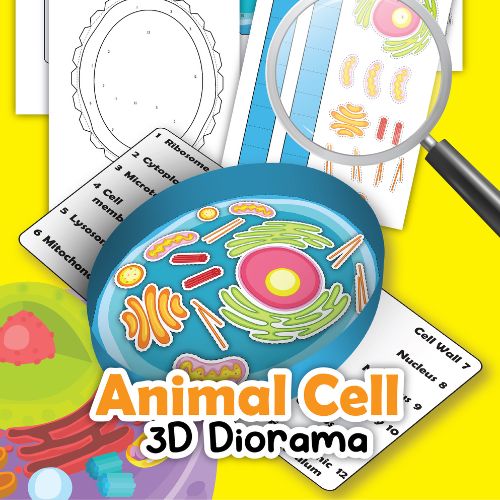
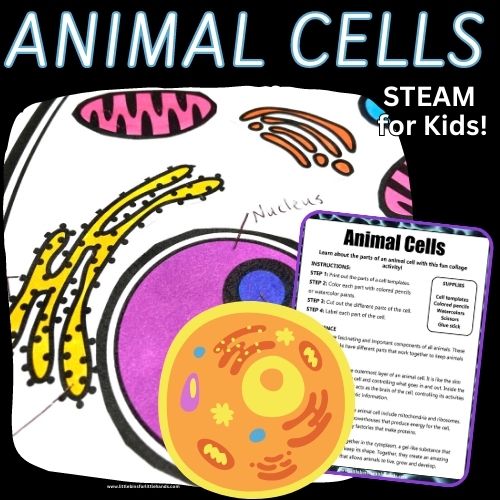
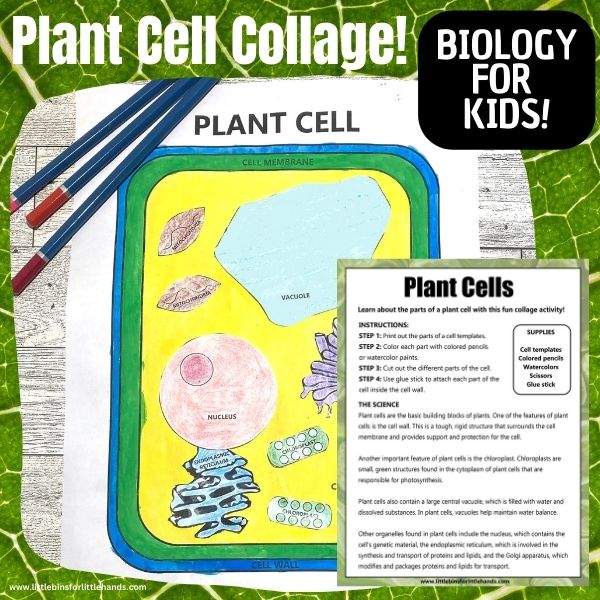


Plant & Animal Cells Printable Pack!
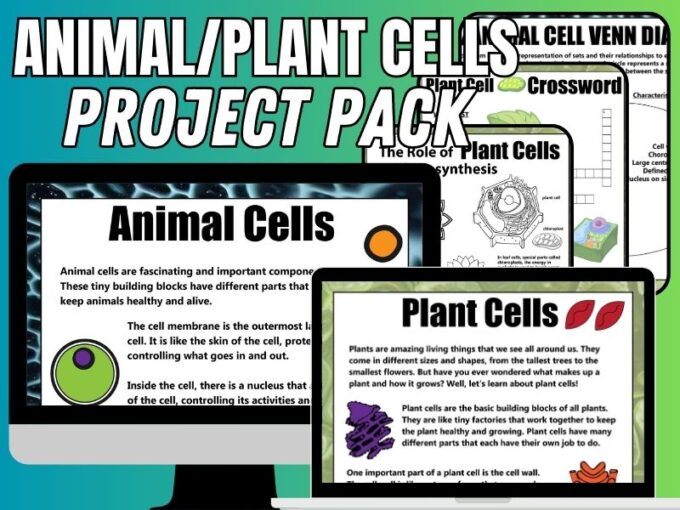
Looking for an all-in-one STEM resource? Our Animal & Plant Cells Printable STEAM Pack includes:
✅ 3D Dioramas
✅ Cut & Paste Activities
✅ Pre-colored and Black-and-White Options
✅ Labeling Worksheets