

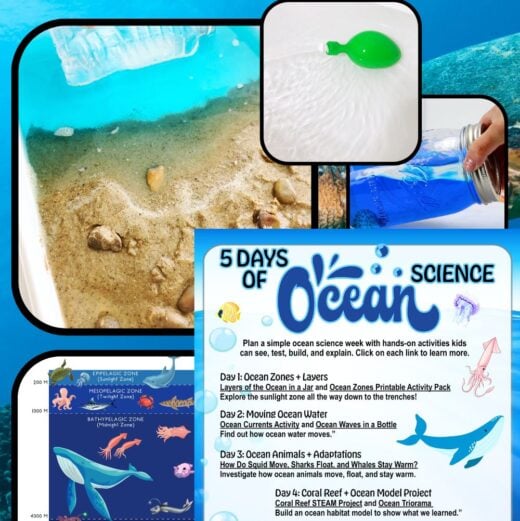
Looking for hands-on ocean activities for kids? These ocean science experiments, STEM projects, art ideas, and printable activities make it easy to explore ocean waves, currents, layers, animal adaptations, habitats, erosion, pollution, and conservation.
These ocean activities are best for kindergarten through 5th grade and work well for classroom science, homeschool lessons, STEM centers, summer camp, or an ocean theme week.
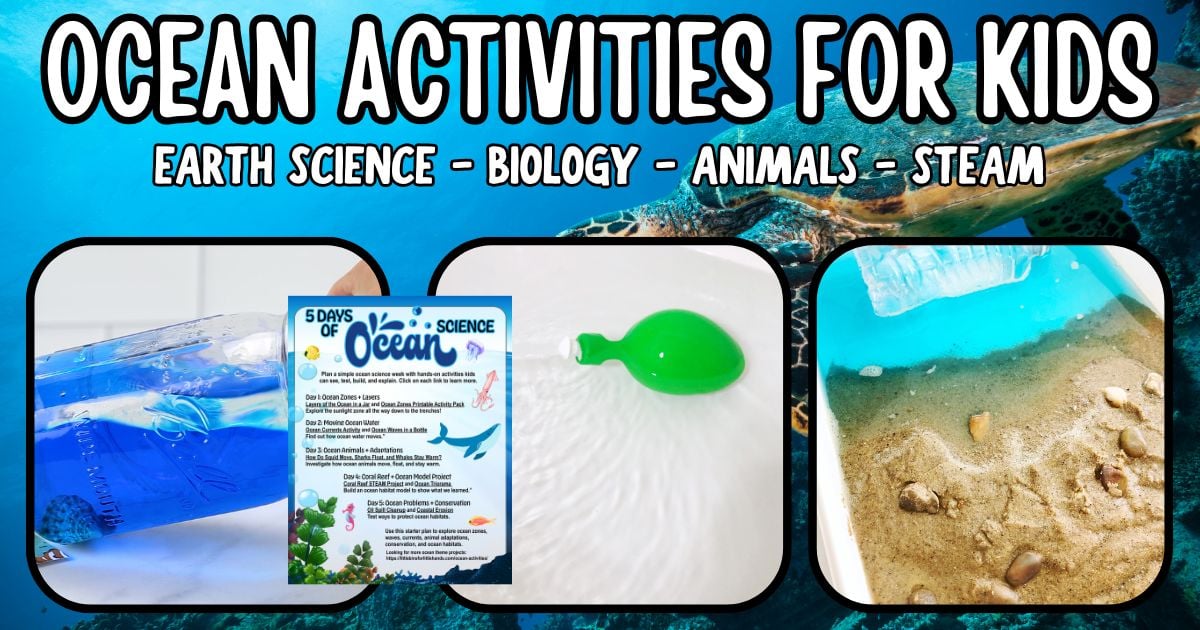
Ocean Activities Quick Guide
You do not need to live near the ocean to enjoy these activities. Most use simple supplies like water, oil, food coloring, sand, shells, ice, paper, and craft materials.
Best For: K–5
Subjects: Science, STEM, Earth Science, Life Science, Art
Use For: Ocean units, summer camp, homeschool, STEM centers, classroom science, early finishers, and theme weeks
Main Topics: Ocean waves, currents, layers, animals, habitats, erosion, pollution, conservation, and ocean art
👉 For younger learners, see our preschool ocean activities collection.
Free 5-Day Ocean Science Starter Guide
Want an easy way to organize these ocean activities into a week of learning?
Grab the free 5 Days of Ocean Science guide with a simple ocean science plan, clickable activity links, and a science investigation planner.
Want the Ocean Science Week Planned for You?
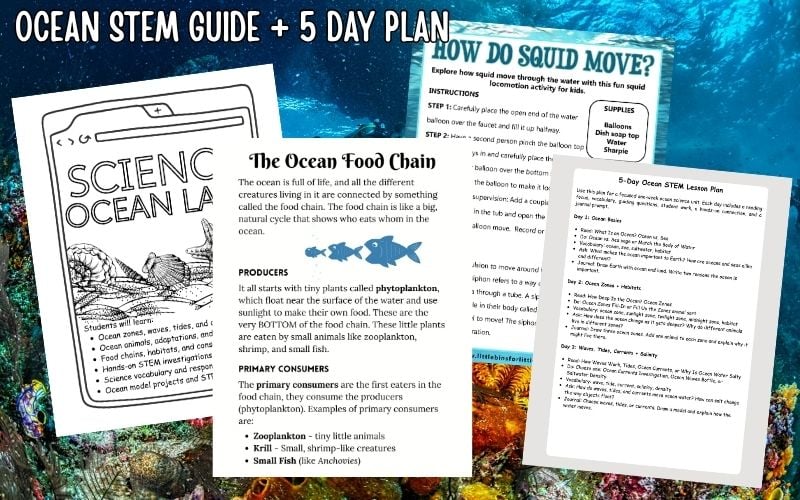
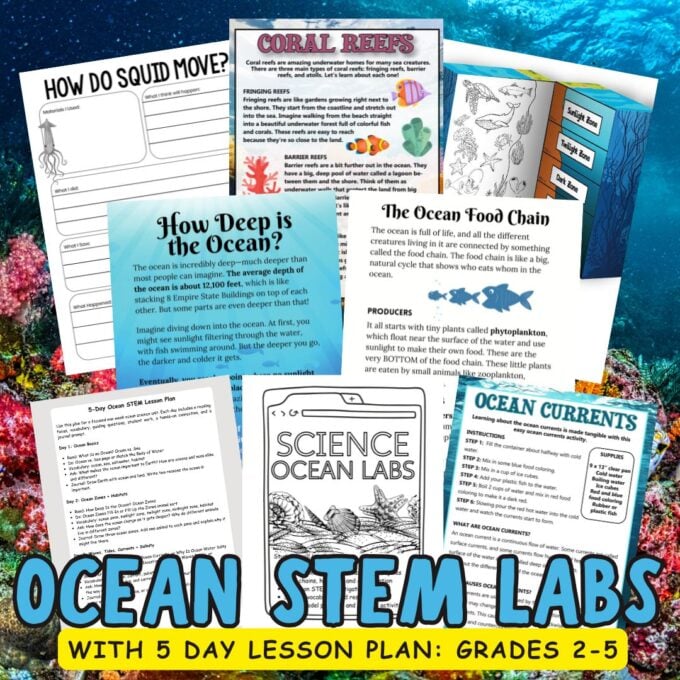
The Ocean STEM Labs Pack for grades 2–5 gives you a ready-to-use ocean science resource with a 5-day lesson plan, reading pages, vocabulary, guiding questions, student response pages, hands-on ocean labs, and final project ideas.
Inside, students explore:
- ocean zones and layers
- waves, tides, and currents
- salinity, density, and water movement
- ocean animals and adaptations
- food chains, pollution, and conservation
- hands-on ocean STEM labs
- ocean triorama, diorama, and coral reef projects
Use it for an ocean unit, science centers, summer camp, homeschool science, or a hands-on Earth science week.
👉 GET THE OCEAN STEM LABS PACK
Ocean Science Activities for Kids
Ocean science activities help kids explore how the ocean works. These projects are great for learning about waves, currents, density, buoyancy, animal adaptations, erosion, pollution, and conservation.
Use them as stand-alone lessons or combine several into a full ocean science week.
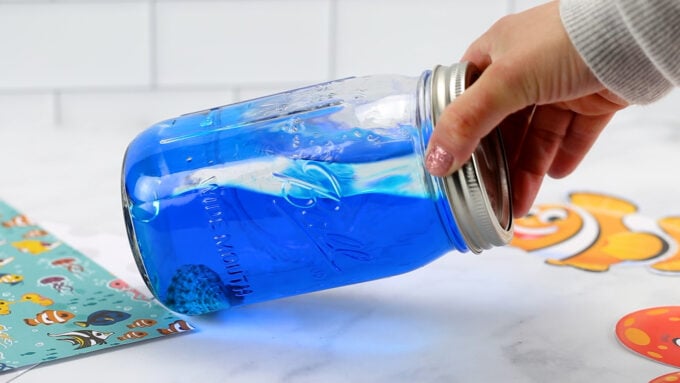
Ocean Waves in a Bottle
Make a simple ocean wave bottle with water, oil, and food coloring. Kids tilt the bottle back and forth to watch wave-like movement.
This activity helps kids see that waves are caused by energy moving through water. It is a quick ocean science model for an ocean unit, STEM center, or summer science activity.
Best for: waves, energy, water movement, ocean models
👉 Ocean Waves in a Bottle
Ocean Currents Activity
Use warm and cold colored water to model ocean currents. This activity helps kids see how temperature and density can affect water movement.
Ocean currents move heat, nutrients, oxygen, and tiny living things through the ocean. This a strong Earth science activity for elementary students.
Best for: ocean currents, temperature, density, water movement
👉 Ocean Currents Activity
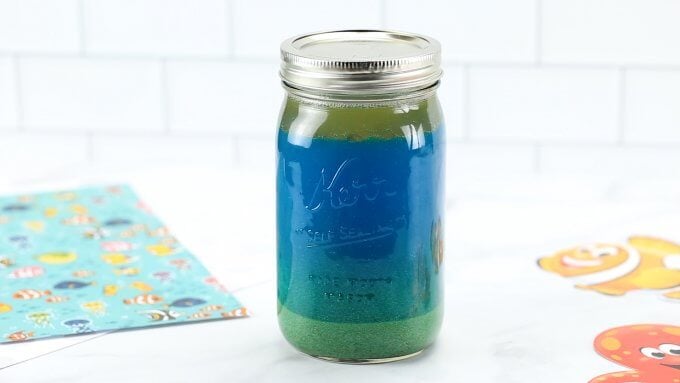
Layers of the Ocean in a Jar
Explore the layers of the ocean with a colorful density jar. Kids build a model that represents the sunlight zone, twilight zone, midnight zone, abyss, and trenches.
This activity works best as a model. It helps students visualize how the ocean changes with depth, light, temperature, and pressure.
Best for: ocean layers, ocean zones, density, depth
👉 Layers of the Ocean in a Jar
Ocean Zones for Kids
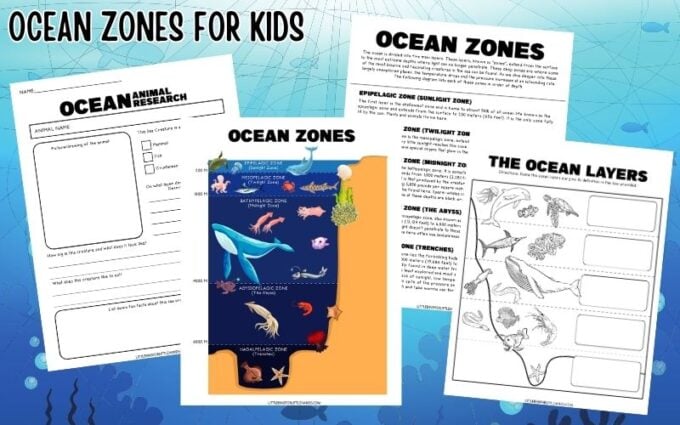
Teach the five main ocean zones with a simple lesson and printable pack. Students learn about the sunlight zone, twilight zone, midnight zone, abyss, and trenches.
This is a great companion to the ocean layers jar activity because it gives students the background information before or after the hands-on model.
Best for: ocean zones, ocean layers, printable worksheets
👉 Ocean Zones for Kids
Beach Erosion Lab
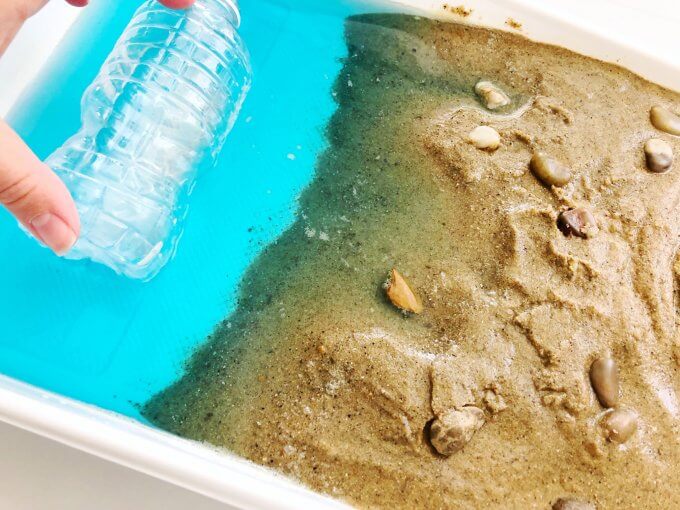
Set up a simple beach erosion activity to show how waves and moving water can change shorelines.
Kids can build a mini coastline and observe what happens when water moves against sand or landforms. This is a fantastic Earth science activity for connecting ocean waves to coastal change.
Best for: erosion, shorelines, waves, landforms
👉 Coastal Erosion Activity
Oil Spill Cleanup Experiment
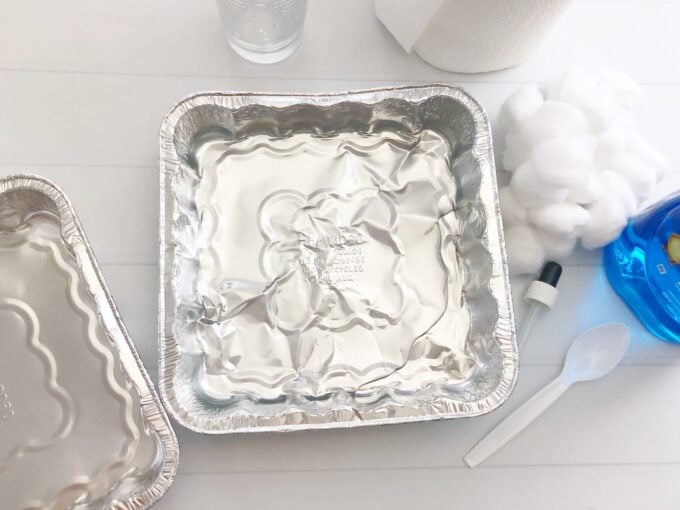
Try an oil spill cleanup activity to explore ocean pollution and conservation. Kids test which materials work best for cleaning oil from water.
This activity helps students think about real-world ocean problems and why protecting marine habitats matters.
Best for: pollution, conservation, engineering, environmental science
👉 Oil Spill Cleanup Experiment
Ocean Acidification Experiment
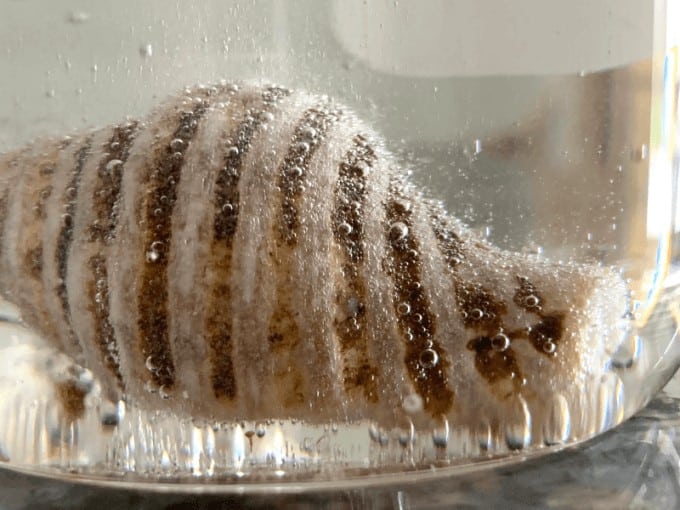
Use seashells and vinegar to model how acidic conditions can affect shells. This activity introduces students to the idea that ocean chemistry can affect marine life.
Keep the explanation simple for younger kids: some ocean animals have shells, and changes in water conditions can affect those shells over time.
Best for: ocean chemistry, shells, conservation, acid/base science
👉 Seashells in Vinegar / Ocean Acidification
Iceberg Density Experiment
Explore how ice floats in different types of water with an iceberg density activity. Kids compare freshwater and saltwater and observe how much ice stays above or below the surface.
This is a useful way to connect density, floating, sinking, and ocean water.
Best for: density, saltwater, floating, icebergs
👉 Iceberg Density Experiment
Ocean Animal Science Activities
Ocean animals are always a favorite part of an ocean unit. These activities help kids explore how animals move, breathe, float, and stay warm in ocean habitats.
👉 Find more ocean animal activities for kids here
How Do Fish Breathe Underwater?
Use a simple model to show how fish use gills to get oxygen from water. This activity helps kids understand that fish breathe differently from humans.
Best for: fish, gills, oxygen, animal adaptations
👉 How Do Fish Breathe?
How Do Sharks Float?
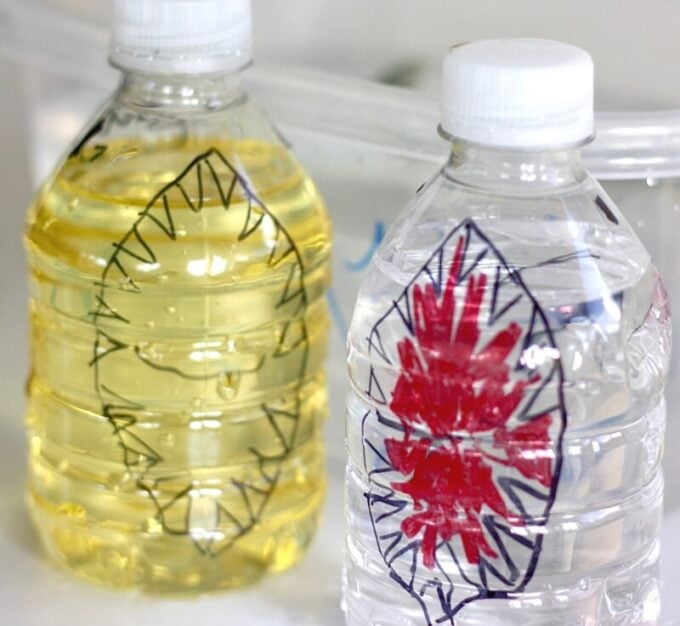
Explore shark buoyancy with a simple hands-on activity. Kids learn why sharks do not sink and how body structures help ocean animals survive.
Best for: sharks, buoyancy, floating, adaptations
👉 How Do Sharks Float?
How Do Squid Move?
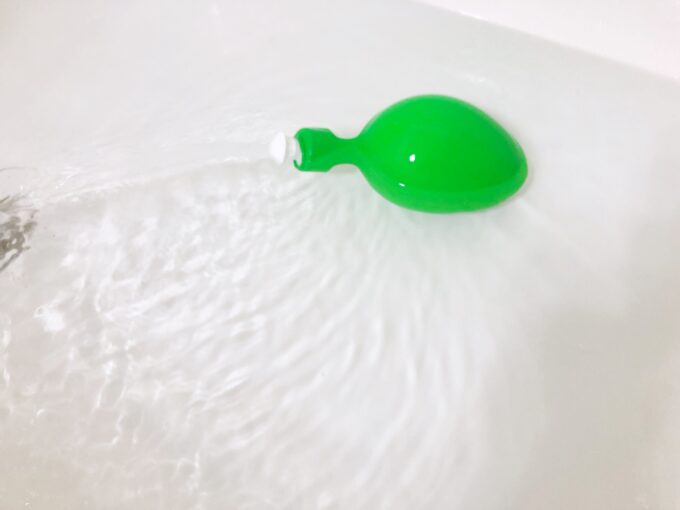
Learn how squid move through the ocean with a fun squid locomotion activity. This activity introduces jet propulsion in a kid-friendly way.
Best for: squid, movement, locomotion, animal adaptations
👉 How Do Squid Move?
How Do Whales Stay Warm?
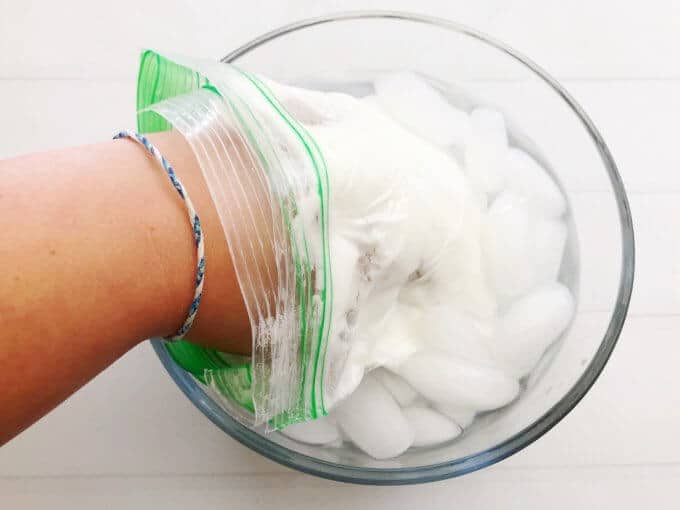
Try a whale blubber experiment to show how insulation helps ocean mammals stay warm in cold water.
This is a great animal adaptation activity for learning about marine mammals and cold ocean habitats.
Best for: whales, blubber, insulation, adaptations
👉 How Do Whales Stay Warm?
Ocean STEM Building and Model Projects
Ocean STEM projects are perfect for kids who like to build, design, and create. Use these for STEM centers, ocean theme weeks, summer camp, or final ocean unit projects.
Map the Ocean Floor
Kids can learn about ocean floor features by creating a simple model inspired by ocean mapping. This activity connects geography, Earth science, and STEM.
Best for: ocean floor, maps, topography, Earth science
👉 Map the Ocean Floor

Ocean Diorama or Triorama
Build an ocean habitat model to show ocean animals, zones, habitats, or food chains. Students can add labels and use the model to explain what they learned.
This is a great final project after learning about ocean layers, animal adaptations, and marine habitats.
Best for: ocean habitats, model projects, animal science
👉 Ocean Diorama / Ocean Triorama
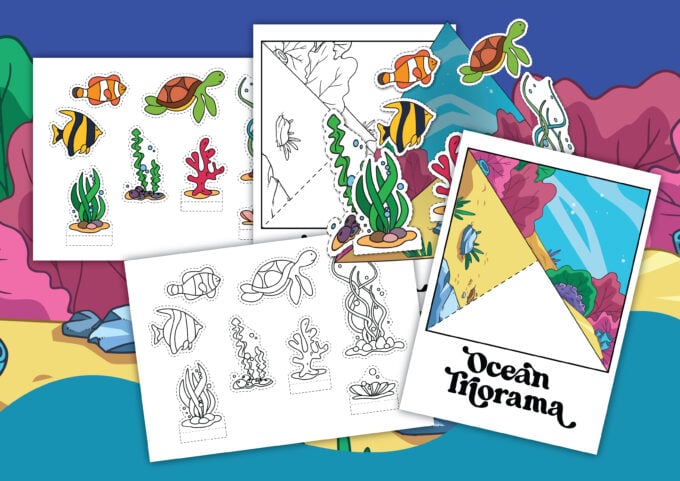
Coral Reef STEAM Project
Create a coral reef model or art project while learning about ocean habitats. Students can build, design, color, and label parts of a coral reef ecosystem.
Best for: coral reefs, habitats, STEAM, final projects
👉 Coral Reef STEAM Project
LEGO Ocean Builds
Use bricks to build sharks, whales, octopuses, crabs, or ocean habitats. LEGO ocean builds are a fun STEM extension for ocean animal lessons, early finishers, or summer camp.
Best for: LEGO STEM, ocean animals, creative building
👉 Ocean LEGO Challenges
Ocean Art and Craft Activities
Add creativity to your ocean theme with simple ocean art projects. These are great for displays, early finishers, science extensions, or summer learning.
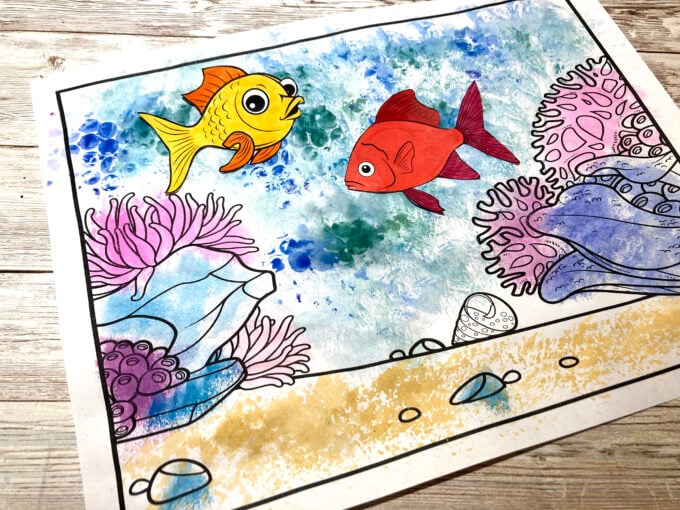
- Ocean Watercolor Art: Create a salt-and-watercolor ocean background, then add fish.
- Hokusai Wave Art: Explore ocean waves through art inspired by The Great Wave.
- 3D Ocean Paper Craft: Build a dimensional under-the-sea scene.
- Ocean Animal Crafts: Make printable fish, sharks, jellyfish, starfish, and more.
- Black Glue Jellyfish: Combine black glue with watercolor to create mixed-media jellyfish.
- Salt Dough Starfish: Sculpt starfish with homemade salt dough for kids.
👉 For more ideas, see our full collection of ocean crafts for kids.
5-Day Ocean Science Plan
Want to turn these ocean activities into a simple week of learning? Use this easy 5-day ocean science plan. Our Ocean STEM Pack is organized and ready to go!
Day 1: Ocean Zones and Layers
- Start with the Ocean Zones for Kids lesson. Then make the Layers of the Ocean in a Jar model. Students learn that the ocean changes with depth, light, temperature, and pressure.
Day 2: Moving Ocean Water
- Make Ocean Waves in a Bottle and try the Ocean Currents Activity. Students learn that ocean water moves through waves, tides, and currents.
Day 3: Ocean Animal Adaptations
- Try How Do Squid Move?, How Do Sharks Float?, or How Do Whales Stay Warm? Students learn how ocean animals survive, move, float, and stay warm.
Day 4: Ocean Problems and Protection
- Try the Oil Spill Cleanup Experiment or Beach Erosion Lab. Students learn how ocean habitats can change and how people can help protect them.
Day 5: Ocean Habitat Model
- Create a Coral Reef STEAM Project, Ocean Diorama, or Ocean Triorama. Students demonstrate what they learned by building an ocean habitat.
Ocean Activities FAQ
What are good ocean activities for kids?
Good ocean activities for kids include ocean waves in a bottle, ocean currents, layers of the ocean in a jar, beach erosion, oil spill cleanup, shark buoyancy, squid movement, whale blubber, ocean animal drawings, and coral reef art.
What can kids learn from ocean science activities?
Kids can learn about waves, currents, ocean zones, density, buoyancy, animal adaptations, habitats, food chains, pollution, erosion, and conservation.
What are good ocean STEM activities for elementary students?
Good ocean STEM activities for elementary students include ocean currents, beach erosion, oil spill cleanup, layers of the ocean in a jar, iceberg density, shark buoyancy, squid movement, and ocean floor mapping.
What are easy ocean activities for kindergarten?
Good kindergarten ocean activities include ocean waves in a bottle, ocean animal crafts, ocean salt painting, layers of the ocean in a jar with help, and simple ocean animal directed drawings.
Can I do ocean activities without living near the ocean?
Yes. Many ocean activities use simple supplies like water, oil, food coloring, sand, ice, shells, paper, craft materials, and recycled items.
How do you plan an ocean science week?
Plan one main topic each day: ocean zones, moving water, animal adaptations, ocean conservation, and a final ocean habitat project.

2 Comments