
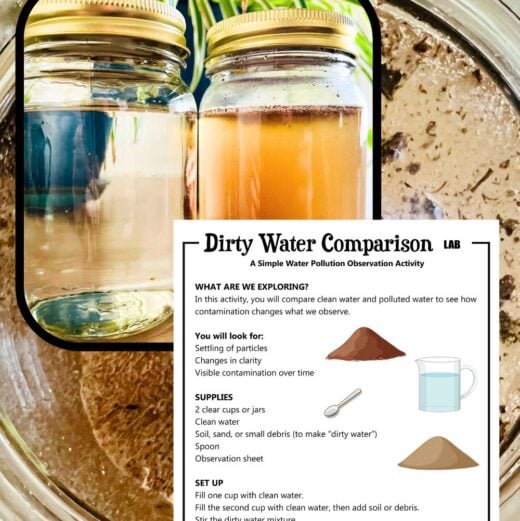
What happens when clean water becomes polluted—and does it ever really become clean again?
This simple, dirty water experiment helps kids explore how pollution changes water. By comparing clean and contaminated water side by side, kids can observe what happens over time and why clean water is so important.
👉 New to this topic? Start with our full guide to Water Pollution for Kids.
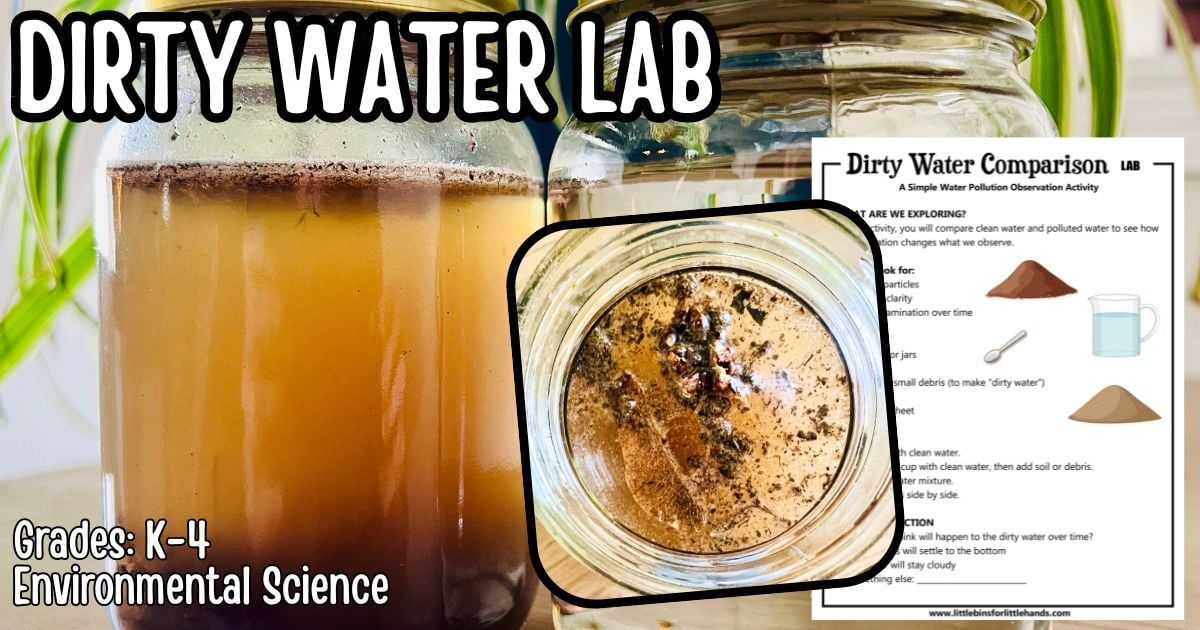
Water Pollution Science
Field: Environmental Science
Grades: K–4
Concepts Explored: Water pollution changes water quality; particles can settle or remain suspended; clarity does not always mean safety; observing changes over time helps us understand environmental processes.
Supplies Needed
- 2 clear cups or jars
- Clean water
- Soil, sand, or small debris
- Spoon
Optional:
- Timer
- Observation sheet
How to Do the Dirty Water Experiment
Step 1: Set Up the Cups
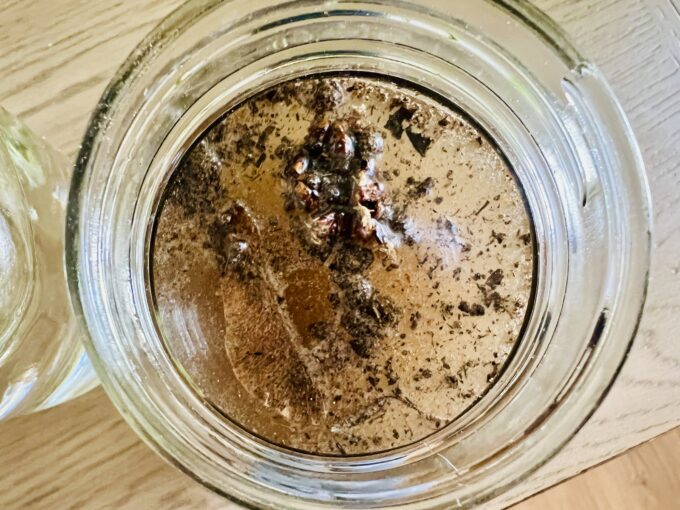
Fill one cup with clean water. Fill the second cup with clean water, then add soil or debris.
Step 2: Mix the Polluted Water
Stir the dirty water mixture. Place both cups side by side so they are easy to compare.
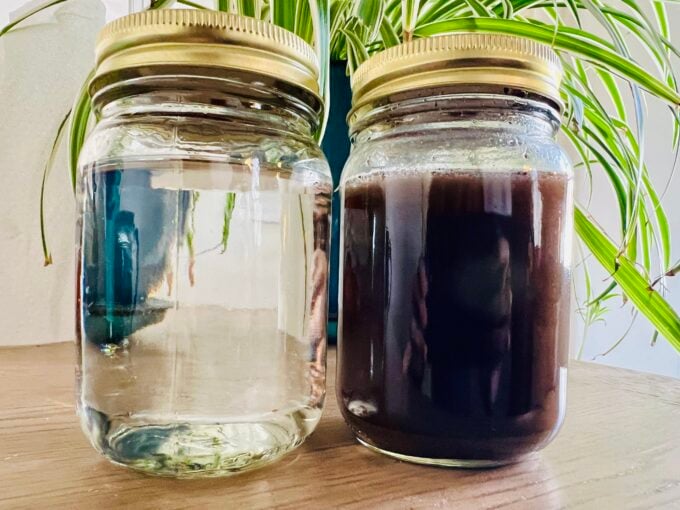
Step 3: Observe Over Time
Watch both cups carefully.
Observe at:
- Start
- 5 minutes
- 15 minutes
- 30 minutes
👉 Compare what changes and what stays the same.
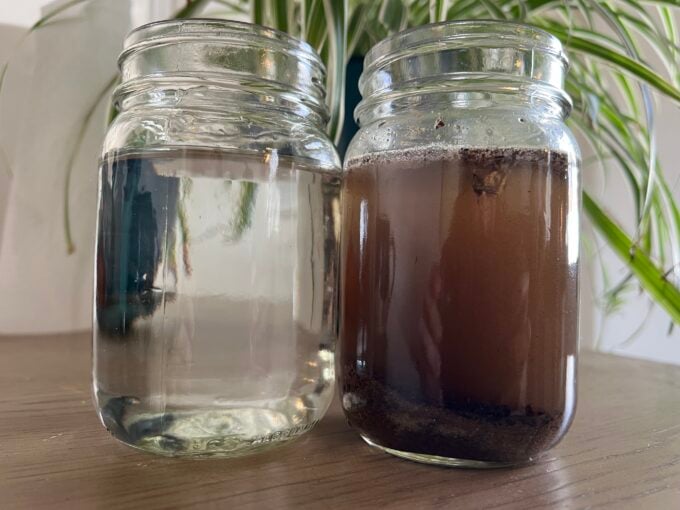
What to Observe
Encourage kids to look closely and describe what they see:
- Does the dirty water stay cloudy?
- Do particles settle to the bottom?
- Does the water become clearer over time?
- Do layers form?
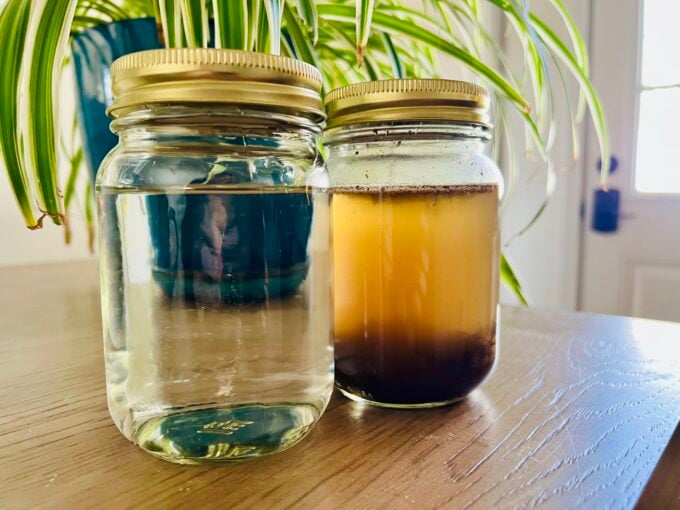
👉 Clean water should stay clear, while polluted water changes over time.
Free Dirty Water Pollution Activity
Use a simple science planner to record your observations and results.
👉 Grab your free dirty water activity page here
What’s Happening? (Simple Science Explanation)
In this experiment, you may notice:
- Settling: Heavier particles sink to the bottom
- Suspension: Smaller particles stay mixed in the water
- Clarity changes: The water may look clearer over time
🛑 Even if the water looks cleaner, it still contains pollution and is NOT safe to use.
Why This Matters
Water pollution affects:
- Drinking water
- Rivers and lakes
- Oceans and wildlife
This experiment helps kids understand that pollution isn’t always easy to see—and that protecting clean water is important.
Extension Activities
Build on this activity with:
👉 Learn more in our Water Pollution for Kids guide
More Facts for Kids
- Not all pollution can be seen with your eyes
- Some pollutants dissolve in water and stay hidden
- Clean water is important for people, plants, and animals
- Pollution can travel through rivers and oceans
Water Pollution FAQ
What is this experiment showing?
This experiment shows how water changes when it becomes polluted and how different materials behave in water.
Why does the dirty water change over time?
Heavier particles settle to the bottom while smaller particles stay mixed in the water.
Does clear water mean it is clean?
No. Water can look clear but still contain harmful substances.
What age group is this best for?
This activity works well for kindergarten through 4th grade.
Can this be turned into a science fair project?
Yes. Kids can test different materials, record observations, and compare results.
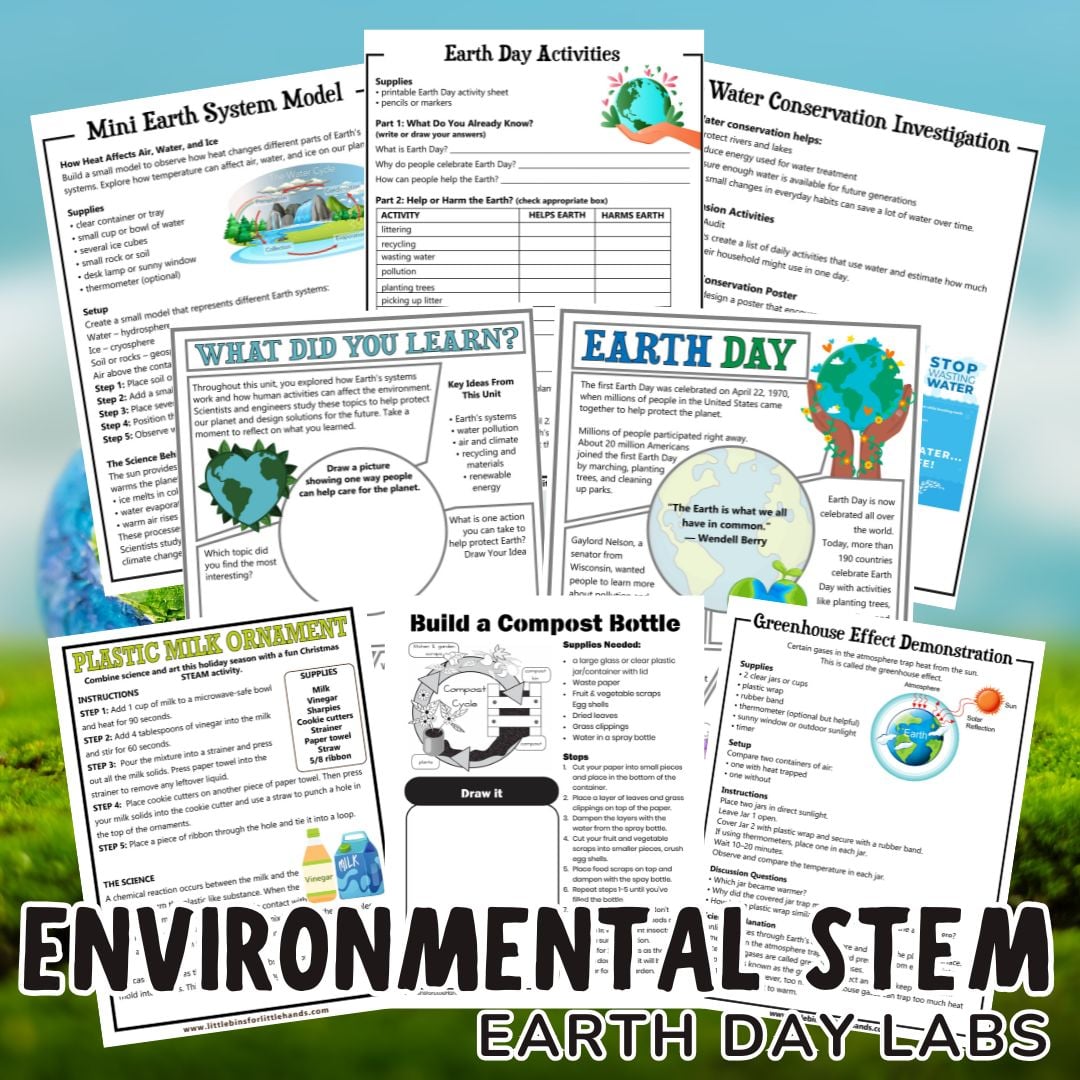
Want Everything Organized for You?
Planning Environmental or Earth Day lessons doesn’t have to mean jumping between 20 different tabs. Our Environmental STEM Printable Pack brings everything together in one ready-to-use resource, with vocab, NGSS questions, and quick-start tips.