

This water pollution STEM challenge helps kids explore how to clean polluted water using simple materials.
Instead of just observing pollution, kids design and test their own cleanup solutions—just like environmental engineers.
👉 If you’re looking for an experiment to observe water pollution first, start with the Dirty Water Experiment.
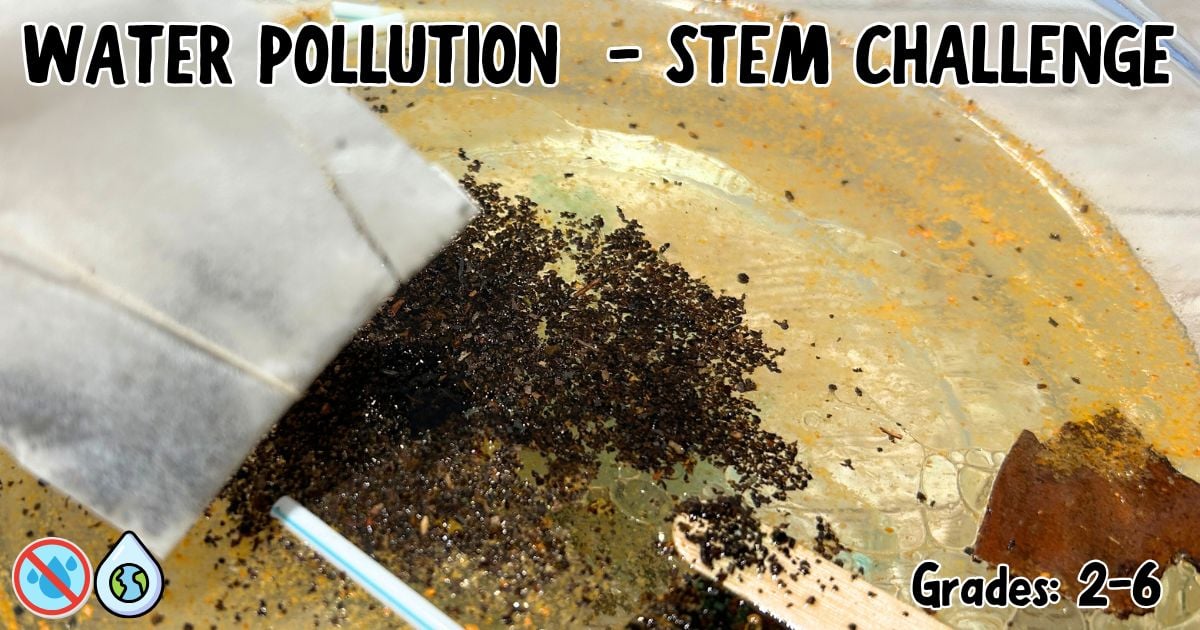
Water Pollution STEM Activity at a Glance
Field: Environmental Science & Engineering
Best Grades: 2–6
Concepts Explored:
- Water pollution
- Environmental engineering
- Separating mixtures
- Problem solving
- Engineering design process
👉 New to water pollution? Start with our complete guide to Water Pollution for Kids.
Supplies Needed
Basic Materials
- Clear container, tray, or bin
- Water
- Small container (cup, bottle cap, or tray)
Pollutants
- Cooking oil
- Dirt or sand
- Small pieces of paper
- Leaves or grass
Tools for Cleanup
- Spoons
- Cardboard pieces
- Craft sticks
- Droppers or pipettes
- Paper towels
- Cotton balls or sponge pieces
Optional: Dish soap
How to Set Up the Pollution Cleanup Challenge
Step 1: Create Polluted Water
Fill a clear container halfway with water.
Add pollutants such as:
- Oil
- Dirt or sand
- Paper pieces
- Leaves or small debris
🔎 Observe what happens when the materials mix.

Step 2: Observe the Pollution
Ask students:
- What floats?
- What sinks?
- What spreads across the surface?
👉 This helps kids understand different types of pollution.

Step 3: Design a Cleanup Solution
Provide tools and materials.
Students design a way to remove as much pollution as possible using:
- Scooping tools
- Absorbent materials
- Barriers
- Filters
👉 This introduces the engineering design process


Step 4: Test and Improve
Students test their cleanup system.
Then improve it by changing:
- Tools
- Materials
- Cleanup order
Compare results and discuss what worked best.

Where This Fits in a Lesson
This activity works best after kids understand what water pollution is.
👉 Start with: Dirty Water Experiment (observe pollution)
👉 Then move to: This STEM Challenge (design solutions)
The Science Behind Pollution Cleanup
Water pollution includes substances that harm ecosystems and make water unsafe.
Different pollutants behave in different ways:
Why does oil float?
Oil floats because it is less dense than water.
Why does sand sink?
Sand sinks because it is heavier than water.
What absorbs pollution?
Some materials soak up liquids, making them useful for cleanup.
How do engineers clean water?
Environmental engineers use methods such as:
- Skimming
- Filtration
- Absorption
- Settling
🔎 Students model these same processes in this activity.
Extend This Activity
Try these related activities:

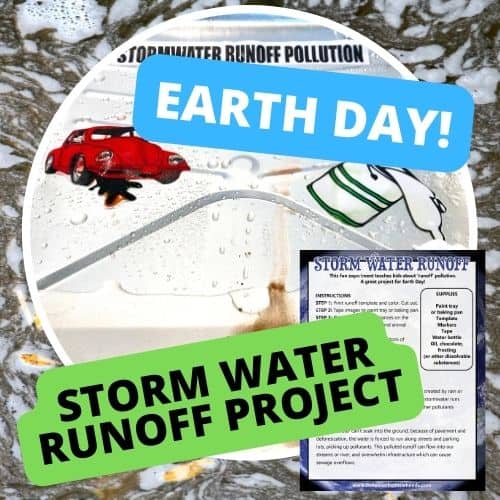
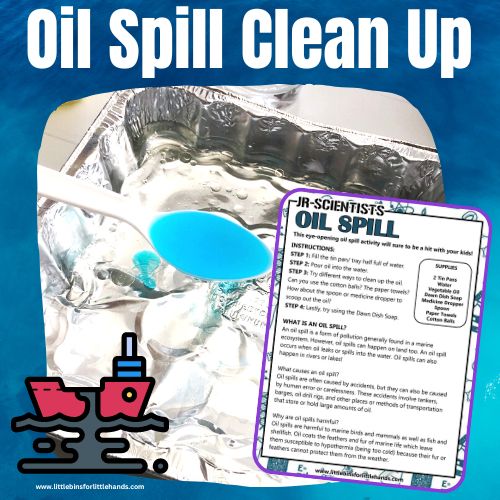
Engineering Challenge Extension
Challenge students to design the most effective cleanup system.
Test questions such as:
- Which tool removes oil best?
- Which material absorbs water fastest?
- Does cleanup order matter?
Students can redesign and improve their solutions—just like real engineers.
Science Fair Ideas (Pick One)
- Which material removes pollution from water most effectively?
- Does filtering water multiple times make it cleaner?
- Which material absorbs oil best?
- Does slower filtration produce cleaner water?
Real-World Connection: Environmental Engineering
Environmental engineers design systems to:
- Clean drinking water
- Protect wildlife habitats
- Remove oil spills
- Reduce pollution
This activity helps kids explore these real-world solutions through hands-on learning.
👉 Cleaning polluted water is just one part of protecting our environment.
Explore more ways to help with water conservation activities for kids.
Water Pollution STEM FAQ
What does this activity teach?
This activity helps kids understand how water pollution affects the environment and how engineers design solutions to remove pollutants. Students explore concepts such as separating mixtures, absorption, and environmental protection.
Is this activity safe for kids?
Yes, this activity uses common household and recycled materials. The water is only for observation and experimentation and should not be consumed.
What age group is this best for?
This activity works well for grades 2–6. Younger students can focus on observation and simple cleanup tools, while older students can design experiments and compare results.
How is this connected to real-world engineering?
Environmental engineers use methods such as skimming, filtering, and absorbing to clean oil spills, treat wastewater, and protect natural water sources. This activity models those real-world processes.
Can this be used as a science fair project?
Yes. Students can test different cleanup materials or methods, collect data, and present their findings. This activity pairs well with a water filtration project for extended investigation.

Continue exploring water conservation efforts
Continue exploring water science and sustainability with our Water Conservation Activities Pack and Water Study Unit, filled with hands-on STEM projects, experiments, and printable investigations designed for elementary learners.