
What happens when water becomes polluted—and why does it matter?
Water pollution affects rivers, lakes, oceans, and even the water we drink. The good news is that kids can explore this important topic through simple, hands-on activities that make learning clear and meaningful.
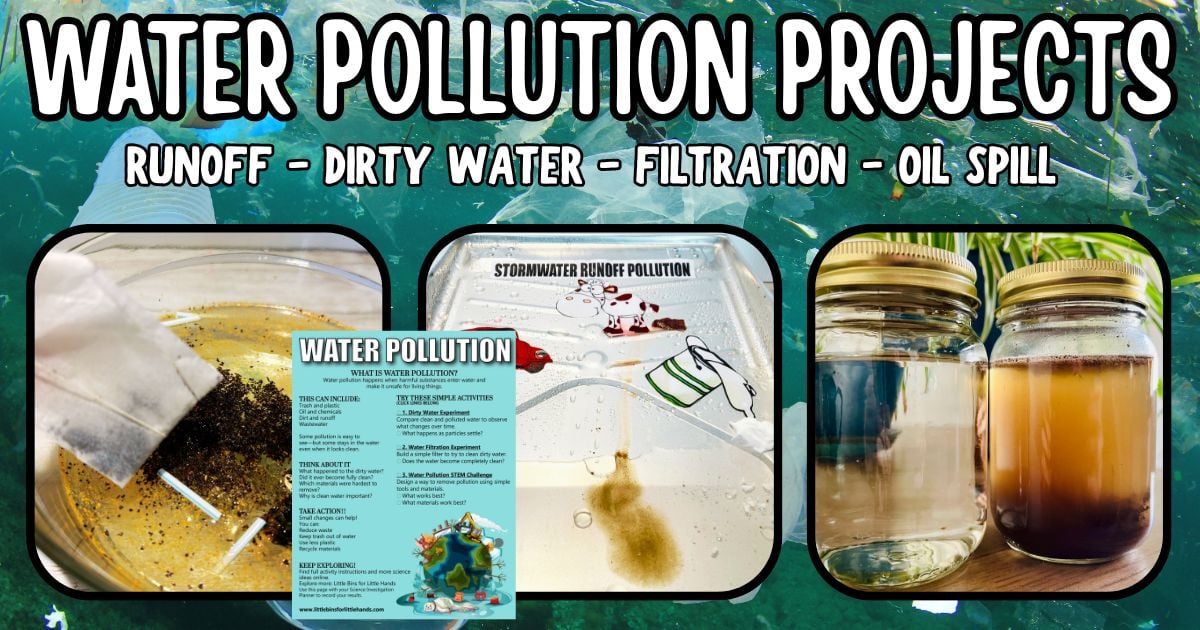
In this guide, you’ll find easy experiments and STEM challenges that help kids understand how water gets polluted—and what we can do about it.
👉 Water pollution is an easy addition to any environmental science lesson
What Is Water Pollution?
Water pollution occurs when harmful substances enter waterways, making them unsafe for living things.
These pollutants can include:
- Trash and plastic
- Oil
- Chemicals
- Dirt and runoff
Water pollution can harm:
- Fish and animals
- Plants
- Ecosystems
- Human health
Why Teach Kids About Water Pollution?
Water is part of everyday life, which makes this topic easy for kids to understand.
These activities help kids:
- See how pollution changes water
- Understand how pollution spreads
- Learn how it affects living things
- Explore ways to protect water
👉 Hands-on learning makes these ideas easier to understand and remember. Looking for more environmental science activities? Explore:
- Earth Day STEM Activities
- Pollution Activities for Kids
Hands-On Water Pollution Activities
Start with one activity or combine a few to build a simple unit.
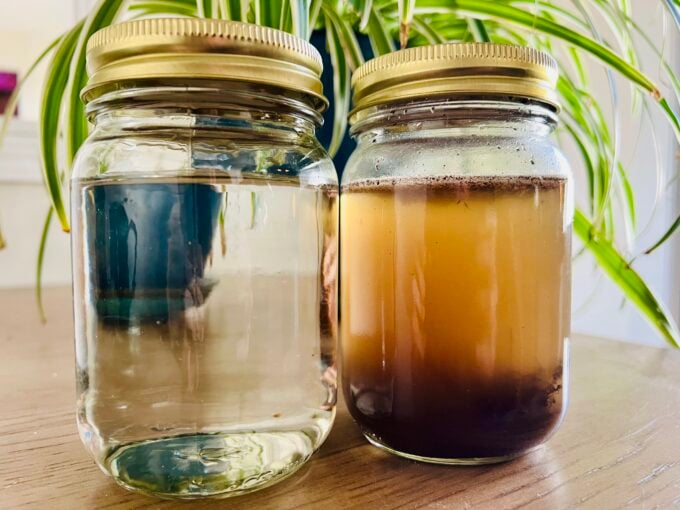
1. Dirty Water Experiment (Observe Pollution)
Start here!
In this activity, kids compare clean and polluted water to observe how contamination changes what they see over time.
👉 Try the Dirty Water Experiment here
What kids explore:
- How pollution changes water
- Why water may look clean but still be unsafe
- How particles settle or stay mixed
🔎 This is the best introduction because kids can clearly see the difference.
2. Water Pollution STEM Challenge (Design Solutions)
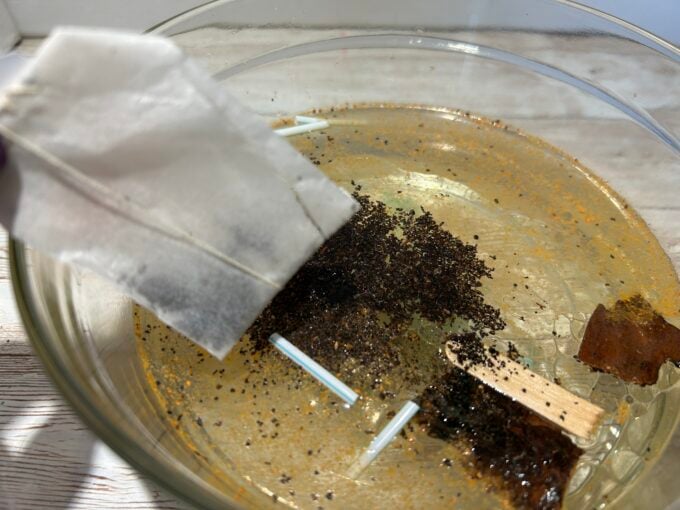
Take it further by designing ways to clean polluted water.
👉 Try the Water Pollution STEM Challenge here
What kids explore:
- How engineers solve environmental problems
- How do different materials remove pollution
- Problem-solving and design thinking
🔎 This activity focuses on creating solutions.
3. Water Filtration Experiment (Clean Water)
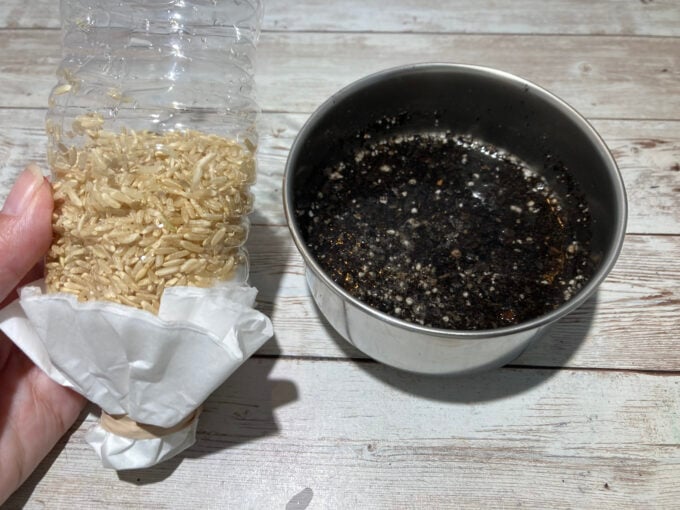
Build a simple filtration system to clean dirty water.
👉 Try the water filtration experiment here
What kids explore:
- How filtration works
- Limits of cleaning water
- Why clean water is important
4. Oil Spill Cleanup Activity
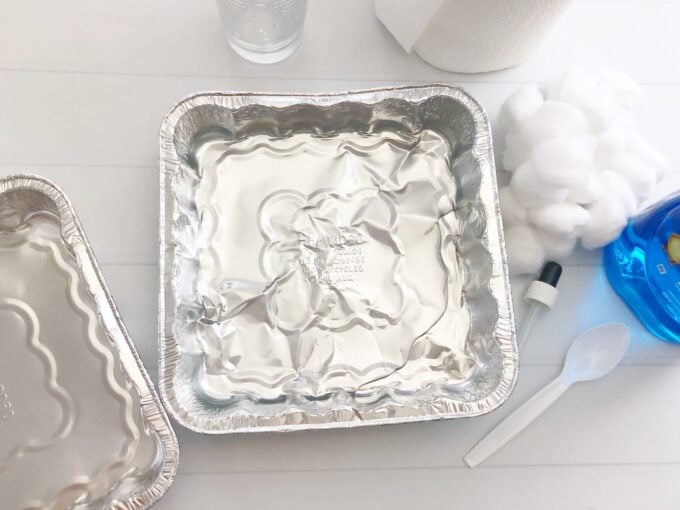
Simulate an oil spill and test different cleanup methods.
👉 Try the oil spill cleanup activity here
What kids explore:
- How oil spreads on water
- Why is cleanup difficult
- Environmental impact
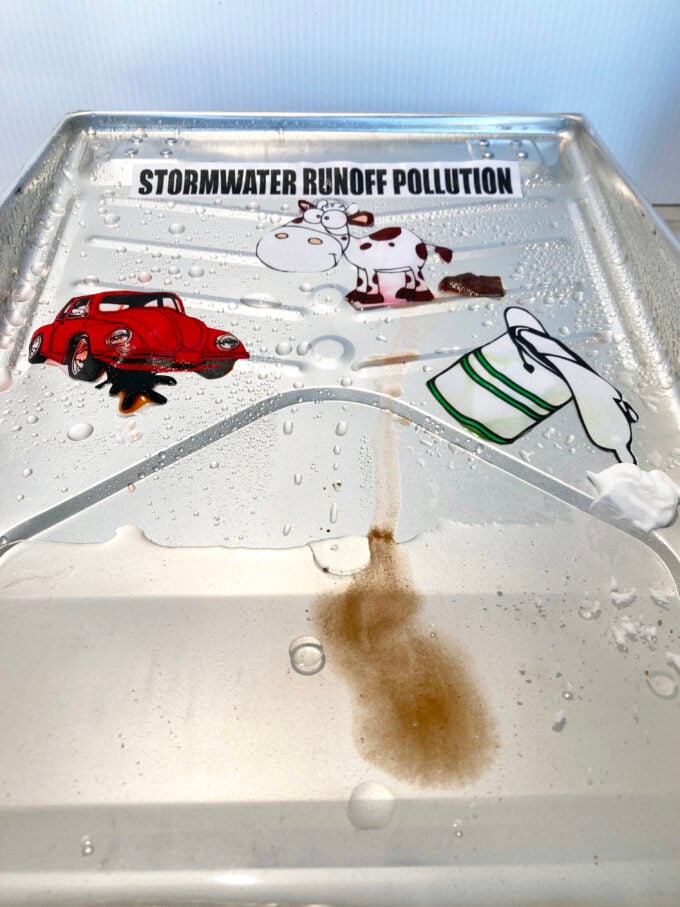
5. Pollution Runoff Activity
Show how pollution moves into water.
Add “pollutants” to the land, then pour water over it and observe how it flows.
What kids explore:
- How rain carries pollution
- Why runoff is a major source of water pollution
👉 Try the Stormwater Runoff project here
Free Water Pollution Starter Kit
Make it easy for kids to explore water pollution.
This simple starter kit includes:
- A quick guide with easy activity ideas
- A reusable science planner for experiments
👉 Download your free Water Pollution Ideas Guides here
How to Teach Water Pollution (Simple Lesson Plan)
Use these steps to turn the activities above into a simple lesson.
Lesson Overview
- Time: 30–45 minutes
- Best Ages: K–4
- Focus: Understanding how pollution affects water
Step 1: Start With a Question
👉 What happens when water gets dirty?
Step 2: Explore With an Activity
Start with:
👉 Dirty Water Experiment
Step 3: Observe and Discuss
Ask:
- What changed?
- Did the water become clean again?
- What was difficult to remove?
Step 4: Connect to Real Life
Talk about:
- Drinking water
- Rivers and oceans
- Pollution sources
Step 5: Take Action
- Reduce waste
- Keep trash out of the water
- Use less harmful materials
The Science Behind Water Pollution
Water pollution occurs when harmful substances enter water systems.
Different pollutants behave in different ways:
- Some float (like oil)
- Some sink (like sand)
- Some dissolve and are hard to see
Even if water looks clear, it may still be polluted.
Clean water is essential for:
- People
- Animals
- Plants
Reduce, Reuse, Recycle & Protect Water
Many actions that reduce land pollution also help protect water.
👉 Explore ways to help with water conservation activities for kids

Water Pollution FAQ for Kids
What is water pollution?
Water pollution happens when harmful substances make water unsafe.
What causes water pollution?
Trash, oil, chemicals, and runoff can all pollute water.
Why is water pollution a problem?
It harms animals, ecosystems, and human health.
How can kids help reduce water pollution?
Kids can recycle, reduce waste, and keep trash out of water.
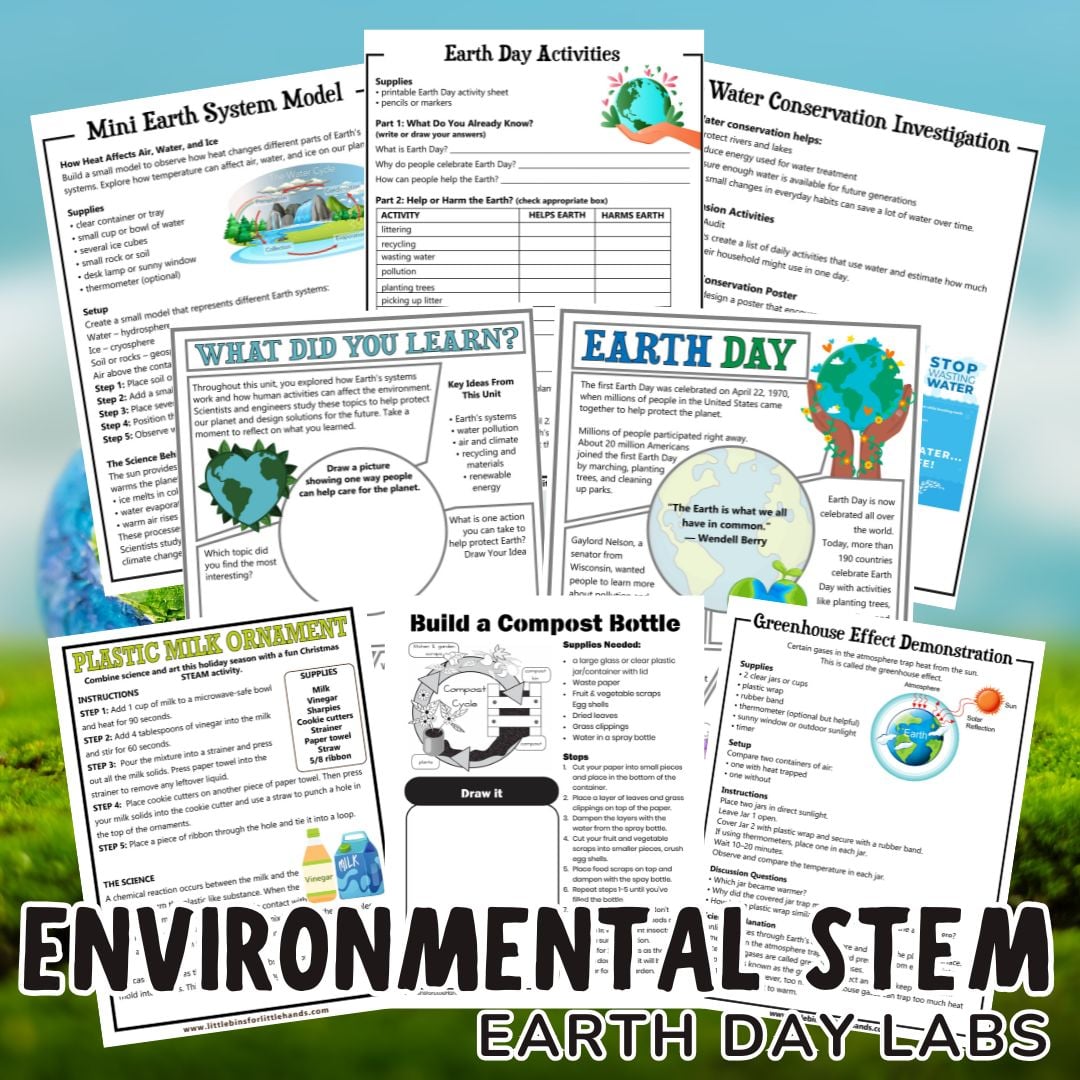
Want Everything Organized for You?
Planning Environmental or Earth Day lessons doesn’t have to mean jumping between 20 different tabs. Our Environmental STEM Printable Pack brings everything together in one ready-to-use resource, with vocab, NGSS questions, and quick-start tips.